Over more than a century of automotive evolution, two familiar schemes have emerged: - powerful and expensive cars have their engine located longitudinally, with rear or all-wheel drive. Mass-market and budget models use a transverse engine layout and front-wheel drive.
Eight-cylinder engines traditionally require space, so they are almost always placed along the body. Therefore, it is all the more surprising to see those rare cars where engineers managed to "force" the V8 to work transversely. These projects became an exception to the rules - and the most striking pages in the history of layout experiments.
Cadillac Eldorado - Pioneer of Front-Wheel Drive V8s
General Motors was one of the first in the United States to mass-produce powerful front-wheel drive vehicles. Initially, the Oldsmobile Toronado and Cadillac Eldorado had a longitudinally mounted V8 - paired with a unique Turbo-Hydramatic 425 automatic transmission, transferring torque to the wheels via a chain drive.
,_photo-02.jpg)
But after the fuel crisis of the 70s, in 1986, the Eldorado and Seville switched to a more compact platform - and the V8 took a transverse position for the first time. Blocks with a volume of 4.1-4.9 liters produced 170-200 hp, worked with a 4-speed automatic transmission, and the gearbox itself was located behind the engine.
Cadillac Seville and the Legendary Northstar
In 1992, the new Seville and Eldorado coupe appeared with an all-aluminum Northstar 4.6 V8 engine. The technologically advanced DOHC engine with 32 valves developed 270-300 hp and was equipped with a proprietary Limp Home system - it allowed you to get to the service even without coolant.
.jpg)
Especially for it, GM created a new 4T80 transmission - the successor to the TH425, again with a chain drive inside.
Oldsmobile Aurora - An Attempt to Save the Brand
The futuristic Aurora sedan also received the Northstar (in its own version). The model was supposed to restore interest in the Oldsmobile brand - but after the brand was closed, the engine moved to the Pontiac Bonneville GXP and Buick Lucerne, becoming the last "front-wheel drive" V8 of the GM era.

Ford Taurus SHO - Compact V8 from Yamaha
In the 90s, the Taurus SHO was Ford's sporting pride. For the third generation, Japanese Yamaha developed a unique V8:
- bank angle - 60° instead of the usual 90° (for compactness)
- a balance shaft is installed to compensate for vibrations
- cut-off - 7300 rpm!

Despite the potential of ≈300 hp, the production engine was limited to 235 hp in order not to "kill" the 4-speed AX4N automatic transmission. Acceleration: 0-100 km/h in 7.4 seconds.
The project turned out to be niche - only about 21 thousand copies (1996-1999).
Volvo S80 / XC90 - Safety First
Volvo had long avoided large engines: in an accident, a large unit could move into the passenger compartment. But after joining Ford, the Swedes needed a V8.
Yamaha engineers helped again - they created one of the most compact V8s in the world: B8444S, 4.4 l, 315 hp Length - only 754 mm!
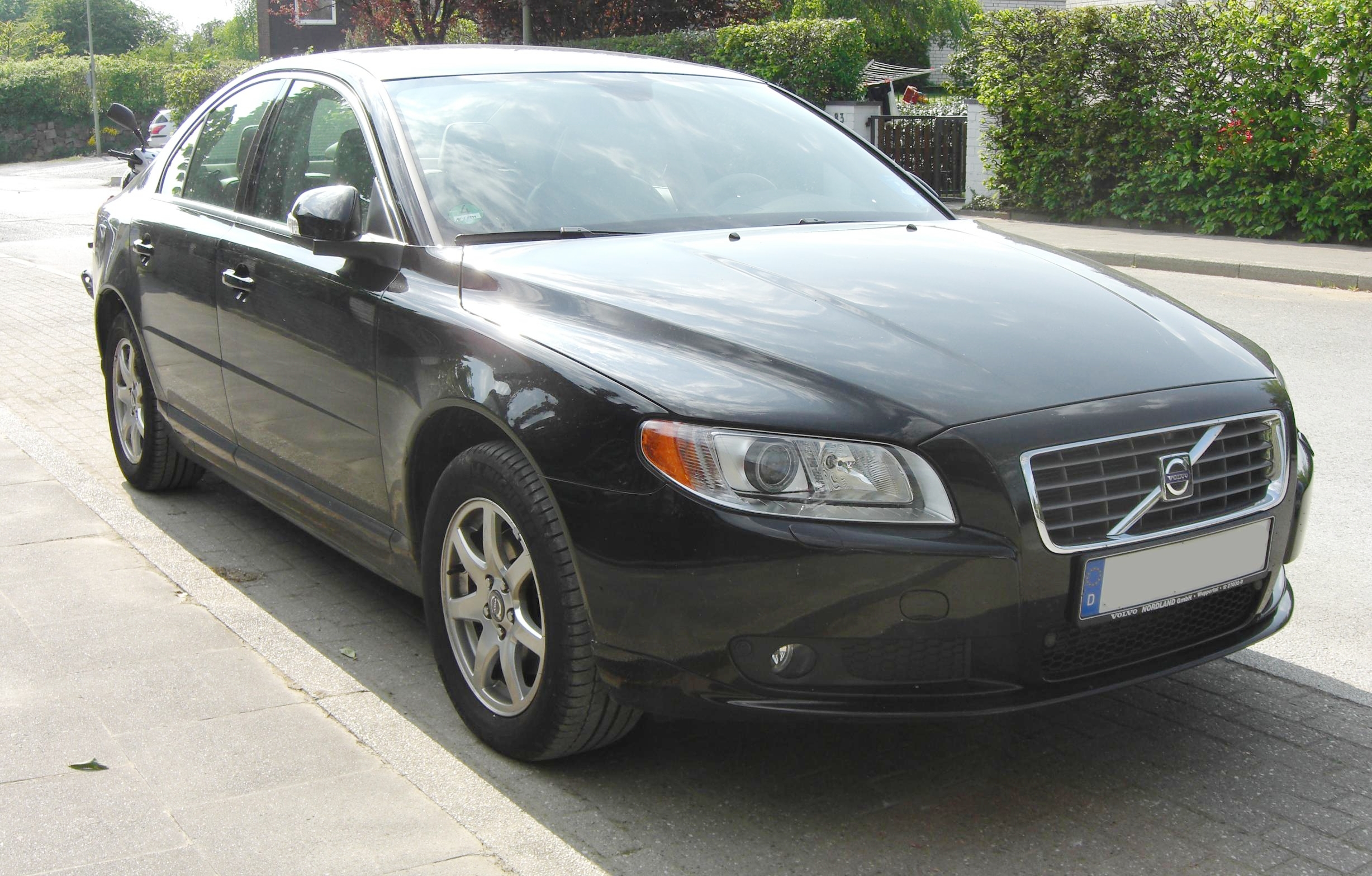
The secret is a unique layout of attachments: everything is fixed directly to the cylinder block, without the usual external brackets.
This engine was first installed in the XC90 (2004), then in the S80 II (2006). Later, it even became the "heart" of the Noble M600 supercar - with two turbines and a power of up to 650 hp!
The transverse V8 is an engineering challenge that not all manufacturers have decided to take on. Each of the described cars became a symbol of courage and technical creativity - even if not always commercially successful.