Volvo Cars has presented the results of a multi-year safety study, according to which the brand’s modern vehicles provide a comparable level of protection for men and women. Specialists from the Volvo Cars Safety Centre analyzed data from more than 50,000 real-world accidents involving over 80,000 people. Comparing 2010–2019 cars with 1970–1979 models showed that the overall risk of driver injury decreased by 79%, and for women — by 88%. As a result, the figures for men and women in the studied vehicles reached comparable levels.
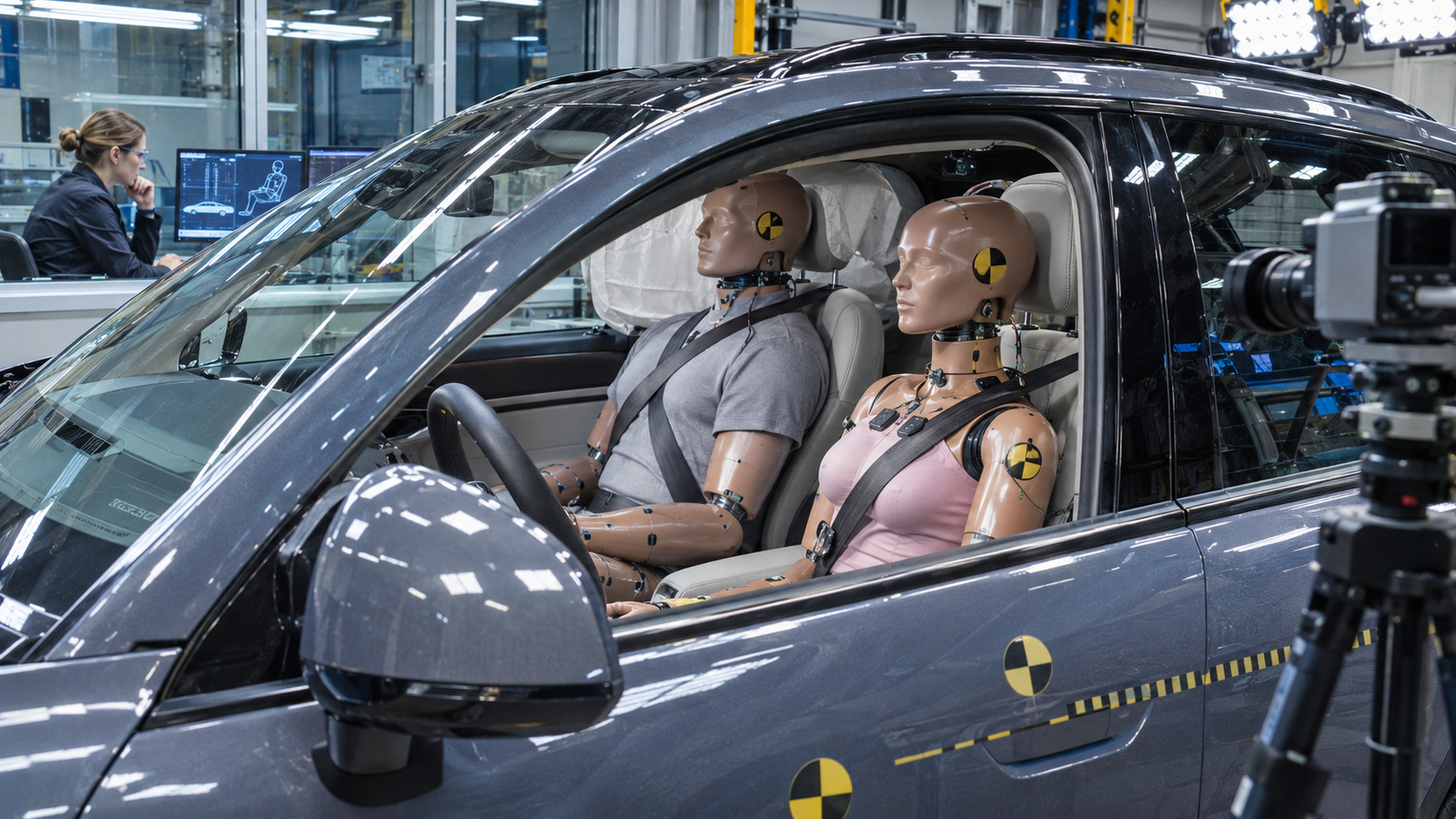
The company has been collecting crash data since 1970 and uses it in developing vehicle bodies, seat belts, airbags, and other safety systems. The study takes into account various collision scenarios, as well as the height, weight, and body build of individuals. The analysis included belted passengers aged 13 and older and moderate injuries potentially threatening life, including fractures and concussions. According to Volvo, belted rear-seat passengers in modern models receive protection comparable to those in the front seats, and in certain scenarios — even higher.
Meanwhile, the issue of disparities in protection between men and women remains relevant for the automotive industry as a whole. A 2019 study by the University of Virginia showed that belted women in comparable frontal crashes were 73% more likely to suffer serious injuries than men. One of the reasons is considered to be the nature of standard tests: European regulation UN R137 requires an average-height male dummy behind the wheel and a scaled-down female dummy in the passenger seat. The latter represents a scaled-down version of the male model rather than an accurate anthropometric copy of a woman.
Changes to independent testing procedures are already planned: Euro NCAP intends to start using the THOR-5F female crash dummy from 2029. However, Volvo’s findings cannot be generalized to all vehicles and automakers: the study only covers cars from the Swedish brand and models built no later than 2019. Its practical significance lies in confirming that analyzing real-world crashes and taking into account differences in occupant physique make it possible to improve protection systems beyond standard laboratory scenarios.