The German Bundeswehr has restricted modern connected vehicles from entering certain military facilities and areas with heightened security requirements. The reason lies in the cameras, radars, ultrasonic sensors, microphones, and data transmission systems installed in the vehicles, which are potentially capable of gathering information about their surroundings. As reported by the German Federal Ministry of Defence, the restrictions are not based on the country of origin or a specific brand: if a vehicle poses a potential risk, it may be barred from entering the respective zone.
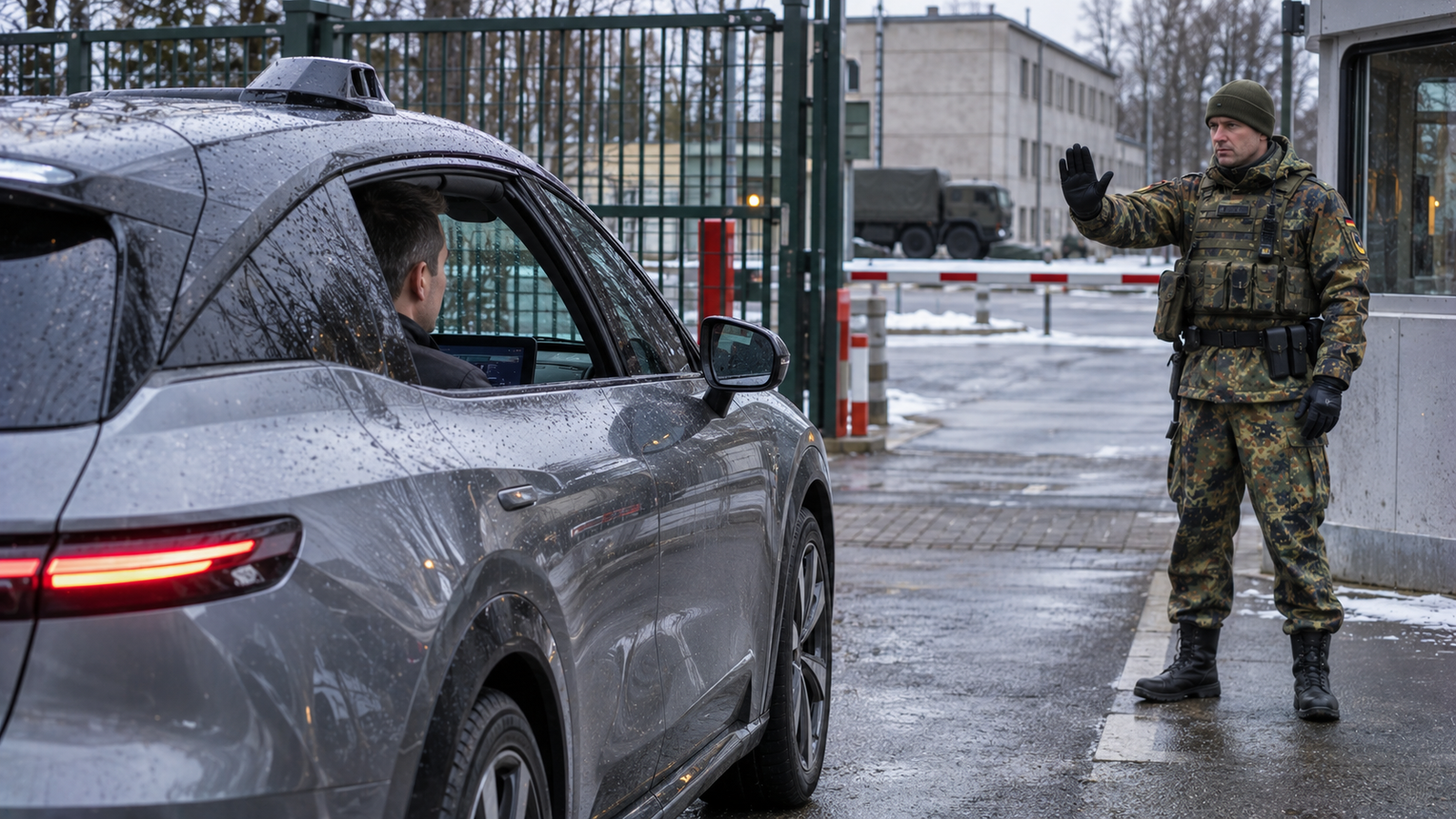
Earlier, Der Spiegel reported on lists circulating within the Bundeswehr of BYD, Geely, and Nio models prohibited from entering sites classified as protected zones. Military personnel who own such vehicles are forced to leave their cars outside the perimeter and proceed onto the grounds on foot. At the same time, there is no public confirmation of data leakage specifically through vehicles yet—the restriction is treated as a precautionary measure. The Ministry of Defence specifically emphasizes that similar requirements may apply to connected vehicles from other manufacturers.
Authorities cite the potential use of vehicle sensors for surveillance of military infrastructure as the reason. Cameras can capture the layout of facilities and ongoing activities nearby, while microphones, radars, and communication tools can collect additional data. In September 2026, during military exercises in Norway, rented Chinese vehicles did indeed record the movements of military personnel near a military facility, including events at a checkpoint. However, this incident does not prove that the recordings were intended for transmission to Chinese intelligence agencies.
The restrictions on vehicles are part of a broader review of the use of Chinese technology by the Bundeswehr. At the same time, Germany is phasing out the use of commercial Chinese drones at military sites and plans to replace previously procured systems with German or European solutions. However, the wording of the German Ministry of Defence differs fundamentally from a simple ban on Chinese cars: the final decision regarding vehicle access is made taking into account the specific zone, its proximity to sensitive facilities, and the results of a risk assessment. Therefore, the claim of a total ban on BYD, Geely, and Nio on German military bases is incorrect.
Read more articles:
- Half of BMW M2 buyers in the US choose a manual transmission
- BYD Yangwang U9 Xtreme accelerates to 503 km/h for the first time in history
- Tesla will wind down Cybertruck production in 2027—output will give way to Cybercab