Affordable new crossover options have appeared on the Russian market in early 2026, despite the massive price increases. Experts at "Auto News of the Day" have compiled a selection of five models that cost less than 1.8 million rubles.
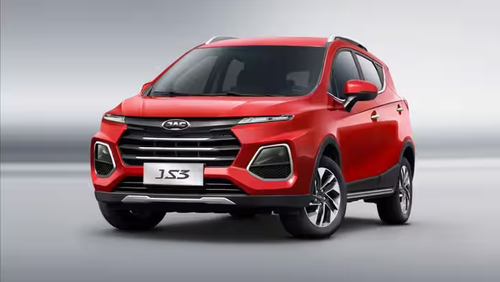
The cheapest foreign car turned out to be the JAC JS3. The price for the basic configuration of the 2023 model is 1,549,000 rubles, taking into account a benefit of 250,000 rubles under the "Special Offer" program. The crossover is equipped with a 109-horsepower 1.6-liter naturally aspirated engine and a six-speed "mechanics". Standard equipment includes front airbags, air conditioning, an audio system with four speakers, rear parking sensors, a stabilization system and cruise control.
In second place is the Livan X3 Pro for 1,669,900 rubles. This crossover is a redesigned version of the Geely Vision X3 and is equipped with a 1.5-liter 103-horsepower naturally aspirated engine with a variator and front-wheel drive. The basic configuration includes 16-inch wheels, a multi-steering wheel, rear parking sensors, front airbags, a built-in DVR, keyless entry and multimedia with an 8-inch touch screen.
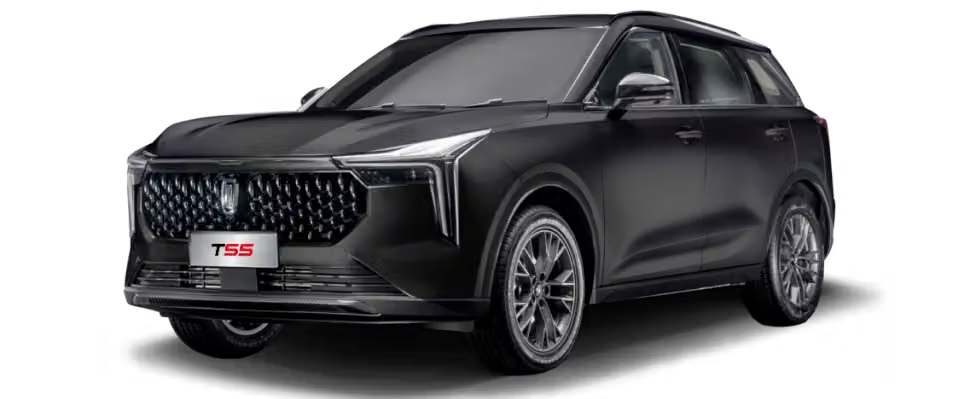
The third position is occupied by the Bestune T55, which, taking into account a 700,000 ruble discount, can be purchased for 1,711,000 rubles. The model is equipped with a 1.5-liter 124-horsepower gasoline engine and a seven-speed "robot" with two clutches. The basic version of the crossover has LED headlights, a leather multi-steering wheel, a sunroof with an electric drive, front and side airbags, climate and cruise control, multimedia with a 12.3-inch display and driver assistance systems.
The fourth place is occupied by the domestic "Moskvich 3". Its cost starts from 1,729,000 rubles for the 2024 model year. The basic version has a 1.5-liter 136-horsepower turbo engine with a six-speed "mechanics". Among the standard equipment are mirrors with electric drive and heating, 17-inch alloy wheels, a multi-steering wheel, heated front seats, climate and cruise control.
The selection is closed by the Haval Jolion with a price of 1,799,000 rubles for the basic configuration of the 2024 model year. The crossover is equipped with a 1.5-liter 143-horsepower turbocharged engine, a seven-speed robotic transmission with a wet dual clutch and front-wheel drive. The basic equipment includes 17-inch alloy wheels, climate and cruise control, a multimedia system with a 10-inch touch screen and four audio speakers.
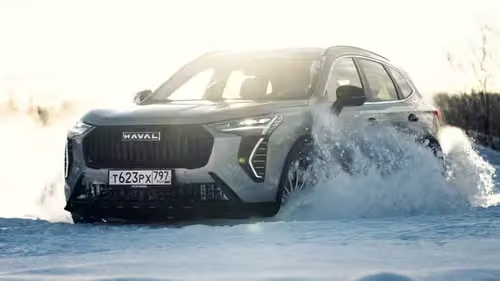
All five models provide a basic set of modern options, including airbags, driver assistance systems, climate control and multimedia kits. Despite the economical price, crossovers are suitable for everyday use in the city and suburbs.
Thus, Russian consumers can choose from five affordable crossovers, the cost of which does not exceed 1.8 million rubles, combining basic functionality and modern equipment.
Read more materials:
- AvtoVAZ officially explained which gasoline should be poured into Lada
- Moskvich announced prices for the Moskvich 6 sedan of the 2026 model year
- Tank raised prices for the entire model range in Russia: Tank 500, 700 and 400 have risen in price
Комментарии