The arrival of hybrids in Geely's Russian lineup changed not only the technical makeup of the models, but also the very approach to their positioning. The name EX5 EM-i breaks away from the familiar sequence of Atlas, Coolray, and Emgrand and sounds far more utilitarian than you would expect from a new crossover. In China, the model is sold under the loud name Galaxy Starship 7, but for our market a more down-to-earth variant was chosen. At the same time, behind the unremarkable name is a car that unexpectedly turned out to be one of the most durable in the hybrid supertest, betting not on showiness, but on efficiency.
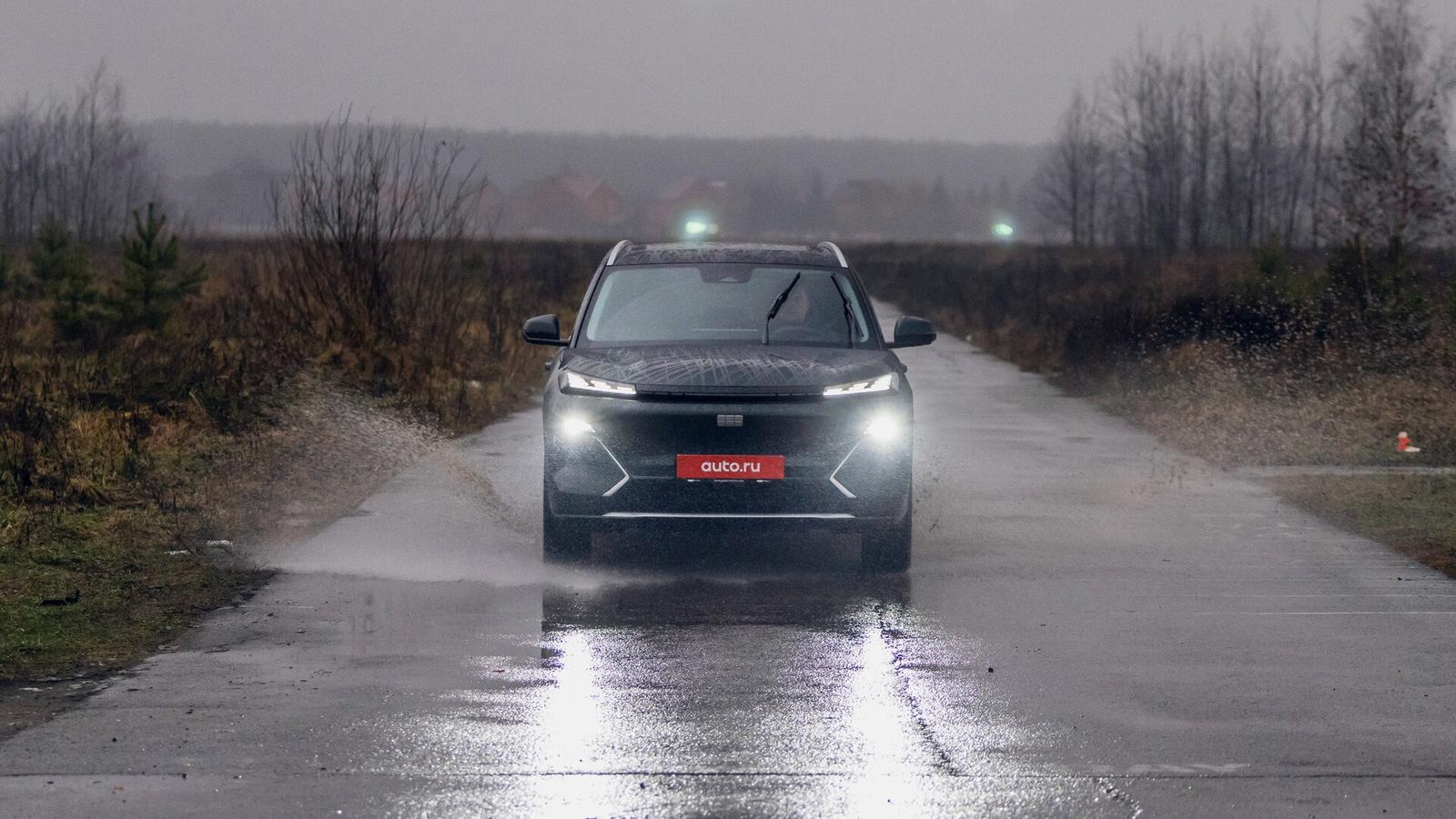
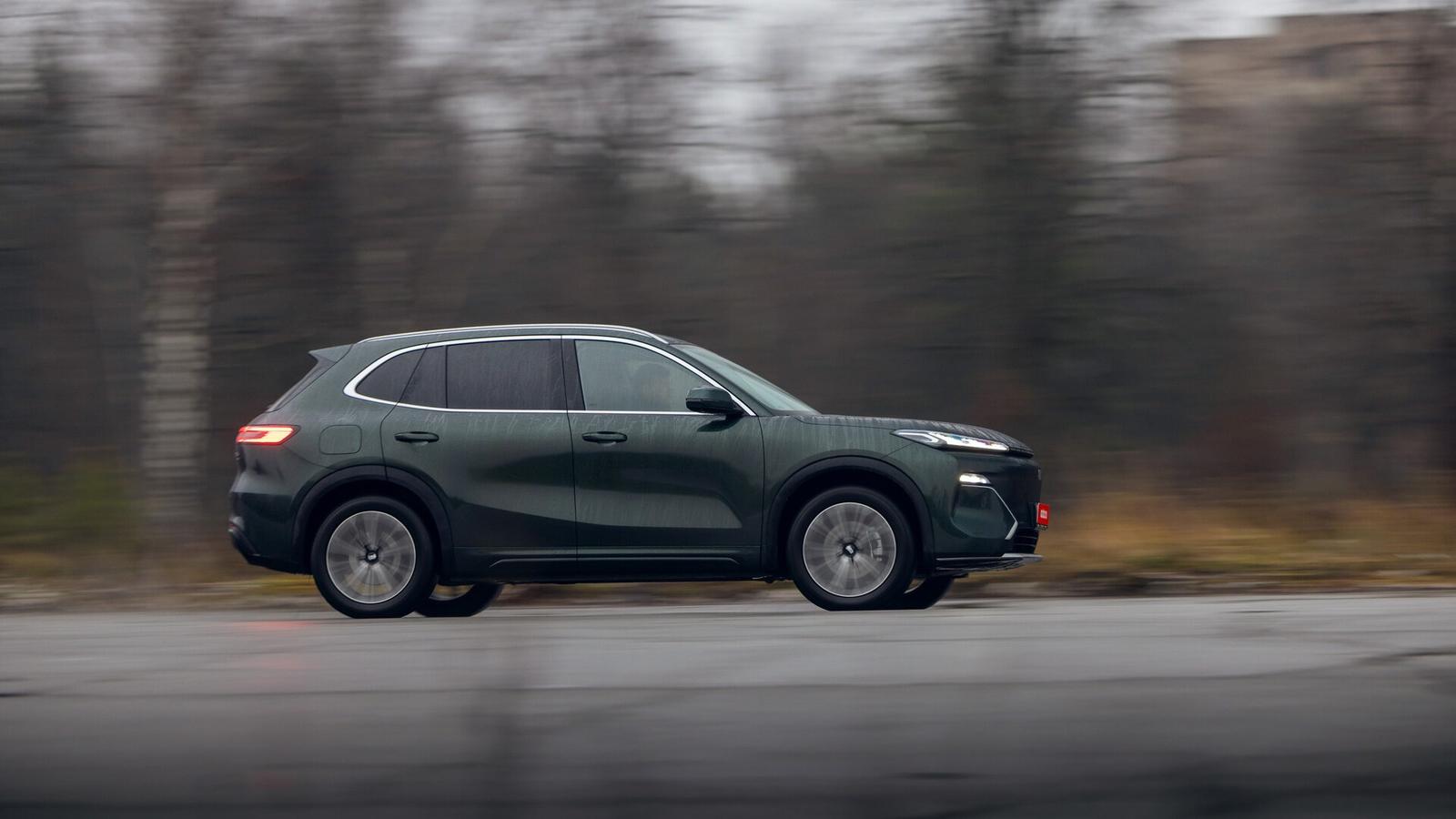
Visually, the EX5 EM-i looks as calm as possible. A streamlined silhouette without sharp lines, a closed-off front end in the style of electric cars, ordinary door handles, and the absence of design experiments create the image of a neutral urban crossover. There is no all-wheel drive here, the battery has a comparatively small capacity, and the claimed range of 943 km under WLTP looks more modest than that of a number of competitors. Even the equipment does not try to impress: climate control is single-zone in all versions, and the list of options is more rational than rich.
At the same time, the EX5 EM-i cannot be called compact in terms of size. Its length is 4,740 mm, width is 1,905 mm, height is 1,685 mm, and the wheelbase is 2,755 mm. In overall dimensions, the hybrid surpasses the Geely Atlas in length, but is slightly behind it in the distance between the axles. As a result, the model ends up in the same class as the Chery Tiggo 7L, Jaecoo J7, and Haval F7, although there are still few direct hybrid competitors in this segment.
The EX5 EM-i interior makes a favorable impression from the very first acquaintance. The upper part of the front panel is trimmed with dense faux leather, while below, soft and pleasant-to-the-touch materials are used. Hard plastic is found only at the bottom, where you almost never touch it. The interior is done in a restrained style, and brown trim is available in the higher versions. The driving position is comfortable despite the lack of lumbar support adjustment and cushion tilt adjustment, and the ranges of the seat and steering wheel settings are sufficient for drivers of different heights and builds.
The controls combine digital solutions and familiar physical elements. The mirrors are adjusted with a conventional joystick, and the climate control has a separate block of buttons on the center tunnel. However, all winter functions, including steering wheel and windshield heating, are hidden in the multimedia system menu. The steering wheel heating is located in an unexpected section and cannot be quickly assigned to a button, so in winter you have to wait for the system to fully load. The media system itself works steadily, the menu is logical and well localized into Russian, and the instrument panel remains readable in all conditions.
In the second row, the EX5 EM-i offers a truly large amount of space. Even behind a driver about 180 cm tall, a passenger can sit with one leg crossed over the other, with plenty of room at the knees and above the head. The floor is completely flat, and the cabin width allows three people to sit without any problems. The rear bench cushion is long, the backrest is comfortable, and the amenities include seat heating, ventilation deflectors, USB ports, an armrest, and individual lighting.
The trunk has a regular shape and a volume of 528 liters, which is less than that of some gasoline competitors. The floor is two-level: in the lower position it adds about 100 liters, but with the seats folded a step appears. Under the floor there is a repair kit, a warning triangle, and a charging cable; there is no spare wheel, not even a space-saver. As for equipment, there is only a bag hook and a cargo cover, with no outlet or additional compartments.
From a technical point of view, the EX5 EM-i is a hybrid version of the electric EX5 and is built on the GEA platform. The body is made of 65% high-strength steels, and the battery is integrated into the load-bearing structure of the floor, which lowers the center of gravity. The powertrain is designed according to a series-parallel scheme with front-wheel drive. It is based on a naturally aspirated 1.5-liter engine producing 99 hp, which works mainly as a generator, but connects to the wheels when necessary. The EM-i electric module includes two electric motors with a total output of 218 hp, with a calculated taxable power of 167 hp. A battery with a capacity of 18.4 kWh provides up to 111 km of electric driving range.
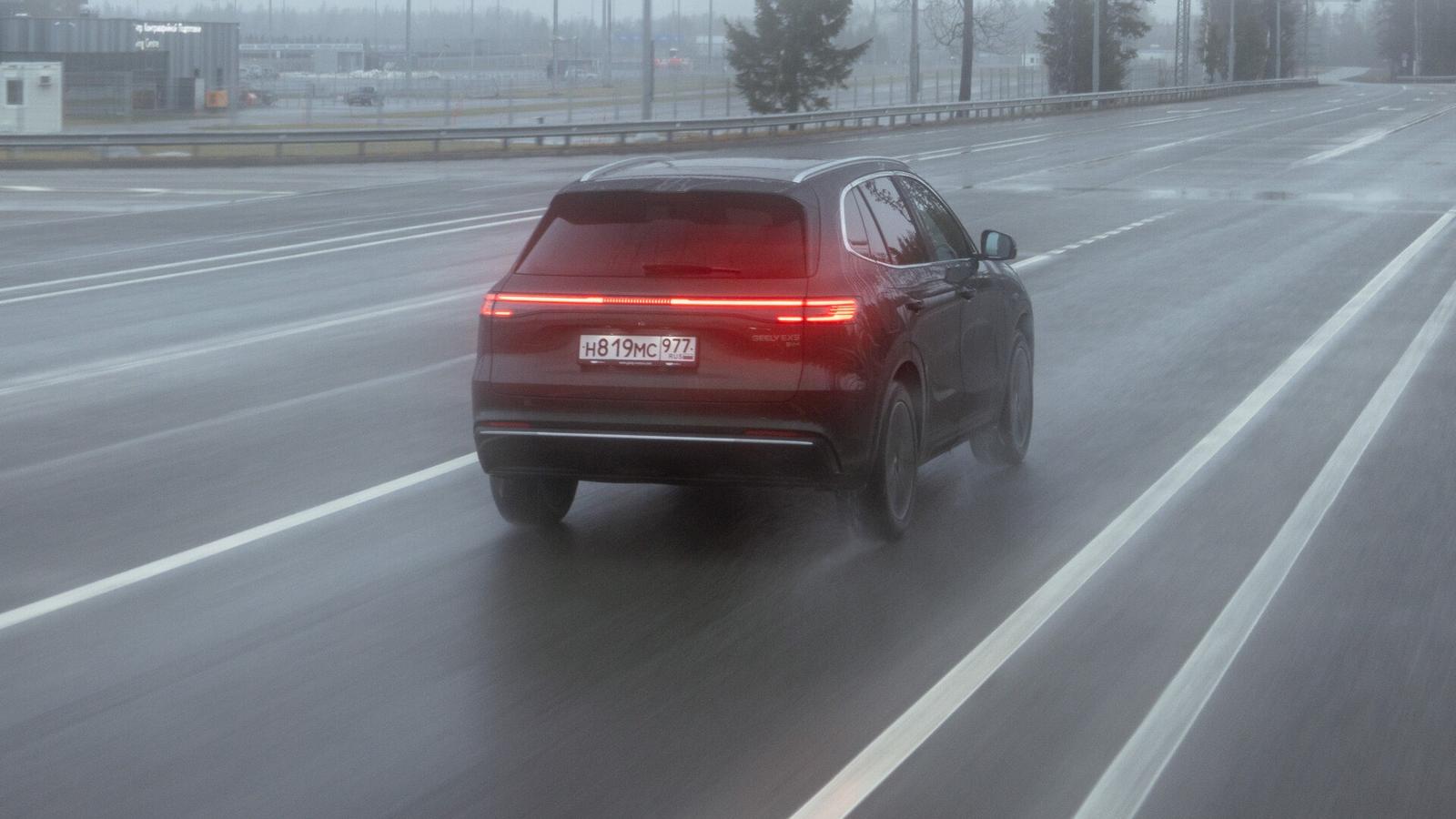
On the move, the EX5 EM-i demonstrates a character focused on calm operation. The electronic assistants work intrusively and do not remember settings, while the traffic sign recognition system often makes mistakes. On the other hand, the range is close to the claimed figure: in real conditions the crossover covered more than 760 km, showing moderate fuel consumption. In the city, the battery lasts for about 100 km, after which the engine becomes actively involved without worsening dynamics. The suspension is comfortable over small and medium bumps, sound insulation is decent, but at high speed there is a sense of disconnection between the body and the chassis, while the steering remains empty and uninformative.
The Geely EX5 EM-i is offered in two trim levels — Pro and Max, priced in the range from 3,669,990 to 3,969,990 rubles. Already in the base version, there is adaptive cruise control, heaters, cameras, and a full set of assistants, while the top version is supplemented with a panoramic roof, head-up display, surround-view system, power-operated features, and an audio system with 16 speakers.
Read more materials:
- AvtoVAZ officially explained what gasoline should be used in Lada
- Moskvich announced prices for the 2026 model year Moskvich 6 sedan
- Tank raised prices across its entire model range in Russia: Tank 500, 700, and 400 have become more expensive
Комментарии