Situations where a car purchased on credit has to be sold are quite common. However, such a transaction has its own peculiarities, since the vehicle remains pledged to the bank until the debt is fully repaid. This means that the owner cannot dispose of the car completely freely.
Is it possible to sell a car bought with an auto loan?
An auto loan differs from a regular consumer loan in that it is issued for a specific purpose — the purchase of a car. Usually, such loans are provided on more favorable terms, but they impose certain restrictions on the owner's actions. Until the debt is repaid, the car is considered collateral.

Nevertheless, the sale of such a car is possible. This follows from the provisions of Article 346 of the Civil Code of the Russian Federation. However, a prerequisite is the consent of the bank that issued the loan. If the owner sells the car without the consent of the credit institution, he takes on serious risks.
Firstly, such a transaction may be declared invalid, as it violates the terms of the loan agreement. Secondly, such actions may qualify as fraud. In particular, Article 159 of the Criminal Code provides for liability for such offenses. If we are talking about a particularly large amount — when the value of the property exceeds one million rubles — the punishment may include imprisonment for up to ten years and a fine of up to one million rubles.
Risks also arise for the buyer. If the transaction is declared invalid, the new owner may lose the car and not get the money back.
If the Vehicle Title (PTS) is with the owner
Usually, the original vehicle title is kept by the bank until the loan is fully repaid. However, some banks, in an effort to attract customers, allow borrowers to keep the PTS with them.

This does not mean that the car is free from encumbrances. Even if the document is in the hands of the owner, the car still remains collateral for the loan. Therefore, its sale without the consent of the bank remains illegal and may lead to the same consequences.
Legal ways to sell a car on loan
Before starting to look for a buyer, it is necessary to notify the bank and obtain its consent. After that, you can use one of several legal options for sale.
The easiest and most common way is to repay the loan early. After full settlement, the bank removes the encumbrance, issues a certificate of no debt, and returns the original PTS. After that, the car can be sold as a regular vehicle. The main difficulty here is to find the funds to fully repay the debt.
Another option is to transfer the loan obligations to the buyer. This also requires the consent of the bank. After receiving money from the buyer, the loan can be repaid in full, or its balance is re-registered to the new owner. The disadvantage of this method is that the seller often has to lower the price of the car, and the paperwork can take several weeks.
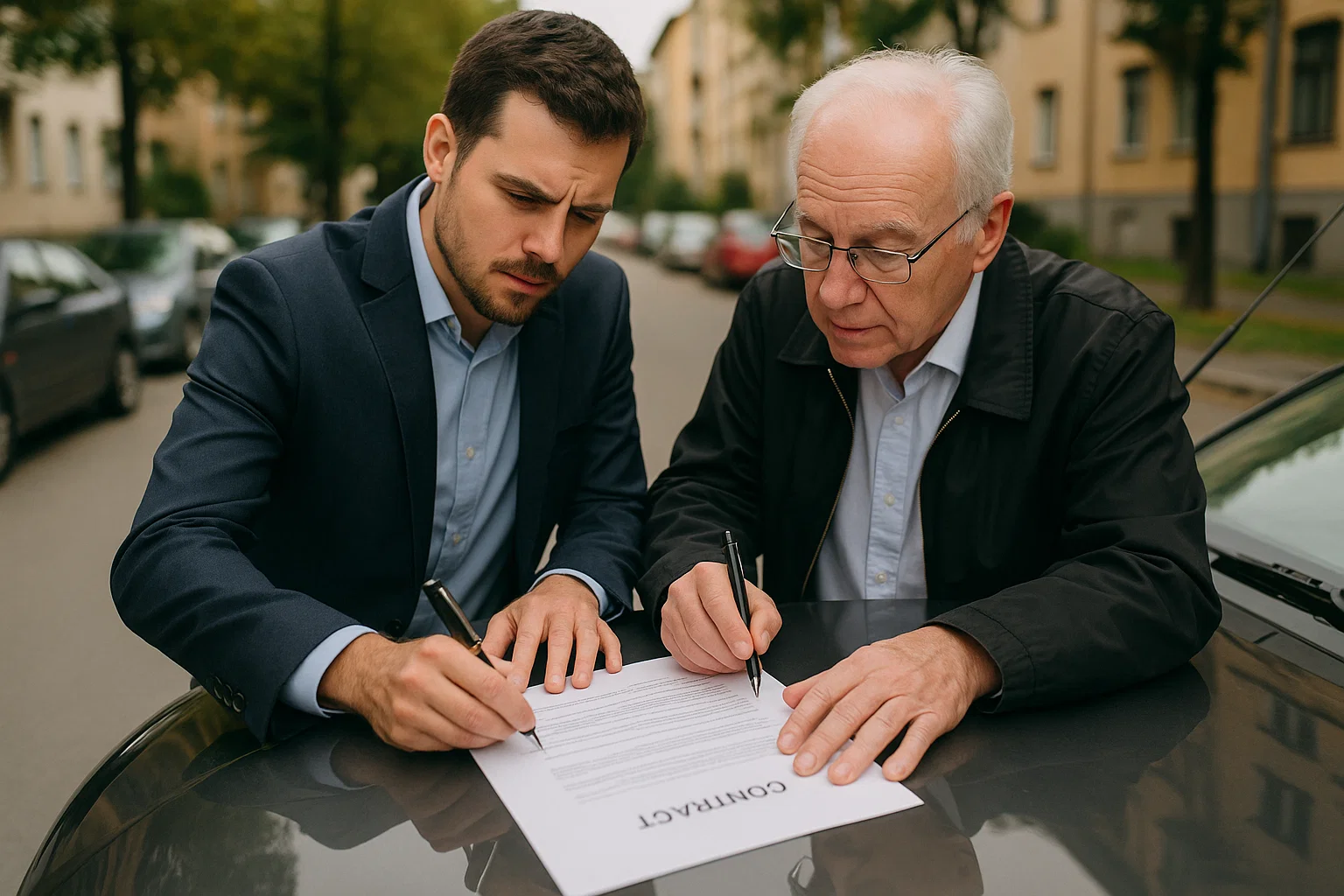
Another option involves replacing the collateral. For example, instead of a car, you can provide the bank with other property — most often real estate. Then the vehicle can be sold, and loan payments will continue according to the same schedule. However, if the terms are violated, the bank will have the right to sell the new collateral.
It is also possible to sell a car under the trade-in scheme. This option is used if the owner simultaneously buys a new car. The car dealership takes over the settlement with the bank on the loan for the old car, and the buyer continues to pay the loan for the new car. The disadvantage of the scheme is that dealers usually value the surrendered car below market value.
Another way is to sell through an auction with the consent of the bank. After the sale of the car, the new owner receives the PTS, and the debt of the previous owner is written off. However, the starting price at such auctions is usually noticeably lower than the market price.
Step-by-step sales instructions
The safest option is considered to be the option with early loan closure. In this case, the procedure is as follows.

First, you need to make sure that the loan agreement allows early repayment. Then you should clarify the exact amount of debt — this can be done in the personal account of the bank or in the branch of the credit institution.
After that, you need to obtain official permission from the bank to sell the car. Then the debt to the bank is repaid in full. Sometimes a consumer loan is issued for this, although its terms are usually less favorable than those of an auto loan.
After full settlement, the bank issues a certificate of removal of the encumbrance and returns the original PTS. From this moment, the car can be sold according to the standard procedure.
Frequently Asked Questions
Many owners are interested in whether it is possible to cancel an auto loan and return the car. The law allows this possibility. According to the Law "On Protection of Consumer Rights", a car is classified as technically complex goods. The buyer has the right to refuse the purchase and sale agreement and demand a refund if defects are detected within the first 15 days after purchase.
A return is also possible later — for example, if significant defects are found, repair deadlines are violated (which should not exceed 45 days), or if the car cannot be used for more than 30 days during each year of the warranty period due to repeated malfunctions.

When returning a car of inadequate quality purchased on credit, the buyer must be returned the amount already paid on the loan, as well as compensate for the fee for its provision.
Sometimes it is also asked whether it is possible to simply transfer the car to the bank in lieu of debt. In practice, this is impossible: the credit institution is interested in receiving funds, not a vehicle. Therefore, in the event of financial difficulties, the car is usually sold with the consent of the bank in order to repay the debt.
A car purchased with an auto loan can be sold, but this requires the consent of the bank. Even if the vehicle title is with the owner, the car still remains collateral for the loan. Selling without approval may be considered fraud and entail criminal liability.
There are several legal ways to sell such a car: early repayment of the loan, re-registration of the debt to the buyer, replacement of the collateral, a trade-in scheme, or sale through an auction. The safest option is to fully close the loan before the sale, after which the bank removes the encumbrance and returns the vehicle title.
Read also:
- How Chinese cars are seizing the domestic market
- The history of TagAZ: from Hyundai to bankruptcy
- Modern disposable engines: myth or reality?
Комментарии