Among car owners, there is still a persistent belief: painting a car is permissible only in summer, when it is warm and dry. It is believed that in the cold season it is impossible to achieve a decent result — the coating allegedly lays down unevenly, dries poorly and soon begins to peel off. However, does this correspond to reality today?
The idea of "summer" painting was formed back in the 1990s. Then, masters mainly used alkyd one-component enamels, which really required high temperatures for normal drying. The process looked accordingly: the car was placed in a chamber with heating up to 60–70 °C for several hours or left in the open sun for a couple of days. In such conditions, the cold season objectively complicated the task, and sometimes made it almost impossible. But since then, technologies have changed significantly.
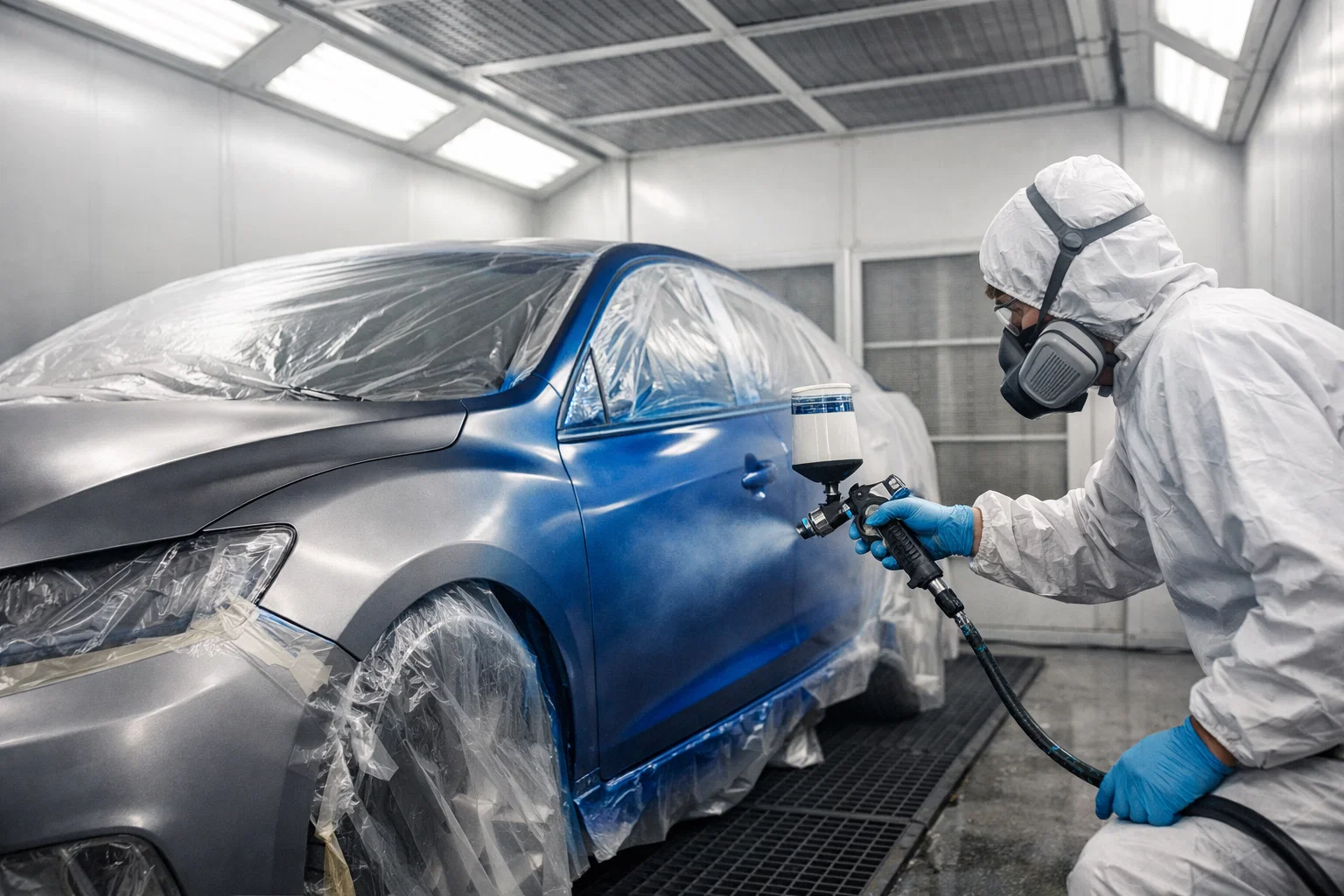
Today, two-component paints and varnishes are used in a professional environment. They consist of a base composition and a hardener that triggers a chemical polymerization reaction. Thanks to this approach, the requirements for external conditions have become less stringent.
Modern systems have their own characteristics. The application temperature is usually in the range of 20–25 °C. Under such conditions, the material is able to dry in about 18 hours. If a heated chamber is used, the varnish on the metallized coating reaches the desired state in just 40 minutes at a temperature of about 60 °C. Even in the absence of specialized equipment, but in a warm room with a temperature of about 24–25 °C, the varnish is able to dry completely overnight. In this regard, the season itself is no longer a critical limitation. Painting should be carried out when the need arises, since modern materials do not depend on the time of year as rigidly as before.
Nevertheless, certain risks remain in the winter period, but they are not related to the calendar, but to the violation of technological requirements. Most often, problems arise in unprepared premises. When the temperature drops to –20…–25 °C outside, and only +10…+15 °C is maintained in the garage, the materials do not receive the conditions necessary for correct polymerization. This applies to all stages — from putty to the finishing layer of paint.
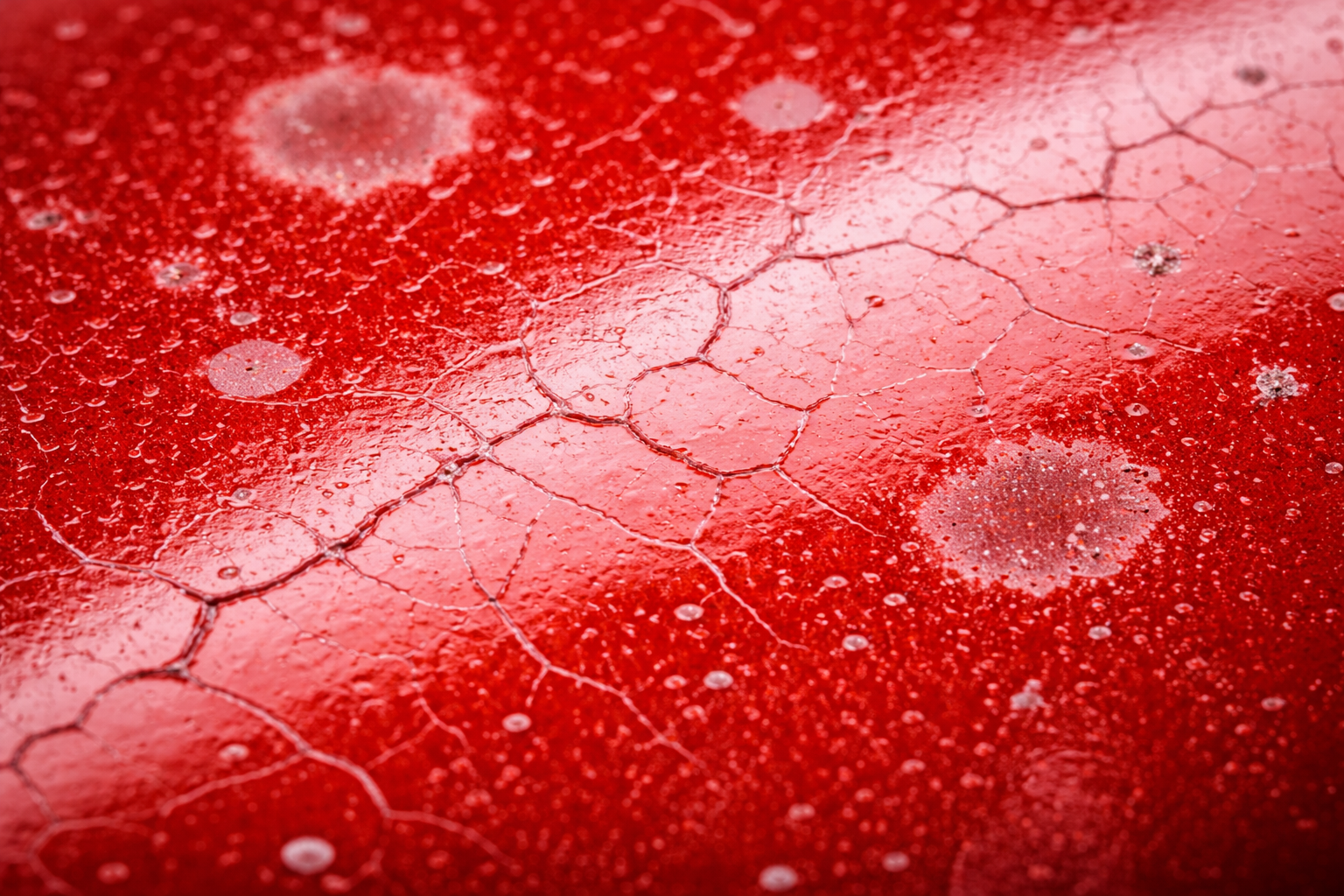
Such deviations lead to unpleasant consequences: the coating may not dry completely, shrinkage, unevenness of the layer, as well as microcracks and hidden defects appear, which appear after some time. Although such violations are possible in summer, they are more common in winter precisely because of non-compliance with the temperature regime.
Another factor characteristic of the cold season deserves special attention — the impact of road reagents. Even if the painting is done perfectly and the car was in a warm box, the paintwork is not finally stabilized immediately, but within a few days. During this period, it remains vulnerable.
If salt and chemical reagents used on the roads get on fresh varnish, an undesirable reaction may occur. In this case, the coating does not peel off or crack, but characteristic whitish spots appear on its surface. They can be eliminated by polishing, but it is much more reasonable to avoid such exposure initially.
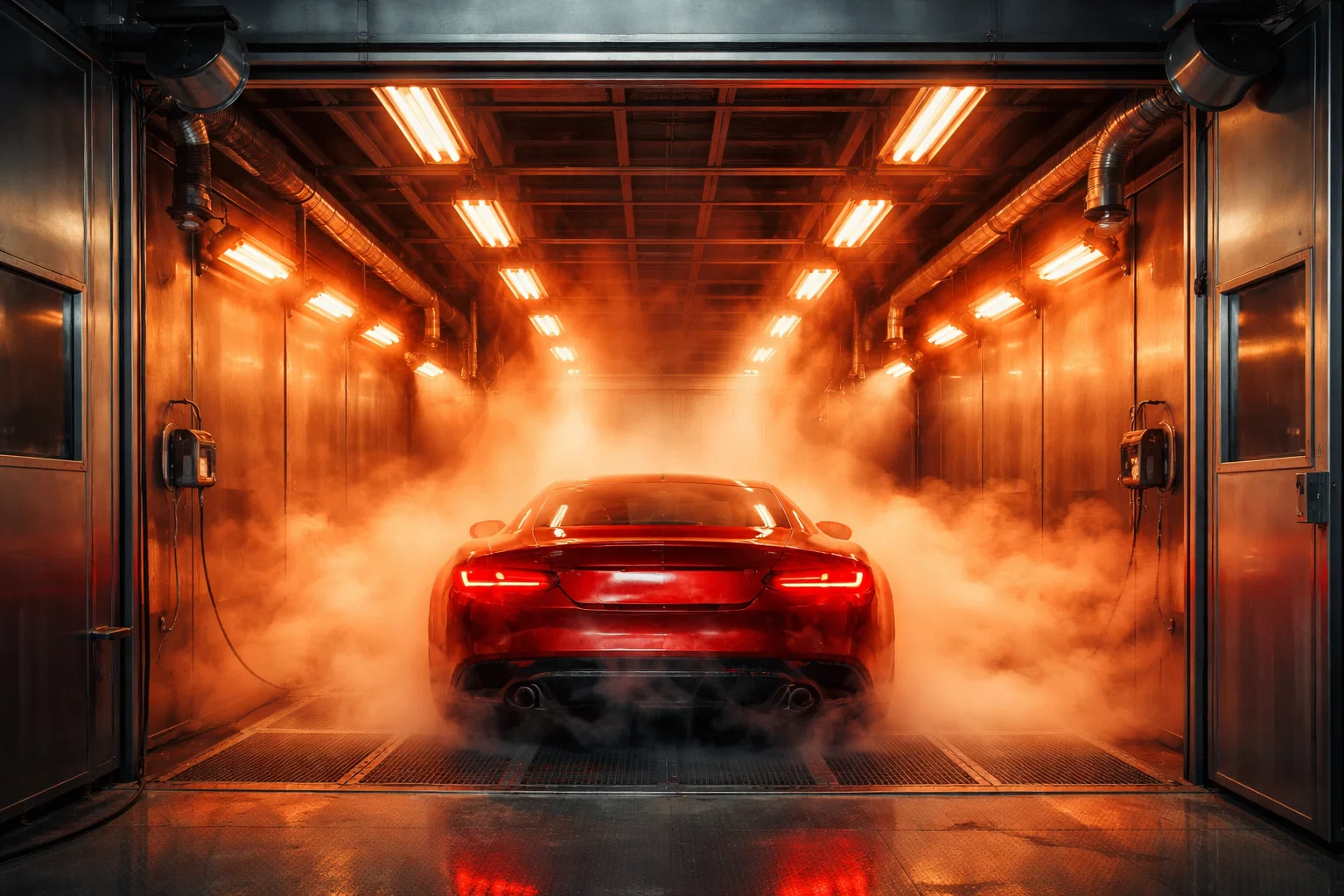
To minimize risks when painting in the cold season, you need to observe a number of conditions. First of all, you should choose a trusted service where the necessary parameters are provided: warmth, cleanliness and the availability of equipment for proper drying. It is important to clarify the warranty obligations — professional service stations provide them regardless of the season.
After completion of the work, it is desirable to observe a gentle operating mode. Ideally, the car should be left in a warm room for several days — usually 3–5 days is enough. If operation is inevitable, it is recommended to avoid contact with an aggressive environment: do not drive through puddles with reagents and use mild detergents when washing.
Modern technologies allow painting a car all year round without loss of quality. The key is not the weather conditions, but compliance with all stages of the technological process and the qualifications of the performers. In a well-equipped service, the result will be equally reliable both in summer and in winter. At the same time, an attempt to save money and carry out work in unsuitable conditions, for example, in a cold garage, almost guarantees problems — regardless of the time of year.
Read more materials:
- Why does the engine need a "burn-in" on the highway
- Why is there no bass in the car and how to fix it
- Comfortable interior: an underestimated factor when choosing a car
Комментарии