A car breakdown almost never happens at a convenient time. The car can let you down on an intercity highway, in heavy traffic during rush hour, or late in the evening in an unfamiliar area. Drivers in such situations usually get lost: traction suddenly disappears, a warning light comes on, or an unusual sound appears. However, it is the first actions after a malfunction that determine whether everything will be limited to a common nuisance or the situation will lead to serious consequences.
The main thing in such moments is to act calmly and consistently. From the first seconds after the problem appears until help is called, the sequence of actions matters.
First actions after a breakdown
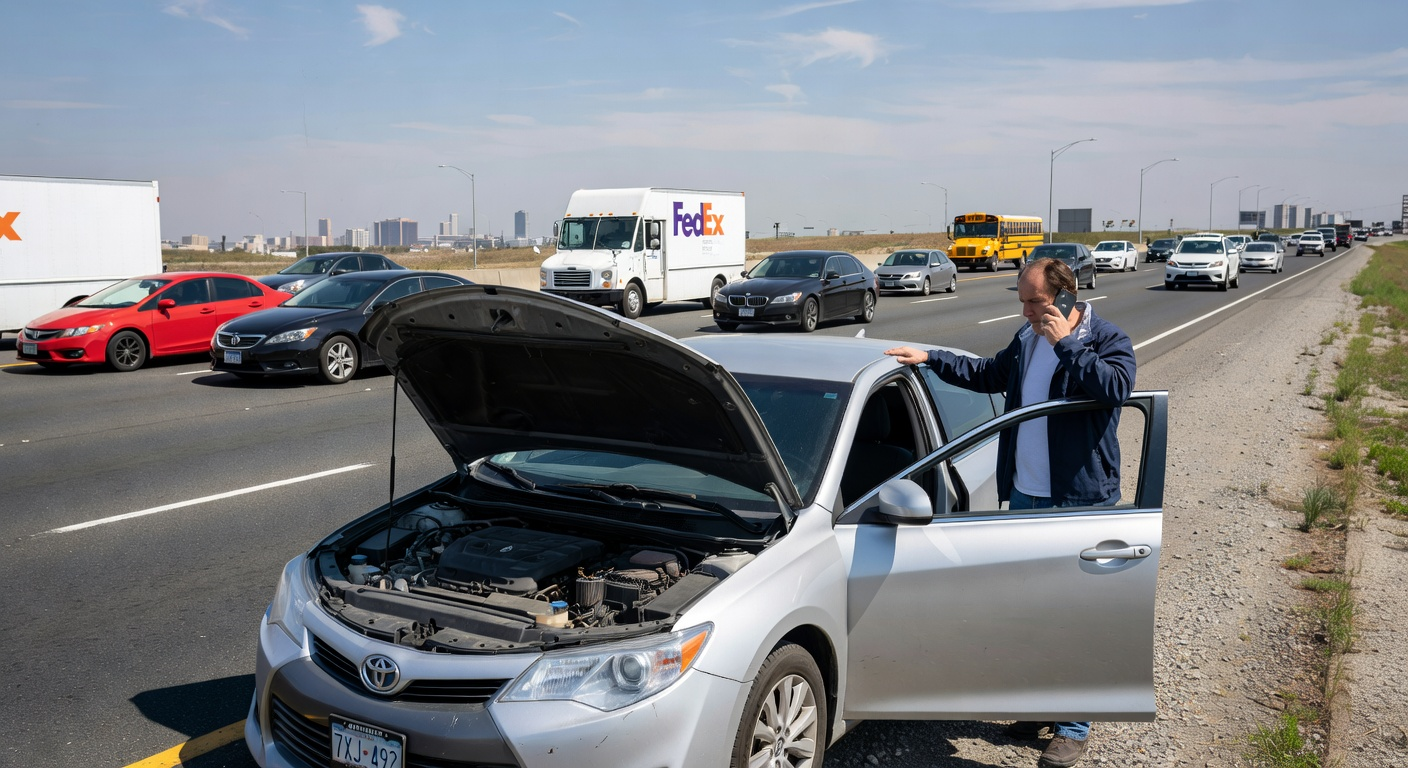
One of the most dangerous mistakes is to brake sharply immediately after it becomes clear that something is wrong with the car. It is especially risky to do this on a busy highway. In heavy traffic, sudden braking easily provokes a chain reaction and rear-end collisions.
As soon as signs of a malfunction appear, you must immediately turn on the hazard warning lights. This should be done even before changing lanes. For other drivers, this is the first and most important signal of a problem ahead.
After that, the speed should be reduced smoothly, while simultaneously moving to the right. The task is to get the car out of traffic as quickly as possible and find a place where it will not pose a threat. On the highway, this is the shoulder or the edge of the lane, in the city - a parking pocket, an entrance, or any safe area.
Even if a tire is flat and the car is actually moving on the rim, it is sometimes safer to carefully drive to a suitable place than to stop right in the middle of a high-speed lane.
After stopping: what to do next
When the car is already stopped, it is important to follow the sequence of actions. Many mistakes are made precisely after stopping.
How to properly exit the car
Do not immediately open the driver's door from the traffic side. First, you need to make sure it is safe. On the highway, it is better to exit through the passenger side or wait until there are no cars nearby.
Every year there are cases when a driver leaves a stalled car and gets hit by passing traffic. This risk is often underestimated, although it is one of the most serious.
Setting up an emergency sign
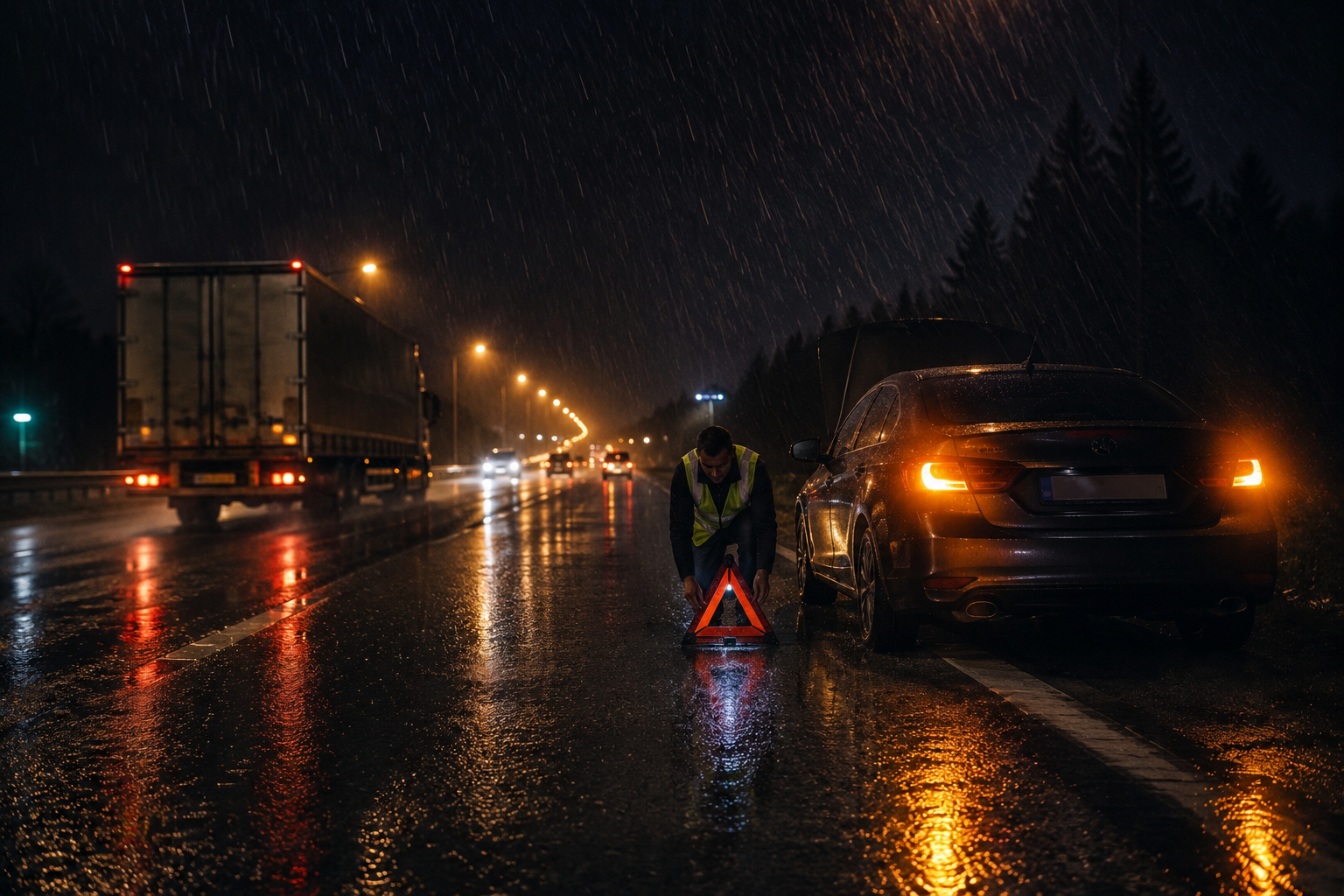
Many drivers place the sign too close to the car, although it is needed not "for show", but for real protection.
Minimum distance according to the rules:
- at least 15 meters in a populated area
- at least 30 meters outside the city
But in reality, the distance should depend on visibility. If the car stopped behind a turn, on an uphill slope, or in another poorly visible place, it is better to place the sign further away. It is much safer to place it 50 meters away than to formally comply with the norm but remain unnoticed by approaching cars.
The sign is always placed on the side of the approaching traffic. If the car partially extends into the oncoming lane on a road without a divider, two signs will be required - in front and behind the car.
Light signaling
Hazard warning lights must be on all the time while the car is on the road or on the shoulder. Many turn them off, fearing to drain the battery, but this is the wrong priority.
A dead battery is a solvable problem. A collision with a stopped car is not.
If the malfunction occurred at night or in bad weather - in fog, rain, or snowfall - you should additionally turn on the parking lights or low beams. The sooner the car is noticed by other drivers, the lower the risk of an accident.
How to understand what happened
You should only deal with the cause of the malfunction after the car has been safely stopped and marked.
Wheel problems
Usually, this malfunction is the easiest to notice. The car starts to pull to the side, a characteristic sound appears, sometimes a pop is heard.
If the car has a spare wheel, a jack, and the driver knows how to use them, the wheel can be replaced independently. If there is no experience or no spare tire, you should not continue driving - it is safer to call for roadside assistance.
Engine stalled and won't start
First, you need to check the most obvious things:
- fuel level
- battery condition
- starter operation
Sometimes the problem is trivial - the fuel has indeed run out. If the starter cranks slowly or doesn't work at all, most likely the problem is related to the battery. If the starter cranks normally but the engine doesn't start, there are too many possible malfunctions, and it's impossible to determine them without diagnostics.
Engine overheating
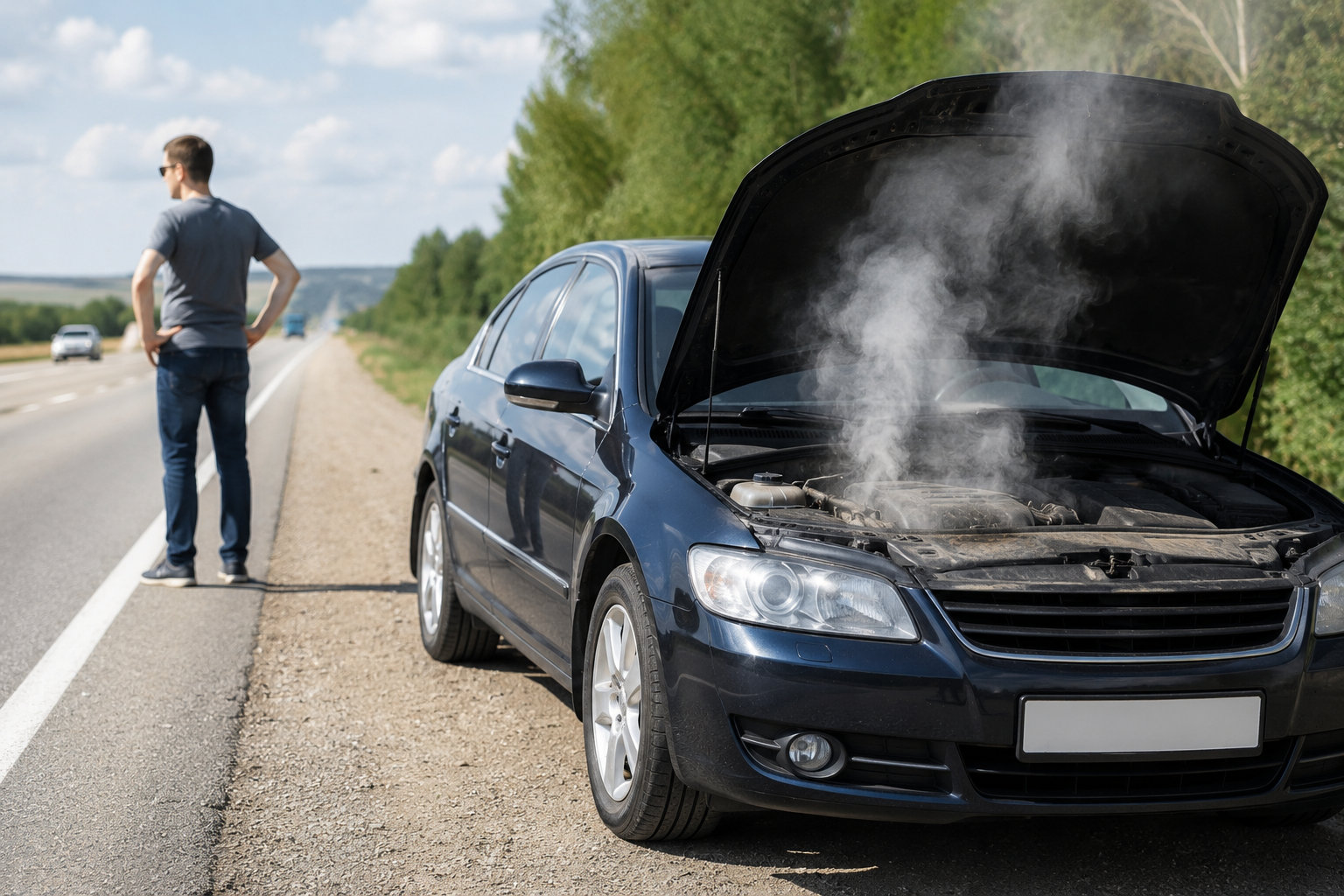
If the temperature gauge needle has gone into the red zone or the corresponding indicator has lit up, you must stop driving immediately.
The engine should be turned off and the hood opened for cooling. Do not open the radiator cap - hot steam can cause serious burns.
Also, do not pour cold water into an overheated engine. After stopping, you need to wait about 20-30 minutes.
Smell of burning or smoke
The smell of burning rubber, plastic, or the appearance of smoke is a reason to immediately stop and leave the car. There is no need to deal with the cause right on the spot in such a situation.
Such signs may indicate wiring fire or problems with the braking system.
Who to call in case of a breakdown
In such situations, it is important to understand the sequence of calls.
When 112 is needed
If the car stopped in a dangerous place, there is a risk of fire, injured people, or a threat to people, the first call should be 112.
Assistance from an insurance company
With comprehensive insurance (CASCO) or a roadside assistance program, many services are already included in the insurance:
- car evacuation
- fuel delivery
- technical specialist visit
The number is usually indicated in the insurance policy or the insurance company's application. It is better to check this information in advance, not after a breakdown.
Calling a tow truck
If insurance assistance is not provided, you will have to find a tow truck yourself. When calling, it is important to immediately report:
- exact location
- landmarks or highway kilometer
- car make
- nature of the malfunction
When to call the traffic police (GAI)
If a broken-down car poses a threat to traffic, GAI officers can help organize a safe detour or speed up evacuation.
Personal safety is more important than the car
While waiting for help, do not sit inside the car if it is near busy traffic. It is especially dangerous to stay in the car on the highway.
It is safest to wait behind the guardrail. If there is none, as far as possible from the roadway. Outside the city, if possible, it is better to move completely off the road.
It is also worth remembering about the reflective vest. It is better to store it not in the trunk under the spare tire, but in the cabin, so that it can be quickly put on when going out on the road at night or in bad weather. In addition, outside populated areas in the dark, the driver is obliged to use such a vest when going out onto the roadway.
Do not agree to intrusive help from strangers who stop themselves and offer a ride or to "quickly check everything." It is much safer to wait for professional help. This applies especially to drivers traveling alone.
What must be in the car
Preparation for a breakdown begins long before the breakdown itself.
The minimum set of items in the car is not a formality:
- first aid kit
- emergency sign
- working fire extinguisher
Moreover, all this must be in working order and stored in such a way that the items can be quickly accessed. An expired fire extinguisher or a broken emergency stop sign are useless.
Additionally, it is desirable to have:
- tow rope
- jumper cables
- pump or tire inflator
- flashlight with working batteries
- water supply
- reflective vest
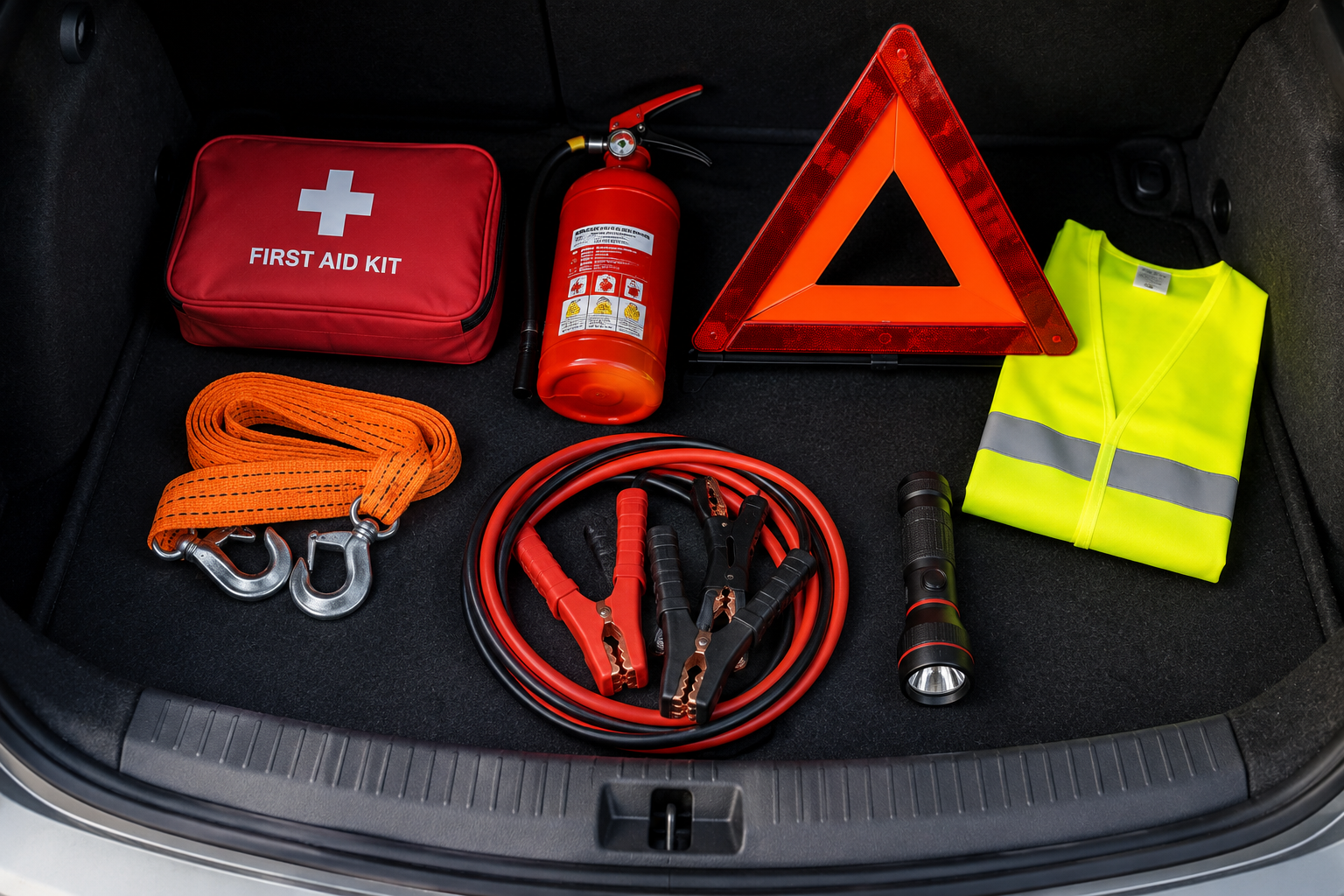
A charged phone is of particular importance. A car charger or power bank is not excessive caution, but basic road preparation. A dead smartphone can turn a common malfunction into a serious problem.
When help has arrived
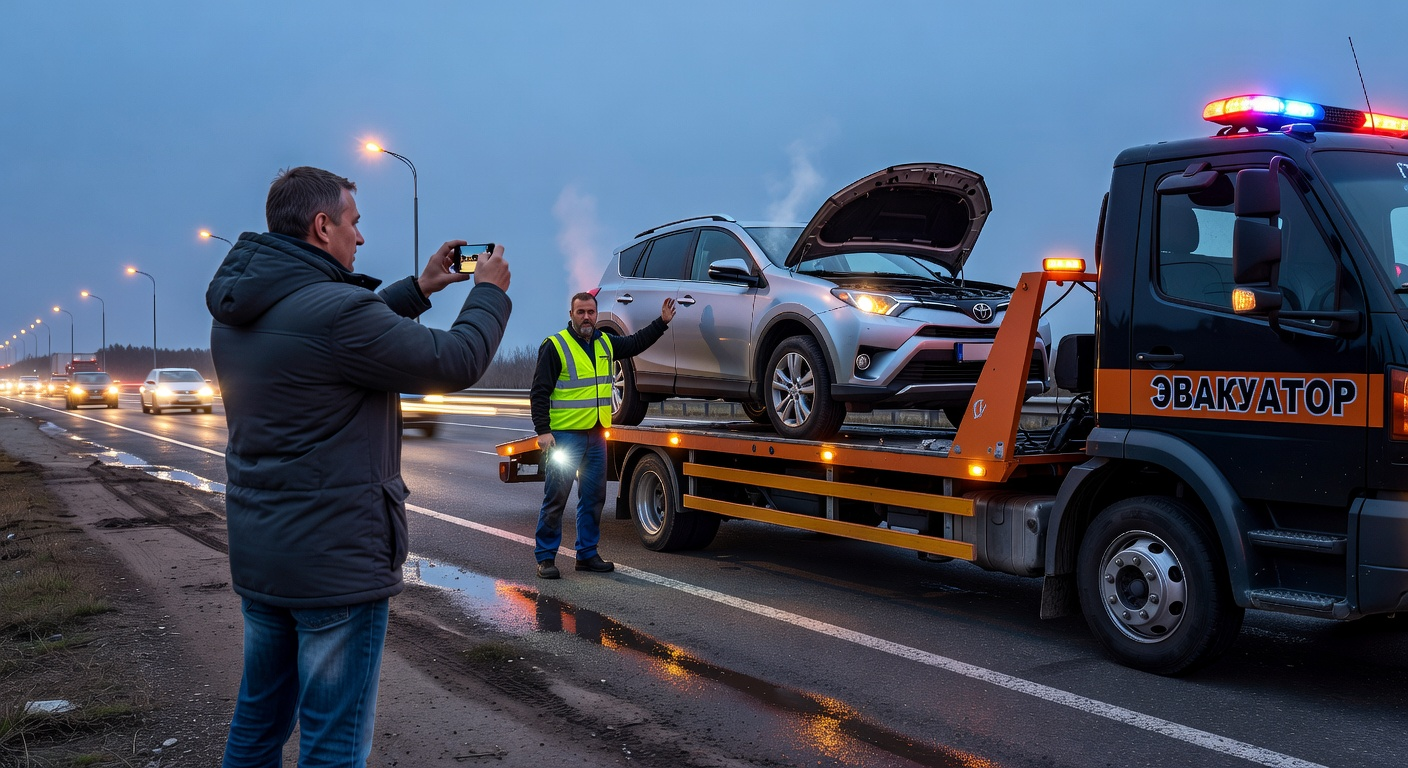
Before loading the car onto a tow truck, it is advisable to photograph its condition: body, wheels, existing damage. This is a common precautionary measure in case of disputes after the car is delivered to the service station.
It is also worth clarifying:
- where exactly the car is being sent
- who is receiving the car
- tow truck number
- processing time
It is better to get at least a receipt or an application for acceptance of the car.
If the breakdown is serious, do not agree to repairs right on the roadside by a random mechanic. The only exceptions may be simple situations such as changing a wheel or delivering fuel. In all other cases, it is more reasonable to deliver the car to a trusted service station.
A breakdown on the road is always stressful, but such a situation remains manageable. Most risks disappear if you act correctly in the first minutes and do not panic. The main thing is to first ensure the safety of people, and only then deal with the car.
Read more materials:
- From Le Mans to Dakar: Top 4 Races Where Pilots Push the Limits of Possibility
- Queue as a Privilege: Ferrari's Strategy
- How the USSR Created the "Flying Tank" T-80 and Why the Turbine Never Became the Standard
Comments