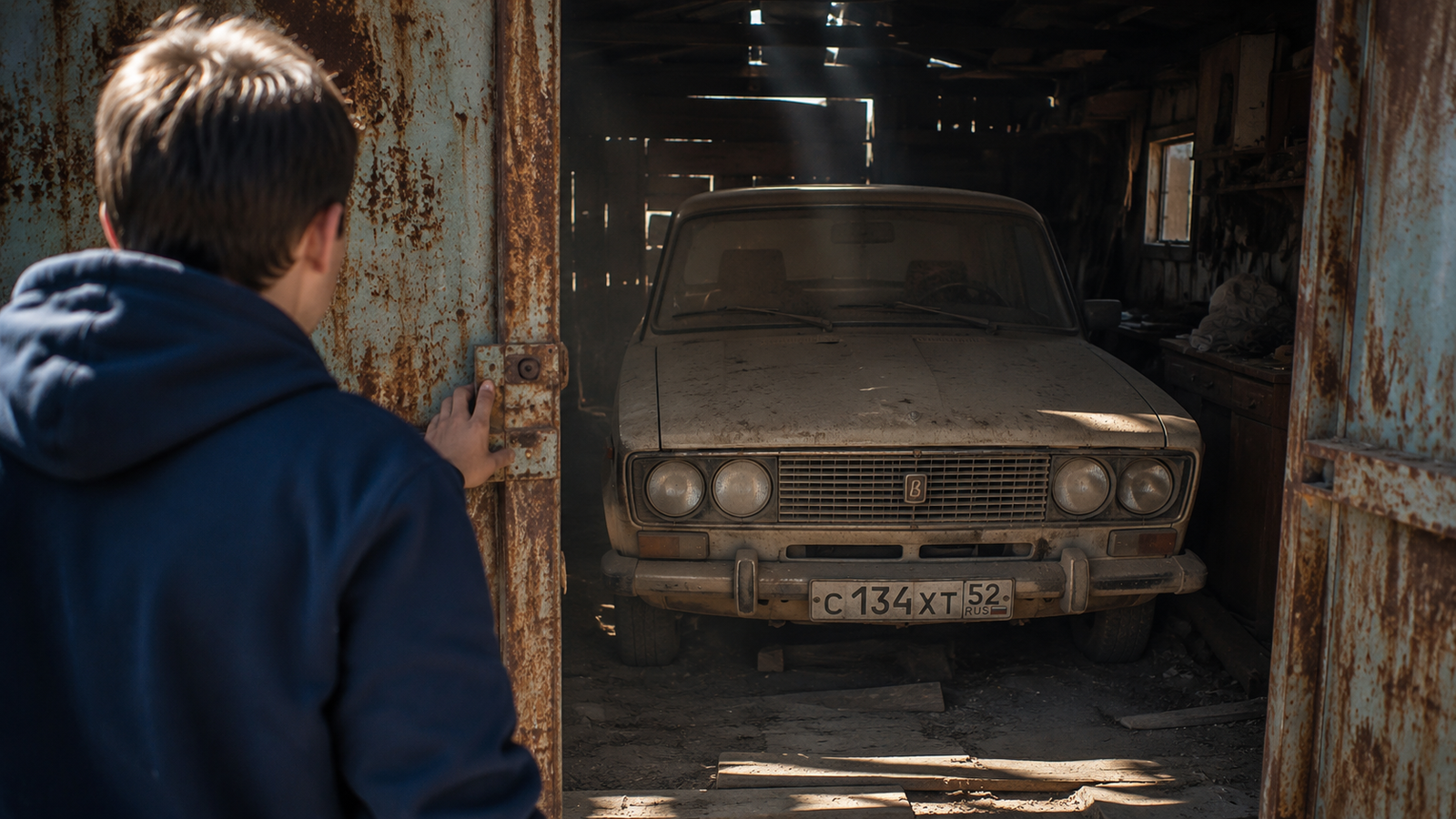
The old garage door creaks open, and inside is a real find. Under a thick layer of dust, a grandfather's "six" with minimal mileage is hidden. The familiar smell of old leatherette still lingers in the cabin, instantly taking you back to childhood. At first glance, it seems that bringing the car back to life is as easy as pie: install a battery, pour in gasoline, turn the ignition key - and go about your business.
In practice, such stories rarely end so easily. A car cannot be stored indefinitely without consequences. While the car stands motionless for years, its components continue to age. The wear and tear simply happens differently: tires do not wear out on the asphalt, but they lose elasticity, technical fluids decompose, contacts become oxidized, and fuel gradually turns into a substance unsuitable for operation. Moreover, a hasty start-up can damage units that could still be kept in good condition.
When oil stops doing its job
New engine oil looks like a clear amber liquid and does its job perfectly. However, after ten years of inactivity, its properties can change beyond recognition.
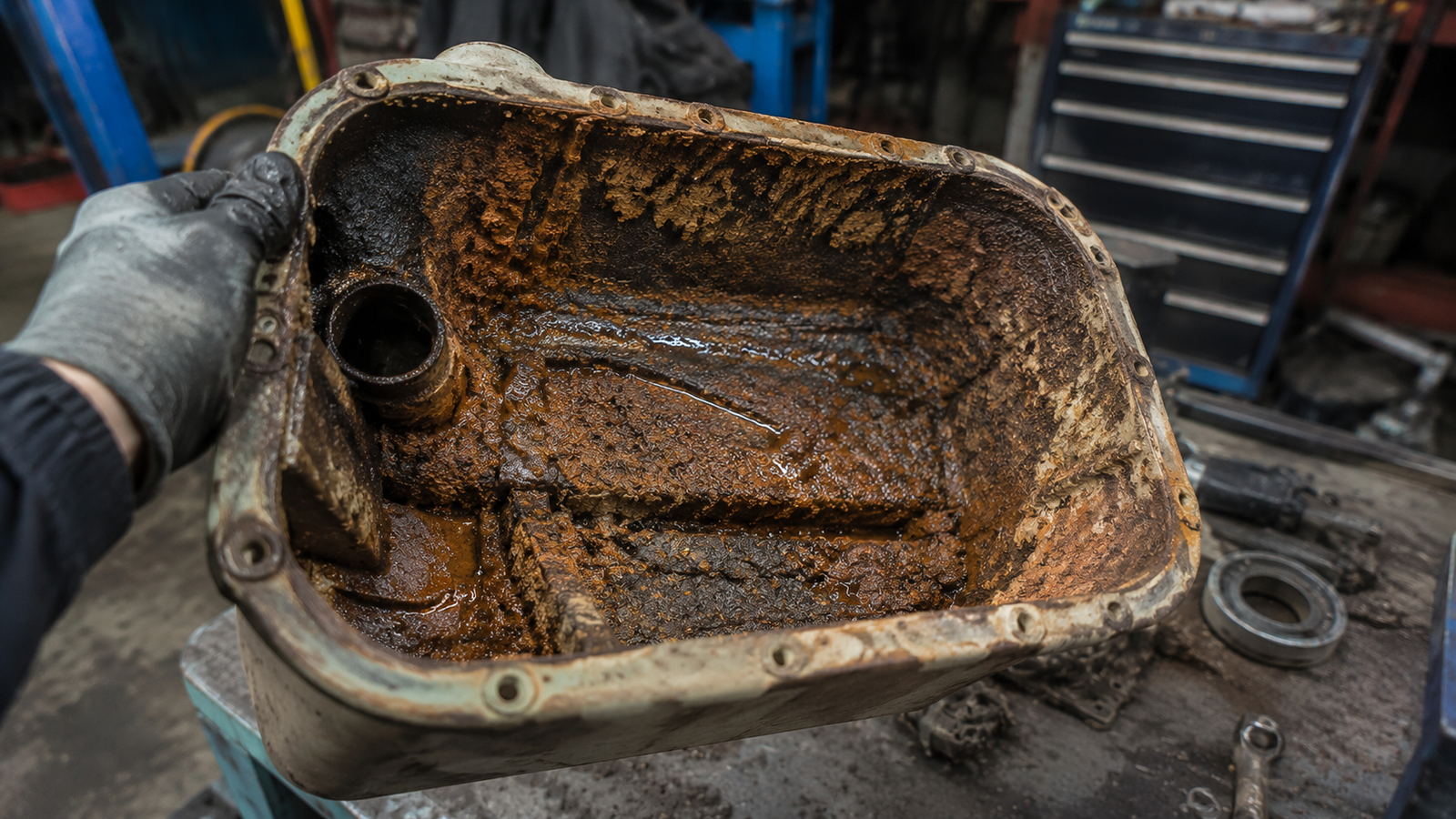
Even in a stationary car, the crankcase cannot be called completely sealed. Moisture gradually penetrates into the engine through the ventilation system. During operation, it evaporates due to the high temperature of the engine, but during long-term storage, it remains inside. Over time, the oxidation process begins.
Gradually, several unpleasant changes occur at once:
- additives are destroyed;
- water accumulates;
- acids are formed;
- sediment appears.
If the oil was already used before storage, and the garage itself was characterized by high humidity, a thick dark mass, little resembling a lubricant, may be found inside the engine. But even if the appearance still seems acceptable, the protective properties of such oil are already significantly reduced.
This is where the first serious danger lies. With a sudden start-up, the pump does not have time to immediately fill the oil channels, and the engine runs for some time practically without full lubrication. The so-called "dry start" occurs, when the rubbing parts contact almost directly. Sometimes a few seconds of such operation are enough to cause damage to the engine that was not present during all the years of storage.
But engine problems are only part of the overall picture. No less unpleasant processes occur in the fuel system.
What gasoline turns into after years
Even without the addition of ethanol, gasoline cannot infinitely retain its original properties. Over many years of storage, the lightest fractions, which are especially important for cold engine start-up, gradually evaporate from it.
As a result, a heavy resinous mixture with a characteristic smell of old paint remains in the tank. It is highly undesirable to use such fuel. It can cause a number of problems:
- clogging of the fuel filter;
- contamination of the fuel pump screen;
- clogging of the carburetor jets.
For VAZ family cars with a classic layout, the carburetor becomes the most vulnerable element.
An additional danger is the corrosion of the inner surface of the tank. Over years of inactivity, rust can form on its walls, and when fresh gasoline is poured in, accumulated particles rise from the bottom and travel further along the fuel line. That is why experienced mechanics prefer not to dilute the old contents of the tank, but to dismantle and thoroughly clean it.
What happens to rubber, brakes, and the battery
It is curious that metal parts often tolerate long-term storage better than many other materials. The main problems are usually associated with what is considered consumables.
First of all, tires suffer. Even if the tread pattern looks almost new, ten-year-old rubber raises serious questions. Over time, it becomes stiff, covered with microcracks, and noticeably loses its grip properties. In addition, many years of pressure on the same point of the surface often lead to wheel deformation, which then manifests itself as vibrations during movement.
No less difficult is the situation with the braking system. Brake fluid actively absorbs moisture from the air, and accumulated water contributes to the corrosion of internal elements.
As a result, after many years of inactivity, a variety of malfunctions can occur:
- brake cylinder leakage;
- seizing of individual mechanisms;
- brake pedal sinking;
- destruction of the inner surfaces of tubes and calipers.
Therefore, the presence of resistance on the pedal does not yet mean that the brakes are ready for operation.
By this time, the battery has most often completely failed. Sulfate crystals form on the plates, which causes the battery to lose its ability to hold a charge normally.
Another problem is found in cars with a manual transmission. During storage, the clutch disc can literally stick to the flywheel. As a result, the driver presses the pedal, but the gear engages with difficulty or does not engage at all.
An unexpected enemy under the hood
Among the unusual consequences of long-term car storage, there are also quite curious stories.
In the USA, some car manufacturers decided to use more environmentally friendly wiring insulation based on soy components instead of traditional petroleum-based materials. It unexpectedly turned out that such wiring began to attract rodents. Car owners massively faced damaged insulation, which mice literally gnawed through.
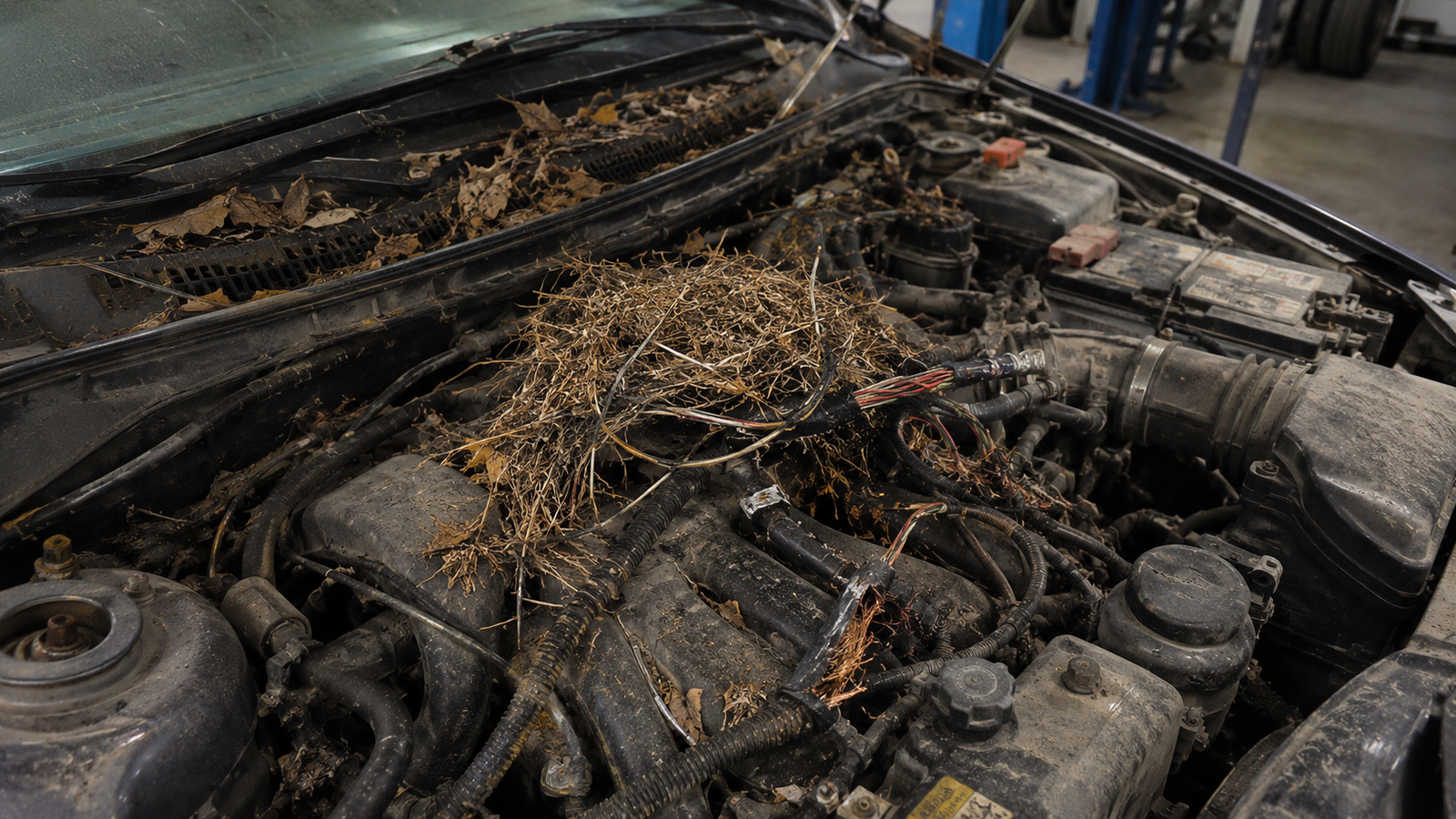
However, the absence of soy materials does not guarantee safety at all. For mice, any car that has been standing for a long time is a convenient shelter.
In ten years, the following can appear under the hood:
- nests in the air filter housing;
- damaged wires and connectors;
- food debris and garbage brought by rodents;
- a persistent smell of ammonia in the cabin.
The combination of dry leaves and damaged electrical wiring is especially unpleasant. In such a case, the first serious load on the system can end not with car repair, but with a full-fledged fire.
How much does it cost to bring a car back to life?
Romantic notions that it is enough to buy a battery and add gasoline usually crash against reality.
If the car is well preserved, the minimum set of works for an old "classic" can indeed be limited to several tens of thousands of rubles. However, full restoration requires significantly greater investments.
Most often, a whole complex of operations has to be performed:
- replacement of all technical fluids;
- maintenance or repair of the braking system;
- installation of new tires;
- cleaning of the fuel tank;
- carburetor flushing;
- diagnostics and repair of the chassis;
- elimination of the consequences of rodent activity.
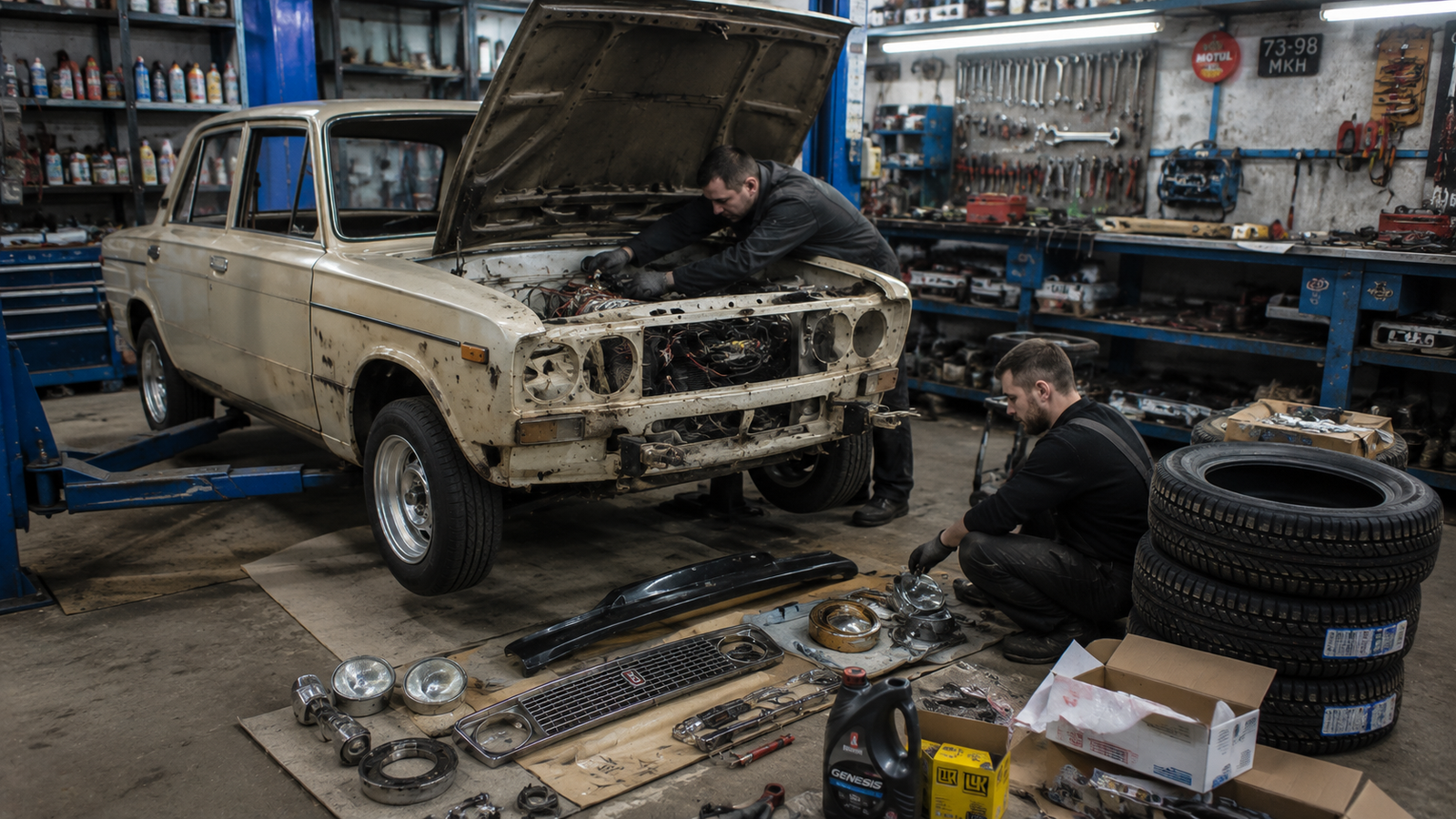
As a result, costs are often already in the hundreds of thousands of rubles. If the years of storage were accompanied by high humidity, more serious consequences are possible. A rotten bottom or engine damage due to once frozen coolant can turn restoration into a full-fledged restoration project, the cost of which approaches the price of a working car.
The most dangerous situation
It may seem that the main problem is the engine that refused to start after a long period of inactivity. In fact, the most insidious scenario looks different.
Much more dangerous is a car that unexpectedly started without much difficulty. A successful start creates a false sense of complete serviceability. In the wave of joy, it is easy to forget that during the years of storage, the brakes could have corroded, the tires could have lost their properties, and the wiring could have suffered from mice.
Therefore, a car that has stood motionless for a decade should be perceived not as a ready-made vehicle, but as a complex technical object requiring thorough inspection. Otherwise, the first trip can be much more risky than all the years the car spent in the garage.
Read more articles:
- Trade-in or independent sale: what is more profitable
- Why do you need a towbar if there is no trailer
- MAZ-200: the truck that built the post-war USSR
Comments