In promotional materials, electric vehicles usually appear to be the almost perfect transport of the future. They are credited with zero emissions, quiet operation, impressive dynamics, and minimal maintenance costs. However, as electric transport becomes more widespread, owners have begun to encounter peculiarities rarely mentioned in marketing brochures.
One such surprise has been accelerated tire wear. Many EV owners have found that a set of tires needs to be replaced significantly earlier than on comparable gasoline-powered cars. This is not just about additional costs, but also a more complex problem affecting the environment and the very concept of electric transport.
Weight and Dynamics: Physics vs. Advertising
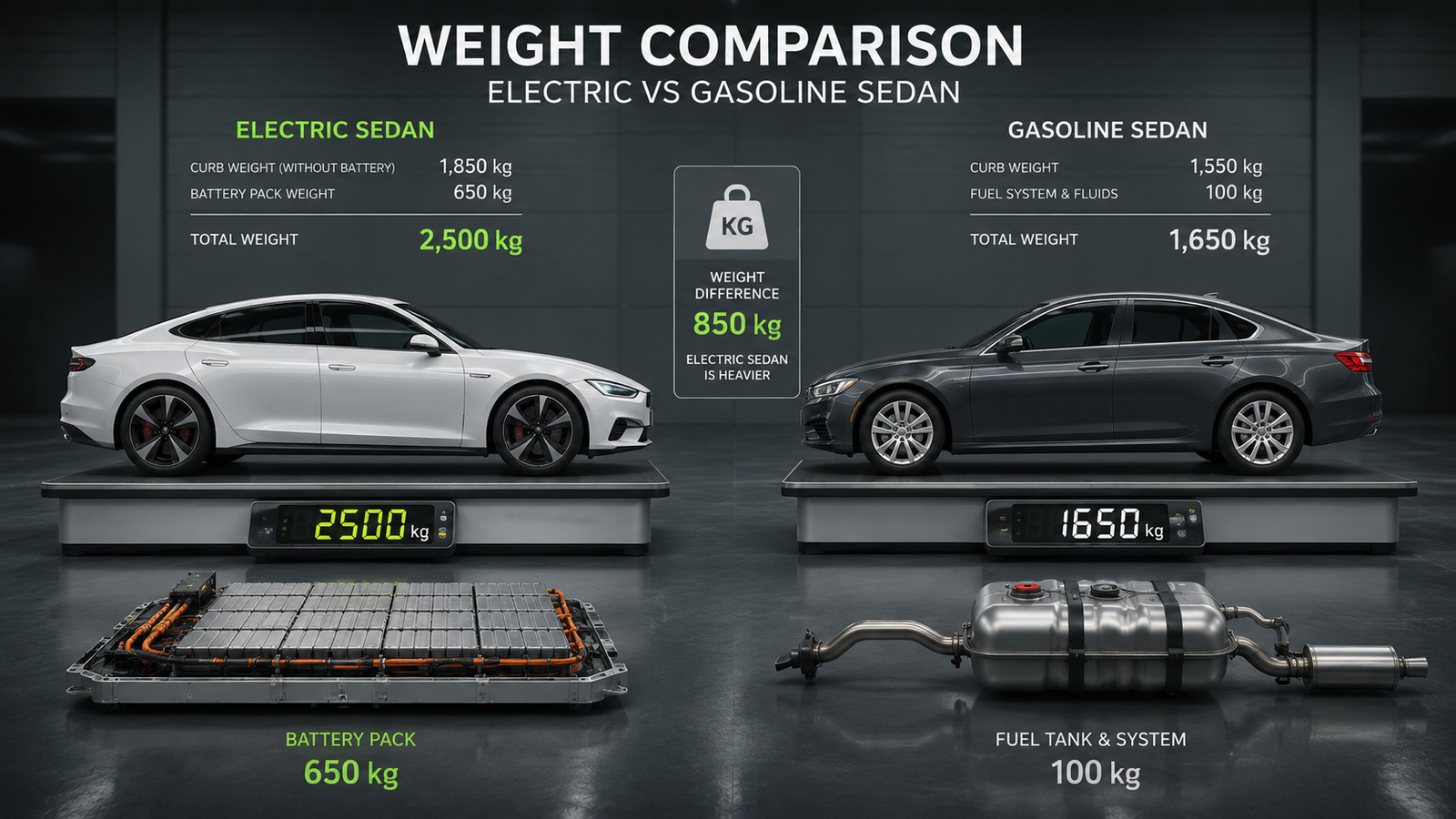
The main difference between an electric car and a traditional passenger car is not only the type of powertrain. One of the most important features is mass.
High-capacity traction batteries significantly increase the weight of the car. Depending on the model, the battery pack can add several hundred kilograms, often 500–700 kilograms. As a result, a sedan approaches the weight of a crossover, and the crossover itself can weigh almost as much as a small commercial vehicle.
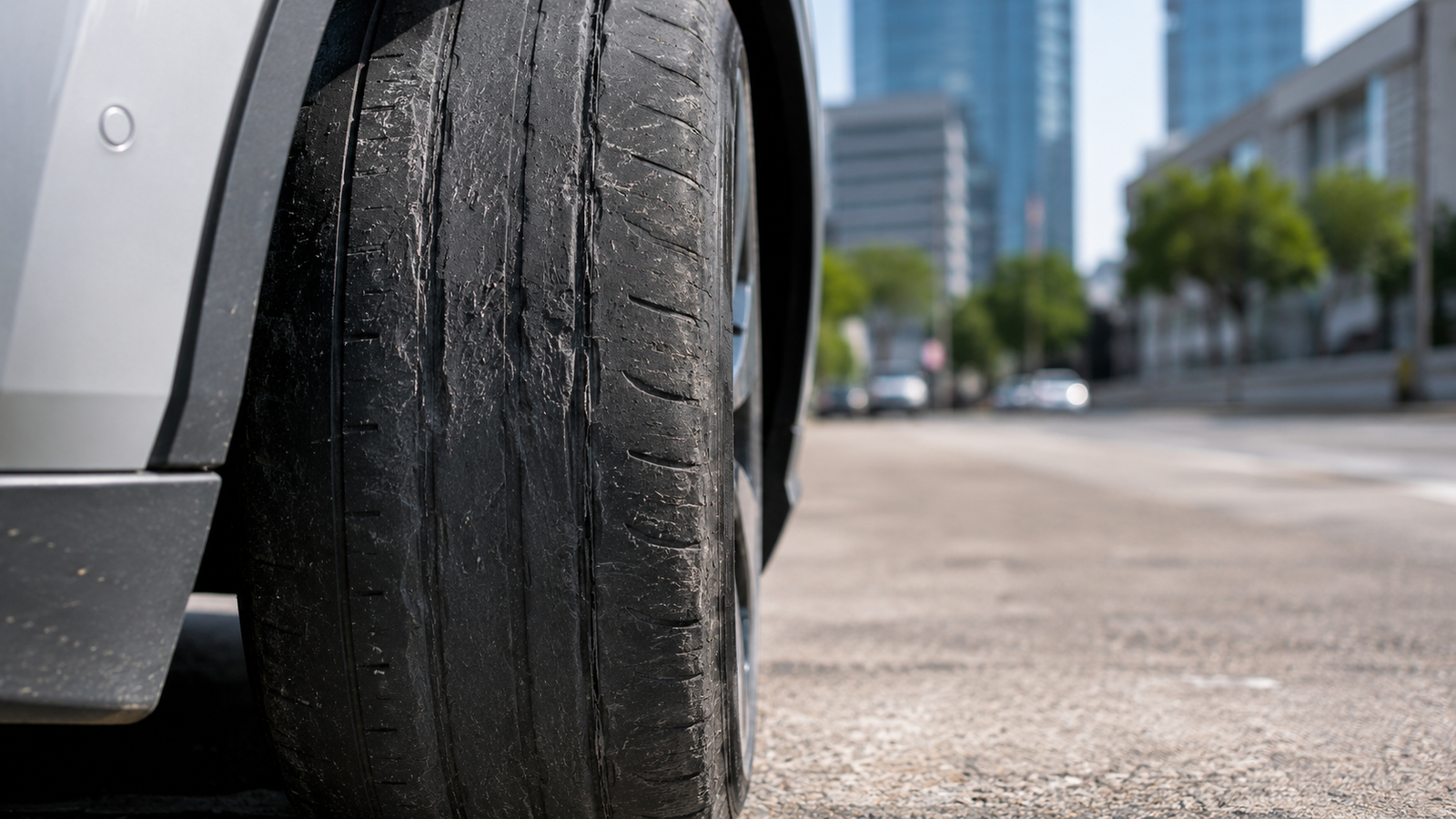
For tires, such a load does not go unnoticed. Under a heavy car, the tire deforms more, and the contact patch with the road increases. During cornering, lane changes, and other maneuvers, the tread experiences more severe loads than on a similar internal combustion engine car.
The consequences are quite predictable:
- the rubber heats up more;
- tread deformation increases;
- sidewall load increases;
- overall tire wear accelerates.
But the problem is not limited to mass alone.
Instant torque also plays a role
One of the main advantages of electric vehicles is their ability to deliver high torque almost instantly. This is why many EVs accelerate very quickly even without powerful multi-cylinder engines.
However, for tires, this feature is far from a gift.
An electric motor does not require a long warm-up period. Almost immediately after pressing the pedal, the wheel receives significant traction. Even if the driver does not notice it visually, at the moment of intense acceleration, the tread experiences microscopic slippage relative to the road surface.
At this moment, the asphalt begins to act as an abrasive material. A layer of rubber is gradually removed from the tread surface, which accelerates its wear.
How regeneration affects tire life
There is another factor that is rarely mentioned in discussions about tire durability.
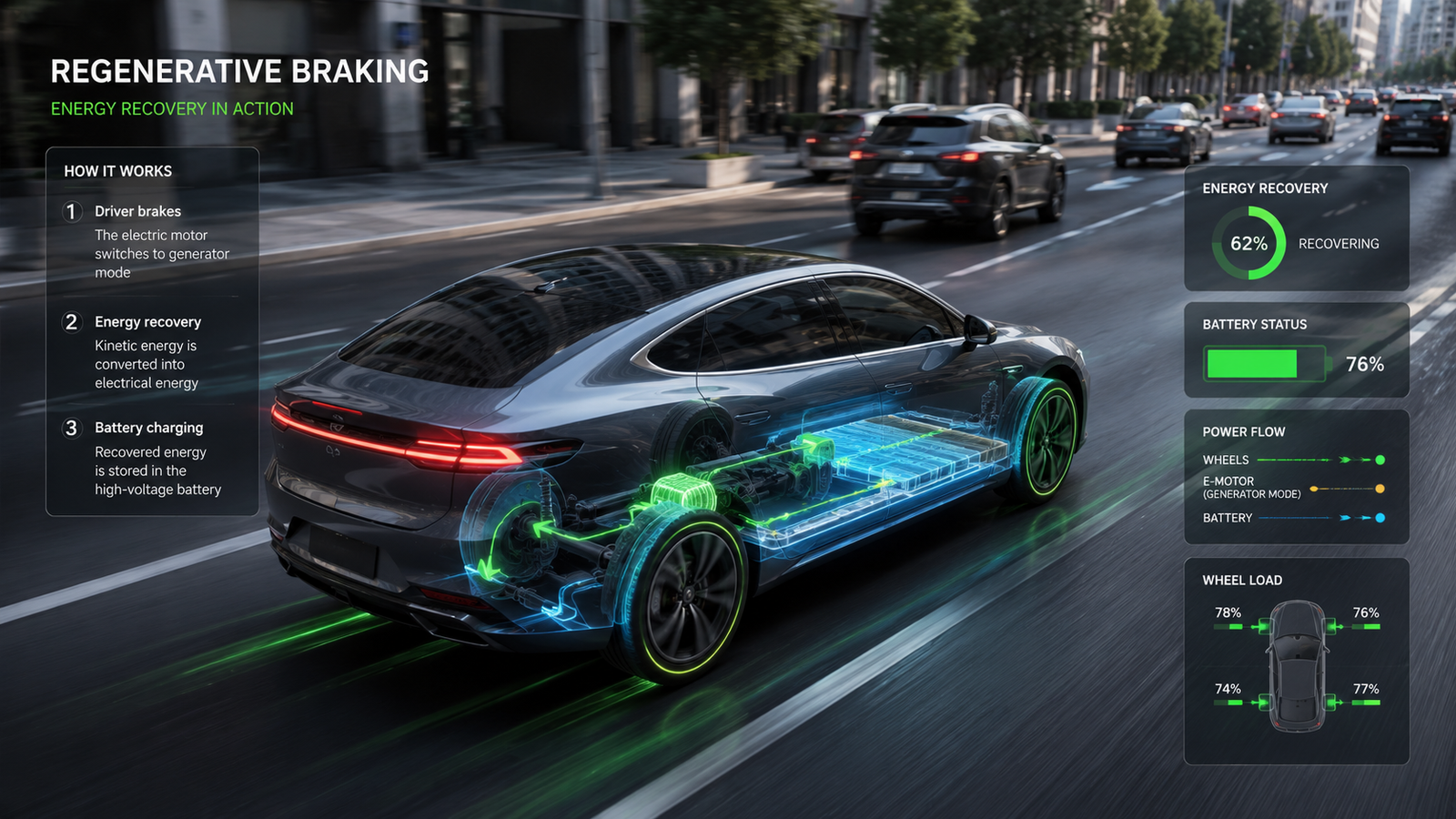
This refers to the energy recovery system. For most EV owners, this driving mode becomes the primary one. After releasing the accelerator pedal, the car begins to decelerate intensely, and the electric motor switches to generator mode, returning part of the energy back to the battery.
From the perspective of energy saving, this is a very effective solution. But for tires, such a mode means regular exposure to additional loads.
During regenerative braking, the wheels experience sharp resistance to rotation. Such cycles of acceleration and deceleration occur constantly, especially in urban conditions.
For tires, this means:
- additional heating;
- increased stress in the tread structure;
- accelerated wear of the working surface.
Therefore, even a calm driving style does not always guarantee a long tire life on an electric car.
Why special tires for electric vehicles appeared
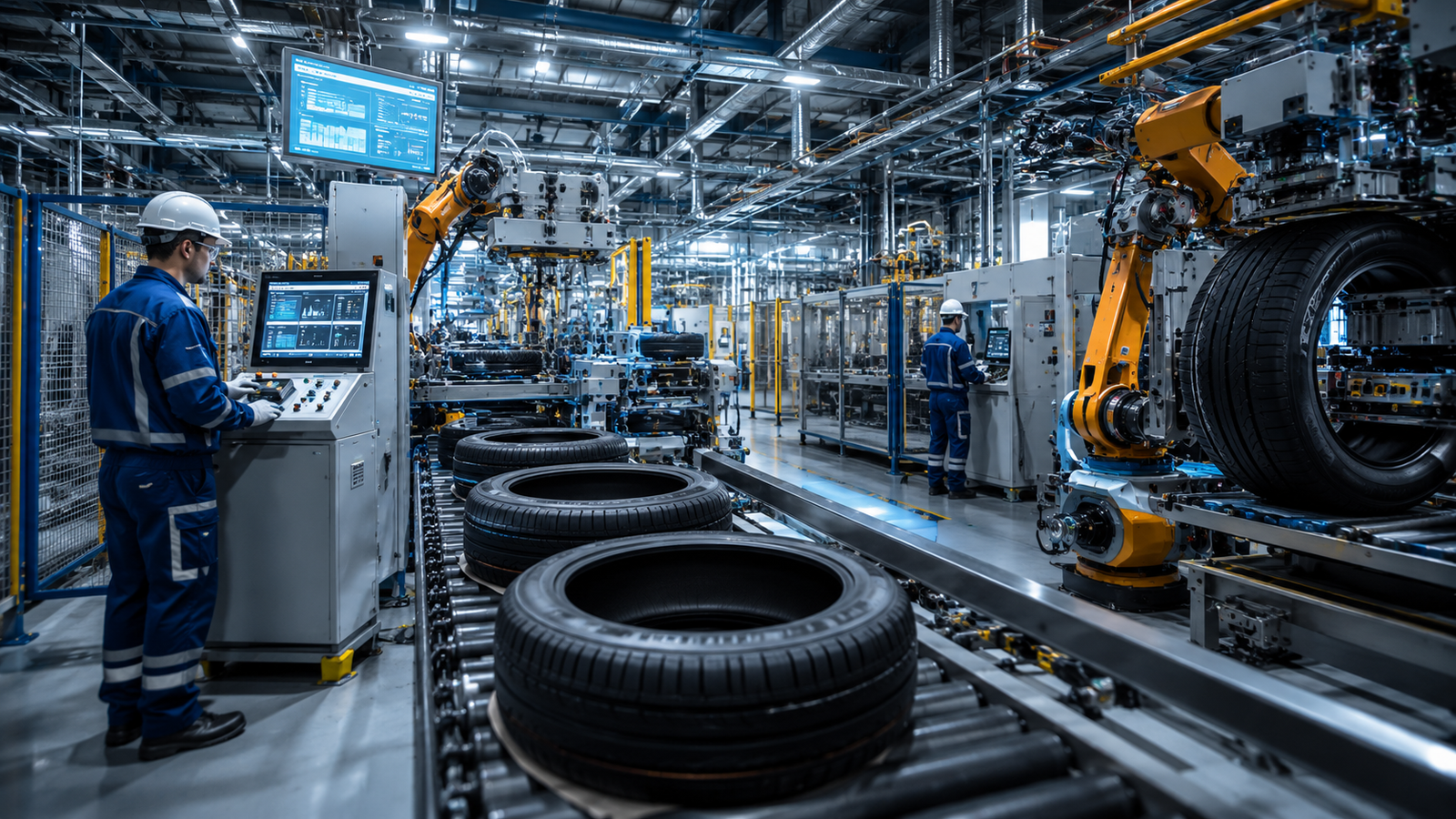
Tire manufacturers quickly noticed the new problem. As a result, a separate category of tires designed specifically for electric transport appeared on the market.
In their development, engineers tried to take into account all the features of operating heavy and powerful electric vehicles.
The design of such tires uses:
- reinforced carcass;
- aramid fibers for increased strength;
- special polymer additives;
- materials with increased abrasion resistance.
In addition, manufacturers pay great attention to acoustic comfort. Since an electric car operates almost silently, tire noise becomes much more noticeable.
To combat this phenomenon, inserts of foamed polyurethane are installed inside some tires. They reduce resonance inside the tire and lower the noise level while driving.
Of course, such a complex design affects the cost. The price of specialized EV tires can be about 30% higher compared to conventional counterparts.
At the same time, the range of such tires remains limited and often depends on the specific car model.
Why pressure becomes critically important
The heavy weight of an electric vehicle places increased demands not only on tire design but also on their operation.
On a conventional gasoline car, a small deviation in pressure often does not lead to serious consequences. With an electric car, the situation is different.
If the pressure drops even slightly, the heavy car begins to put more stress on the tire sidewalls. The tire deforms, heats up faster, and begins to wear more intensely at the edges.
As a result, the following consequences are possible:
- accelerated tread wear;
- overheating of the rubber;
- reduced service life of the tire set;
- additional maintenance costs.
Therefore, electric vehicle owners have to monitor the condition of their wheels much more carefully and regularly check the pressure.
Environmental paradox
The most curious aspect of this story is not related to owner costs at all.
The main goal of electric vehicle proliferation is to reduce harmful emissions. However, accelerated tire wear has sparked a new discussion about the impact of transport on the environment.
According to studies mentioned in the article, the amount of particles generated by tire wear can many times exceed the volume of emissions from modern gasoline engines complying with the Euro-6 environmental standard.
A curious situation arises. On the one hand, emissions of fuel combustion products are reduced. On the other hand, more tiny particles of rubber and other tire components enter the environment.
The problem is not limited to dust. A modern car tire contains many chemical compounds, some of which can affect the environment, including aquatic ecosystems.
The constant growth of the electric vehicle fleet creates additional complexity. The more such cars appear on the roads, the more tires are subjected to accelerated wear.
The price of progress
As a result, a rather interesting paradox has emerged. Electric vehicles continue to be positioned as environmentally friendly, quiet, and technologically advanced transport with minimal maintenance requirements.
However, these advantages hide additional costs. Owners have to change tires more often, carefully monitor pressure, and often buy special high-tech tires, the cost of which is noticeably higher than usual.
At the same time, car manufacturers continue to actively expand their electric model lineups and gradually reduce the range of gasoline-powered cars. These changes have even affected the sports segment. Many models that were previously associated with powerful gasoline V8s are now getting electric powertrains.
The situation has reached a very unusual level: some manufacturers already offer special devices that imitate the sound of a traditional gasoline engine. It turns out that technologies continue to develop, but along with new opportunities, new problems also arise, which almost no one thought about until recently.
Read more materials:
- NAMI-012: Soviet truck that ran on wood
- ZIL-3906 "Aeroll": an all-terrain vehicle that could have been a revolution
- Trade-in or self-sale: what's more profitable