Buyers have long been accustomed to each new generation of car being slightly larger than the previous one. Manufacturers always emphasize this in presentations: increased length, wider track, longer wheelbase, spacious interior. All of this is perceived as an obvious advantage.
Indeed, additional centimeters make the car more comfortable, safer, and more spacious. But this trend also has a downside, which European experts have begun to seriously discuss. It turns out that endlessly increasing car sizes is impossible — sooner or later, urban infrastructure stops being able to cope with them.
Why automakers are constantly increasing car sizes
For manufacturers, increasing dimensions has long been part of their marketing strategy.
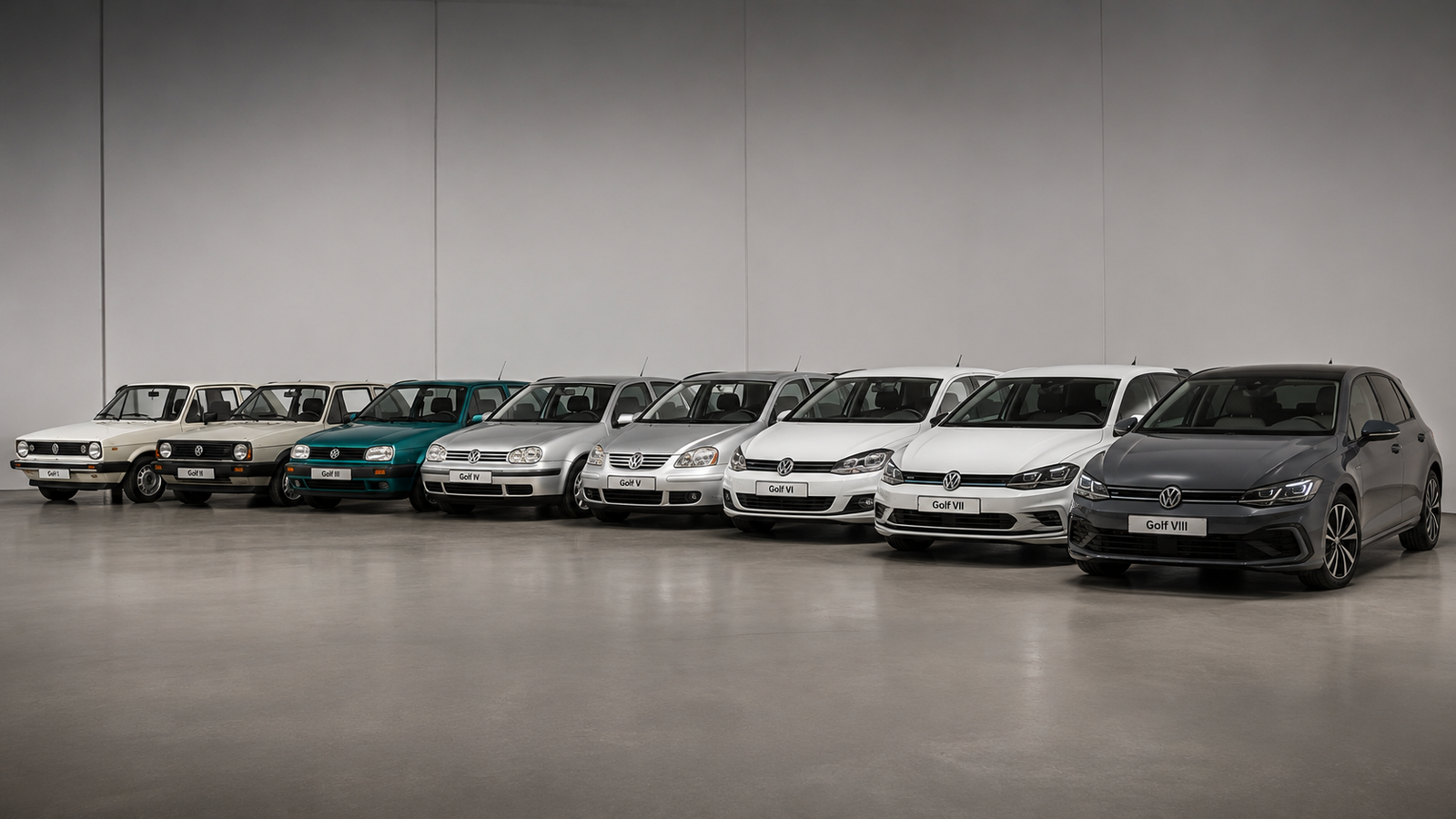
A longer body allows for more space for second-row passengers, a larger trunk, and makes the car visually more substantial. At the same time, the wheelbase increases, which positively affects ride smoothness and stability.
There is also a psychological factor. Many buyers compare a car's size with competitors when choosing. A larger car is often perceived as more modern and prestigious.
That is why cases where a new generation retains its previous dimensions can be counted on one's fingers today.
Compact models are gradually ceasing to be compact
A good example is the Skoda Fabia family.
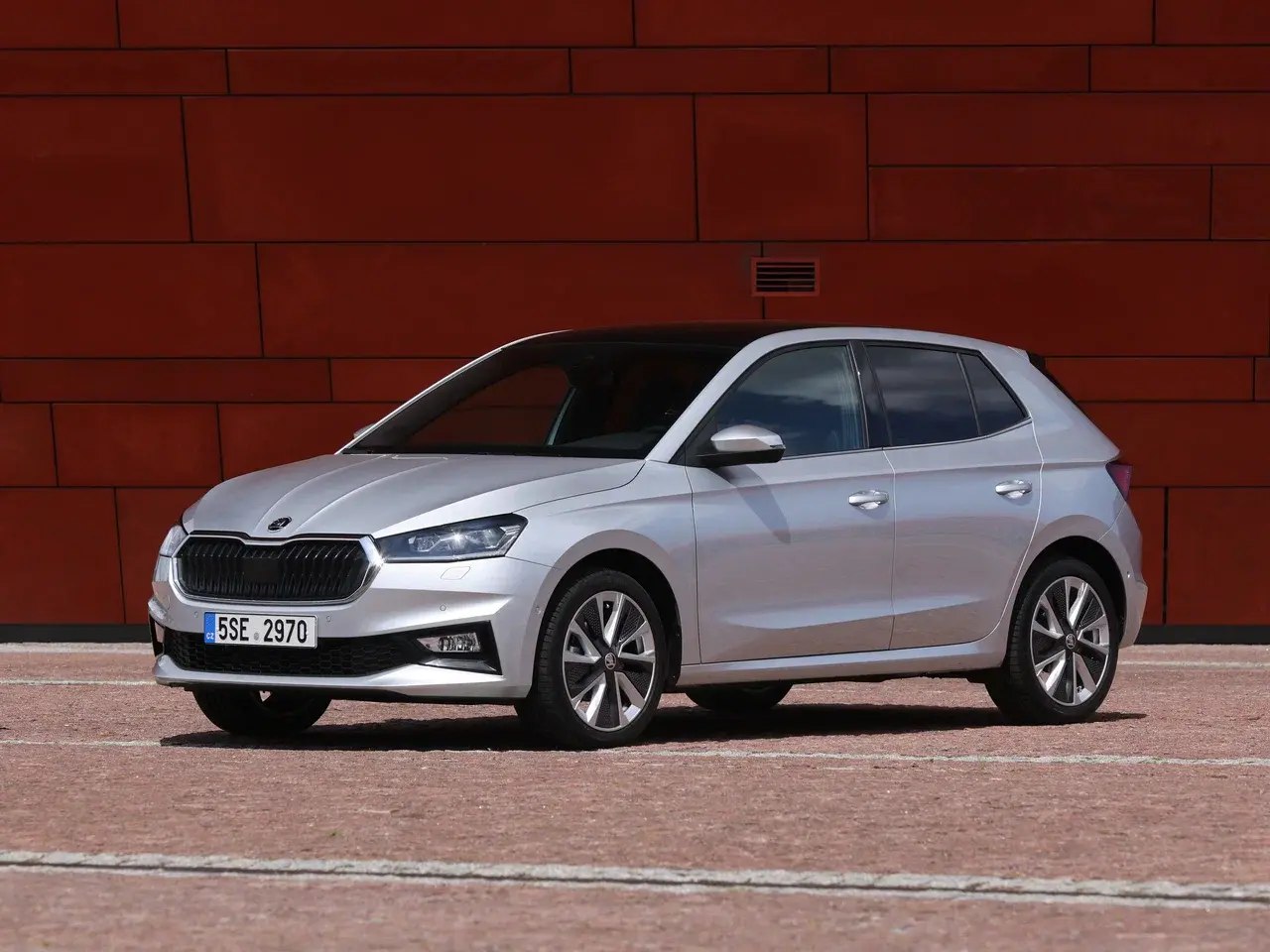
Each generation of this car became slightly longer and wider than the previous one. Individually, the changes seem insignificant, but after three or four generations, the difference reaches several tens of centimeters.
The same story has happened with almost all car classes. A modern compact hatchback is often already approaching the size of family models from twenty years ago, and many crossovers have grown so much that they are practically on par with SUVs of the past.
What the European experts' study showed
The organization Transport & Environment (T&E) analyzed the dimensions of cars sold in Europe over the past 25 years.
The results obtained were telling.
If in 2000 the average passenger car had a length of about 4090 mm and a width of 1690 mm, by 2025 the average figures had grown to approximately 4380 mm and 1820 mm, respectively.
In other words, cars gained about 1.2 centimeters in length and approximately 0.5 centimeters in width annually.

At first glance, this is not much. However, over a quarter of a century, the increase has been quite significant.
Why large cars are becoming a problem
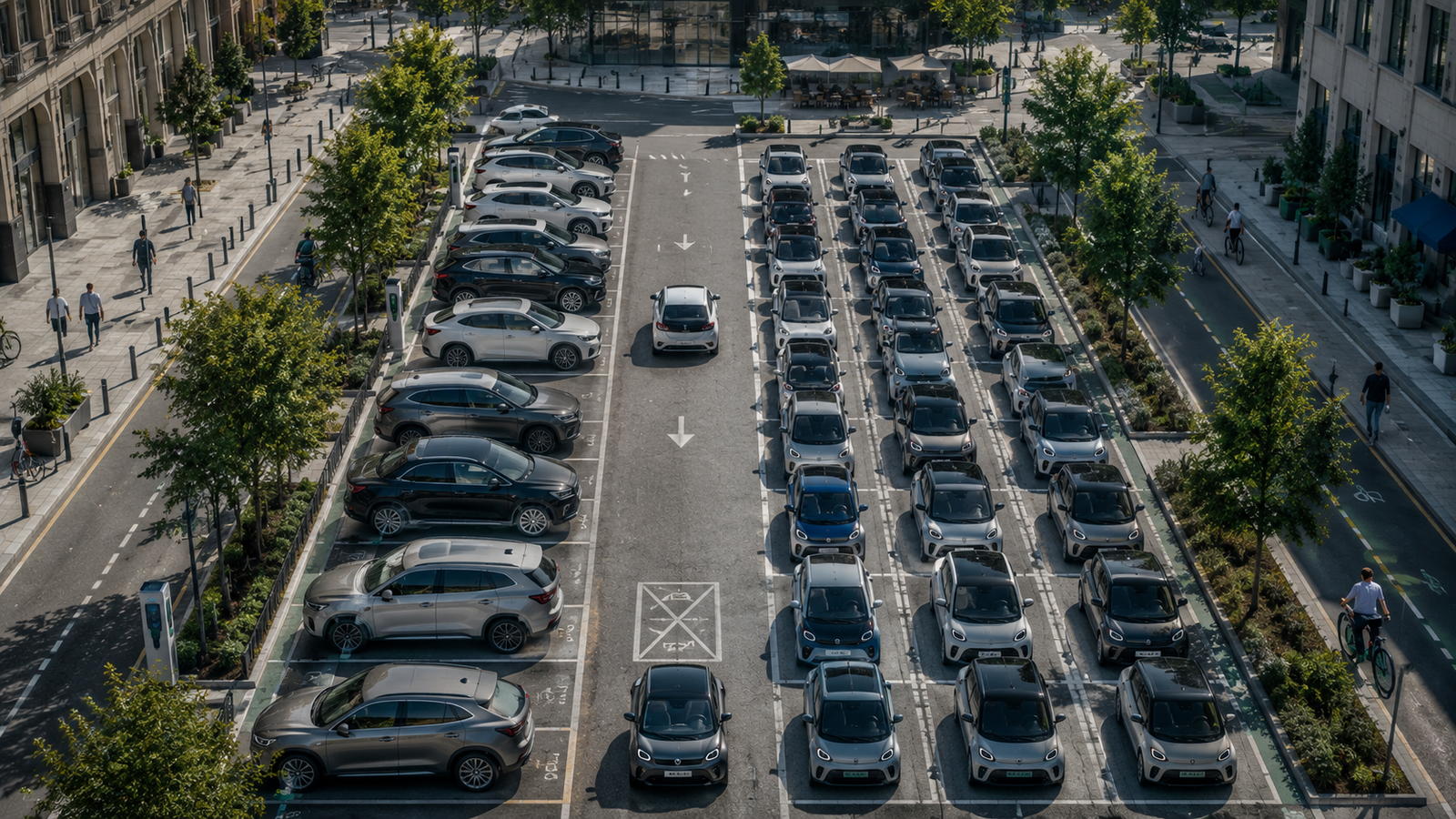
The paradox is that cars are growing, but parking spaces are not.
Most courtyards, underground parking lots, and city parking spaces were designed decades ago when cars were noticeably more compact.
According to T&E estimates, if the existing trend continues, by 2040 the capacity of European parking lots could decrease by approximately 9–14% solely due to the increase in car sizes.
That is, the number of parking spaces will actually decrease without any construction or reconstruction.
How Europe proposes to solve the problem
Experts believe that the growth in car sizes can be stopped by economic methods.
The main tool is tax incentives for compact models.
A similar scheme has long been applied in India, where cars less than four meters long receive significant tax advantages.
That is why many manufacturers develop special versions of their models for the Indian market.

A good example is Skoda. The Slavia models, 4541 mm long, and Kushaq, 4225 mm long, failed to achieve significant sales. Later, the company introduced a new Kylaq crossover, only 3995 mm long, which fully fits local tax requirements.
What cars should be like by 2040
T&E proposes not just to stop the growth of car sizes, but to gradually make them more compact.
According to the organization's calculations, the optimal modern passenger car should have a length of about 4250 mm and a width of 1770 mm.
It turns out that in a decade and a half, cars, on the contrary, should become slightly smaller than current models.
According to the authors of the study, this will allow preserving parking infrastructure, more efficiently using urban space, and reducing the burden on the transport system.
What this means for Russia
For now, such restrictions are not even being discussed in Russia.
The domestic market still gravitates towards large sedans, SUVs, and crossovers, and no tax incentives for compact cars are provided.
Therefore, in the coming years, Russian buyers will most likely continue to observe the familiar picture: each new generation of cars will gradually increase in size.
However, the European discussion shows that endlessly increasing dimensions is impossible. Sooner or later, manufacturers will still have to find a balance between comfort, safety, and the capabilities of urban infrastructure.
Read more articles:
- Why supercar manufacturers are massively producing crossovers: it's not just about profit
- Methane instead of gasoline: is natural gas really becoming a profitable alternative
- To remove EGR or not: we analyze without myths