In many American suburbs, public transportation is virtually nonexistent. If a person doesn't have a car, getting to work, the store, or another part of the neighborhood is often difficult. This is how a significant portion of American suburban development is structured today.
Approximately 92% of American families own a car. About 78% of workers commute to work by driving, while only about 4% use public transportation. The rest work from home, walk, or use other modes of transport.
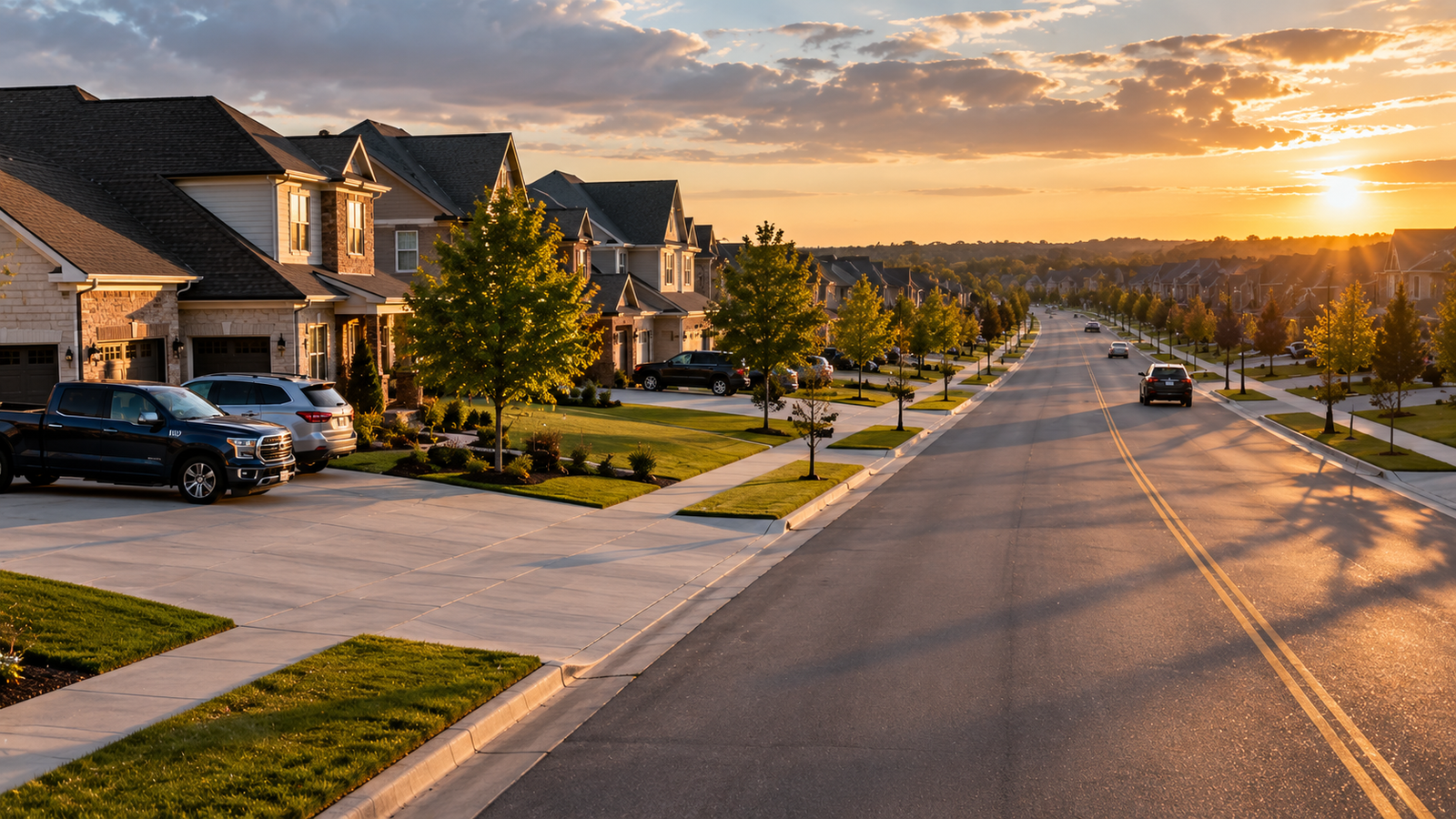
Yet, a hundred years ago, the US was the world leader in tram network length. Their total length reached approximately 80,000 km, and trams existed in almost every American city with a population over 10,000 people.
The disappearance of American trams is often linked to the well-known story of National City Lines. General Motors, Firestone, and oil companies invested in it. National City Lines acquired over 100 tram systems in approximately 45 cities, after which some routes were replaced by buses.
In 1949, General Motors and its partners were found guilty of monopolizing bus sales and fined $5,000. This story became the basis of the popular theory that the automotive industry and oil companies deliberately destroyed American public transportation.
However, explaining the disappearance of trams solely by this conspiracy is not possible. Hundreds of cities where National City Lines did not operate independently abandoned their tram systems. American tram companies began experiencing economic problems long before this company emerged.
Many systems operated under city franchises, whose terms limited the fare. In some cases, the fare was only five cents and remained virtually unchanged for a long time. After World War I, prices in the US rose sharply, while fares remained the same. As early as 1919, dozens of tram companies faced financial problems — approximately two decades before National City Lines' most active period.
Then, American public transportation had to compete with the widespread adoption of automobiles. By 1929, there were about 23 million cars in the US — approximately one car for every five residents.
The period of World War II is indicative. Gasoline was rationed, new car production was limited, and in 1946, public transportation carried a record 23.5 billion passengers. After restrictions were lifted and mass car production resumed, the situation changed. By 1960, the number of public transport trips had decreased to approximately 9 billion.
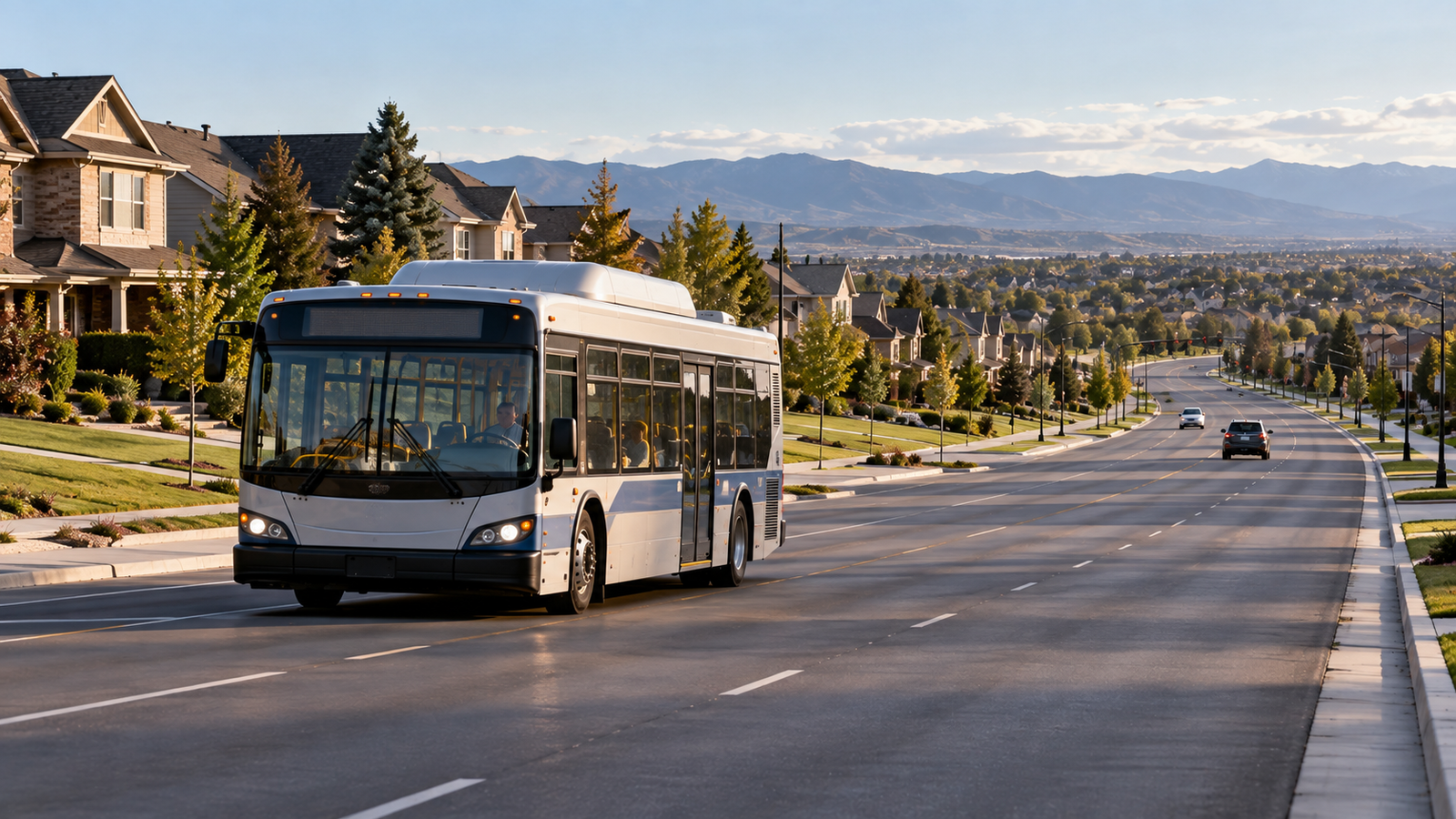
This creates a paradoxical picture: Americans did indeed switch to cars, but largely because cars became more convenient and accessible. At the same time, the American city itself was changing — and this is where the story of the current dependence of suburbs on personal transport begins.
How American Suburbs Were Built Around the Car
After World War II, the US faced a huge demand for housing. The government stimulated the construction of new homes and provided veterans with preferential mortgage terms. Buying a new home in the suburbs gradually became easier than acquiring an old home in the city.
The Federal Housing Administration (FHA) played a major role in this. Loan terms depended, among other things, on the assessment of the building itself. A new home could receive an estimated service life for decades to come, while an old building with worn-out utilities was assessed less favorably. As a result, a mortgage for a new suburban home could be more affordable in terms of monthly payments than a loan for old urban housing.
At the same time, functional zoning became widespread. Initially, one of its tasks was to separate residential areas from industrial facilities that could create noise, smoke, and other inconveniences. But over time, the separation began to spread much wider: housing, shops, offices, and other functions began to be located at significant distances from each other.
By 1940, this arrangement was used in approximately 80% of new settlements. Moreover, quite large plots of land were often allocated for individual houses — on average, about 12 ares.
For public transportation, such low-density development creates a serious problem. The further apart the houses are, the more passengers a bus has to collect on a long route. And if there are few potential passengers, a frequent service becomes economically unprofitable.
American transport planners estimated the necessary building density for different service intervals as early as the 1970s. A bus with an interval of about an hour required significantly denser development than in a typical post-war suburb. For a ten-minute interval, the density had to be even higher — closer to townhouses and compact low-rise development.
The American suburb with large plots turned out to be poorly adapted to regular public transportation. When there are large distances between houses, stops have to be placed far apart, and the route becomes long and sparsely filled.
The situation is further complicated by commercial infrastructure. Most large commercial facilities are designed for visitors arriving by car, so huge parking lots are arranged next to shops and shopping centers.
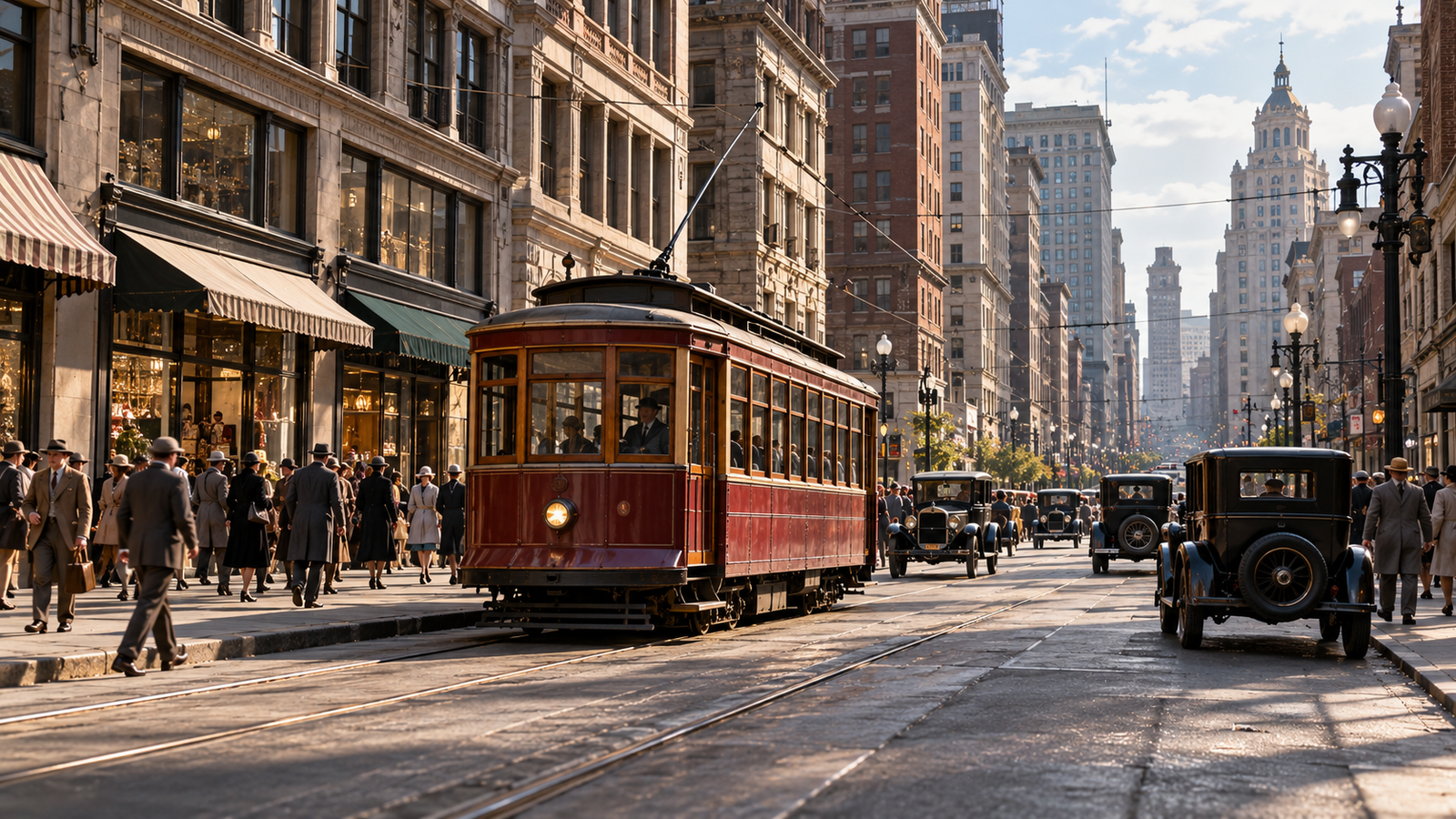
The exact number of parking spaces in the entire US is unknown. Various estimates give hundreds of millions and even over a billion spaces. In the suburbs, this creates another paradox: a huge area is allocated for car storage, while pedestrian and bus infrastructure turns out to be secondary.
As a result, the distance from a residential area to a store can be several kilometers, and the pedestrian route is further complicated by the lack of sidewalks. For a motorist, such a layout is almost imperceptible, but for a person without a car, it turns a regular trip for groceries into a serious problem.
Why Public Transportation Took a Back Seat
The construction of federal expressways played an important role in shaping the American transportation system. In 1956, President Dwight Eisenhower launched a large-scale program to build the Interstate Highway System.
At the same time, a special model for road financing was formed. Taxes on gasoline, diesel fuel, and some automotive goods went into the Highway Trust Fund, whose funds were primarily directed to road infrastructure.
Public transportation occupied a completely different position in this system for a long time. Bus and tram services in many cities remained private businesses, so federal road funding practically did not extend to them.
As a result, the federal government actively invested in the construction of automotive infrastructure, while local public transportation remained a problem for cities and private companies. When carriers began to lose passengers and money, cities gradually began to take their systems under their own control.
By the 1970s, American public transportation had largely transformed from a commercial service into government-subsidized infrastructure. Such systems do not fully pay for themselves with tickets: a significant portion of expenses has to be covered by budgets.
A peculiar spiral resulted. The fewer passengers used buses and trams, the harder it was to maintain frequent routes. The less often transport ran, the more attractive cars became. And the more people switched to cars, the fewer passengers remained on buses.
What It Means to Live in America Without a Car
Life without a car in the US is entirely possible, but its convenience largely depends on the specific city and area. In dense urban development, subways, buses, trams, and pedestrian infrastructure allow one to do without a personal car. In a typical suburb, the situation is completely different.
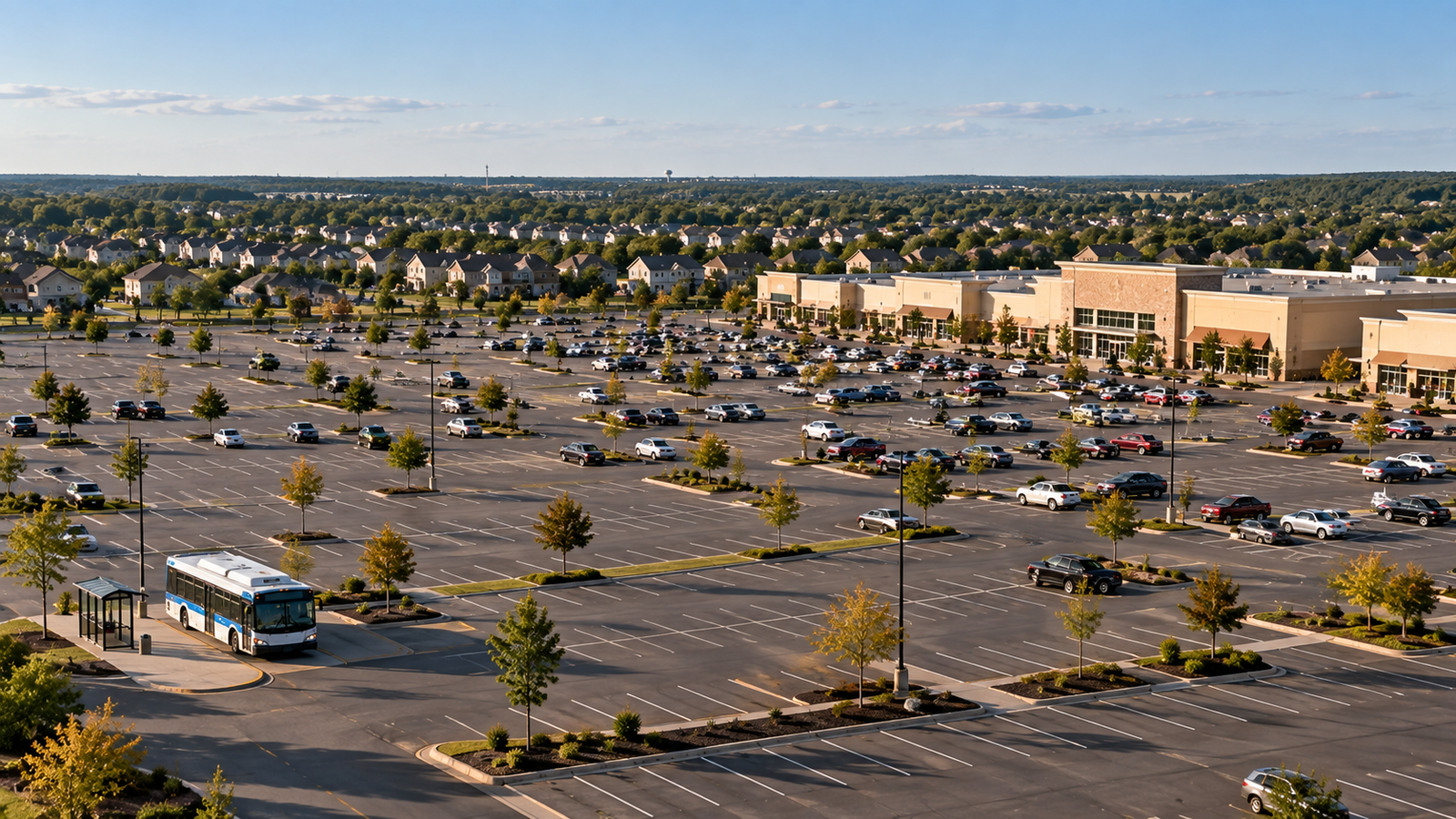
A stop can be far from home, the bus can run at long intervals, and the nearest store can be several kilometers away. For a person with children, groceries, or limited mobility, such a system becomes especially inconvenient.
Between cities, dependence on cars also persists. Amtrak passenger trains primarily use railway infrastructure owned by freight companies. Because of this, passenger trains in many cases must account for the movement of freight trains, which limits the possibilities of rail communication.
Taxis and services like Uber and Lyft remain. However, regular trips quickly become expensive. If you use a taxi daily for trips from the suburbs to the center, the costs can be significantly higher than the cost of owning a car.
According to the American Automobile Association, the total cost of owning a new car in 2026 is about $12,863 per year, or approximately $1,072 per month. For a used car, expenses may be lower.
That is why a car in the American suburbs is perceived not so much as a luxury item, but as a necessary element of everyday life. It allows one to work, buy groceries, drive children, and use urban infrastructure, which is often beyond walking distance.
Where in the US Can You Live Normally Without a Car
The situation changes dramatically in old large cities. On average across the US, a relatively small proportion of families live without a car, but in New York, more than half of households are car-free. In Washington, Boston, San Francisco, and Philadelphia, the proportion is also significantly higher than average.
The reason is related not so much to the size of the city as to the history of its development. These cities began to form before the widespread availability of affordable cars. Therefore, their central areas are characterized by dense development, a mix of different functions, and developed public transportation.
In such conditions, a car sometimes becomes more of a burden. Parking is expensive, space is limited, and the subway or other public transportation allows for faster access to the center.
Los Angeles shows the opposite scenario. The city actively developed during the era of mass motorization, so its territory is much more oriented towards personal transport. The proportion of families who do without a car there is significantly lower than in the old cities of the East Coast.
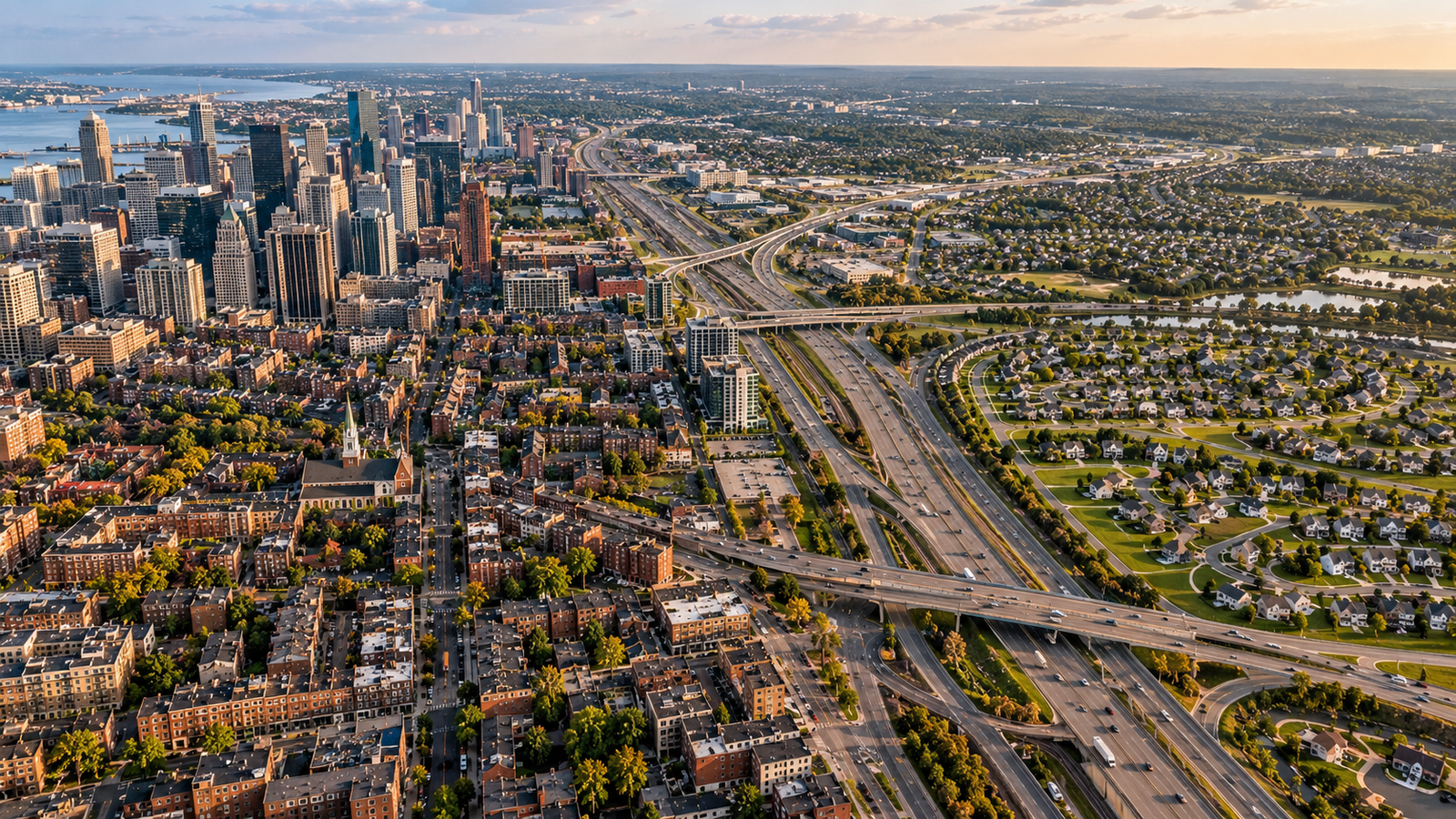
The American transportation model was not formed due to a single decision or a single company. It was simultaneously influenced by the spread of the automobile, the economic problems of old tram systems, mortgage policy, zoning, post-war suburban development, federal investments in roads, and the gradual decline in public transport ridership.
As a result, a vicious circle emerged: low-density development makes buses unprofitable, infrequent buses make cars necessary, and a large number of cars further stimulates the construction of car-oriented areas.
American freedom of movement is indeed largely provided by the automobile. But the flip side of this model is a high dependence on personal transport and long distances, which for a person without a car turn from an ordinary part of everyday life into a serious infrastructural problem.
Read more materials:
- Why a car brakes worse in autumn, even without snow and ice
- What to lubricate caliper guides with: main mistakes
- Why a balanced wheel still vibrates at speed