The planned increase in the recycling fee in Russia may sharply increase prices for cars from parallel imports and practically stop their sales. Dmitry Zabora, head of the Carwin service, told Autonews about this in a commentary.
According to him, the new recycling fee coefficients effectively close the import of cars older than three years. Thus, the Honda CR-V and Honda Breeze, which previously cost 2.2-2.5 million rubles, will rise in price by at least 1.3 million in November, and after the January indexation they will add another 1.6 million.
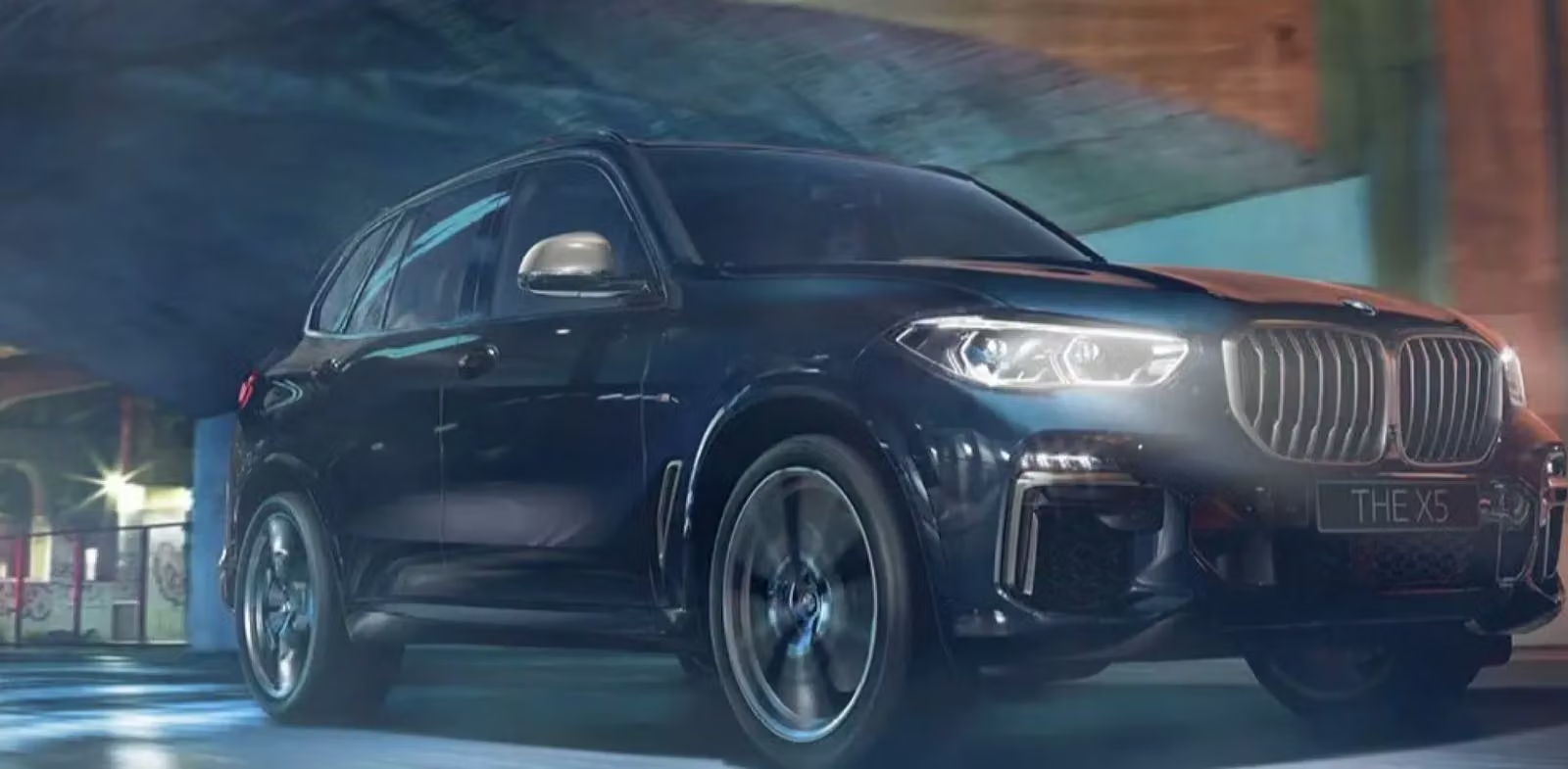
The increase in prices is especially noticeable for larger models. The Hyundai Santa Fe with a diesel engine and three rows of seats will become more expensive by 3-3.5 million, and the BMW X5 will add almost 4 million rubles. Even mass-market cars will not avoid price increases: the Geely Coolray will rise in price to almost 3 million, and the Geely Monjaro will exceed 5 million rubles.
Zabora predicts a reduction in imports from China and Korea by 80-85%, and from Japan - up to 15%. According to his assessment, this will be a serious blow to the market and will lead to an increase in interest in used cars. Deputies have already appealed to the government, warning that an increase in the recycling fee will primarily affect the mass segment and affordable models.
Read more materials:
- "Today... is a historic day for us." Ferrari Unveils Its First Electric Car
- "The Chinese" are no longer liked? Russia expects a collapse in sales of cars from China
- Hundreds of new Skoda Kodiaq cars were brought to Russia at a price of 2.5 million rubles