The electric Ford Bronco, developed by the JMC-Ford joint venture specifically for the Chinese market, has gone on sale with prices starting from 229,800 yuan ($32,640 USD). The 5-meter-long model is equipped with 31 ADAS sensors, and its electric motor develops 310 kW (416 hp). The car is available as a fully electric vehicle (BEV) and as a hybrid (EREV).
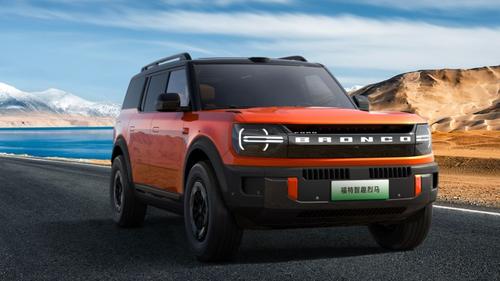
Externally, the Bronco replicates the design of the gasoline-powered Bronco Sport: a square body, large headlights, retractable elements, and a lidar on the roof. The SUV's dimensions are 5025/1960/1825 mm, with a wheelbase of 2950 mm, ground clearance of 220 mm, and approach and departure angles of 30° and 32°. The interior is designed for five passengers, with the top configuration offering electric drive and heated rear seats, heated and ventilated front seats, a trunk of up to 497 liters, and in the BEV version, an additional 160 liters in the front.
The Bronco's interior features a 15.6-inch touchscreen, a digital instrument panel, a 70-inch AR-HUD, a 7.5-liter refrigerator, 21 speakers, 10 airbags, and a panoramic roof. The infotainment system runs on Snapdragon 8255, and the computing power of the ADAS systems reaches 508 TOPS on two Nvidia Orin X chips.
Read more materials:
- AvtoVAZ officially explained which gasoline should be poured into Lada
- "Moskvich" announced prices for the "Moskvich 6" sedan of the 2026 model year
- Tank raised prices for the entire model range in Russia: Tank 500, 700 and 400 have become more expensive