Electric vehicles do not necessarily catch fire more often than internal combustion engine vehicles: this is the conclusion drawn from the statistics of the Swedish fire services for 2025. During the year, rescuers registered 46 fires involving electric vehicles and plug-in hybrids from a fleet of 1.03 million such vehicles. This is about 4.5 cases per 100,000 vehicles.
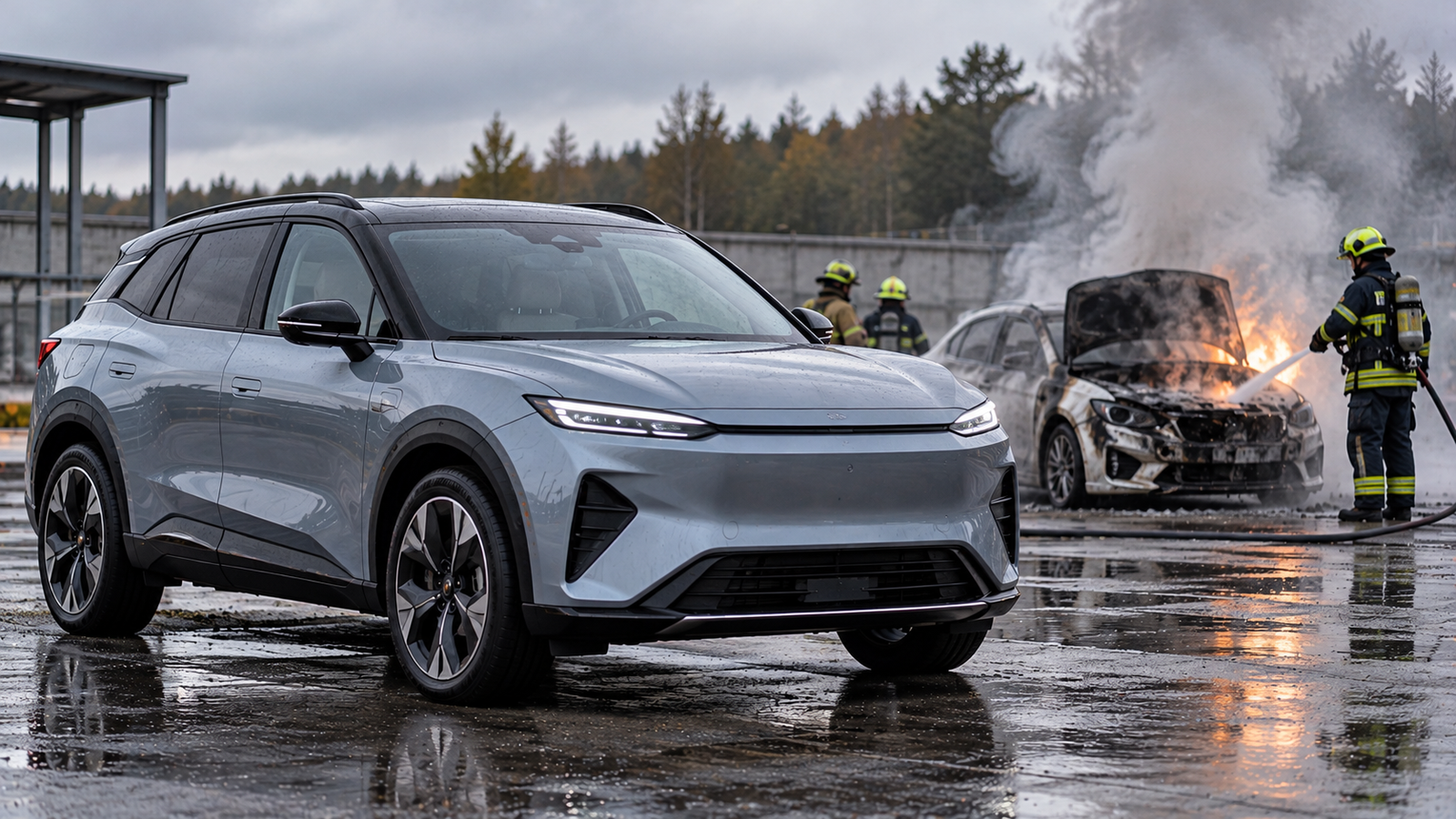
For comparison, among approximately 4 million cars with gasoline, diesel, gas, and other engines, about 2750 fires were registered — approximately 69 cases per 100,000 vehicles. According to these data, the frequency of fires in the group of ICE vehicles was about 15 times higher. However, the comparison has limitations: Swedish statistics do not account for arson among plug-in vehicle fires, and the electric vehicle fleet is, on average, younger.
Data from other countries indicate a similar trend. The German Insurance Association GDV found no signs of an increased risk of electric vehicle fires compared to gasoline and diesel cars in its insurance statistics. In Norway, an analysis of fires from 2016–2019 also showed that ICE vehicles caught fire more often after accounting for fleet size.
However, an electric vehicle fire may require more complex work from firefighters. If a lithium-ion battery enters a state of thermal runaway, the reaction can spread between cells, releasing heat and dangerous gases. Even after external flame suppression, the battery may require prolonged cooling, as there remains a risk of re-ignition.
Read more materials:
- Chery Recalls 8878 Omoda 5 Crossovers in Malaysia After Rear Axle Detachment
- BYD to Unveil New Seagull on October 20: Hatchback Grew by 42.5 cm and Received LiDAR
- Tesla Renamed Full Self-Driving in Europe After Regulatory Claims