Translated with AI from the Russian original.
Ford has produced over 5,000 large aluminum castings for the Fathom electric pickup, which is scheduled to enter production in 2027. Each vehicle will receive two such components — a front one and a rear one. According to the company, they replace 146 individual structural parts that would have been required with a traditional design.
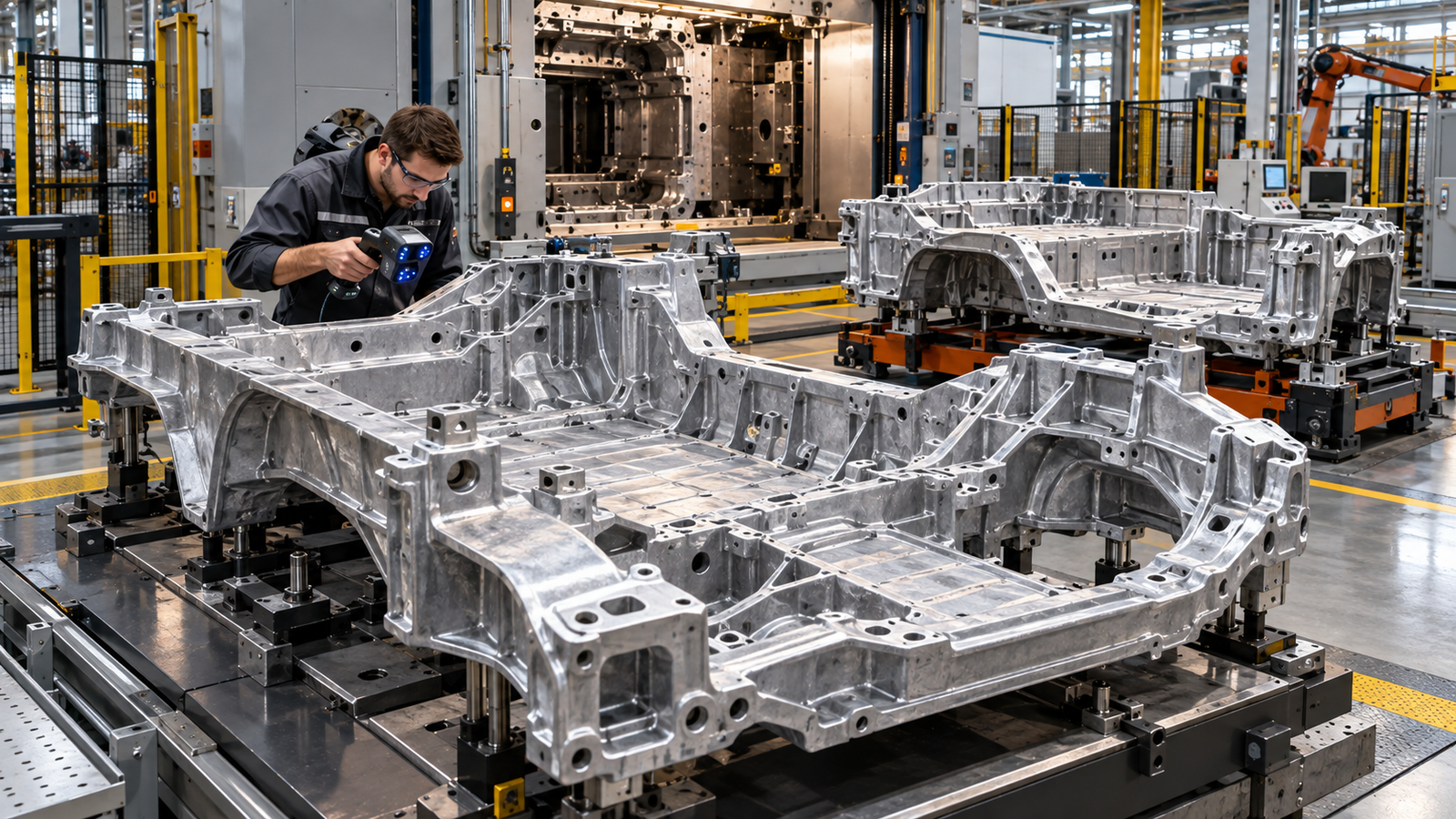
Ford calls this technology unicasting. In how it works, it resembles the gigacasting that Tesla uses to reduce the number of body components. Instead of manufacturing multiple individual parts followed by stamping, welding, and assembly, the company forms large structural aluminum sections in a single operation.
Production of the castings has been organized at Ford’s technical center in Shelbyville, Kentucky. Aluminum ingots are heated to around 700 °C, after which the molten metal is injected into a mold under pressure. A robot then extracts the finished part and moves it for cooling. After trimming excess material, the blank undergoes several inspection stages.
The inspections include dimensional checks in a temperature-controlled room, industrial X-rays to detect internal defects, optical surface scanning, and sample strength testing. The chemical composition of the alloy is analyzed separately. Batches are not shipped to the vehicle assembly plant until all required inspections are completed.
The large castings have become part of the new Ford Universal EV production system. Instead of sequential assembly of the vehicle on a single line, the car is divided into three main sections: front, rear, and battery. They are assembled in parallel, with key components installed before the sections are finally joined together. Ford estimates that this approach should shorten the manufacturing cycle and reduce assembly complexity.
The Fathom will be the first vehicle built on the company’s new universal electric platform. Ford states that the pickup will seat five passengers and feature bidirectional power capability. The starting price on the official website is listed from $28,350 (around 2.3 million rubles) excluding delivery and fees, and pre-orders are expected to open in early 2027.
Read more:
- Rare Marsh-1 all-terrain vehicle is being sold in Germany for 20 thousand euros
- Tesla cancels Cybertruck launch in Australia after seven years of waiting
- Four-seat Fiat Multiplina electric car runs into weight issues