Formula 1 is the most prestigious, "royal" race. But are the cars in it the fastest? The short answer is yes. A slightly longer one is no. An even longer one is both yes and no. Why is that? Let's figure it out.
If you expand on the topic, it's not so simple: a racing car goes exactly as fast as the specific discipline requires. And yes, somewhere the speed is deliberately limited for safety, and somewhere, on the contrary, no "ceilings" are set. Let's start the review with the most dynamic, but not always the fastest series.
Rallycross: 150 km/h
In the World RX championship, the top class is the pinnacle of rallycross. It simply cannot be faster in this discipline. So, at the stage in Norway, Andreas Bakkerud completed the final - six laps of a kilometer each - in four minutes. Average speed? About 90 km/h when driving "flat out" without saving tires and fuel.
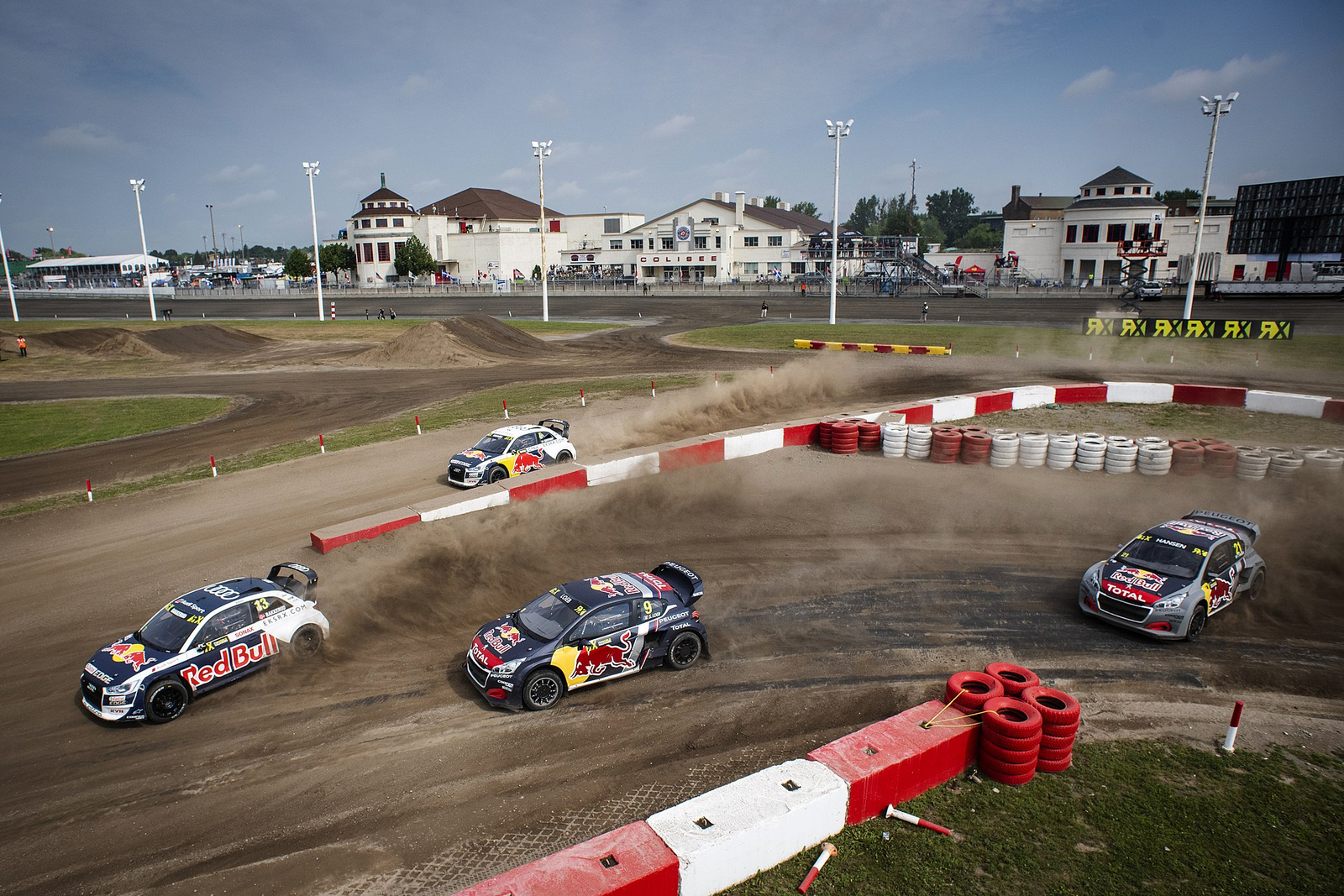
The engines of rallycross cars are fierce: 560 hp and 900 N·m for the champion Audi S1 EKS RX quattro - indicators with which an ordinary car would easily take 300 km/h. But the track does not allow to accelerate - the laps are short, the straights are at best two hundred meters, and most of the power goes into gravel, dust and black stripes on the asphalt.
Therefore, the maximum speed is limited to 140-150 km/h. But the acceleration is fire: about two seconds to hundreds. In terms of starting dynamics, rallycross cars are close to Formula 1.
Rally: 200 km/h
One of the fastest gravel competitions is the Rally Finland. Its legendary 33-kilometer special stage "Ouninpohja" is completed by the leaders in about 15 minutes. Average speed - 132 km/h. And all this - on narrow forest roads, trampolines and blind turns.
Modern WRC cars have about 315 hp and 420 N·m, but the maximum speed is kept around 200 km/h. The manufacturer of Polo R WRC directly says: the car does not need more - in rally, acceleration and stability in corners are more important. Acceleration to hundreds takes about 3.9 seconds.
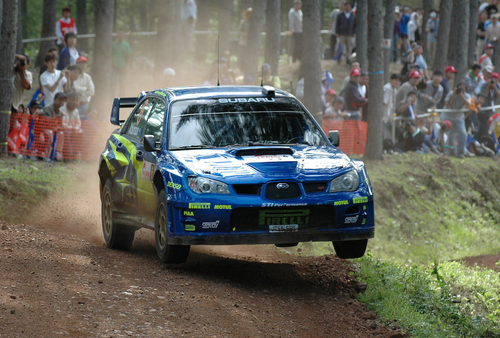
The 2017 regulations raised the power to 380 hp, but the top speed did not increase: for the sake of dynamics, the gears were adjusted to exit corners faster, and not to fly in a straight line.
Formula 1: 350 km/h
The highest speed of the 2016 season - 378 km/h - belongs to Valtteri Bottas, who accelerated on the longest straight of the Baku circuit. In races, the speeds are lower: the official record is 372.6 km/h in Monza (2005). Mercedes cars, for example, were not faster than 362 km/h.
But the essence of Formula 1 is not in the maximum speed. Those who pass corners faster win. Downforce up to 3000 kgf, extremely soft tires and aerodynamics give "space" acceleration: 1.9 seconds to hundreds, about 4 seconds - to 200 km/h, and the car reaches 300 km/h in about 12 seconds. On some tracks, the eighth gear is not engaged at all - acceleration is more important than "peak".
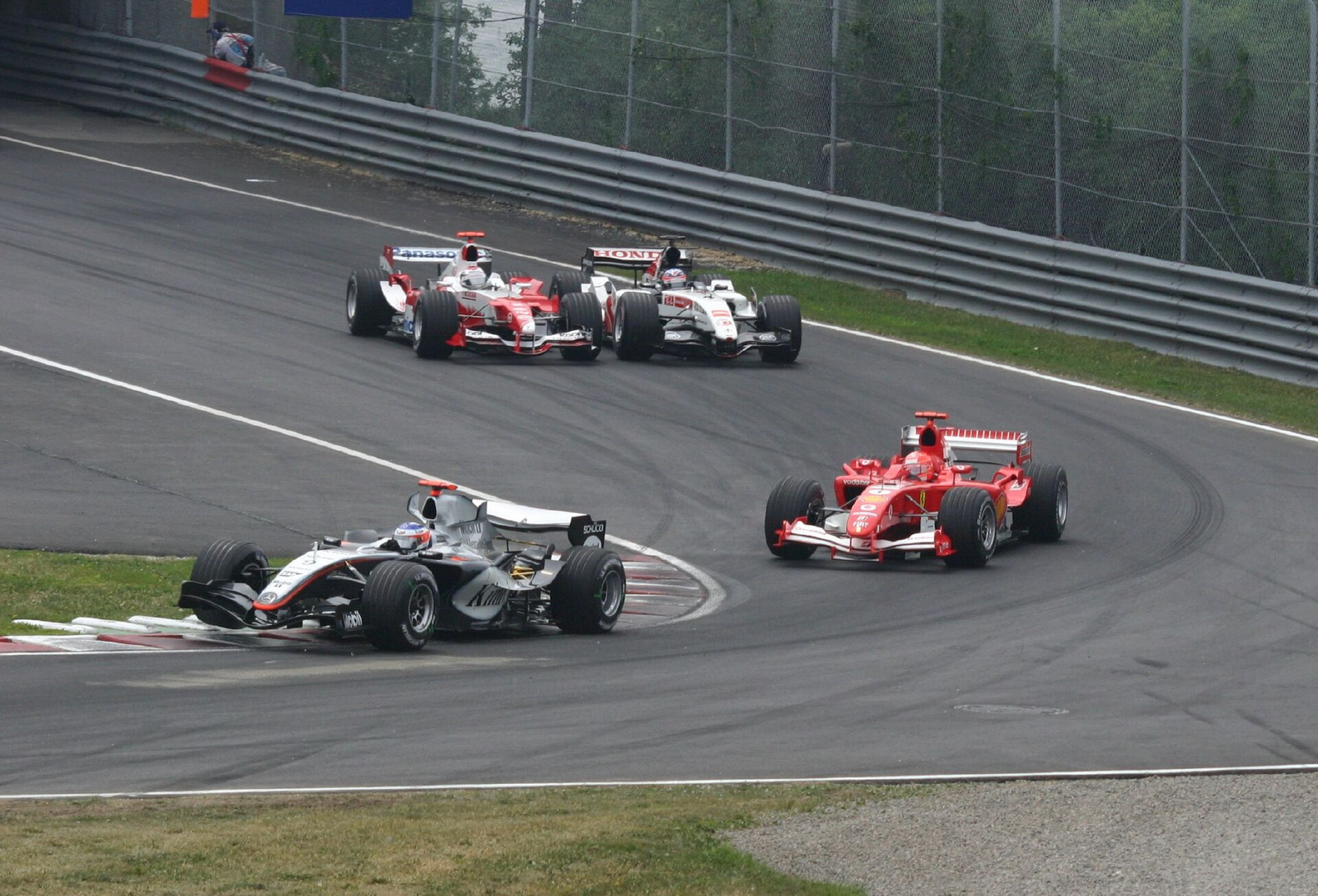
Yes, in terms of maximum speed, F1 is inferior to road hypercars - the same Bugatti Chiron with a declared 420 km/h. But in corners and acceleration, production cars have no chance.
Approximately the same principles are followed by LMP1 prototypes in WEC - more powerful, slightly faster, but in terms of average speeds they are close to F1.
Accelerate a Formula 1 car to 500 km/h? Possible. It is enough to change the gear ratios. But there is no point in this.
Drag racing: 530 km/h
Now - a discipline where only a straight line is important. Dragsters are designed for distances of 1/8 and 1/4 mile when starting from a standstill. In the top class Top Fuel - a real "crazy space".
Top Fuel passes 300 meters in 3.7 seconds. Fuel consumption - a mixture of nitromethane and methanol - about 50 liters per second! The V8 engine based on the legendary Hemi produces 8000-10,000 hp. The supercharger is mandatory, there is no gearbox: power is transmitted through a multi-disc "tractor" clutch.
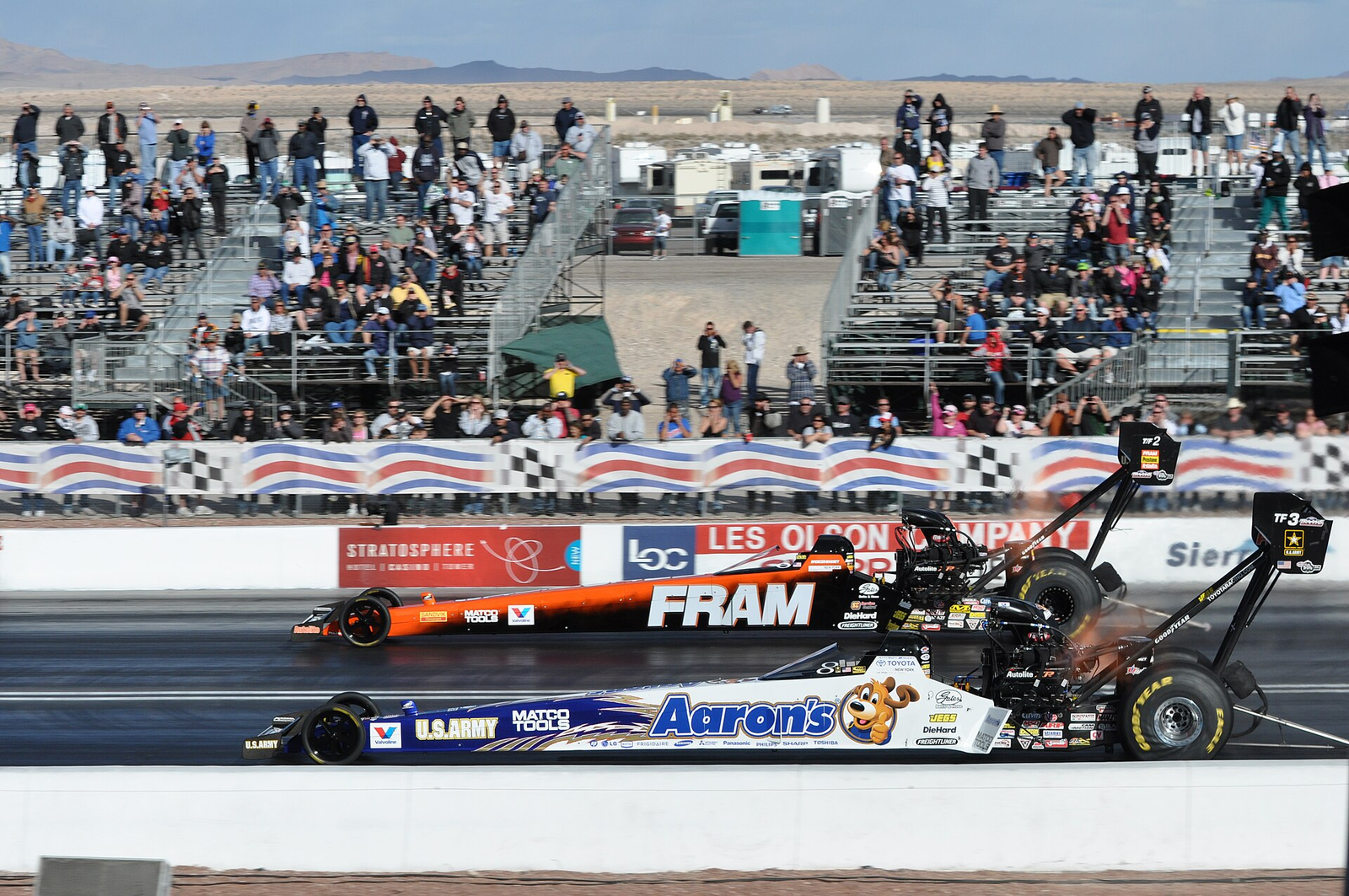
The classic "hundred miles" is reached in one second. The finish speed is about 530 km/h. Further, the dragster has hardly been studied: there is only enough fuel for 305 meters - the restriction was introduced in 2008 for safety reasons.
Record runs: 707 km/h
World land speed records are overseen by the FIA, not the Guinness Book. A complex system of classes has been created for records: by engine type, volume, distance, starting method.
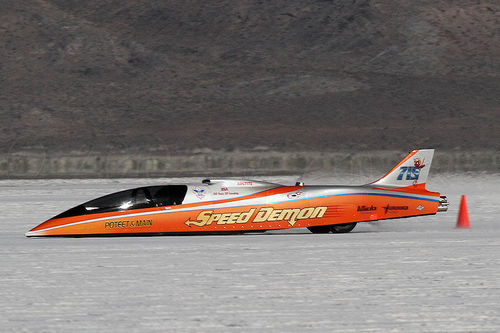
In the category of cars with Otto cycle engines and turbocharging, the "absolute" result belongs to the Poteet & Main Speed Demon apparatus. In 2012, it reached 707.408 km/h on the Bonneville salt lake. The six-liter Chevy V8 produced over 2500 hp. This is the fastest car with an internal combustion engine of all types.
Speed Demon is modernized annually - its refinement lasts for years.
But records are not a spectacular side of motorsport. Often they pass without an audience: the car rushes in one direction in the morning, in the other in the afternoon, and the record is recorded by the average value. Involuntarily the question arises: "Are these the most useless cars in the world?". And the answer is again twofold - yes and no.
Non-automotive records
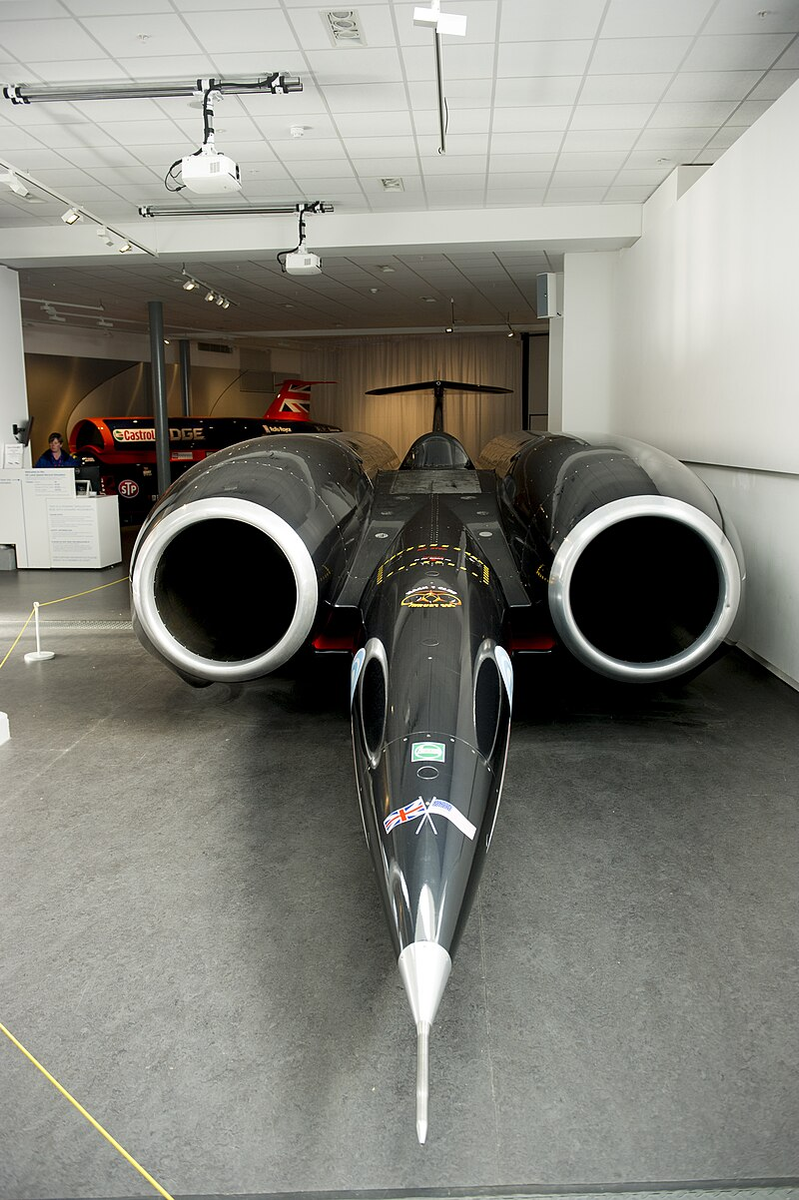
The absolute speed on land is 1227.985 km/h. It was set by Thrust SSC in 1997: two jet engines and the appearance of an aircraft - it is difficult to call it a car.
Among motorcycles, the record is 634.217 km/h for the Top 1 Ack Attack Streamliner (2013). In fact, it is a rocket-like capsule on two wheels with engines from Suzuki Hayabusa.
On the water, the record belongs to the Spirit of Australia boat - 511.11 km/h (1978, J34 jet engine).
The highest air speeds were set by the military, often not officially confirmed. It is believed that the maximum was reached by the SR-71A in 1976 - 3529.56 km/h.
And the absolute engineering extremum is 10,430 km/h, it belongs to an unmanned four-stage rocket accelerated along rails in 1994.
Read more materials on the topic:
- Cars that are cool without speed
- The most useless car options for which we overpay
- 10 most expensive cars in the world: the pinnacle of engineering
Comments