Winter and summer windshield washer fluids differ not only in name but primarily in purpose and composition. A mistake in choosing is not just an inconvenience but a real risk to the entire washer system. The main criterion that separates these fluids is the season of use.
Winter washer fluid, better known as antifreeze, is designed for sub-zero temperatures. Its key characteristic is the freezing point, which is directly related to the concentration of alcohol in the composition and determines the overall frost resistance. Such a fluid must remain fluid even in severe cold so that the pump, tubes, and nozzles continue to operate normally. Summer washer fluid, on the other hand, does not contain alcohol. It is designed for above-freezing temperatures and is designed for a different task: the effective removal of road dust, oily film, and especially traces of insects. Using summer fluid in winter almost guarantees freezing of the system and failure of its elements.
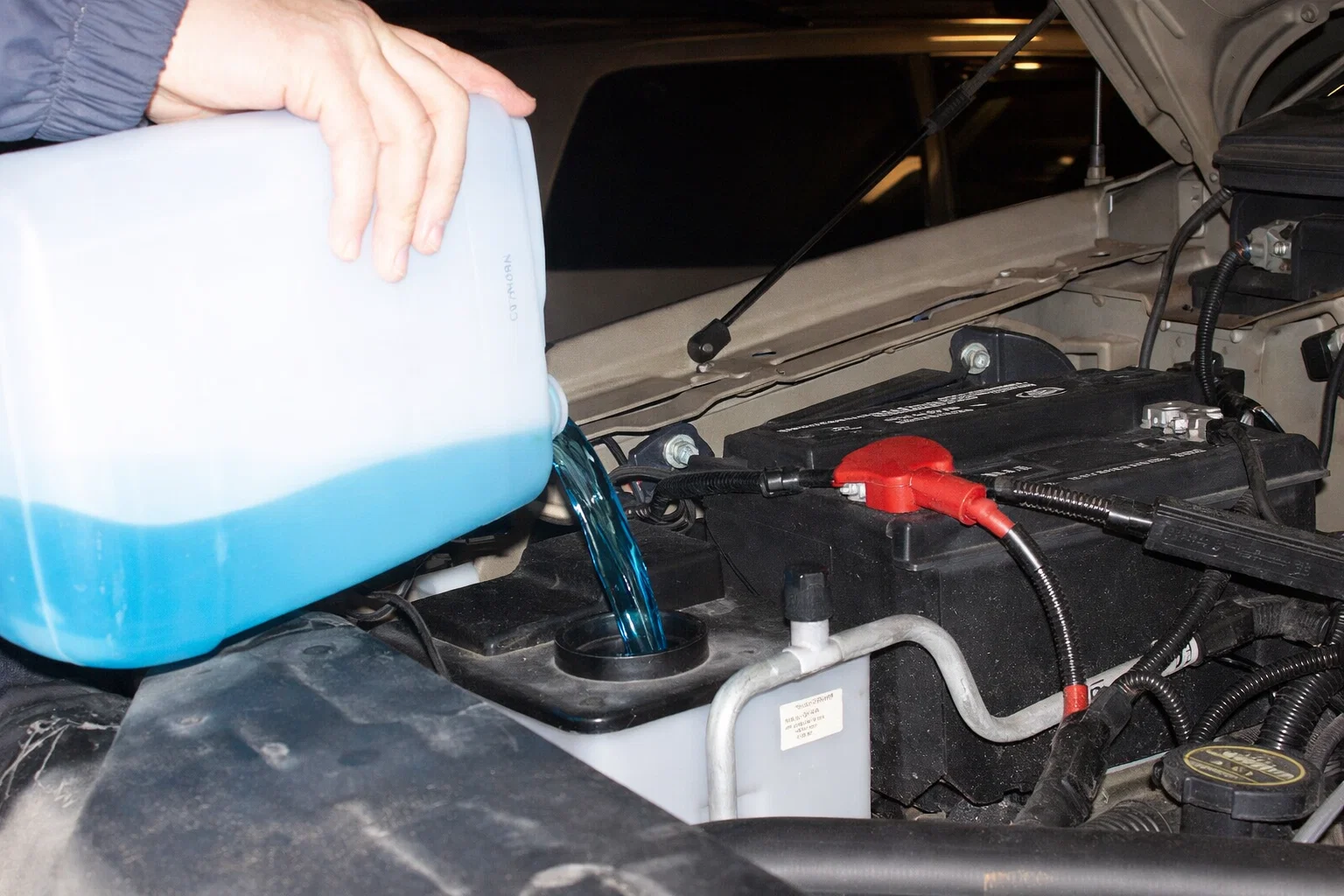
Between these options, there is also all-season fluid. It is usually designed for temperatures around -10 °C and is only suitable for regions with mild climates. This is a compromise that poorly handles both severe frosts and summer contaminants: in the cold, it quickly crystallizes, and in the heat, it is noticeably inferior to specialized summer products for removing insects.
Choosing a quality washer fluid always starts with inspecting the packaging. A reliable product is poured into dense canisters with smooth seams and a tight lid. The label should be glued neatly, with clear printing, without blurry fonts. It must indicate the manufacturer with contact information, composition, date of manufacture, expiration date, and freezing point. The presence of a certificate of conformity is an important marker of the legality and safety of the fluid.
The quality can be partially assessed even before purchase. If you shake the canister, a stable foam appears in a good washer fluid. Special attention should be paid to the smell. Legal fluid based on isopropyl alcohol has a sharp, characteristic aroma, which is often compared to acetone. Almost no smell is an alarming sign: such fluids often turn out to be fakes based on methanol, which is hazardous to health. Before buying, it is also useful to study fresh ratings of washer fluids and reviews.
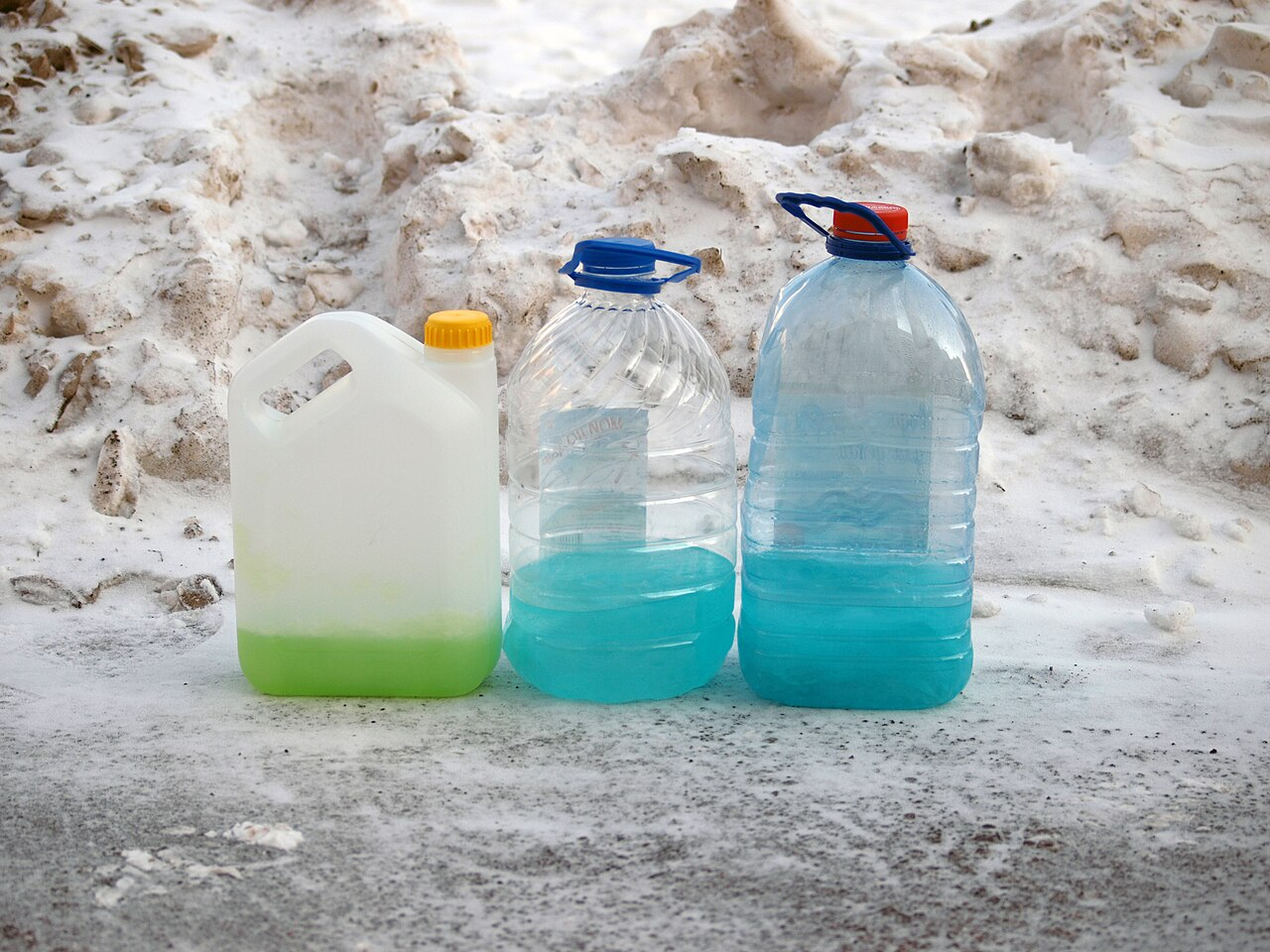
Using low-quality windshield washer fluid can lead to a whole host of problems. In winter, the most common of these is crystallization in the tank. Frozen fluid expands and can damage the tank itself, the pump, or the tubes. At any time of the year, a bad composition often manifests itself as a greasy film on the glass, which is especially dangerous at night and in oncoming headlights. Aggressive components clog the nozzles, accelerate the wear of the wiper blades, and make the rubber seals stiff and brittle. In advanced cases, even the paintwork of the body suffers: cloudy spots appear on it.
When choosing between a ready-made solution and a concentrate, it is worth considering convenience and economy. Ready-made fluid is easier to use, but concentrate is more profitable and allows you to independently adjust the freezing point. It should be diluted exclusively with distilled water, since tap water contains salts that eventually clog the nozzles. The proportions are always indicated on the label. You can check the correctness of the dilution in a simple way: pour a little liquid into a container and put it in the freezer. If it remains fluid, then the concentration is chosen correctly. The appearance of sediment in the canister is a serious signal of poor quality or violation of production technology; it is better not to use such a liquid at all.
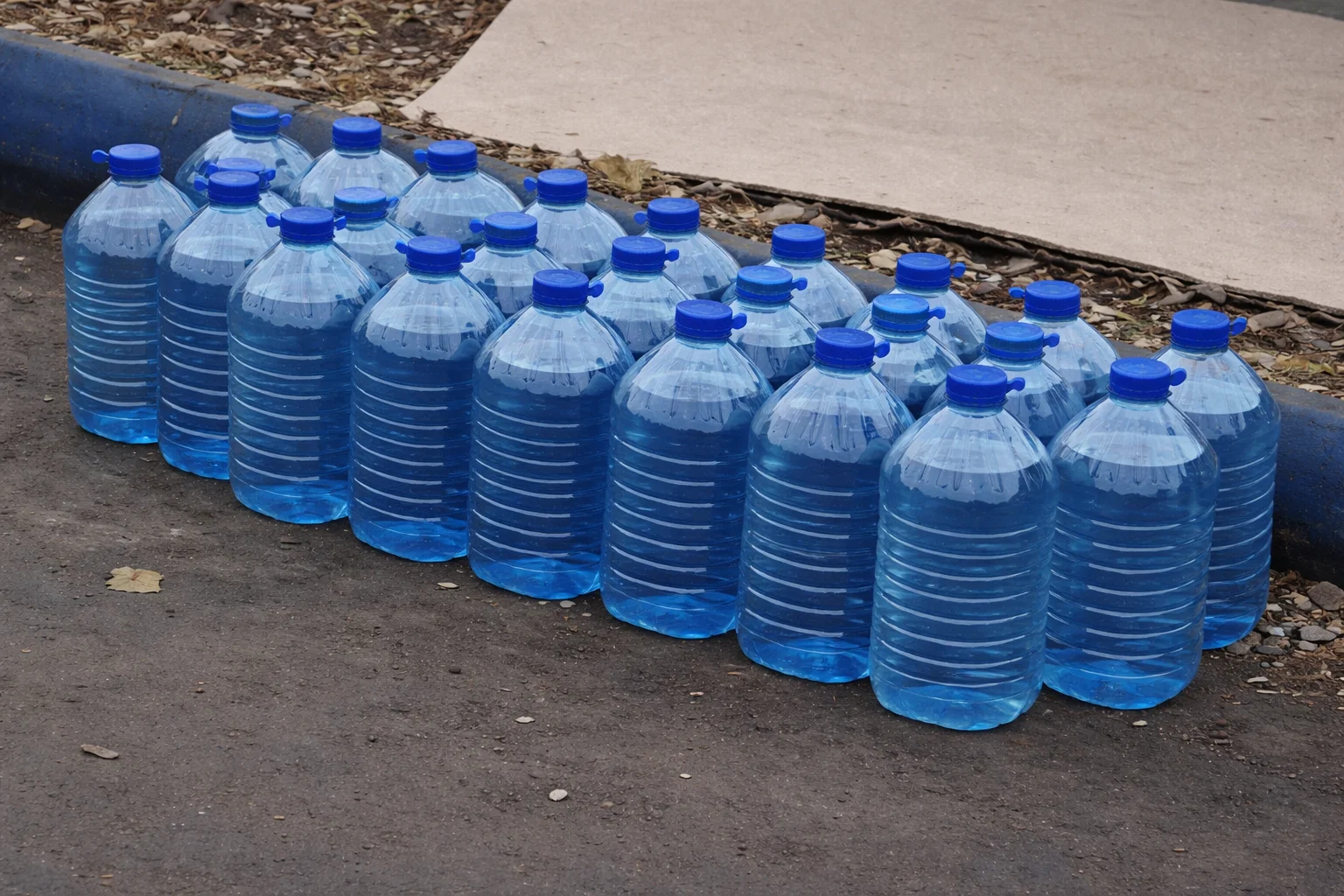
If the antifreeze still freezes in the tank, it is important not to turn on the pump. The car must be warmed up in a warm room, wait until it is completely thawed, then drain the liquid and replace it with one suitable for the temperature. A sharp smell of washer fluid is not a defect, but a sign of legal isopropyl alcohol; the absence of smell is much more dangerous. Mixing winter and summer fluids is not worth it: summer reduces frost resistance, and different brands can react and give a precipitate that can clog the system.
As a result, choosing the right windshield washer fluid is not a trifle, but a matter of safety and vehicle preservation. A competent approach will save you from problems with visibility, premature wear of parts, and unexpected repairs, which often begin with such a seemingly simple thing as the wrong washer fluid.
Read more materials on the topic:
- Old junk cars can bring money - how to properly scrap a car
- How turn signals appeared
- How to choose wheel disks and not to be mistaken