AvtoVAZ has officially confirmed plans to launch a commercial line under the SKM brand in 2026. Production will include vans and minivans, which can be called the successors of the legendary "Nadezhda". At the presentation, the plant also mentioned the future Lada Azimut crossover and the revival of the Lada Vesta Sport. SKM is a new brand created specifically for the Russian market, and, as it turned out, its "native" counterpart in China is called SRM.
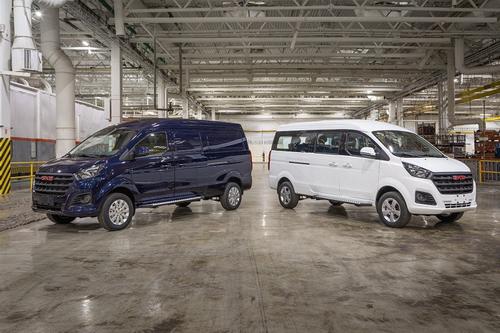
A cargo van and a minivan on the same platform will be produced under the SKM brand. Body length — 4890 mm, width — 1700 mm, height — 1995 mm, longitudinal engine, rear-wheel drive, rear suspension with leaf springs and a solid axle. In the engine compartment, there will probably be a two-liter naturally aspirated engine with a capacity of 150 hp, working in tandem with a 5-speed manual transmission. The weight of the car will vary from 1.3 to 1.6 tons. These cars are designed to occupy the segment between Largus and Gazelle, becoming an alternative to Sobol models and light commercial vehicles from Sollers.
However, the project has a number of obvious risks. Firstly, production will be established on a pilot production line, which is less perfect than the main conveyor, and the quality of the Chinese prototype itself raises questions. Secondly, the price of new cars should be attractive, otherwise the story with the more expensive Largus, which lost interest from buyers, will be repeated. Thirdly, it is not clear how ready the small and medium-sized business market is to accept new products in the current economic conditions, especially given the competition and demand for commercial vehicles.
SKM is essentially the "younger brother" of the Chinese SRM Jinhaishi, a modernized version of the Jinbei Haise X30L, produced from 2015 to 2018 by Brilliance. In the Russian market, SRM is known only for the SWM crossovers produced at Avtotor in Kaliningrad. AvtoVAZ adapts these cars to its requirements, installing a localized logo and bringing them up to Russian standards.
The first SKM models will be available in two versions: a passenger minivan and a cargo van. In the future, the line is planned to be expanded with on-board trucks and chassis for various superstructures. The main goal is to offer domestic customers a universal commercial vehicle between the passenger Largus and the larger Gazelles, but with a price and operation suitable for small businesses.
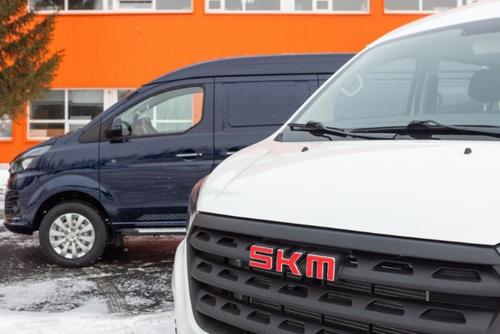
The key factor for the success of the project is the establishment of production at the new OPP, which should ensure stable quality. Any assembly failures or shortcomings of the Chinese prototype may sharply reduce confidence in the brand and repeat the fate of "Nadezhda", which became famous, but quickly left the assembly line due to problems with quality and reliability.
The price issue is also critical. Largus lost popularity after the increase in cost, and the new SKM vans will be noticeably more expensive than their predecessors. The demand for such cars directly depends on the financial capabilities of small and medium-sized businesses, and the economic situation and competition with already established models make this factor especially important.
Finally, the market itself is risky for launching new commercial models. Despite official announcements and assurances from the plant, only practice will show the success of the project. While AvtoVAZ is betting on the Chinese platform and experienced capacities, the question remains: are Russian entrepreneurs ready to accept SKM and will the brand repeat the path of "Nadezhda" or become a new competitive player in the light commercial vehicle segment.
Read also materials:
- AvtoVAZ officially explained which gasoline should be poured into Lada
- Moskvich announced prices for the Moskvich 6 sedan of the 2026 model year
- Tank raised prices for the entire model range in Russia: Tank 500, 700 and 400 have risen in price