A car is a complex mechanism where even seemingly minor deviations can hide serious threats. A slight extraneous noise, a small spot under the car after parking, or a slightly heavier steering wheel are often perceived by drivers as natural signs of wear and tear. As a result, a visit to the service is postponed, and the problem continues to develop.
Meanwhile, there are malfunctions that do not tolerate delay. The danger lies not only in obvious failures such as non-working brakes or a jammed steering wheel — often a critical situation arises from a chain of events starting with a minor defect that turns into a serious accident in a matter of seconds.

Let's analyze five types of malfunctions that require immediate intervention.
1. Problems with the braking system
The braking mechanism is a key element of the car's active safety. Any deviations in its operation are unacceptable and require immediate inspection.
The most characteristic signs:
- the appearance of oily traces under the pedal or under the car, indicating a brake fluid leak;
- an increase in pedal travel, its excessive softness, or a feeling of "failure";
- extraneous noises during braking — squeaking, screeching;
- deviation of the car to the side when the brake is applied.
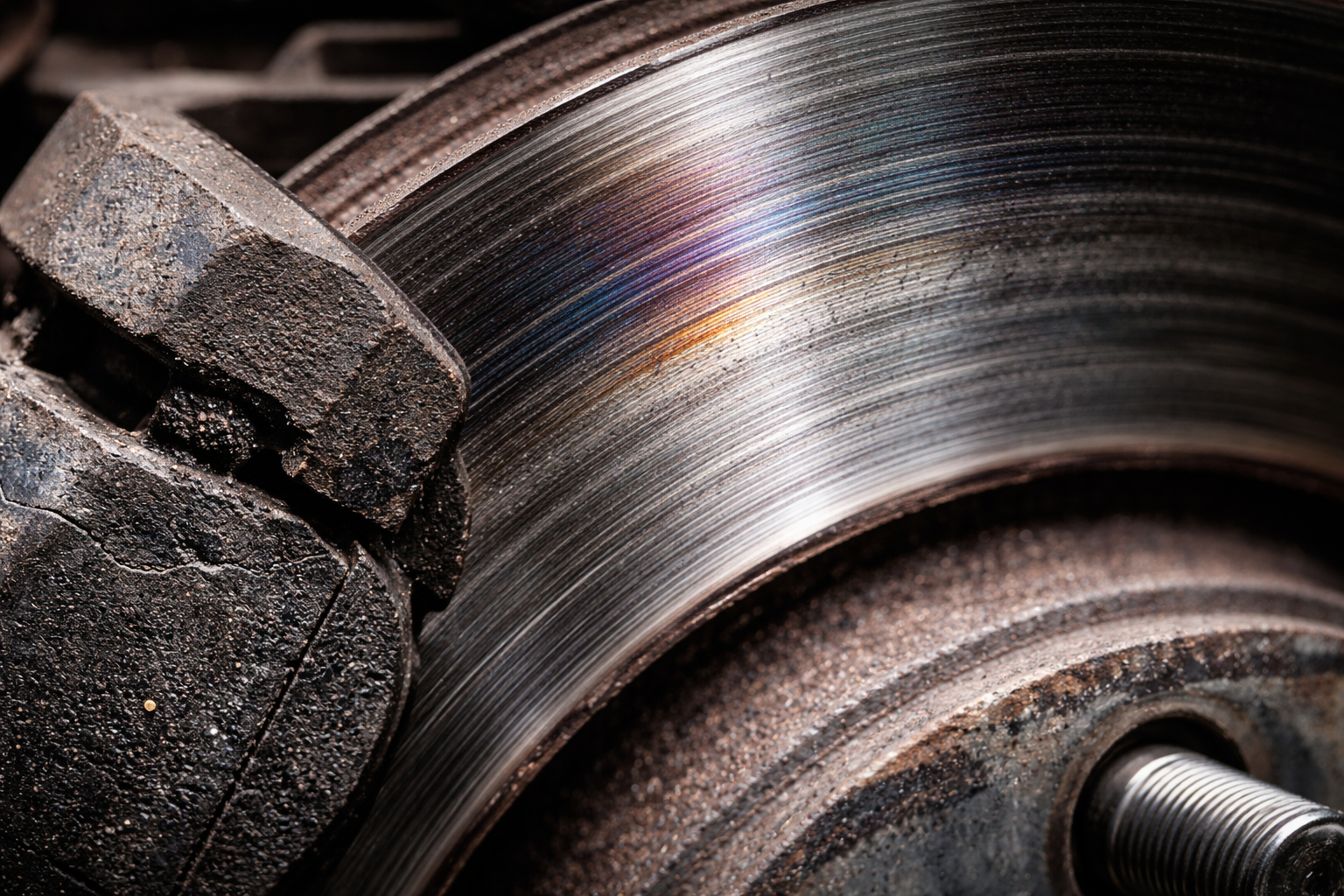
Even a minor leak can eventually lead to a complete loss of pressure in the system. In motion, this means the inability to stop the car. Any doubts about the health of the brakes are sufficient grounds for immediate consultation with specialists.
2. Wear of chassis components
Knocks, vibrations, and squeaks while driving are not just a matter of comfort, but clear signs that the suspension components are working at the limit of their capabilities.
Possible consequences include:
- overheating and jamming of the wheel bearing, which at speed can lead to wheel lockup and loss of control;
- sudden destruction of ball joints or steering tips, often without pronounced preliminary symptoms;
- deterioration of wheel grip with the road due to faulty shock absorbers, which increases the braking distance.
The moment of final failure of a part cannot be predicted. Therefore, any noises, play, and vibrations should be a reason for diagnosis.
3. Play and knocks in the steering
Steering provides a direct connection between the driver and the road. Any deviations in its operation inevitably reduce control over the car.
The main causes of problems:
- natural wear of steering rods and tips;
- damage to the steering rack;
- corrosion and loosening of fasteners.
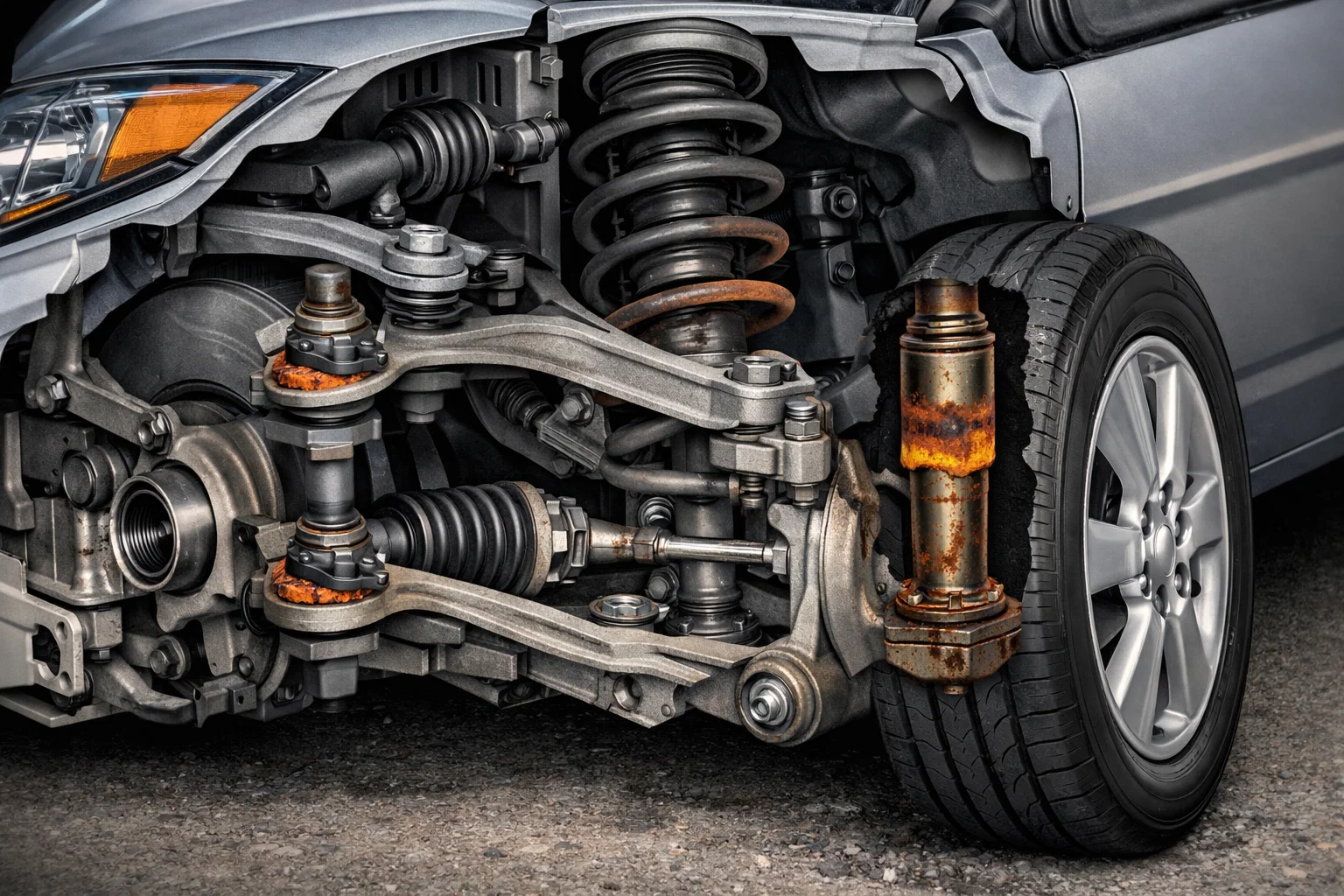
In the presence of play or knocks, even a small obstacle — such as a pothole or stone — can provoke loss of control. Despite the fact that the car may remain on the move, the level of risk becomes unacceptably high.
4. Decrease in the level of working fluids
The engine and transmission directly depend on a sufficient volume and quality of technical fluids. Their shortage leads to serious consequences.
Possible scenarios:
- lack of engine oil causes oil starvation, which leads to damage to the crankshaft, liners, and piston group; repairs in such cases cost tens of thousands of rubles;
- coolant leakage causes engine overheating, which can lead to deformation of the cylinder head, damage to the gasket, or engine seizure;
- a decrease in the level of brake fluid is fraught with brake failure;
- transmission oil leakage can lead to transmission failure.
Regular level checks are one of the most affordable ways to prevent costly repairs.
5. Violation of the tightness of the fuel system
A fuel leak is often perceived as a minor malfunction, but in practice it is one of the most dangerous situations.
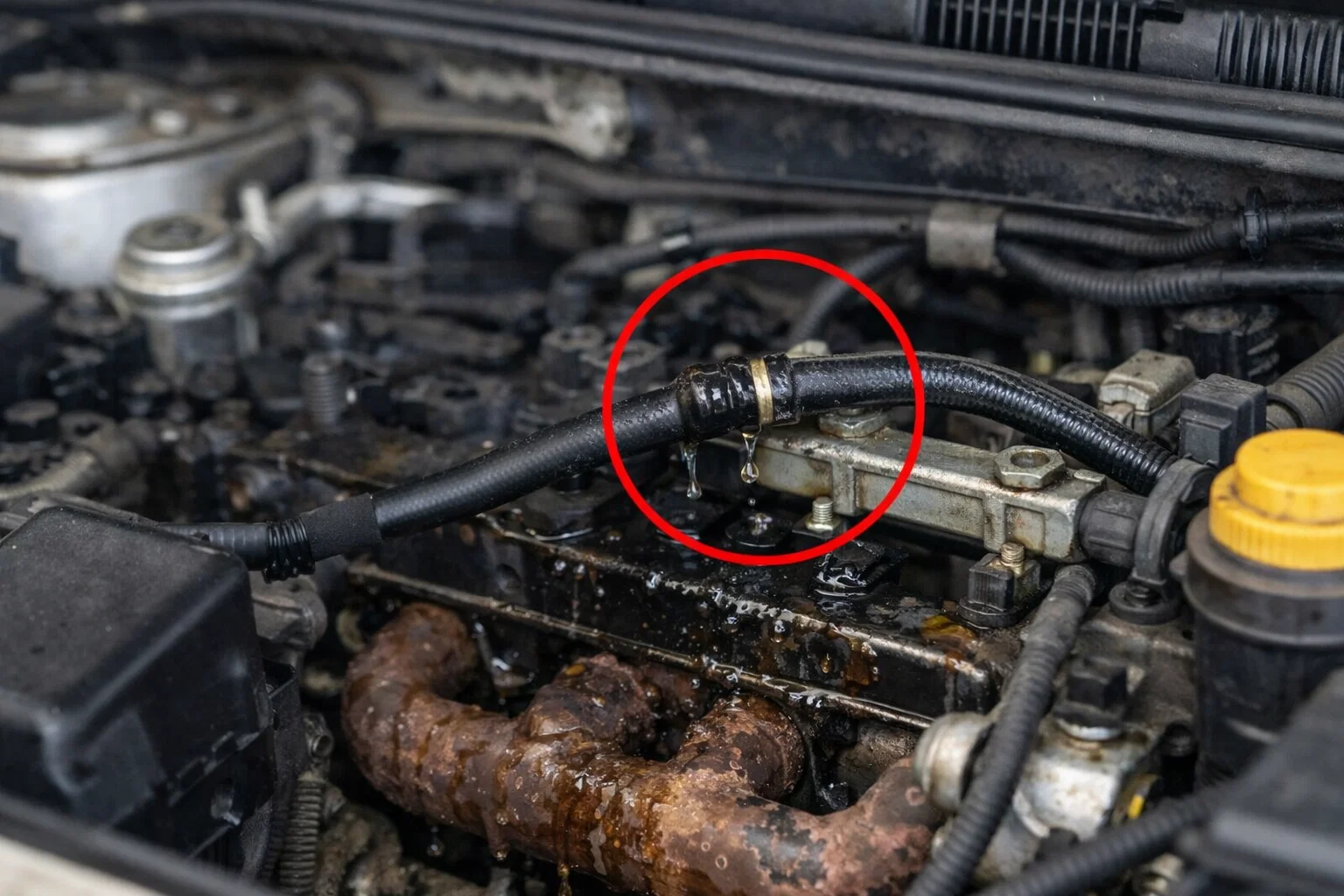
Main risks:
- even minor damage to the fuel hose or tank creates a fire hazard;
- gasoline vapors are easily ignited by a spark or contact with heated elements of the exhaust system;
- the intensity of the leak can increase dramatically, including while driving.
The smell of gasoline after parking or the appearance of stains under the car is a reason to immediately stop operation until the causes are clarified.
Why postponing repairs is unacceptable
The common logic "the car is running - so everything is not so bad" is misleading. Car components do have a safety margin, but it is limited. Wear accumulates, and at a certain point, destruction occurs.
Such situations are especially dangerous at high speed: the consequences can be critical. At the same time, timely elimination of the malfunction almost always costs significantly less than eliminating its consequences. For example, replacing a wheel bearing is incomparable in cost to repairs after it seizes.
The car does not forgive ignoring signals about malfunctions. The brake system, suspension, steering, fluid levels, and fuel system tightness are among the components where even minor deviations require immediate response.
Careful attention to the behavior of the car, regular diagnostics, and timely repairs are the only way to maintain the safety of the driver and those around them. Waiting for it to "go away on its own" can lead to a minor problem turning into a serious accident.
Read more materials:
- Is it possible to paint a car in winter: truth and myths
- Wooden "Moskvich-422": how it worked
- Why does the engine need "warming up" on the highway
Comments