There are vehicles destined to enter history instantly. But there are others — those that appear at the wrong time and in the wrong place, only to gain recognition under entirely different circumstances. The story of the GPA amphibious vehicle is exactly one of those. A machine deemed unsuccessful in its homeland went through the harshest trials of the Second World War and turned out to be truly in demand where it was not originally expected.
The "sea jeep" that was not accepted
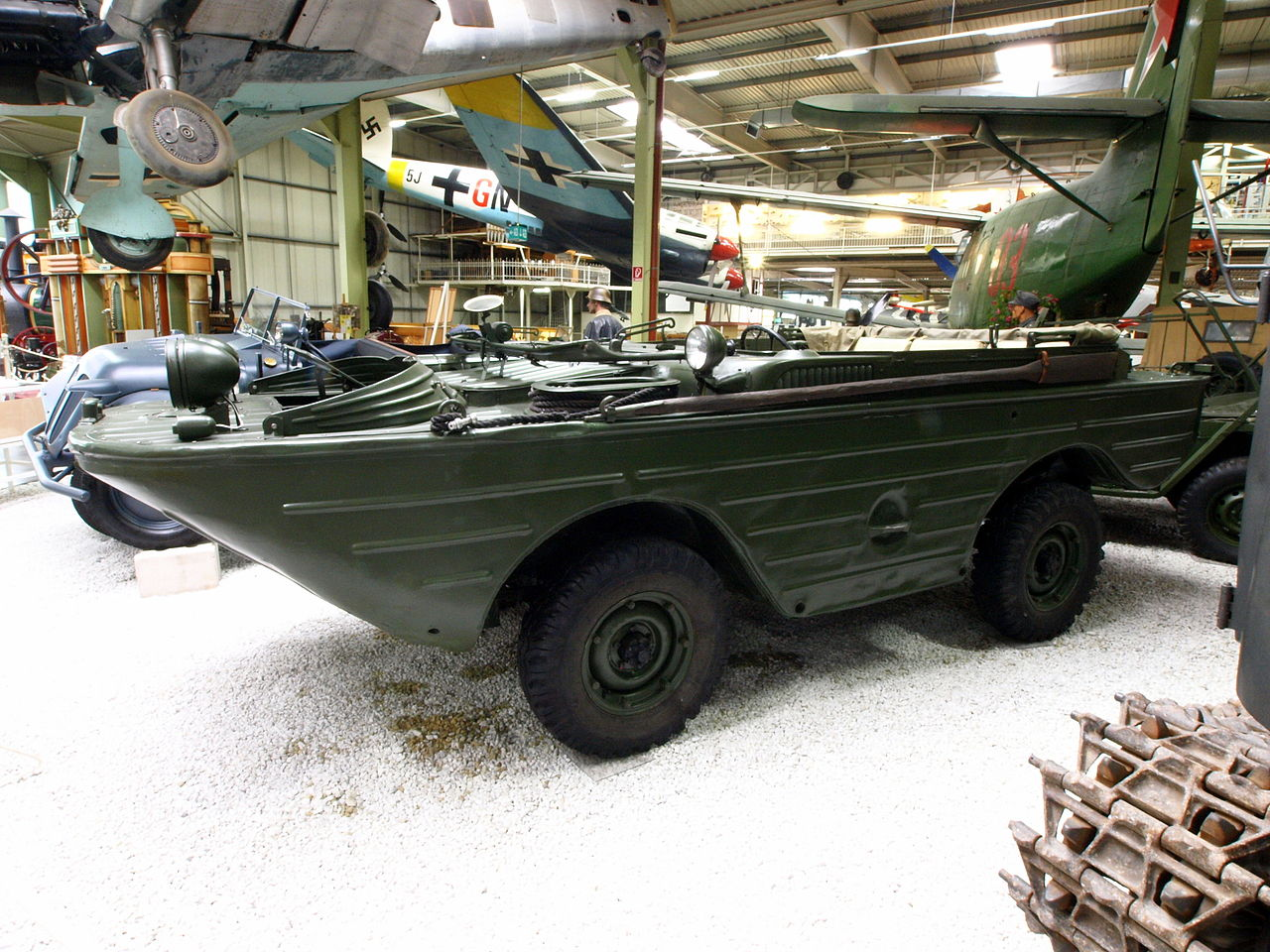
In the United States, this vehicle was called the Seep — a kind of naval version of the jeep. In the Red Army, a simpler name took hold — the "Ford-4." One of the thousands of units produced, and there were 12,774 in total, was recognized as unsuccessful just a year after production began and was withdrawn from service by the American army.
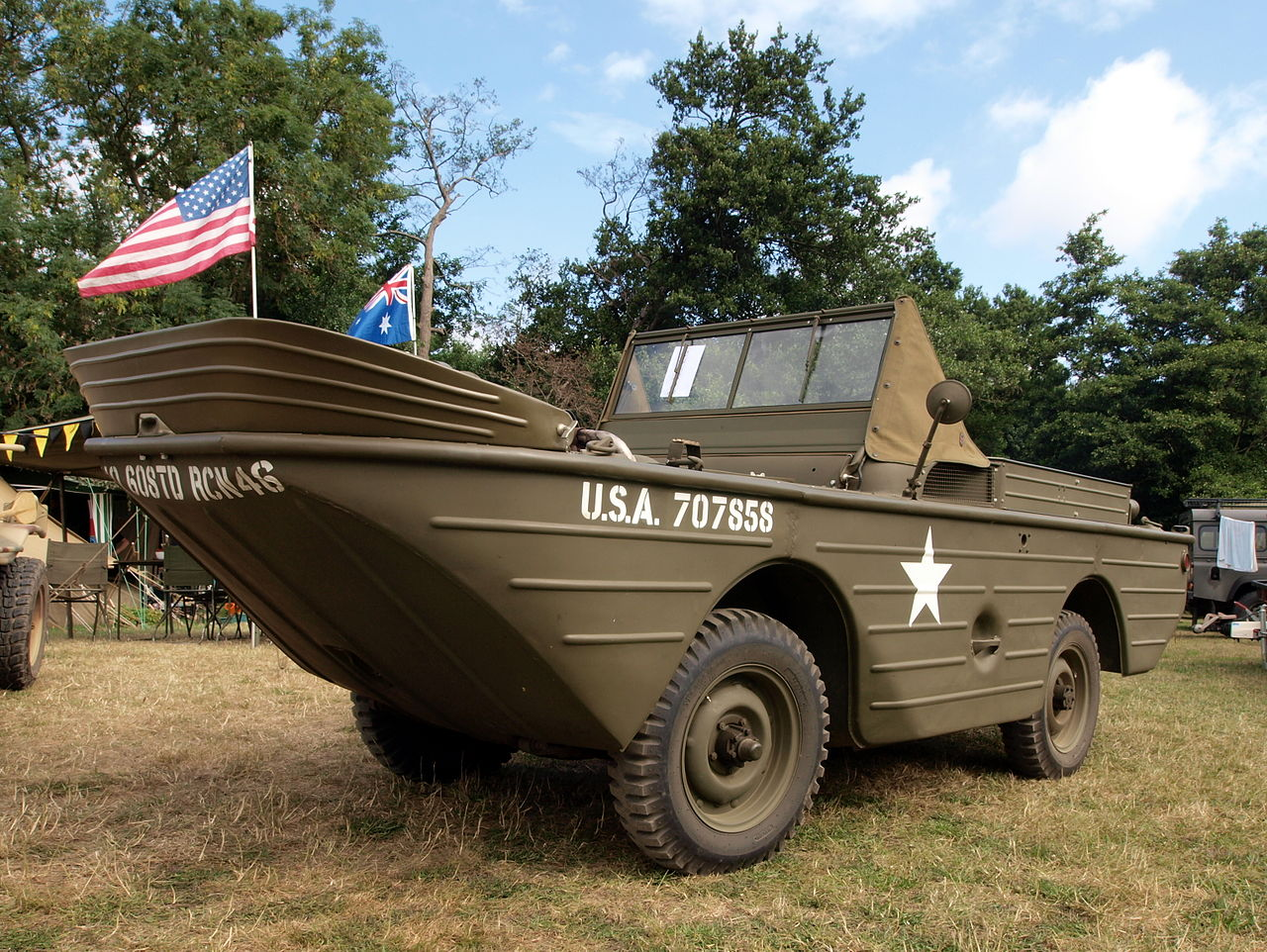
Nevertheless, these vehicles were actively used on the fronts of Eastern Europe. They took part in crossings of the Dnieper, the Vistula, the Oder, and the Svir, operated in estuaries and on lakes, transported scouts, and even towed ferries carrying tanks. The paradox is easy to explain: in wartime, what matters is not a perfect design, but whether it fits specific tasks.
How the GPA amphibious vehicle appeared
In the spring of 1941, when military action had already engulfed Europe, the United States began preparing for possible operations on the continent. The army needed a compact amphibious vehicle for moving units across water obstacles.
They used proven equipment as the basis — components of the Ford GPW army jeep: the engine, transmission, and elements of the running gear.
The hull, meanwhile, was developed by specialists from the New York yacht design firm Sparkman & Stephens. They applied their knowledge of hydrodynamics and created a design in the form of a flat-bottomed hull with a tunnel propeller, water rudder, capstan, and splash guard.
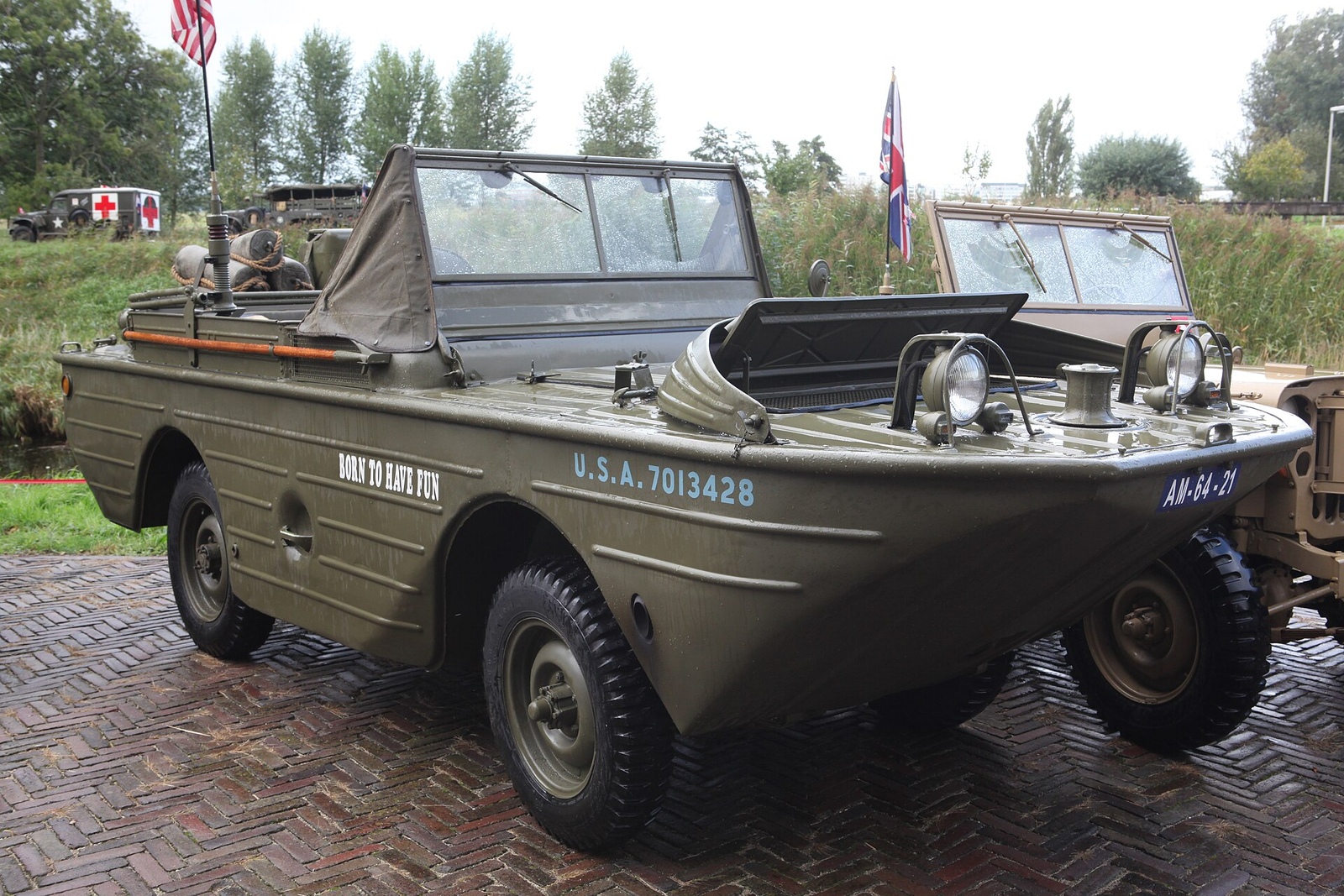
The first prototype took to the water on February 9, 1942, beating competitors by nearly a month. By April, Ford had already received an order for five thousand vehicles.
Design: well thought out, but not universal
From an engineering standpoint, the vehicle looked quite convincing. The hull was divided into three sealed compartments, which allowed it to retain buoyancy even when damaged.
Key design features:
- GPA-6005 engine with 54 hp, adapted for operation on water
- three-speed gearbox and two-speed transfer case
- four-wheel drive with two driven axles
- separate engagement of the propeller
- the ability to move simultaneously on wheels and propeller power
Additional protective solutions were also provided. For example, a special pin in the steering mechanism would shear off if the water rudder jammed, returning control to the wheels. A manual pump removed up to 150 liters of water per minute, allowing the vehicle to stay afloat even if the hull was damaged.
The specifications also looked respectable: speeds of up to 89 km/h on land, about 9 km/h on water, and a crew of up to six people.
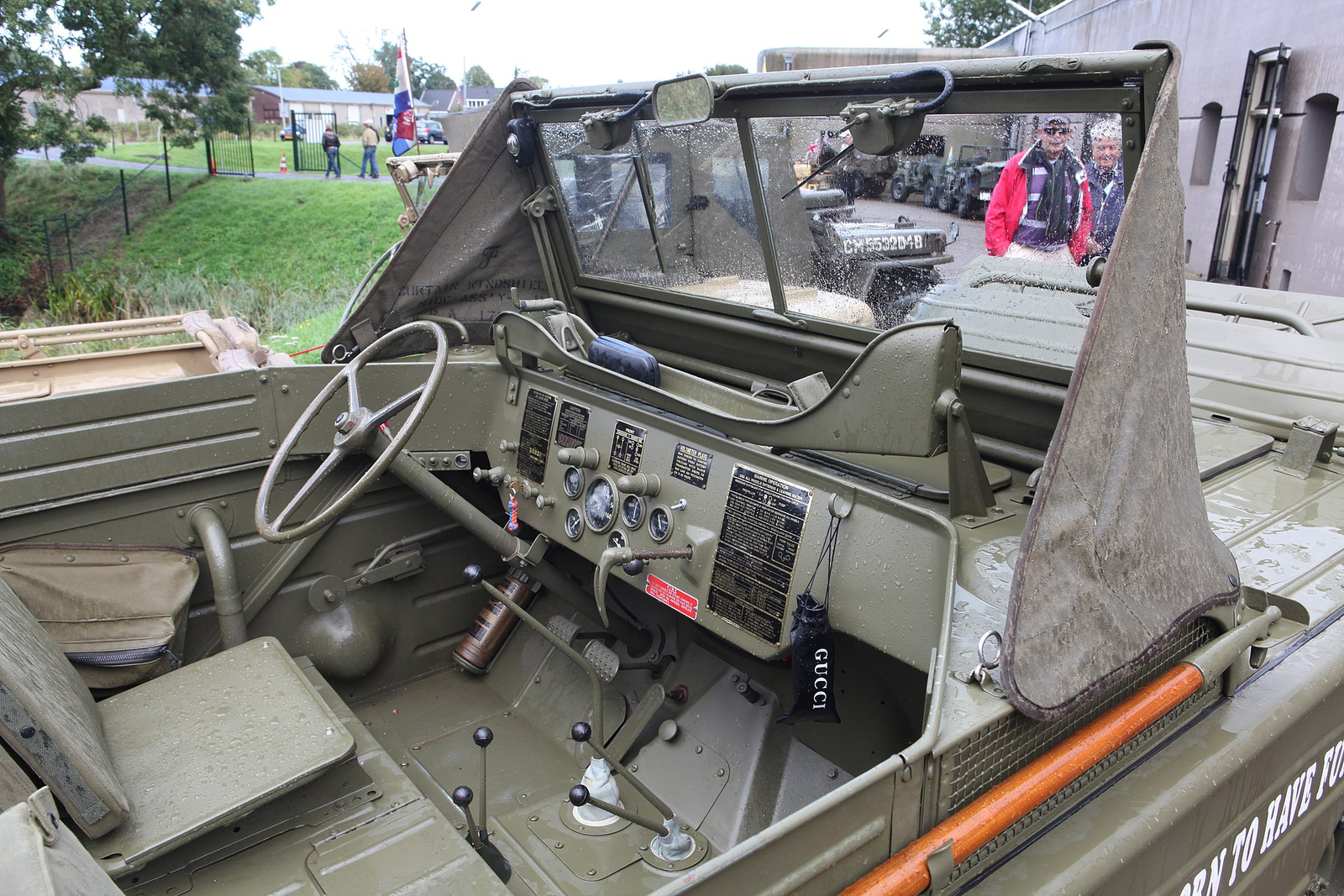
However, fuel consumption on water reached 187 liters per 100 km — a serious figure even by wartime standards.
Why the GPA did not take root in the US Army
Problems became apparent already under combat conditions. In freshwater tests, the shortcomings were not obvious, but at sea the situation changed.
Main reasons for rejection:
- low freeboard, which allowed waves to wash over the hull
- insufficient stability in seawater
- considerable weight (about 1.5 tons), which reduced off-road mobility on land
Against the backdrop of the three-axle DUKW amphibious vehicle, capable of operating in the open sea, the compact GPA looked weaker. In June 1943, its production was halted, and the remaining vehicles began to be transferred to the Allies.
A second life in the Soviet Union
About 3,500 amphibious vehicles were sent to the USSR. It was here that the machine revealed its potential.
The Red Army needed equipment not for naval landings, but for other tasks:
- crossing rivers — the Dnieper, the Vistula, and the Oder
- operating in estuaries and swampy terrain
- supporting reconnaissance operations
The GPA fit these conditions perfectly.
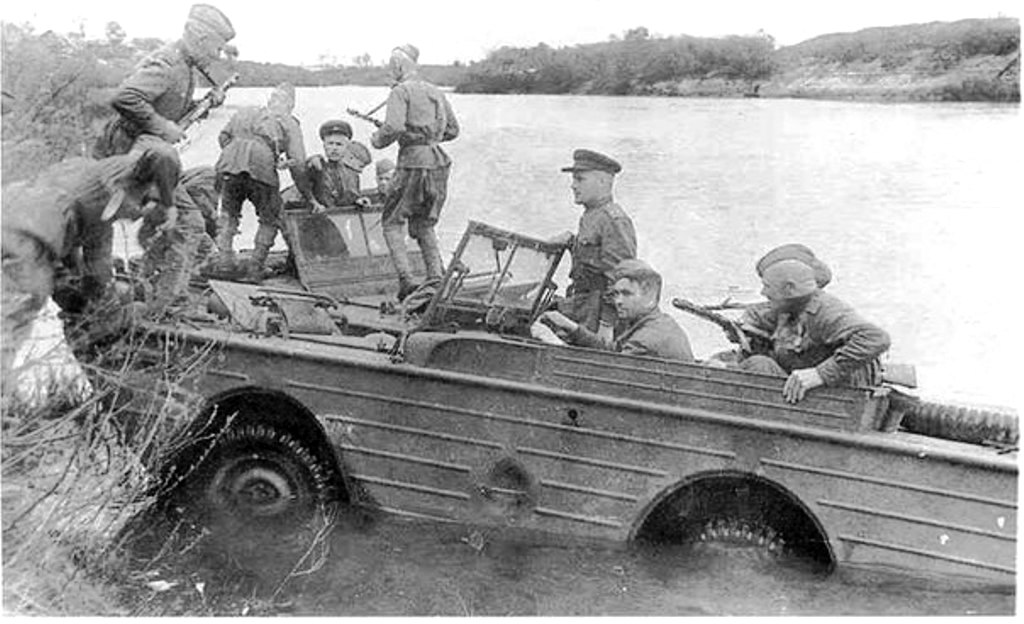
A telling episode occurred on August 22, 1944, when the 252nd Separate Amphibious Battalion began a crossing of the Dniester Estuary. First, reconnaissance operated at night, then the main forces crossed independently, afloat.
By noon, T-34 tanks had already reached the opposite shore, delivered on ferries towed by those same amphibious vehicles.
Practical use at the front
During combat operations, the GPA performed a wide range of tasks: transporting reconnaissance groups, delivering ammunition, evacuating the wounded, supporting crossings, towing ferries, and pulling out vehicles.
The machine was valued for its simplicity and reliability. The engine started in any conditions, operation did not require complex training, and repairs were often carried out right in the field.
Interestingly, the shortcomings that were critical for naval operations played almost no role on flatland rivers. The low sides and open top did not interfere with mission performance, since the amphibious vehicles were used not under fire, but in logistics and at crossings.
Legacy and continuation of the story
After the war, the experience was not lost. The USSR developed its own designs:
- GAZ-011 based on the GAZ-67B
- GAZ-46, which became the direct successor to the GPA
These vehicles were used in engineering units until the end of the 1960s.
An unexpected epilogue
The most unusual chapter of the story is connected with peacetime. In 1950, Australian Ben Carlin purchased a decommissioned GPA, named it "Half-Safe" ("Half safe"), and set off on a journey around the world.
In a vehicle deemed unfit for ocean waves, he crossed the Atlantic via the Azores, traveled through Europe and the Middle East, and reached Burma.
The story of the GPA is an example of how technology can end up "out of place" and yet become indispensable under different conditions. A machine rejected in the United States played a notable role in Red Army operations and left its mark on engineering history.
Its fate clearly shows that the value of technology is determined not by universality, but by how well it matches a specific task.
Read more articles:
- How to get your headlights back in order after winter
- Wheel tightening: three dangerous mistakes
- Wide tires: a myth or a real advantage
Комментарии