By the end of the 1950s, the Soviet automotive industry found itself in a strange situation: despite having a developed school of off-road technology and mass production of army GAZ-69s, the civilian sector practically lacked a passenger car with increased cross-country capability. Moskvich and Pobeda models were designed for paved roads, while their capabilities quickly diminished in rural areas.
The answer to this demand was the Moskvich-411 – an all-wheel-drive station wagon created at the turn of the decade.
From GAZ to MZMA
GAZ was the first to try to solve the problem. In 1955, the GAZ-M72 appeared – an all-wheel-drive Pobeda based on GAZ-69 components. Simultaneously, the compact GAZ-M73 was being developed, but the launch of new models was limited by production capabilities.
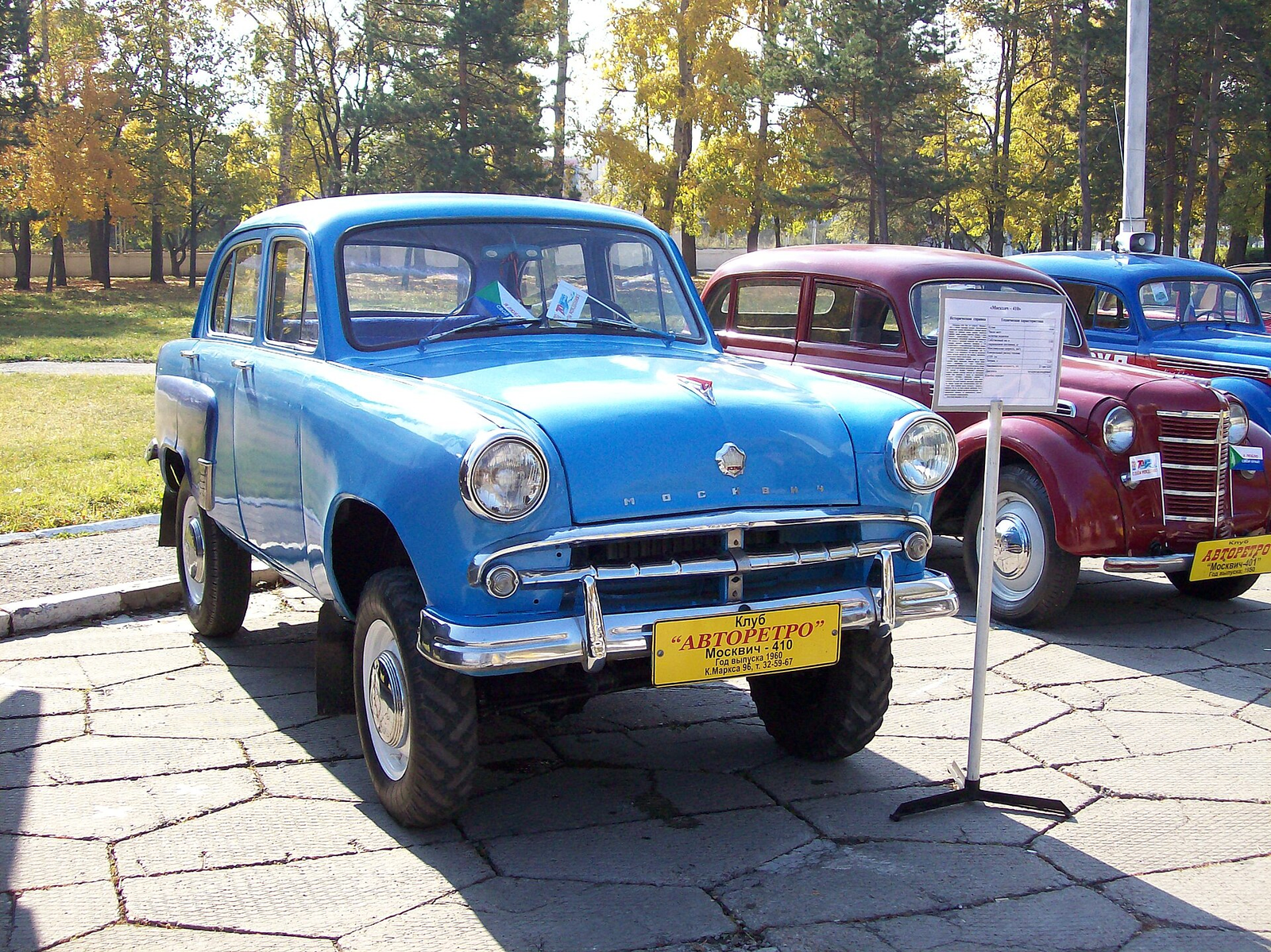
Ultimately, the developments were transferred to MZMA, where in 1957, production of the Moskvich-410 – an all-wheel-drive sedan – began. It became the basis for further development, leading to the creation of the station wagon.
Design and Purpose
The Moskvich-411 was designed with a clear focus on rural operation. Its basis was the components of the production Moskvich-402:
- load-bearing body
- four-cylinder engine with a displacement of 1220 cm³
- mechanical four-speed gearbox
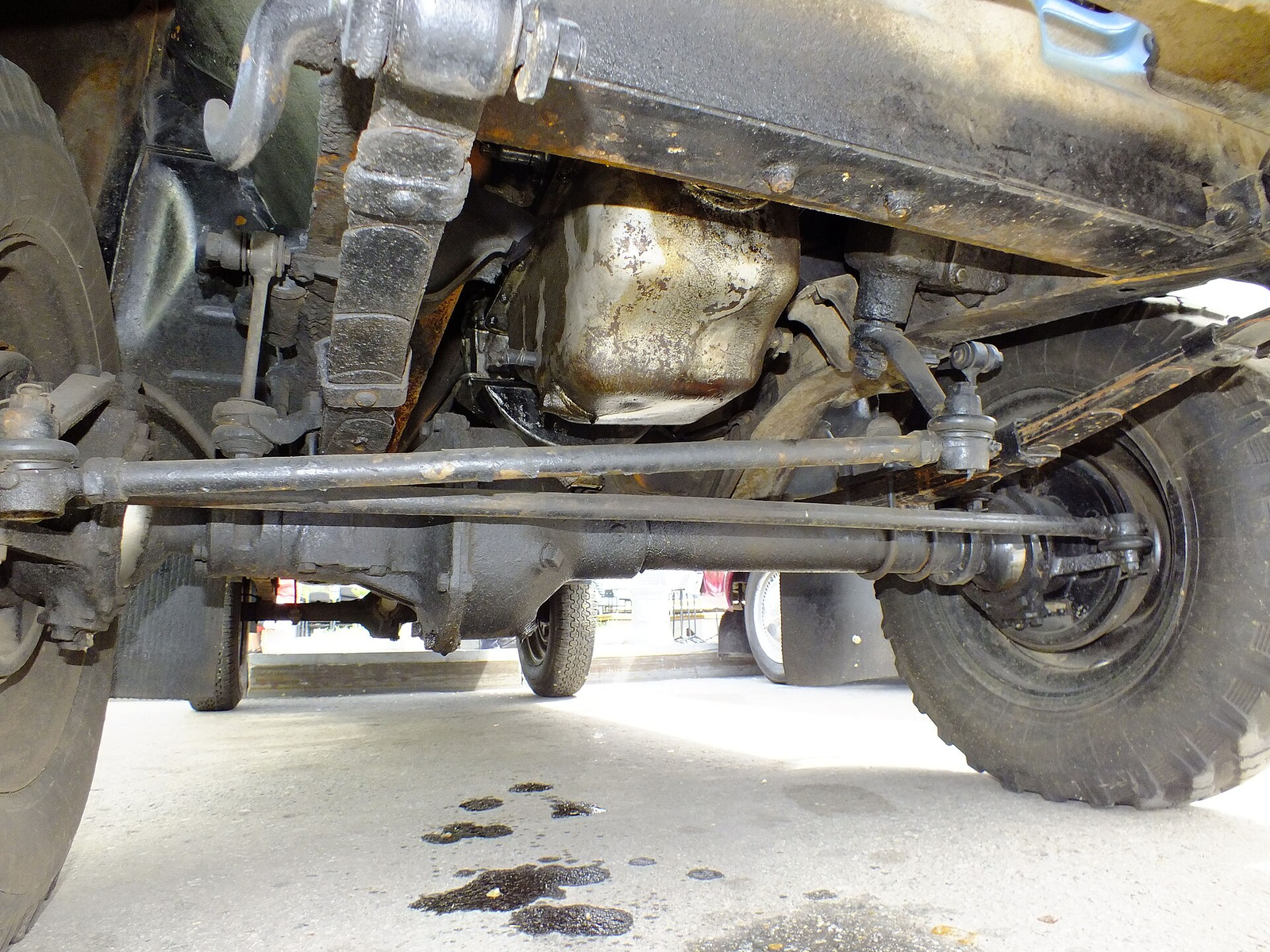
All-wheel drive was provided by a two-speed transfer case and a connectable front axle.
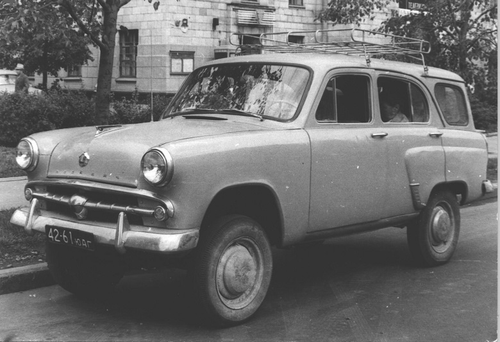
The body was a modified version of the Moskvich-423 station wagon, reinforced with additional elements. The gross weight was about 1540 kg, and the payload capacity was about 200 kg. This configuration allowed the car to be used not only for transporting people but also for household needs.
Design Features
Externally, the car was easily distinguished by its increased ground clearance and characteristic stance. The design was significantly strengthened and adapted to harsh conditions:
- increased ground clearance (about 220 mm)
- reinforced body and additional cross members
- more powerful radiator and oil cooler
- lever shock absorbers
- modified steering column
The interior remained simple but functional: without excessive trim, with a working heating system and a standard radio receiver.
Cross-country Capability and Handling
The main qualities of the Moskvich-411 were revealed off-road. The low gear (2.68) and all-wheel drive allowed it to confidently move through mud and dirt, where ordinary passenger cars would lose traction.
At the same time, design features were also evident while driving:
- transmission noise was noticeable already at 50 km/h
- strong engine braking occurred when releasing the accelerator
- first gear allowed movement at almost minimal speed
The 45 hp engine and torque of about 88 N·m seemed modest, but in combination with the transmission, it provided sufficient traction. The maximum speed reached approximately 90 km/h, and fuel consumption was 10–12 liters per 100 km.
Short Fate
The Moskvich-411 was produced for a short time – from 1958 to 1961. Production was extremely limited: about 500 cars annually, a total of about 1500 units.
The reason for such a volume lay outside the engineering plane. The factory focused on exporting more in-demand rear-wheel-drive Moskvich-407s, which sold successfully in Europe. All-wheel-drive versions had no demand there, and production resources were reallocated in favor of export models.
The Moskvich-411 became a rare example of a car that was in demand domestically but did not develop due to economic reasons. Its history is determined by several factors:
- the need for transport for rural areas
- a successful combination of a passenger car body and all-wheel drive
- limited production resources
- priority of export deliveries
As a result, this model remained small-batch but took a special place in the history of the Soviet automotive industry as one of the first attempts to create a versatile passenger SUV.
Read more articles:
- Hybrid: benefit or overpayment
- "Zhiguli" luxury class: the phenomenon of VAZ-2103
- How KrAZ-256B conquered British construction sites
Комментарии