The post-war years were a challenge for all countries. Europe was recovering from the destruction, the Soviet Union was returning to peaceful life and at the same time sought to establish foreign trade in order to receive currency. In these conditions, Soviet technology — simple, durable and affordable — began to be actively supplied abroad. Above all, reliability and unpretentiousness were expected of it.
Passenger cars were mainly purchased by those who were looking for inexpensive transport, while trucks were purchased in large quantities for state and commercial needs. One of the key partners of the USSR was Finland, with which pragmatic economic ties were built. Through the joint venture Konela, Soviet cars arrived in thousands — they were used in construction, agriculture and the forestry industry.
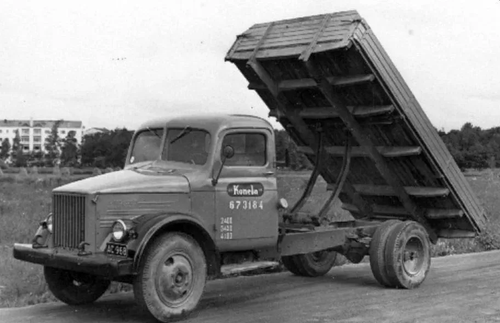
A special place was occupied by the GAZ-51, known as the "Lawn". It quickly became in demand due to the combination of simple design, maintainability and moderate cost. However, during operation, it turned out that in its original form, this truck does not fully meet the needs of the Finnish market.
Why the Standard GAZ-51 Was Not Suitable
Finnish carriers more often worked with bulky rather than heavy cargo — furniture, building materials, industrial products. The standard platform of the "Lawn" turned out to be too short and limited the efficiency of transportation.
This led to the need for modifications, which began to be carried out immediately after the arrival of the cars:
- the frame was lengthened, adding additional sections and increasing the base by 1–1.5 meters
- in some cases, a third, so-called "lazy" axle was installed
- large vans of local production were mounted on the elongated chassis
As a result, unusual designs appeared: the familiar GAZ-51 cab was combined with a long body designed to carry a significantly larger volume of cargo.
Engineering, Not Handicraft
Such alterations cannot be considered primitive. Finnish workshops actually performed full-fledged engineering work. Lengthening the frame required recalculation of loads and changes in design.
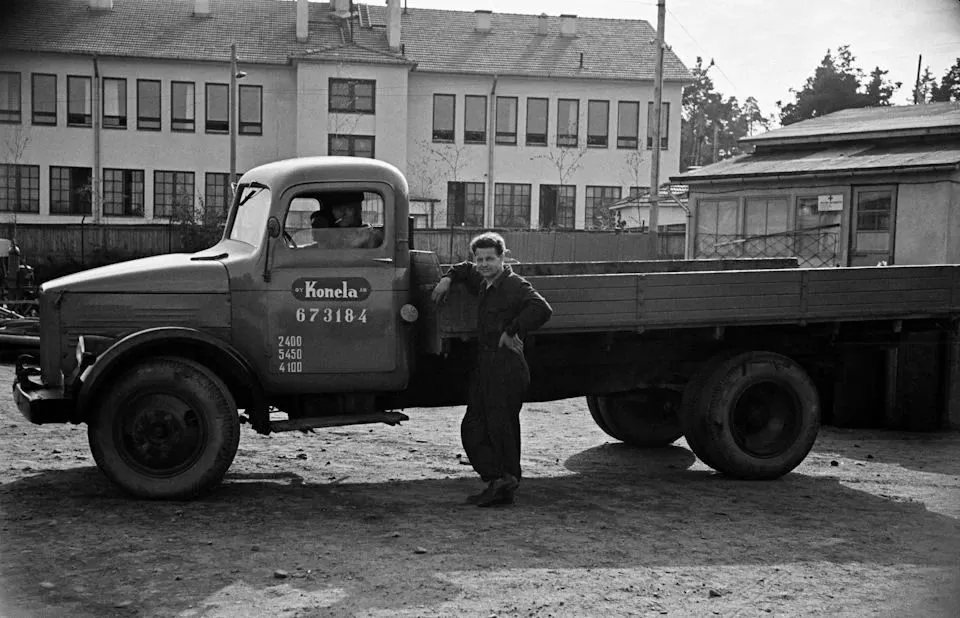
In the process of modifications:
- the spars were reinforced and crossbars were added
- the location of the spring supports was adjusted
- the load on the axles was redistributed
- the third axle reduced the load on the rear axle and reduced tire wear
The bodies were made using the technology common in Scandinavia — from aluminum panels or plywood on a metal frame. Due to its light weight, even a six-cylinder engine with a volume of 3.5 liters coped with the increased volume of transportation.
The result was a kind of hybrid: a Soviet chassis with army roots was combined with a practical concept close to future European delivery trucks.
Cabins: Myths and Reality
A common story about replacing the cab is associated with the Finnish versions of the GAZ-51 — and there is some truth in it. Early post-war cars were indeed equipped with wood-metal cabs: the shortage of steel forced the use of plywood coated with tarpaulin or leatherette.
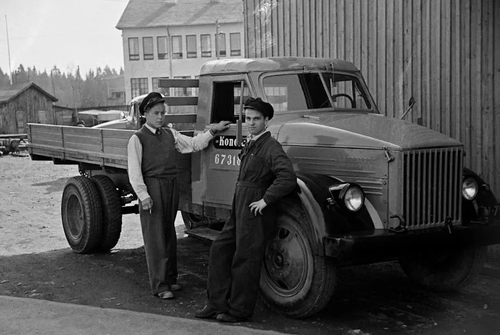
In wet and windy climates, this design quickly wore out. Therefore, Finnish customers began to purchase not finished cars, but chassis with units, installing cabs on their own.
The practice included various solutions:
- installation of all-metal cabs of their own production
- use of cabs from used European and American trucks (Volvo, Opel, Bedford, Studebaker)
- adaptation of the design to local operating conditions.
As a result, unusual combinations appeared: the Soviet technical base was combined with a more comfortable and warm foreign cab.
Export Versions and the Limit of Possibilities
A modification of the GAZ-51V was produced for foreign markets. Its engine was slightly modified: a modified cylinder head, compression ratio and carburetor settings made it possible to increase the power to 78–80 horsepower instead of the standard 70.
This helped to cope with the increased load, and the official payload reached 3.5 tons — provided that it was operated on high-quality roads. On some cars, reinforced rear axle elements from the GAZ-63 were used, which increased the service life.
Some owners went further, installing their own hydraulic dump truck mechanisms, since the serial GAZ-93 was considered not spacious enough.
The Decline of the Era of Gasoline Trucks
Modernized "Lawns" were actively used in Finland until the late 1960s. However, during this period, the European automotive industry was undergoing important changes — a massive transition to diesel engines.
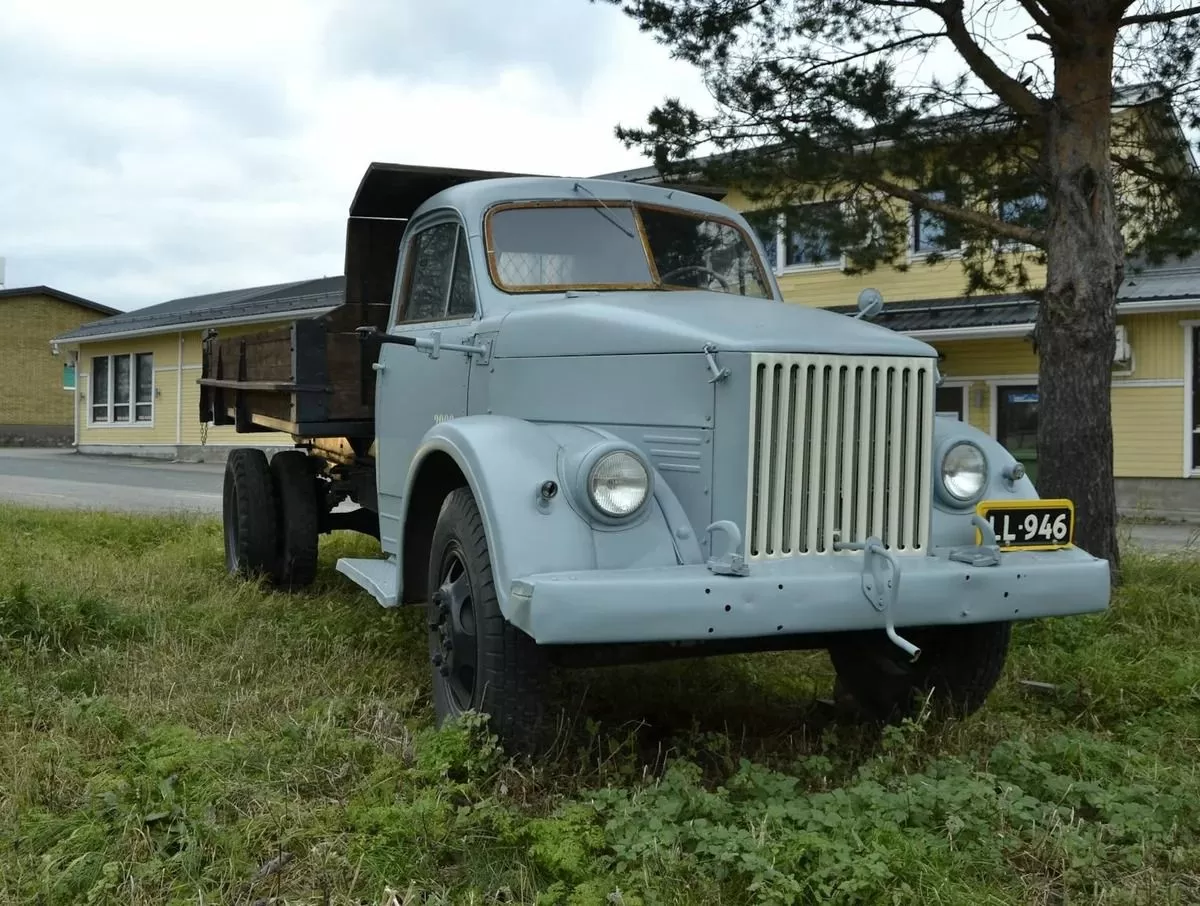
Against the background of these processes, the gasoline GAZ began to give way to competitors. Manufacturers such as Volvo, Scania and Mercedes relied on economical diesel engines, which provided lower fuel consumption and lower operating costs.
If in the early 1960s the Gorky Automobile Plant had offered a modern diesel engine for export models, the situation could have developed differently. But this did not happen.
The Finnish modifications of the GAZ-51 remained a striking episode in the history of the model. They clearly showed how a simple and reliable design is able to adapt to completely different operating conditions — and even anticipate trends that will later become the norm for the European automotive industry.
Read more materials:
- Why Turn Signals Are Not Used in China
- Tatra: A Truck That Goes Everywhere
- What the Logos of VAZ, GAZ and Others Hide