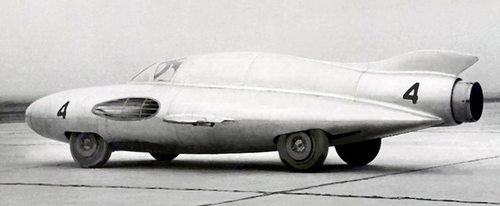
In 1954, an unusual machine was tested at a military airfield in Gorky: outwardly a car, but with a jet engine from a MiG-17. Behind the wheel was test driver Mikhail Metelev, whose task was to reach 700 km/h.
At a speed of about 300 km/h, an accident occurred. Metelev survived, and the project was closed. This marked the end of the first Soviet jet car's history and the beginning of a series of experiments with aircraft engines on the ground.
Why it was necessary
The reasons were divided into two groups:
- Records. The USSR wanted to surpass John Cobb's achievement of 634 km/h (1947). A jet engine seemed to be the fastest solution.
- Military tasks. The increasing mass of missiles required powerful transporters. Gas turbine engines provided approximately twice the power for the same size.
Additionally, the behavior of tires and components under extreme loads was studied.
Key Projects
GAZ-TR. A lightweight aluminum car with a VK-1 engine (later from a MiG-17), with a thrust of about 2700 kgf. Goal – 700 km/h. Aircraft tires were used. Tests ended in an accident at 300 km/h: there were no suitable tires or track, and jet thrust did not provide control.
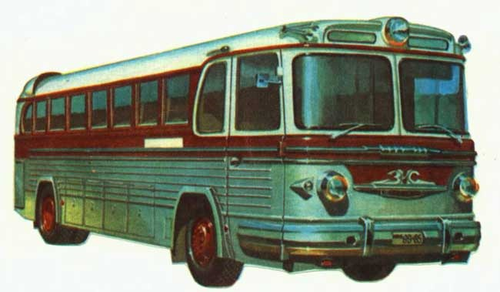
Turbo-NAMI. A bus based on the ZIL-127 with a 360 hp turbine, weighing 13 tons. It accelerated to 160 km/h, but fuel consumption was 144 l/h compared to 40 for a diesel. It proved useless for civilian tasks, but potentially interesting for military ones.
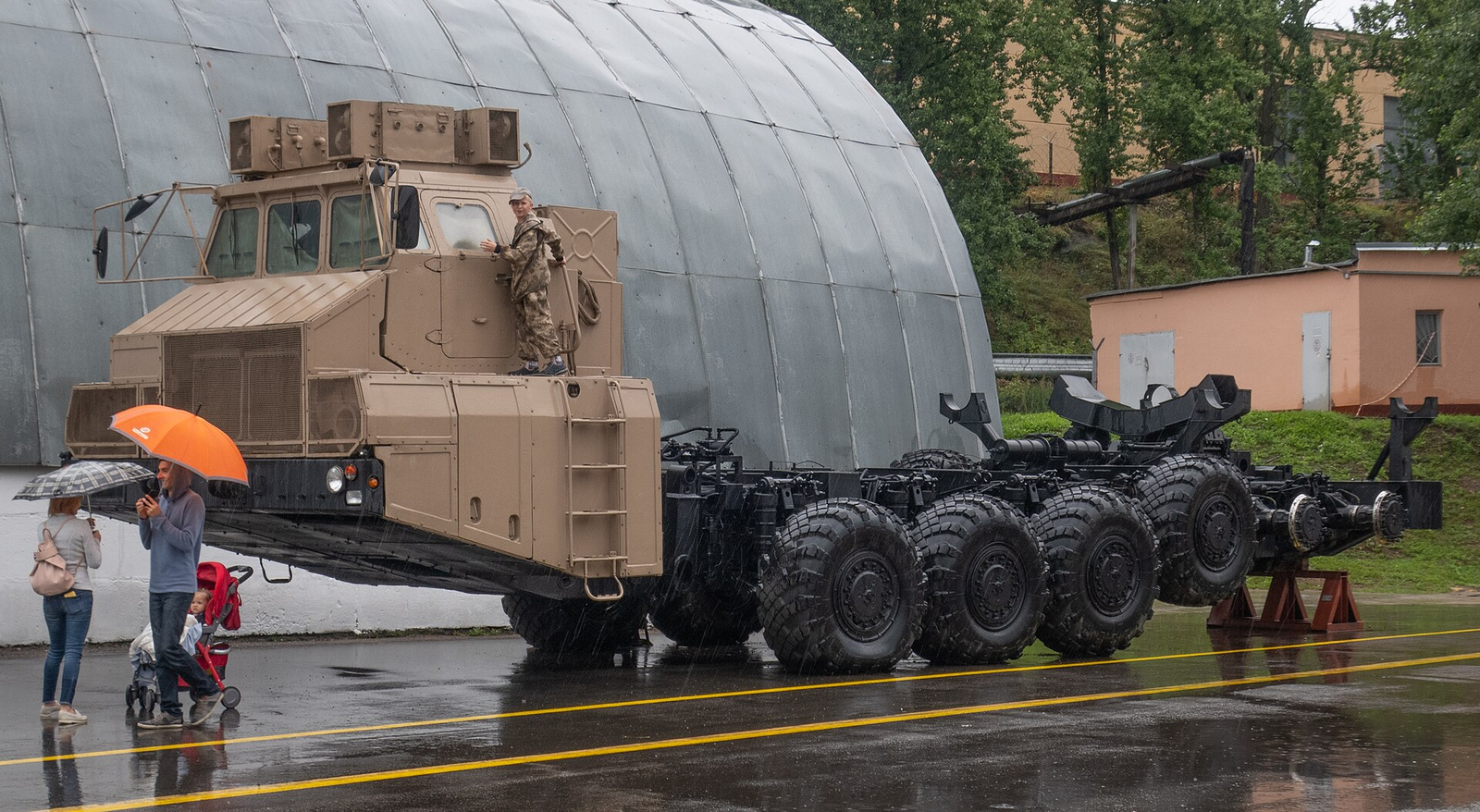
MAZ-7907. A 1984 transporter: 12 axles, 24 wheels, 32 meters long, up to 220 tons of cargo. A 1250 hp turbine worked as a generator for electric motors. Speed – 27 km/h. Two copies were built.
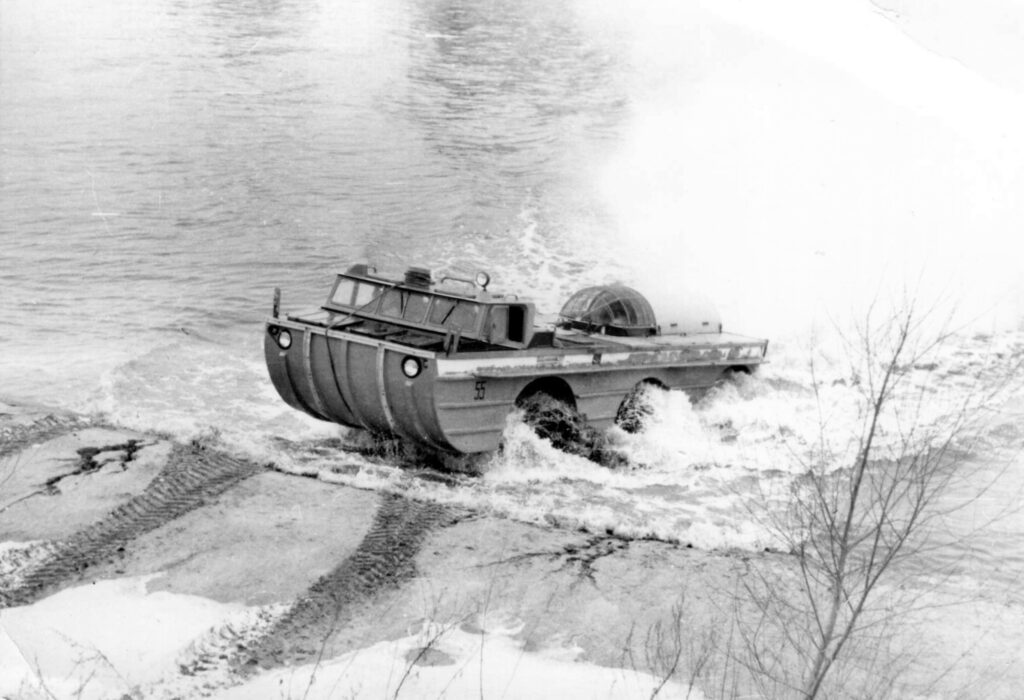
ZIL-132P. An amphibian for astronaut evacuation. The VK-1A turbojet engine was used for additional thrust. Acceleration to 60 km/h in 12 seconds, but consumption in swamps was up to 14 l/s, with minimal range.
The main problem and outcome
The general difficulty was power transmission:
- mechanical transmissions could not withstand the loads
- even successful solutions were complex and expensive
- fuel consumption remained extremely high
None of the projects became serial. The GAZ-TR was destroyed, the Turbo-NAMI was dismantled, and the MAZ-7907 was preserved.
Cobb's record held until 1963 when it was broken by Craig Breedlove in a jet car without wheel drive. Soviet engineers were moving in the right direction, but it did not yield practical results.
Read more articles:
- How the USSR created an "invisible" command post
- Why a car "thinks" before accelerating
- Engine noise: when it's dangerous
Комментарии