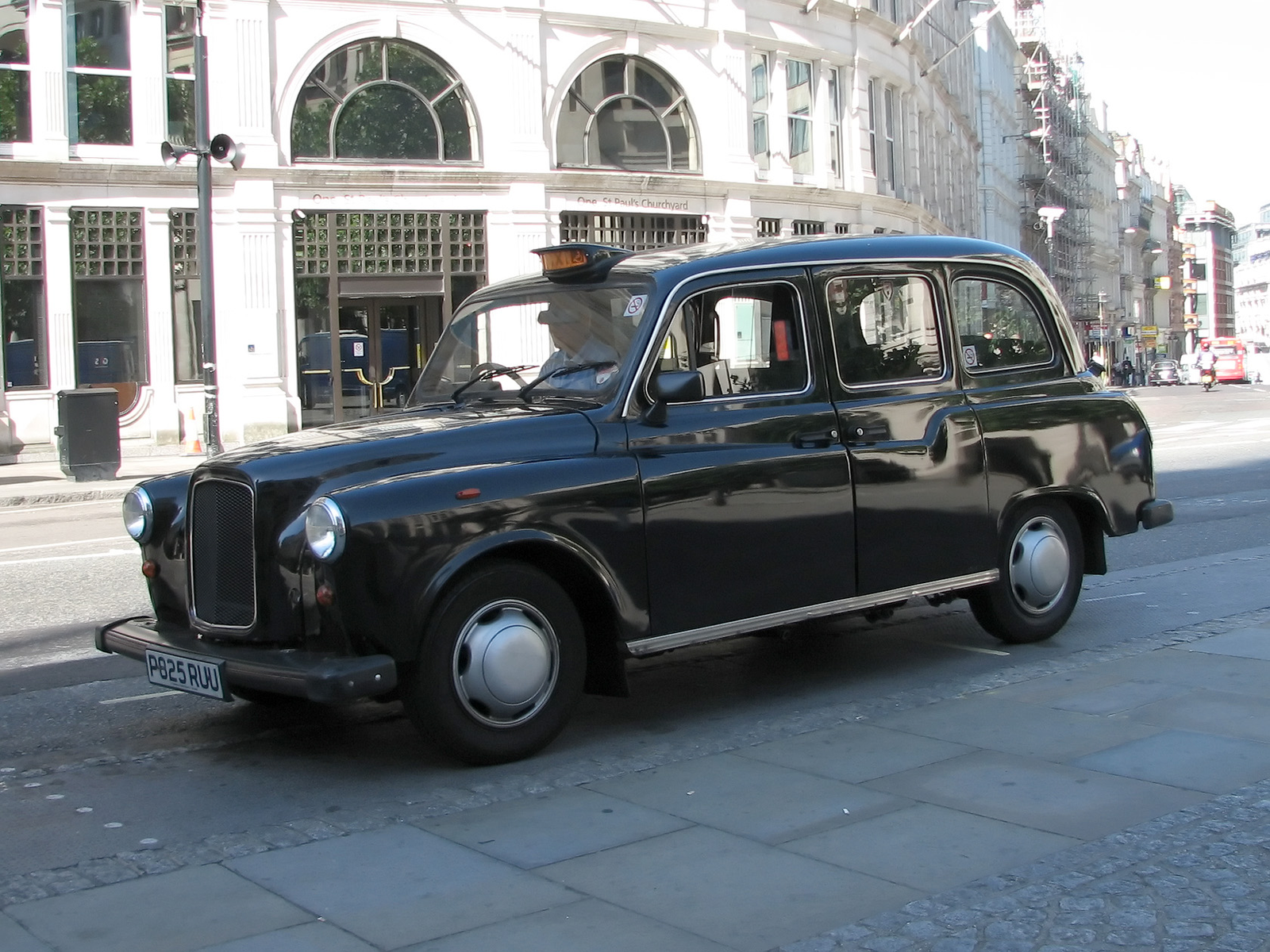
The world's automotive history knows many models that can truly be called great. However, only a few have managed to pass on their key features to subsequent generations. Among these examples are the Volkswagen Beetle, Fiat 500, and Mini. The London taxi Austin FX4 confidently fits into this category, its distinctive features easily recognizable even in modern black cabs of the UK capital.
The British Approach to Taxis: Traditions and Peculiarities
Continental Europeans have long looked at the British with slight bewilderment. Reasons for this were found everywhere:
- driving on the left side of the road
- double-decker buses
- separate taps instead of the usual mixer
- the habit of not taking off shoes indoors
- and, of course, very peculiar taxis
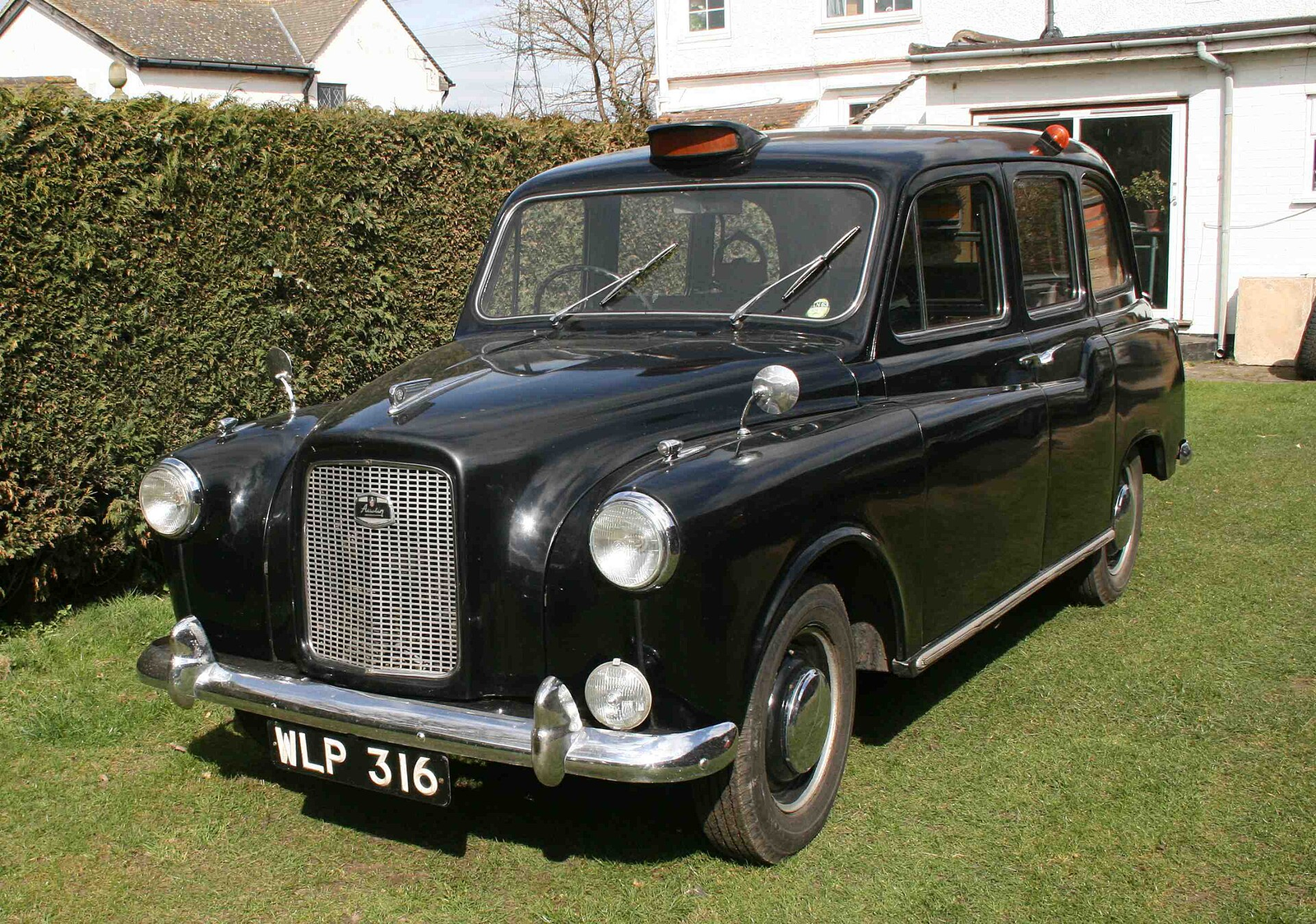
The arrangement of the luggage compartment was particularly surprising. In classic British taxis, it was located not in the usual trunk, but next to the driver – in the front passenger seat. Moreover, items were practically on an open platform, unprotected from rain or wind, and could end up on the road during sharp maneuvers.
Before the advent of the Austin FX4, such a scheme was considered normal: cars were three-door, and cargo was transported in this way. But this is far from the only feature. The height of the cars also looked unusual. It exceeded the height of an average person, which was explained by requirements formed back in the 1920s: a passenger had to be able to sit freely in the cabin without removing their top hat.
Even by 1958, when top hats were out of fashion, this tradition persisted. The Austin FX4 had a height of 1.77 meters – 11 centimeters more than the first-generation Renault Espace minivan. At the same time, the car was officially classified as a sedan.
The interior layout was no less unusual. Two passengers sat facing backward. This was because the main rear bench, designed for three, was considered primary. Additional passengers were seated on folding seats installed opposite, facing backward relative to the direction of travel.
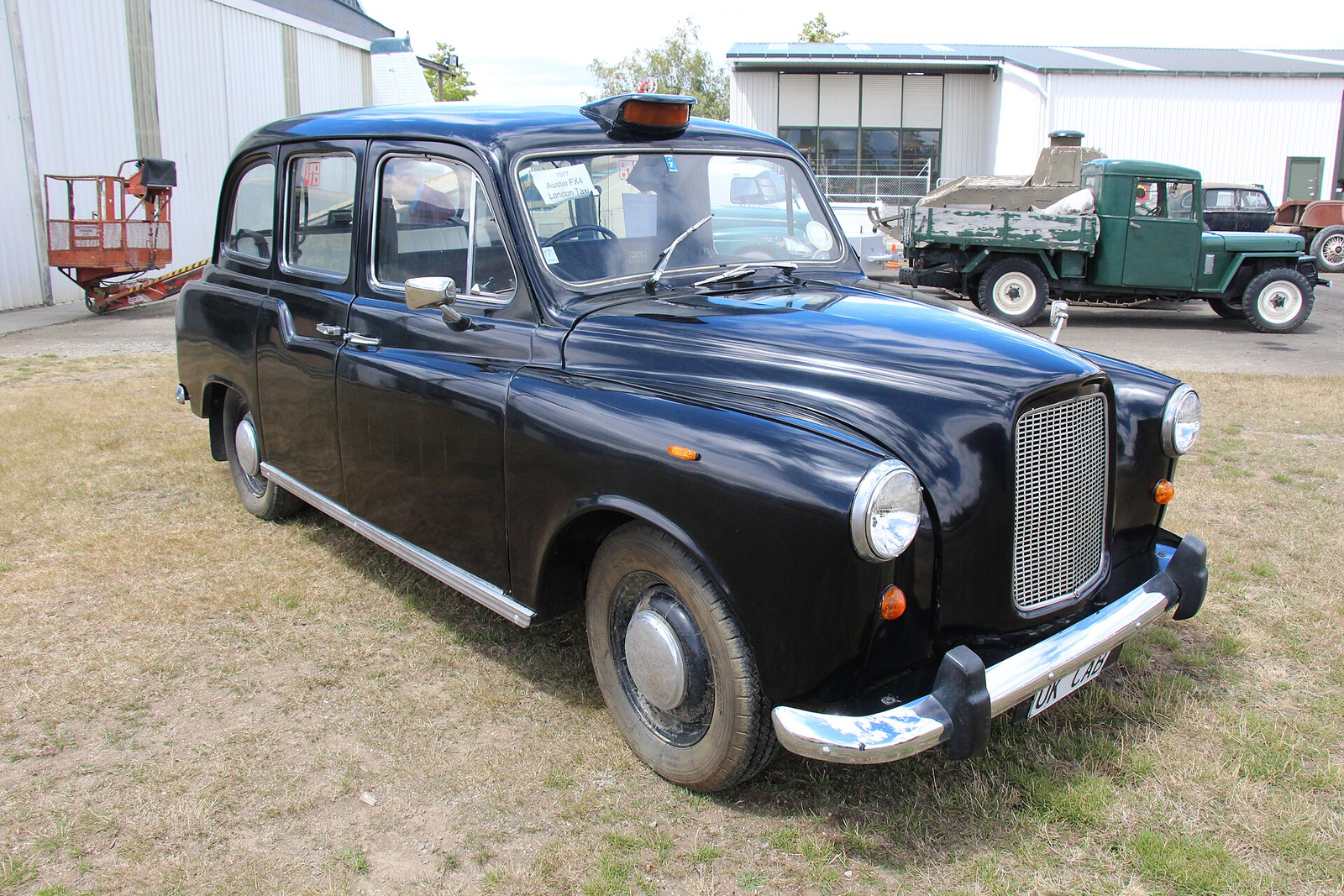
As a result, British taxis appeared to Europeans as a collection of solutions that were both surprising and perplexing.
The Birth of the Austin FX4: A Joint Project
By the mid-1950s, the Austin FX3 was outdated, and London's largest taxi operator, Mann & Overton, insisted on the creation of a new model. The company not only initiated the project but also covered half of the development costs, making the collaboration particularly attractive to manufacturers.
Three parties participated in the creation of the Austin FX4:
- Austin – responsible for the chassis and powertrains
- Carbodies – handled bodywork and final assembly
- Mann & Overton – acted as the customer and investor
The result was presented in July 1958. Right from the start, Mann & Overton placed an order for 2,000 vehicles, ensuring a strong market launch for the model.
The new version received a fourth door, covering the cargo compartment next to the driver. The traditional trunk was retained but used exclusively for the spare wheel and tools.
Design and Technical Features
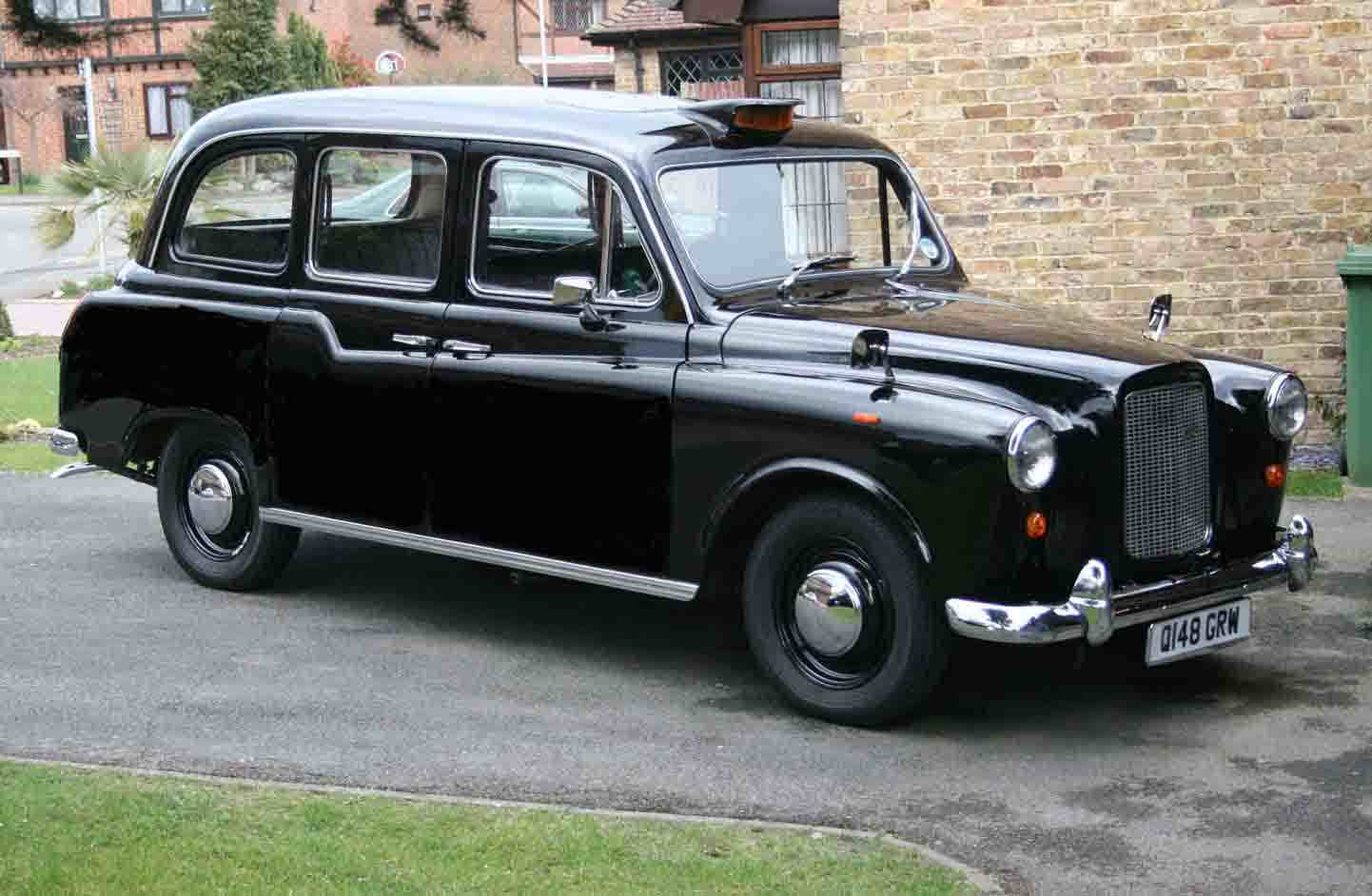
Despite the update, a number of unusual solutions remained:
- the trunk lid opened downwards, not upwards
- the taillights were located not only on the fenders but also on the roof
- the rear doors had rear hinges ("suicide" scheme)
The driver's workspace was separated by a partition with a small window. Folding seats for additional passengers were attached to it.
Among the mandatory requirements set by the police were:
- a turning radius of no more than 7.6 meters
- the presence of an orange light above the windshield
- ground clearance of at least 18 cm.
The car's design was practical: a strong ladder frame, a flat floor, and a hood combined with the radiator grille, fully opening the engine compartment.
The technical specifications of the original version included: length – 4.58 m, width – 1.74 m, wheelbase – 2.81 m, weight – about 1600 kg.
Under the hood was a 2.2-liter diesel engine producing 55 hp (121 Nm), paired with a three-speed BorgWarner automatic transmission. The top speed was 95 km/h. An alternative was a gasoline engine of the same displacement with a manual gearbox, but it did not gain popularity among taxi drivers.
Change of Ownership and Model Evolution
The history of the British automotive industry in the second half of the 20th century was accompanied by constant reorganizations. Austin was part of BMC, then in 1968 became part of British Leyland, partially nationalized in 1975. However, this did not prevent the corporation's bankruptcy in 1986.
Even before that, in 1982, the rights to the FX4 were transferred to Carbodies. Despite these changes, the car itself continued to be produced and modernized.
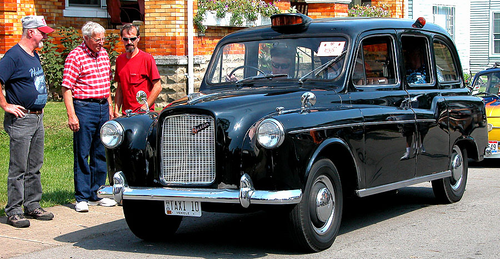
Key stages of updates were as follows:
- 1969 – improved sound insulation and updated interior materials
- 1974 – a 2.5-liter diesel engine with 60 hp was installed, increasing speed to 105 km/h
- 1982 – the FX4R version received a 2.2-liter Land Rover engine (62 hp), power steering
- 1984 – replaced with a more powerful 2.5-liter diesel engine (68 hp)
Some cars were adapted for transporting passengers in wheelchairs.
Transition to LTI Fairway
The final stage of evolution came in 1989. The model received a new name – LTI Fairway. Later, in 1992, the company London Taxis International was established.
The main change was the engine replacement: instead of British units, a Nissan TD27 diesel engine with a volume of 2.6 liters and 85 hp was used.
Interestingly, cooperation with Nissan was based on barter: 200 cars were sent to Japan annually, sold there under the name Big Ben.
End of Production and Legacy
Despite adherence to traditions, the production of the model could not continue indefinitely. Environmental and safety requirements intensified, and a competitor appeared on the market – Metrocab, which surpassed the veteran in several parameters.
On October 1, 1997, the last LTI Fairway was assembled. It was not put into operation but became an exhibit at the National Motor Museum in Beaulieu.
Over almost 40 years, more than 75,000 cars were produced. These cars earned a reputation for being exceptionally reliable and durable:
- many continued to operate years after production ended
- a mileage of a million miles was not uncommon for them
The main legacy, however, lay elsewhere. When creating the next model – the LTI TX1, whose production began in 1997, the developers deliberately maintained a visual connection with its predecessor. This decision allowed the recognizable appearance of the black cab, which became an integral part of London, to be preserved.
Read more materials:
- "Moskvich-411": The Forgotten SUV of the USSR
- Hybrid: Benefit or Overpayment
- "Zhiguli" Luxury Class: The Phenomenon of VAZ-2103
Комментарии