Bird droppings can damage paintwork faster and more noticeably than winter chemicals over an entire season. The reason lies in their composition. The main threat is uric acid, which birds excrete in a concentrated form. Its acidity is roughly on par with vinegar or lemon juice. When such a mixture lands on a hot car body, especially in summer, the clear coat heats up and becomes more vulnerable. The acid gradually penetrates the top layer of the coating, corroding it and leaving behind matte areas, cloudiness, and fine cracks.
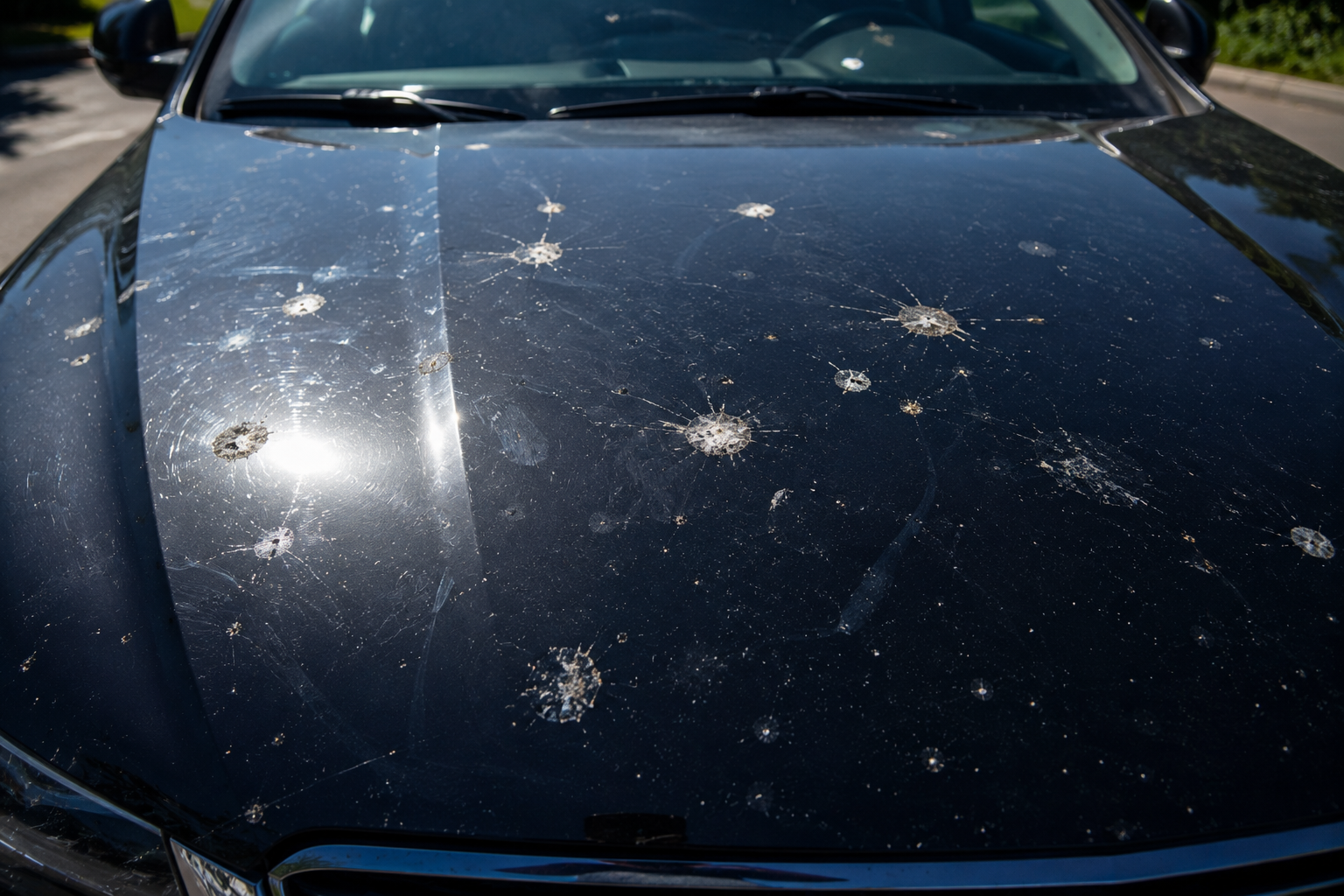
The situation is exacerbated by another detail that is rarely considered. Bird droppings almost always contain grains of sand and small solid particles. Birds swallow them along with food, and then all of this ends up on the car's body. Therefore, attempting to quickly wipe off a dried spot with a dry napkin turns into actual sanding of the paintwork. As a result, the car body simultaneously receives:
- chemical damage from acid
- mechanical scratches from abrasive particles
It is precisely after such "cleaning" that light, cloudy marks often remain on the clear coat, which can no longer be removed by ordinary washing.
For comparison, road de-icing agents act differently. Salts and chemical compounds are indeed aggressive, but they primarily attack metal, especially if there are already chips and cracks on the car body. As long as the clear coat remains intact, the destruction proceeds gradually. Bird droppings work significantly faster. Sometimes a few hours under the scorching sun are enough for the coating to sustain noticeable damage.
Heat is especially dangerous. At high temperatures, the chemical reaction accelerates, and the clear coat becomes softer. If you leave contamination on a hot hood for a whole day, by evening you might find not just a spot, but a full-fledged etching mark.
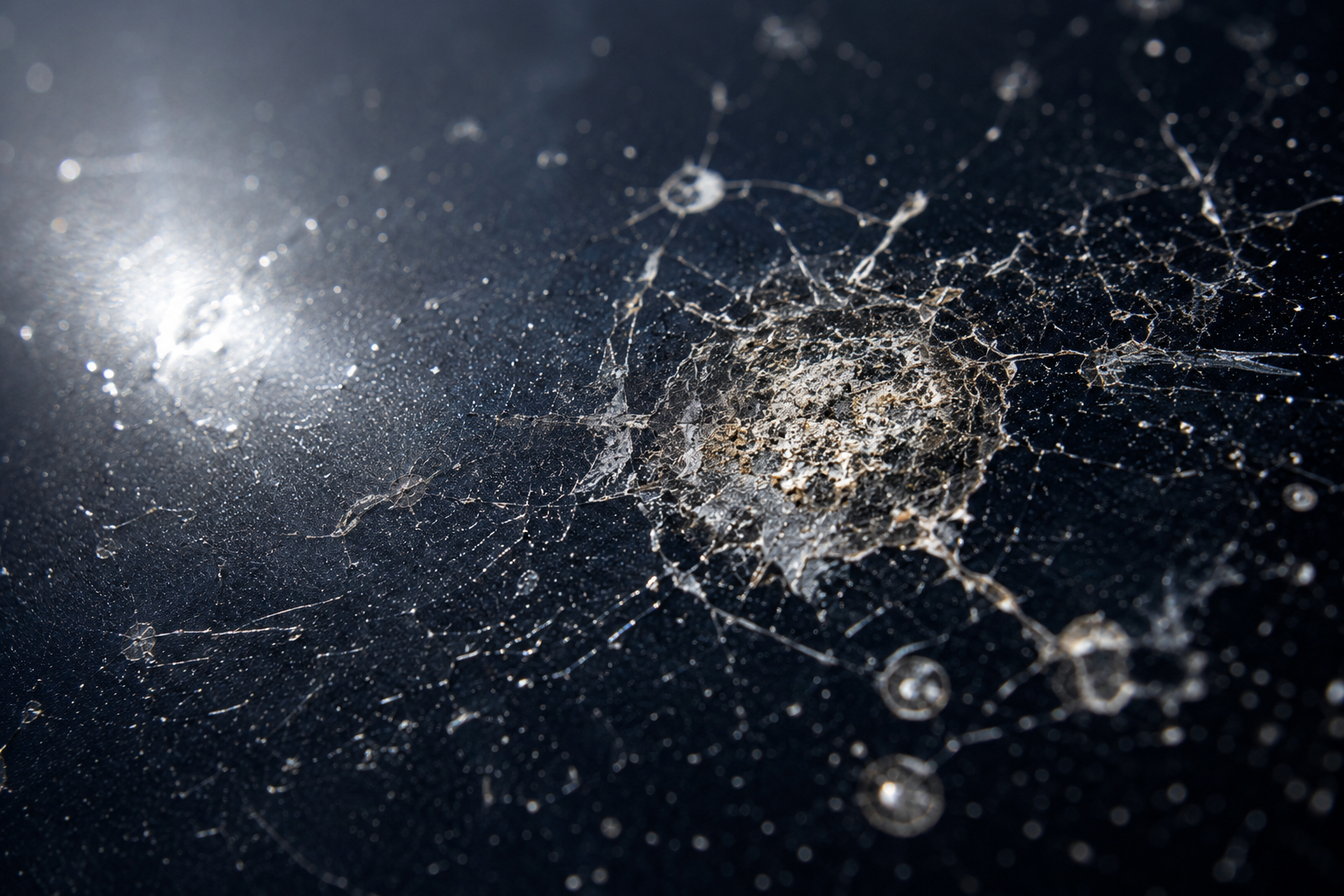
Therefore, the first rule here is extremely simple: no attempts to wipe off droppings dry. Not with a cloth, not with a paper napkin, not with a fingernail. All of this will only increase the number of scratches. A dried spot must first be soaked.
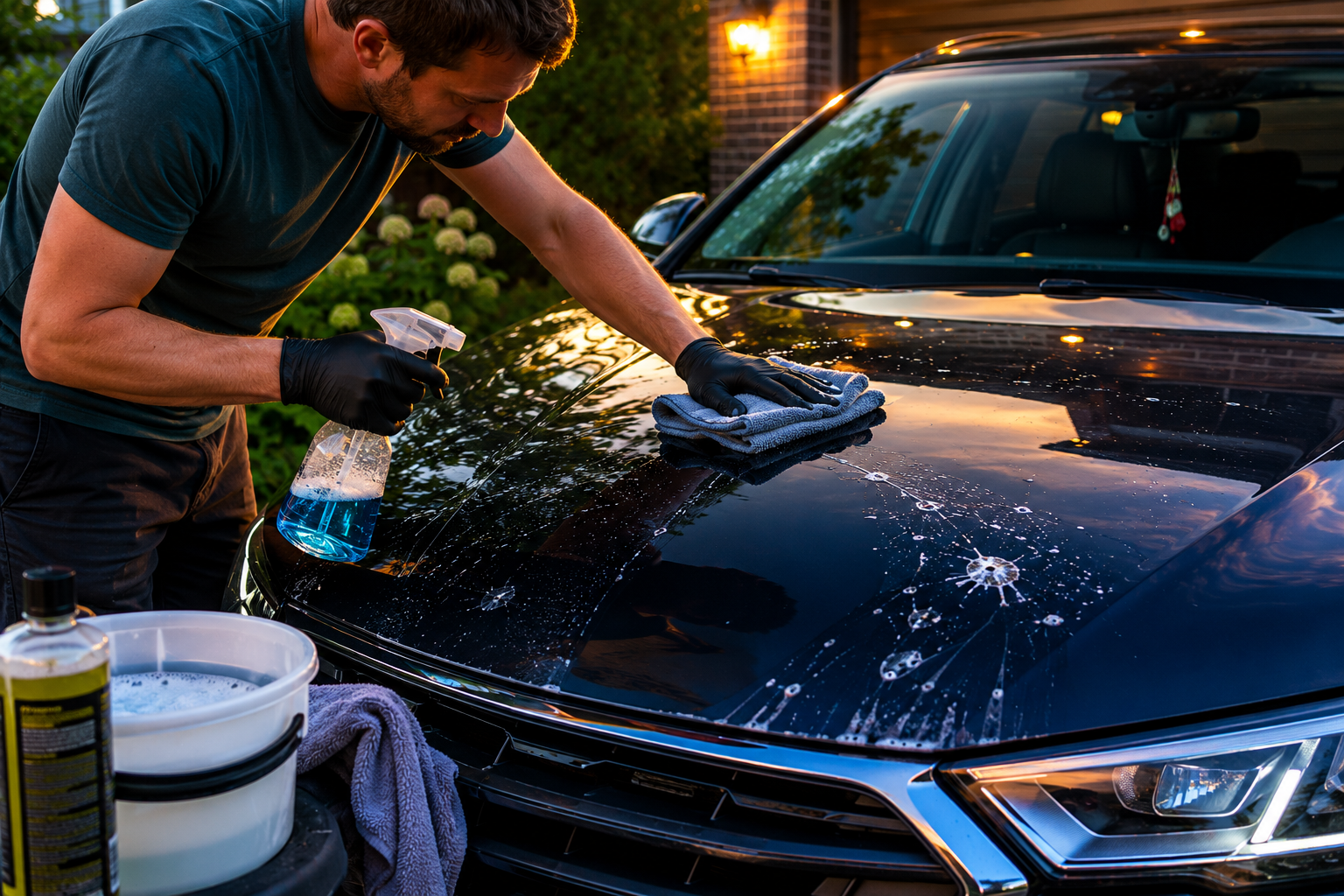
The safest method is quite simple:
- wet a soft cloth or sponge with water
- apply it to the contamination for 10–15 minutes
- wait until the dried mass softens
- gently remove the residue without strong pressure
After softening, droppings usually come off effortlessly. But water alone is not always enough. Mildly alkaline car shampoos or special car body cleaners work much more effectively. Such compositions help neutralize the acid and simultaneously soften organic residues. Usually, a couple of minutes are enough, after which the contamination can be easily removed with a microfiber cloth.
Sometimes drivers use improvised means. For example, ordinary sugar-free carbonated water — carbonic acid helps soften old traces. Some use WD-40, as solvents quickly deal with dried mass. However, after this, the surface still needs to be thoroughly washed with shampoo to remove the greasy film.
But using vinegar, citric acid, and other "folk" methods is absolutely not recommended. Additional acid will only exacerbate the damage to the clear coat. Instead of cleaning, you will get a double chemical attack on the coating.
If the spot has already left a mark, the subsequent result depends on the depth of the damage. When only the top layer of the clear coat is affected, abrasive polishing usually saves the situation. A master removes a few microns of the coating, after which the shine returns. But if the acid has reached the base coat of paint and changed the pigment, polishing will no longer help. In such a case, only repainting the part remains.
That is why procrastination here is especially costly. Reagents affect the car body for weeks, while bird droppings sometimes destroy the coating in literally a few hours. The longer it stays in the sun, the deeper the acid penetrates.
To avoid such problems, it is enough to follow a few simple rules:
- do not leave droppings on the car body for long
- always soften the contamination first
- use a soft microfiber cloth
- keep a quick car body cleaner in the car
- after removing the spot, wash the surface with shampoo
Some may find such caution excessive. But practice shows the opposite: a small white blob can indeed lead to expensive polishing or even repainting of an element. And after that, it will no longer be possible to perceive bird droppings as a harmless trifle.
Read more articles:
- What the A/C button in a car actually does
- Why the Soviet NAMI-044E was too early
- Why tractor and combine tires were whitewashed in the USSR