By the mid-2000s, it became clear that the passenger cars of the Gorky Automobile Plant were rapidly losing market share. Despite modernizations, the GAZ-31105 "Volga" produced at that time was essentially a further development of a design rooted in the GAZ-24. Against the backdrop of modern foreign cars, the vehicle looked outdated both technically and visually.
It was at this moment that GAZ management attempted to maintain its presence in the passenger car segment. This led to the Volga Siber project – a model that was supposed to mark a new stage in the brand's history, but ultimately became one of the most controversial pages in the domestic automotive industry.
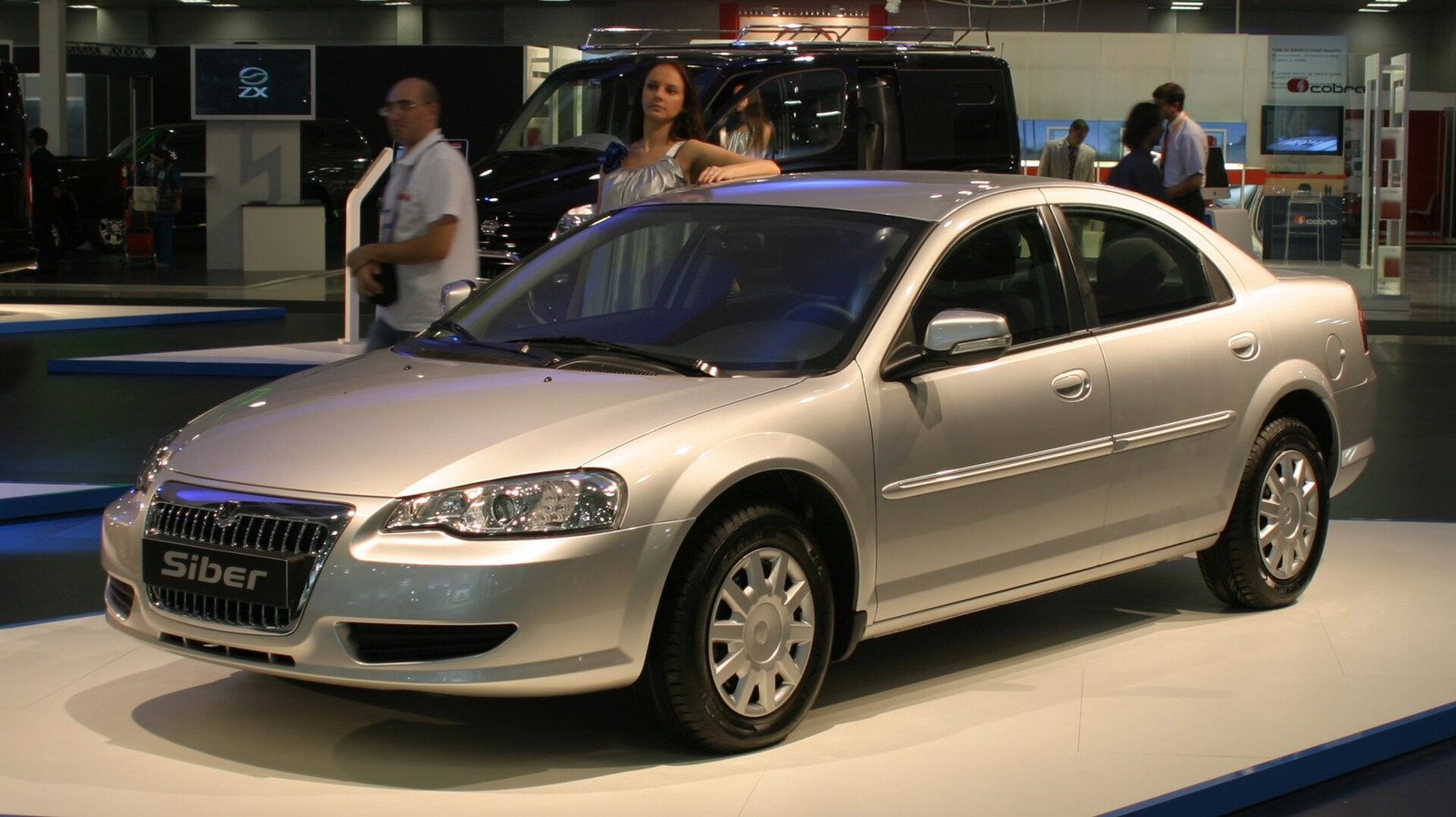
Only 8,933 cars were produced over two and a half years, after which the project was closed. Today, amidst another revival of the Volga brand, it is particularly interesting to recall why such a seemingly promising model failed to achieve success.
When the old "Volga" could no longer cope
In the mid-2000s, GAZ's position in the passenger car segment looked increasingly difficult.
The main problems of the GAZ-31105 were well known:
- outdated design;
- poor body corrosion protection;
- low build quality;
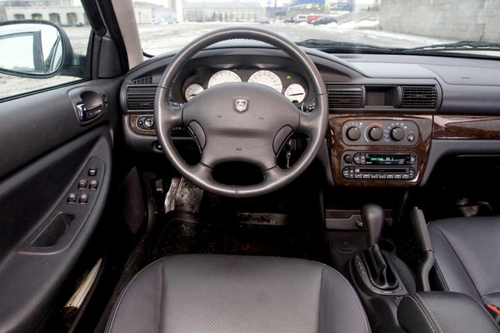
- morally outdated interior.
Only in 2007 did partial galvanization begin to appear on individual elements, but this could no longer rectify the situation.
Meanwhile, the Russian market was actively filled with modern budget foreign cars that offered buyers a completely different level of quality, safety, and comfort.
Developing a completely new car required huge investments and many years of work. The plant did not have such resources. Therefore, the management decided to use a faster and relatively inexpensive option.
How GAZ Bought an American Car
In 2006, Chrysler was completing production of the Sebring model at its plant in Michigan.
Usually, such equipment is sent for disposal, but this time the situation was different. The Gorky Automobile Plant acted as the buyer of the production line.
As part of the deal, the Russian side received a so-called controlling stake in the technologies necessary to organize car production.
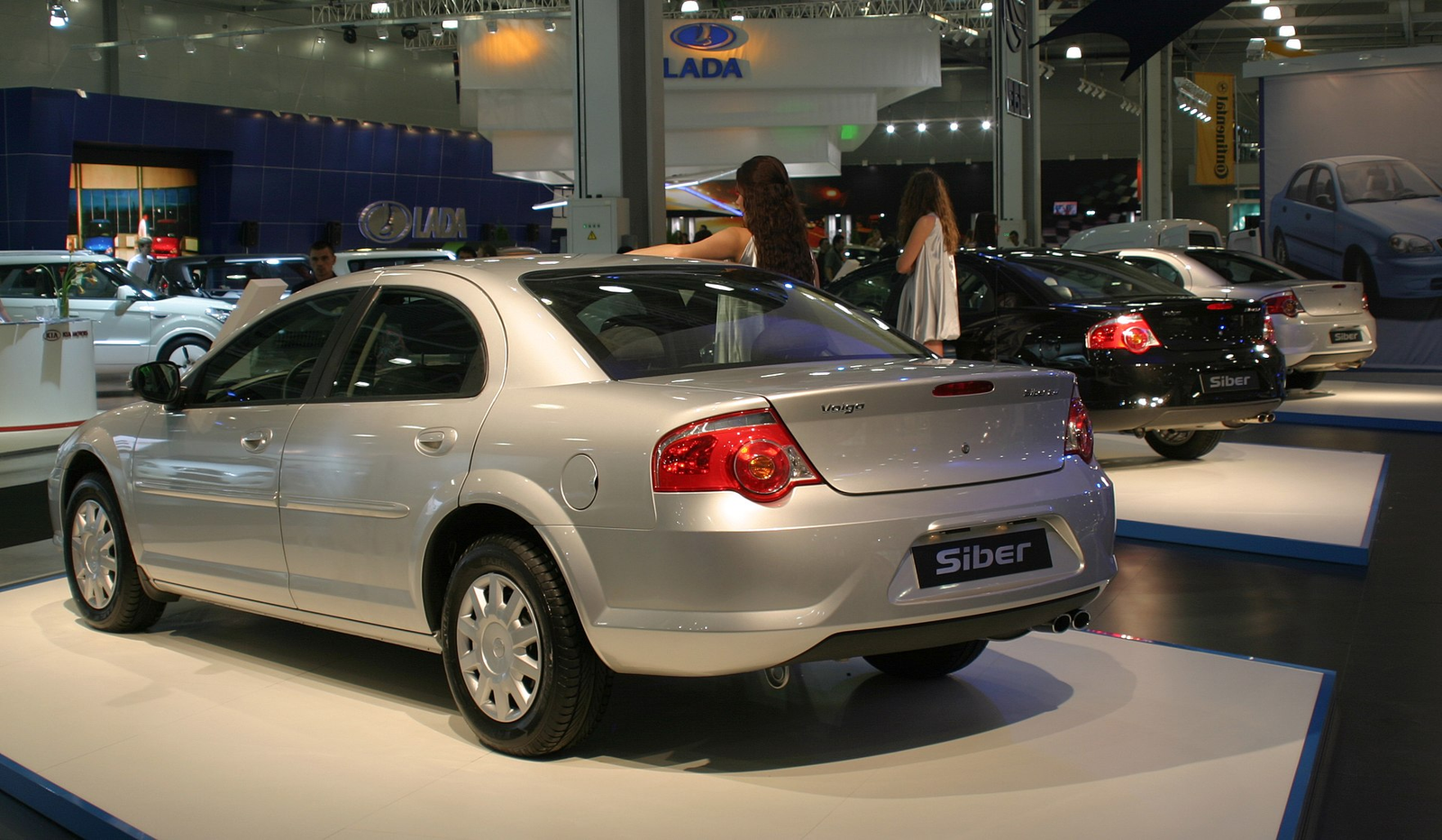
Additionally, a contract was signed for the supply of power units and automatic transmissions from Chrysler's Mexican plants.
For the American company, the deal proved to be very profitable. According to various estimates, Chrysler received about $150 million for equipment that otherwise might have simply been written off.
Russian specialists had to independently dismantle the production line, transport it, and prepare it for operation at GAZ.
The Car Was Not Left Unchanged
Despite the American origin of the model, GAZ engineers did not limit themselves to simply assembling the Chrysler Sebring under a new name.
The car was seriously adapted to Russian operating conditions.
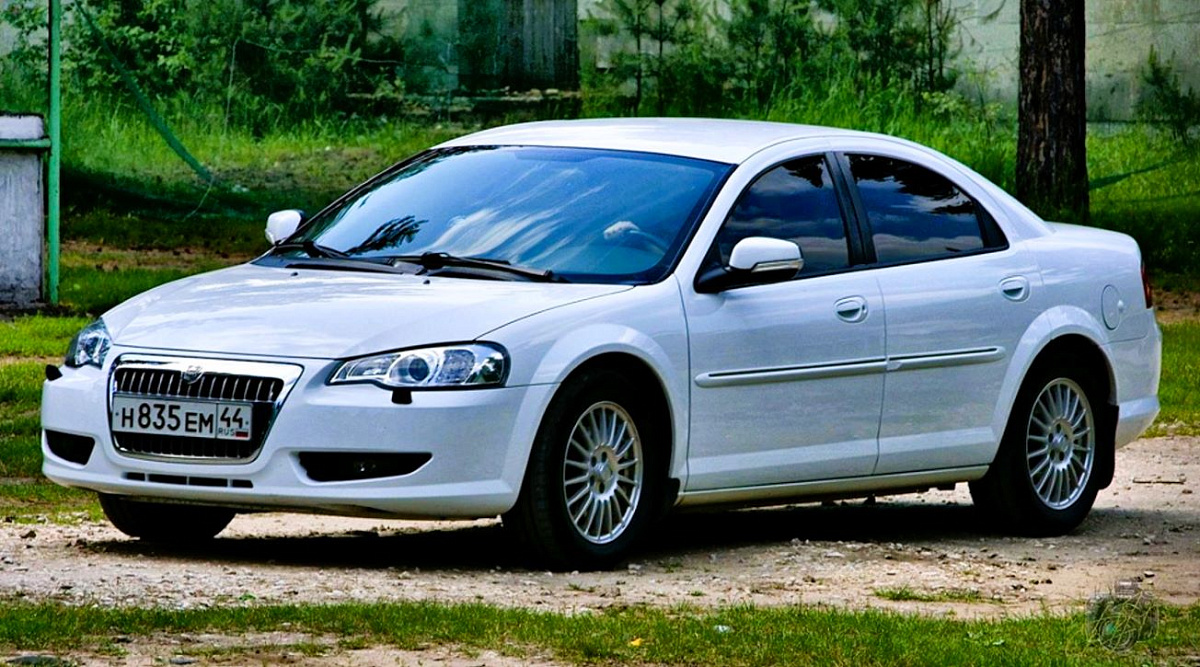
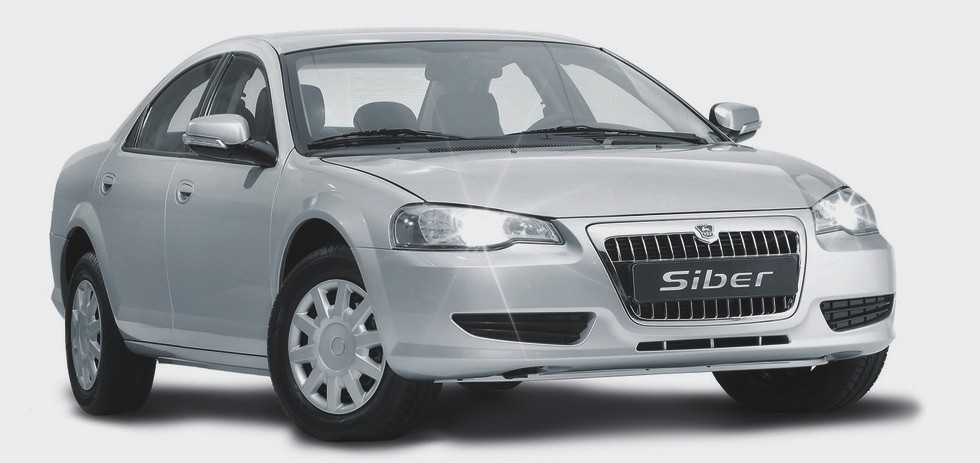
Changes affected the exterior:
- new headlights appeared;
- the radiator grille was redesigned;
- the bumpers were changed;
- larger mirrors with turn signal repeaters were installed.
However, the most important improvements were hidden under the body.
Plant specialists increased the ground clearance from 140 to 160 millimeters and revised the suspension settings.
As a result, several improvements were achieved at once:
- increased energy intensity of the chassis;
- reduced body roll in corners;
- made the car more composed in handling.
To compensate for the increased loads, the side members and shock absorber mounts were reinforced, increasing the torsional rigidity of the body.
In addition, the standard equipment included a so-called "warm package," which included heated seats and exterior mirrors.
Adaptation Even Affected Fasteners
One of the unexpected tasks was the redesign of fasteners.
The original Chrysler Sebring fully used an inch-based fastening system. For Russian services of that time, this could have been a serious problem, as the necessary tools were not widely available.
Therefore, engineers began to gradually convert the design to the metric standard.
This task was not fully resolved, but a significant part of the fasteners was still adapted to the sizes familiar to Russian mechanics.
Why Localization Was Considered Critically Important
In those years, Russian legislation provided serious benefits for car manufacturers who achieved a certain level of localization.
If the share of domestic components exceeded 30%, the enterprise could import many components almost duty-free.
Both sides were interested in such a scheme:
- Chrysler continued to sell engines and transmissions;
- GAZ reduced production costs;
- buyers could count on a more affordable car price.
The localization process was indeed quite active. The plant quickly found Russian suppliers for a large number of parts, but the quality of some components proved to be mixed.
Where the Problems Began
Some localized parts were noticeably inferior to their American counterparts.
Owners most often encountered the following shortcomings:
- hard interior plastic;
- appearance of extraneous noises;
- rapid wear of seat upholstery;
- soft paintwork.
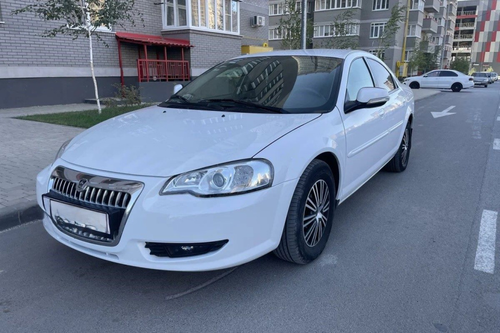
Due to insufficient lacquer resistance, the body quickly became covered with small chips and characteristic "cobwebs."
However, it cannot be said that localization was a complete failure.
A number of solutions proved to be quite decent:
- cataphoretic primer provided good body protection;
- the modernized suspension had a good service life;
- the exhaust system worked reliably.
In many cases, corrosion appeared precisely in places where the paintwork was damaged, and not due to structural problems of the body.
Why the Promising Project Failed
At the time of its release in 2008, the Volga Siber could not be called a modern car by world standards. However, in terms of its overall characteristics, the sedan looked quite competitive for the Russian market.
Buyers were offered:
- a spacious interior;
- a 2.4-liter naturally aspirated engine;
- a four-speed automatic transmission;
- front-wheel drive;
- adaptation to Russian operating conditions.
Nevertheless, the model did not achieve success.
The 2008 global financial crisis, which began just a few months after sales started, is often cited as the reason.
Due to changes in exchange rates, the car's price sharply increased. If GAZ initially expected to sell the model for approximately 400 thousand rubles, then the amount of about 480 thousand was later named. Later, the cost of the basic version reached 590 thousand rubles.
However, explaining the failure solely by the crisis would be too simplistic.
Reputation Proved Stronger Than Merits
Even at its initial price, the car faced serious competition.
Many buyers preferred:
- Ford Focus;
- Toyota Corolla;
- other popular foreign cars.
Although these models belonged to a lower class, for consumers they remained full-fledged foreign cars with a more modern reputation.
An additional problem was the brand's positioning.
By that time, the image of the "Volga" was already firmly associated with outdated design, corrosion, and a car for a conservative audience. Young buyers increasingly dreamed of a foreign car, not a domestic one, regardless of its characteristics.
The marketing strategy also did not perform well. Many experts later noted that retaining the model's American origin and using the Chrysler brand could have generated more interest among buyers.
Project Finale
Production plans looked very ambitious. GAZ expected to produce up to 60 thousand cars annually.
Reality turned out to be completely different.
The actual production volume was approximately 3,000 cars per year, and demand continued to decline.
As a result, just two years after the start of mass production, it was decided to stop production. The remaining cars were sold by dealers with significant discounts.
Thus ended the history of Volga Siber and, at the same time, the era of the classic "Volga."
Volga Siber became one of the most unusual models in the history of the Gorky Automobile Plant. The car received an American platform, underwent serious adaptation for Russian conditions, and had quite decent characteristics for its time.
However, a combination of several factors proved stronger than its technical merits. The financial crisis, rising prices, weak marketing, and the brand's established reputation prevented the model from taking a prominent place in the market.
Ultimately, Volga Siber remained in history as the last serious chance to preserve GAZ's passenger car direction and, at the same time, as an example that even a good car is far from always able to achieve commercial success.
Read more articles:
- CVT: The Main Boogeyman or a Brilliant Gearbox?
- Why All Car Tires Are Black
- Electric Cars Are Taking Over the Market: Where and Why
Comments