In the mid-1950s, the Soviet Army faced the need for a new high-mobility cargo truck. The military required a vehicle capable of operating confidently in off-road conditions, overcoming deep snow, muddy terrain, and delivering cargo where ordinary equipment quickly lost mobility.
The development was entrusted to the Minsk Automobile Plant (MAZ), which already had experience in creating all-wheel-drive vehicles in the form of the MAZ-501 logging truck. It was on its basis that engineers began designing a new army truck. Thus, the MAZ-502 appeared – the first production all-wheel-drive vehicle from the Minsk Automobile Plant and one of the most important machines in the enterprise's history.
From Logging Truck to Army All-Terrain Vehicle
The new model was based on the well-proven design of the MAZ-501, but a number of fundamental changes were introduced into it during the creation of the MAZ-502.
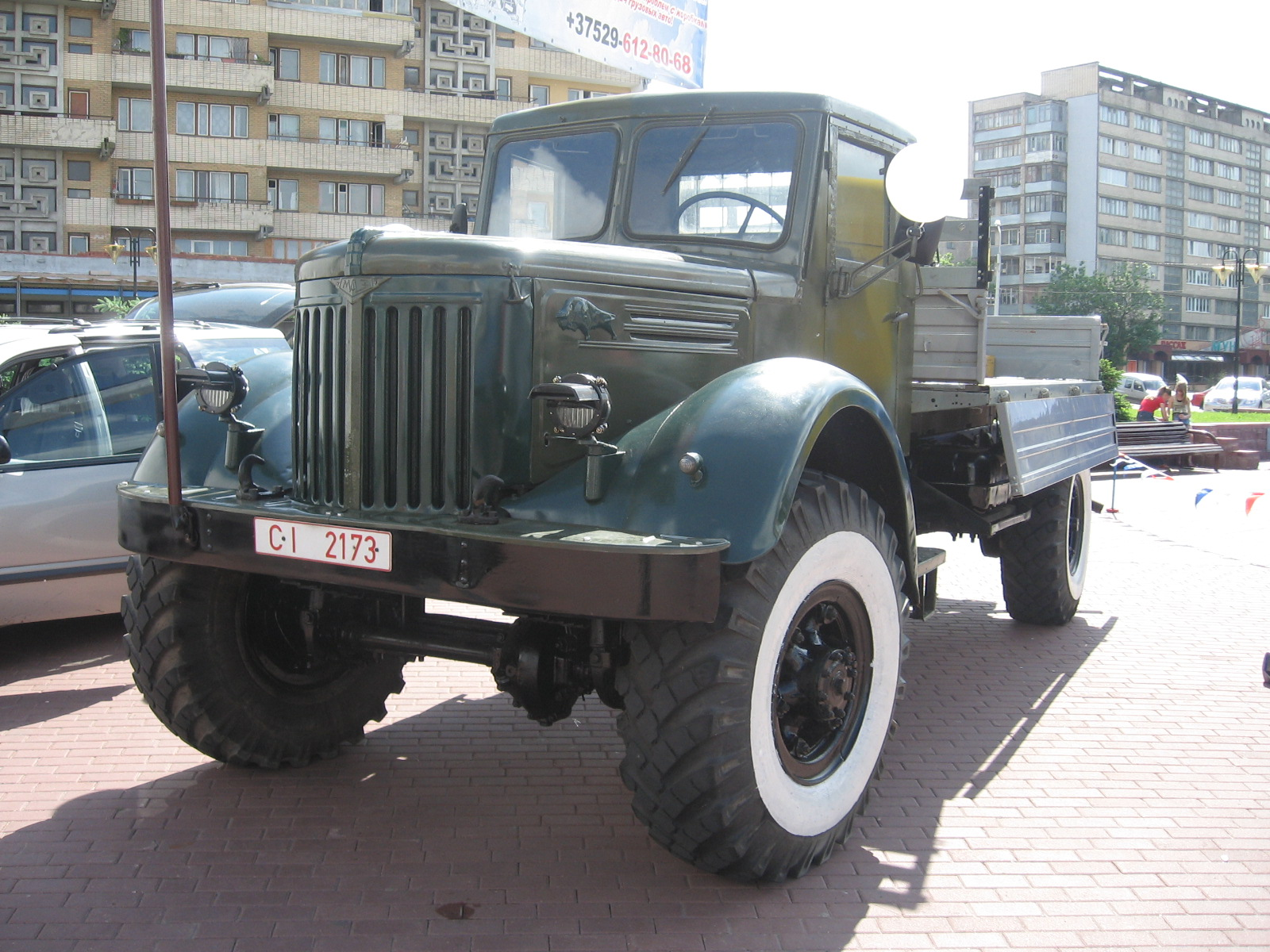
The main innovation was the use of single-slope, enlarged wheels on the rear drive axle. Instead of standard 12.00–20 tires, wide-profile Ya-190 tires measuring 15.00–20 were used.
This solution provided several advantages at once:
- reduction of specific pressure on the ground;
- improved cross-country ability in deep snow;
- more confident movement on muddy roads;
- reduced likelihood of slipping on weak surfaces.
In combination with all-wheel drive and a reduction gear, this allowed the truck to be transformed into a full-fledged army all-terrain vehicle.
The MAZ-502 was capable of:
- carrying up to 4 tons of cargo;
- transporting 18–20 military personnel;
- overcoming ascents with a steepness of up to 25 degrees;
- crossing fords up to one meter deep.
Design for Heavy Off-Road Conditions
The vehicle's wheelbase was 4520 mm, and the ground clearance under the axles exceeded 290 mm. For a heavy truck of the mid-1950s, these were very serious indicators.
The front drive axle received Weiss-type constant velocity joints. This ensured effective traction transmission even at significant steering angles.
The transmission included a two-speed transfer case with the ability to disengage the front axle. This scheme allowed for:
- reducing fuel consumption on paved roads;
- reducing load on the transmission;
- reducing wear of components when driving on highways.
Such a solution was considered very progressive for the technology of its time.
American Roots of the Soviet Diesel
The first MAZ-502s were equipped with a two-stroke YaAZ-204 diesel engine with 110 horsepower. Later, a modernized YaAZ-204V, developing 135 horsepower, began to be installed on the vehicle.
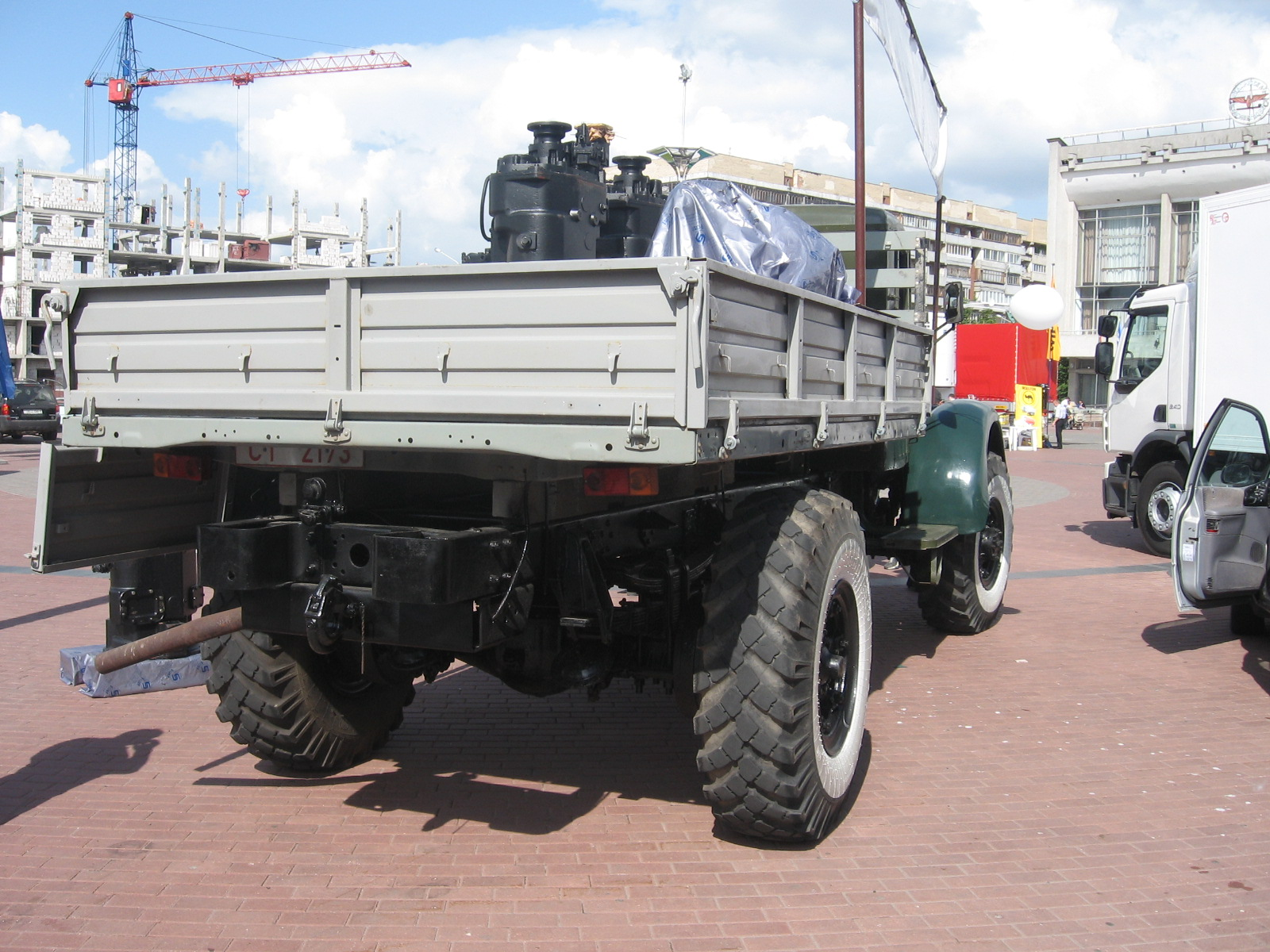
These engines were created based on American wartime GMC diesels and had characteristic features:
- high noise level;
- demanding maintenance;
- good traction at low RPMs.
For military equipment, the latter factor was especially important.
The vehicle's electrical equipment was switched to 24 V, which corresponded to military equipment standards and facilitated engine starting in low temperatures.
The working volume of the YaAZ-204 was 4.65 liters. Thanks to the two-stroke scheme and a scavenging supercharger, the engine provided confident traction almost from idle, although this came at the cost of loud operation and thick smoke under load.
Fuel consumption in heavy operating conditions often exceeded 45 liters per 100 km.
The fuel system included tanks with a total capacity of about 225 liters, which provided a cruising range of approximately 450 km on the highway. This figure significantly decreased off-road.
The gearbox retained the five-speed mechanical design from the MAZ-200 family, but the gear ratios were adapted for heavy off-road operating modes.
Tested by Snow and Off-Road
Some of the most important tests for the new truck were comparative tests conducted on snowy proving grounds in the late 1950s.
It was there that the MAZ-502 was able to demonstrate the advantages of its design.
In loose snow, the vehicle confidently continued to move in situations where the MAZ-200 and YaAZ-214 quickly lost cross-country ability due to higher pressure on the surface.
Success was ensured by a combination of several factors:
- wide-profile single-slope tires;
- proper weight distribution;
- high ground clearance;
- a transmission designed for heavy driving conditions.
Army documentation specifically noted the truck's ability to maintain steerability when driving through deep snow ruts.
The vehicle's weight distribution also played a role. The front axle was sufficiently loaded for confident steering, but the wheels did not dig too deep into the snow.
Outstanding Cross-Country Ability Came at a Price
However, the strengths of the design simultaneously became its drawbacks.
The MAZ-502 was designed primarily for heavy off-road conditions, so its characteristics on the highway looked significantly more modest.
The main disadvantages were:
- high fuel consumption;
- low maximum speed;
- increased load on the road surface;
- accelerated wear of the chassis when operating on asphalt.
The maximum speed was about 50 km/h, which was a direct consequence of the vehicle's off-road specialization.
The total weight of the vehicle exceeded 11 tons, and the specific power was at the level of approximately 11–12 horsepower per ton.
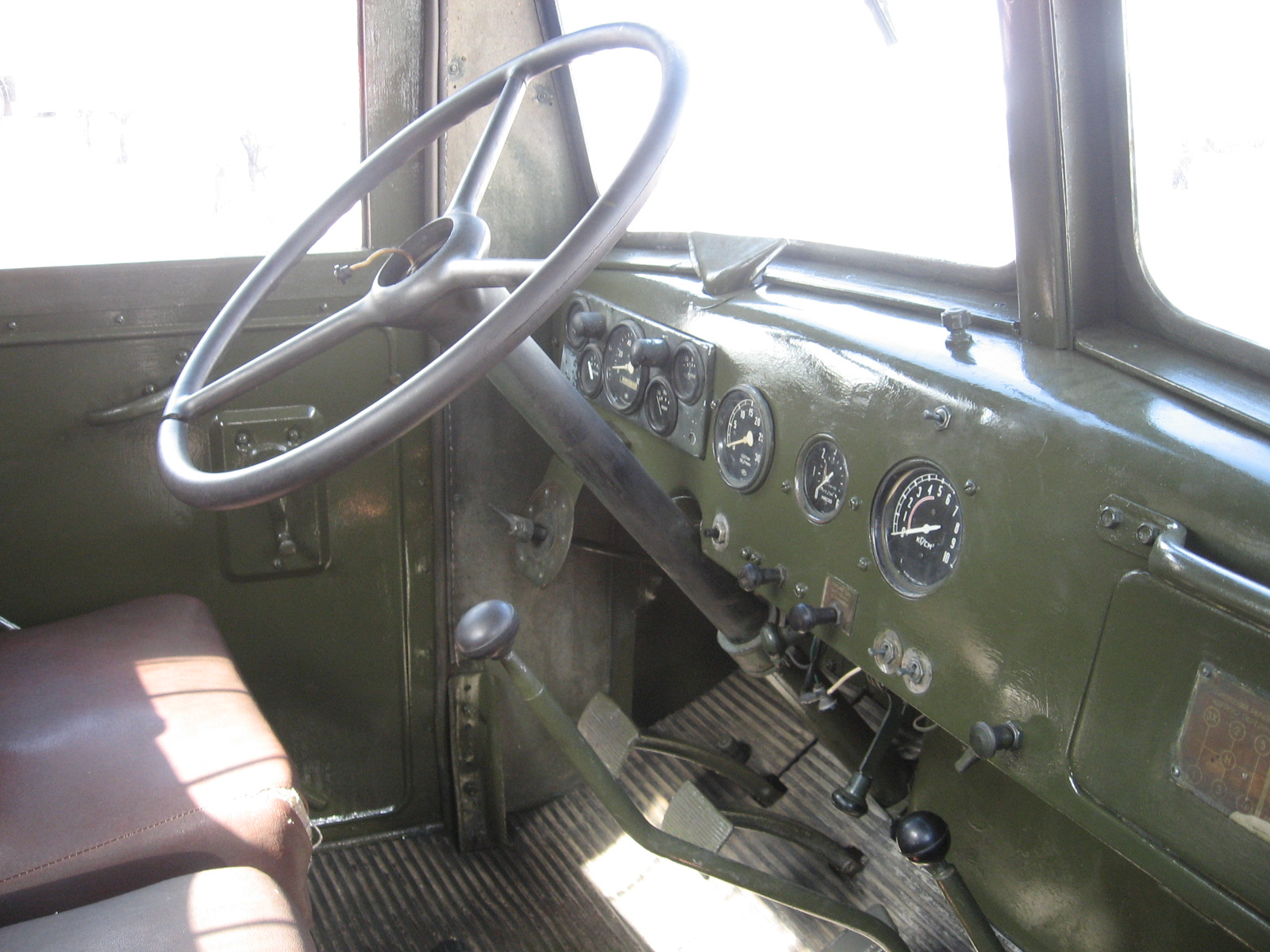
On long ascents, the speed noticeably decreased. Additional inconvenience was created by the engine, part of which was located inside the cabin's engine compartment. Because of this, the driver's workplace quickly filled with noise and heat.
Drivers' recollections indicate that in winter, the truck could move for hours through virgin snow in first or second gear almost without stopping. However, prolonged driving on the highway at high RPMs seriously fatigued the crew.
Not Just a Truck
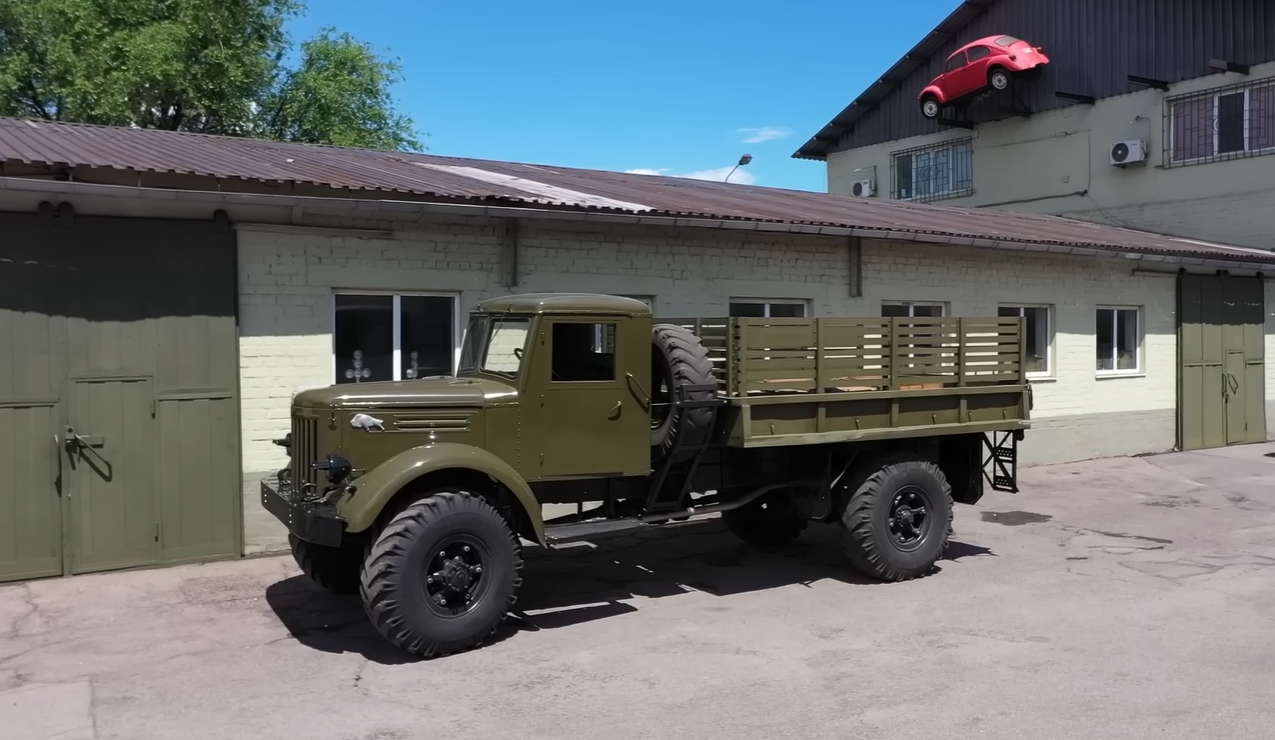
Several specialized modifications were created based on the MAZ-502.
Among the most famous variants are:
- the MAZ-502V semi-trailer tractor for working with semi-trailers of air defense forces;
- the MAZ-502A towing and recovery vehicle with a powerful front winch;
- various special-purpose engineering vehicles.
The D-450 rotary snowplow deserves special attention.
This machine received a separate engine to drive the working equipment and could:
- move huge volumes of snow;
- throw snow masses up to 35 meters away;
- ensure the clearing of airfields and important transport routes in northern regions.
Legacy of the MAZ-502
Serial production of the MAZ-502 ended in 1966. It was replaced by more modern models, better adapted to a wide range of tasks.
However, the significance of this vehicle proved to be much broader than its production period.
It was the operation of the MAZ-502 that allowed designers to accumulate invaluable experience, which was subsequently used in the creation of heavy multi-axle vehicles of the MAZ-535 and MAZ-537 families.
During operation, engineers received a large amount of practical data on the operation of:
- transmissions;
- drive axles;
- wide-profile tires;
- all-wheel drive schemes in deep snow and swampy terrain.
Therefore, the MAZ-502 can be considered not just an army truck, but an important stage in the development of the entire Soviet school of heavy off-road automotive engineering. It was this machine that helped lay the technical foundation for the emergence of many legendary Minsk tractors of subsequent generations.
Read more materials:
- Why the Volga Siber couldn't save the legendary brand
- CVT: The Main Boogeyman or a Brilliant Gearbox?
- Why are all car tires black?
Comments