Not so long ago, the concept of fast charging an electric vehicle meant a mandatory stop of 30–40 minutes. Today, the situation is rapidly changing: some modern models can replenish their range by several hundred kilometers in the time it used to take to find a free terminal and connect a cable.
This progress is not based on marketing claims, but on concrete technical solutions. Moreover, their impact is felt not only by owners of expensive electric cars but also by buyers of mass-market models.
Why Identical Stations Charge Differently
Many believe that charging speed is determined solely by the power of the charging station. However, in reality, several factors influence the final result.
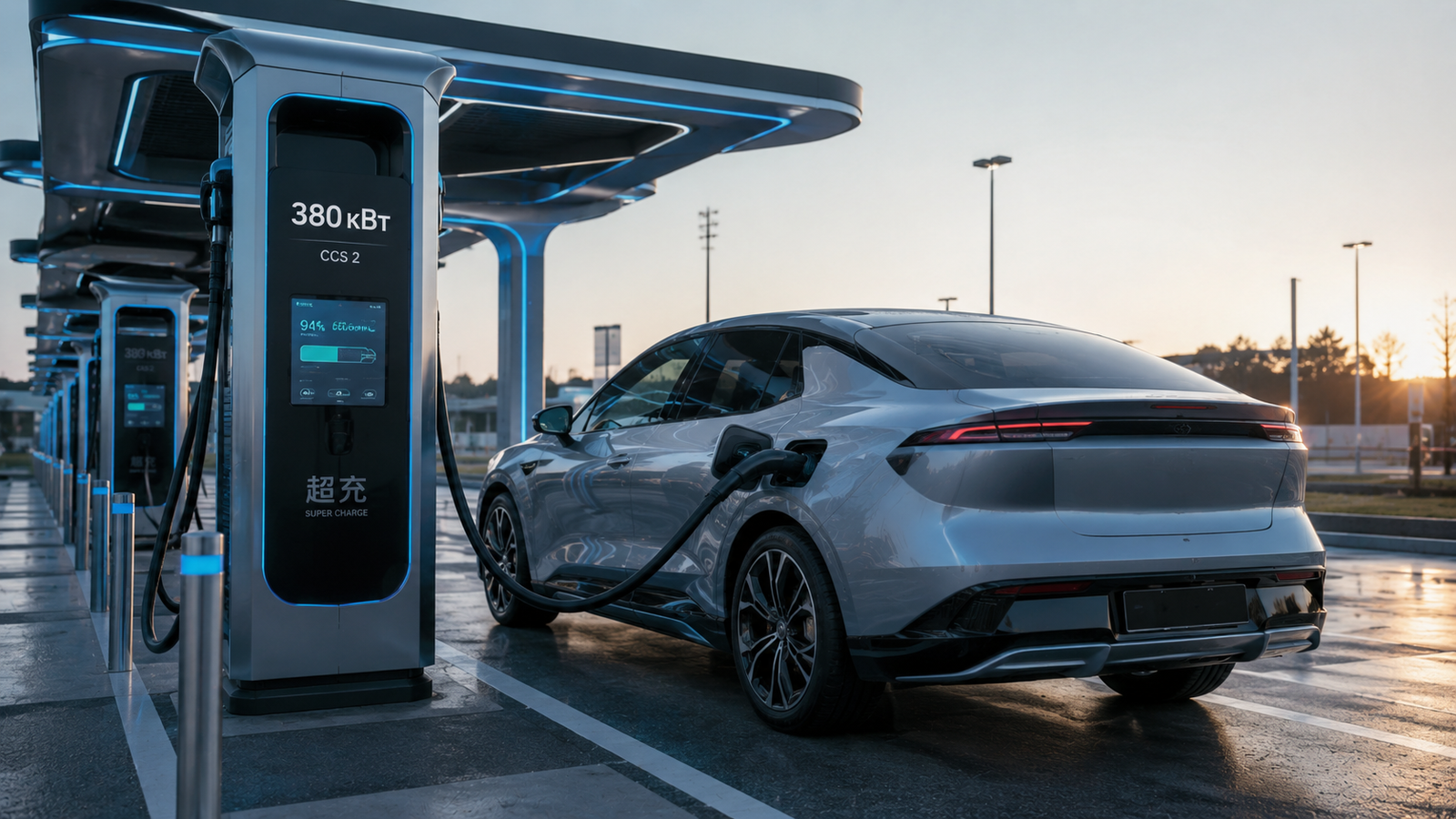
Among the main parameters are:
- traction battery capacity;
- vehicle electrical architecture;
- current battery charge level;
- ambient temperature;
- capabilities of the charging station itself.
There is a simple rule that helps to understand how the system works. The actual charging power is always limited by the smaller of two values. If the car can accept up to 250 kW, and the charging station only delivers 50 kW, the process will occur at 50 kW. The reverse situation works similarly.
The battery charge level plays an equally important role. This is why EV owners often notice that the first percentages are gained very quickly, but as it approaches full charge, the process slows down significantly.
The reason lies in the battery's operating characteristics. In the final stages, the electronics limit the power to protect the battery, so charging from 80 to 100% can take almost as long as it previously took to gain most of the capacity. This is why in daily use, most drivers rarely charge their car to the maximum.
Why 800 Volts Became the New Standard
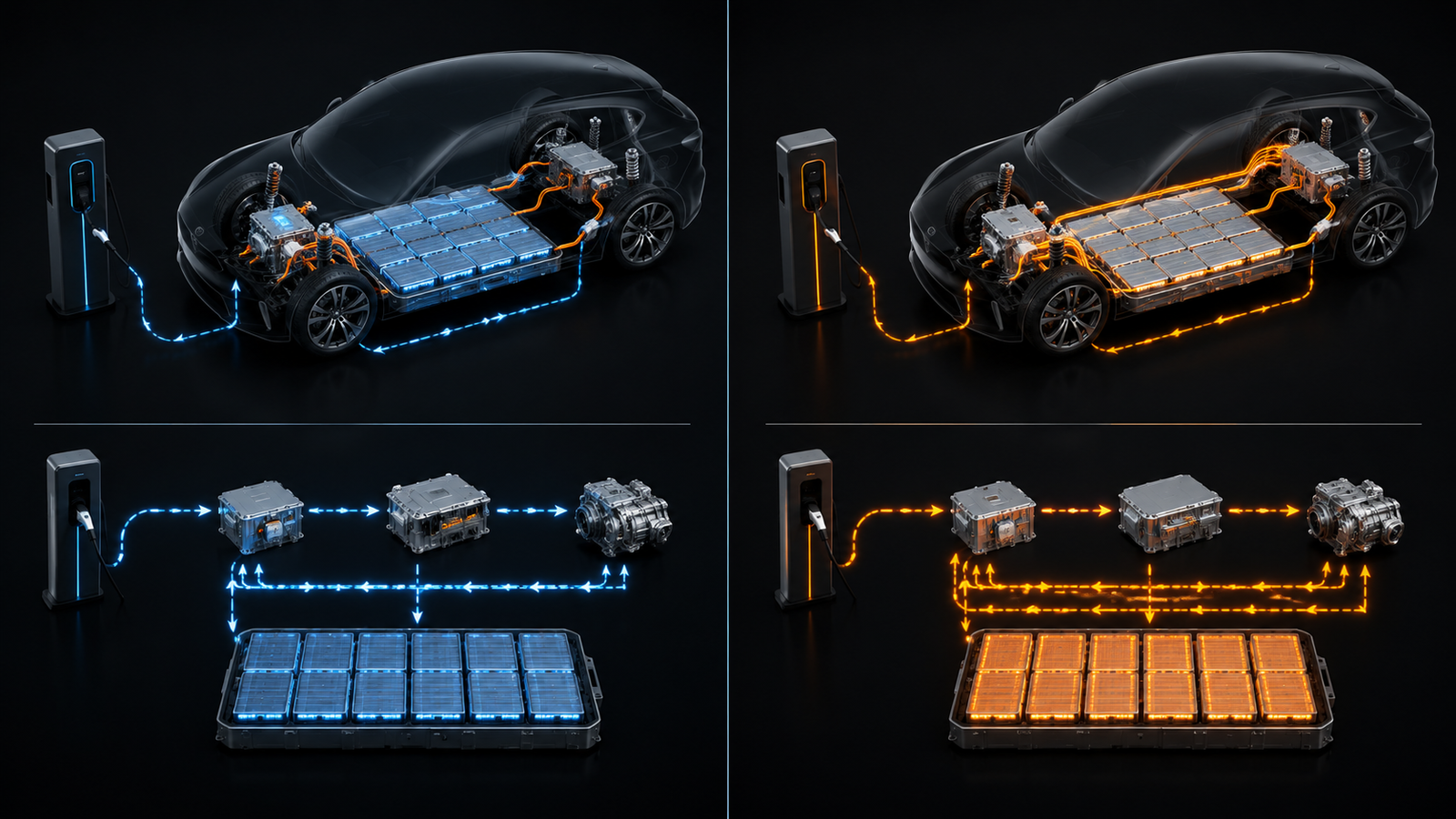
One of the main achievements of recent years has been the transition of manufacturers to an 800-volt architecture. Some companies have already begun to implement solutions with an operating voltage of about 900 V.
At first glance, the difference seems to be a purely technical characteristic, but it has become one of the key factors in increasing charging speed.
The advantages of the new architecture include:
- increased energy replenishment speed;
- reduced power transmission losses;
- more efficient charging system operation;
- the possibility of using ultra-fast charging complexes.
As a result, for the same connection time to the station, a car with an 800-volt system can receive significantly more energy than a similar previous-generation model with a 400-volt architecture.
Just a few years ago, such figures would have been perceived as a demonstration of experimental technologies. Today, we are talking about production cars that are already available to buyers, including in the Russian market.
Chinese Manufacturers Became Leaders in the Race
While the most advanced fast-charging technologies used to be primarily associated with European and American brands, the situation has now changed.
It is Chinese companies that are setting the pace for the industry's development, and many of these cars are officially or unofficially represented in Russia.
Among the most interesting solutions of recent years are:
- models with so-called "golden batteries" capable of adding several hundred kilometers of range in just 10–12 minutes;
- electric vehicles on the e-Platform 3.0 Evo platform with an 800-volt architecture;
- models compatible with both modern and older 400-volt charging stations;
- cars with 900 V batteries, which in test conditions demonstrate charging from 10 to 97% in the time previously required only for the journey to the charging complex.
An especially important advantage for Russian conditions remains the compatibility of new platforms with existing infrastructure. Thanks to this, owners do not have to search exclusively for the most modern charging stations.
What Will Change in the Coming Years
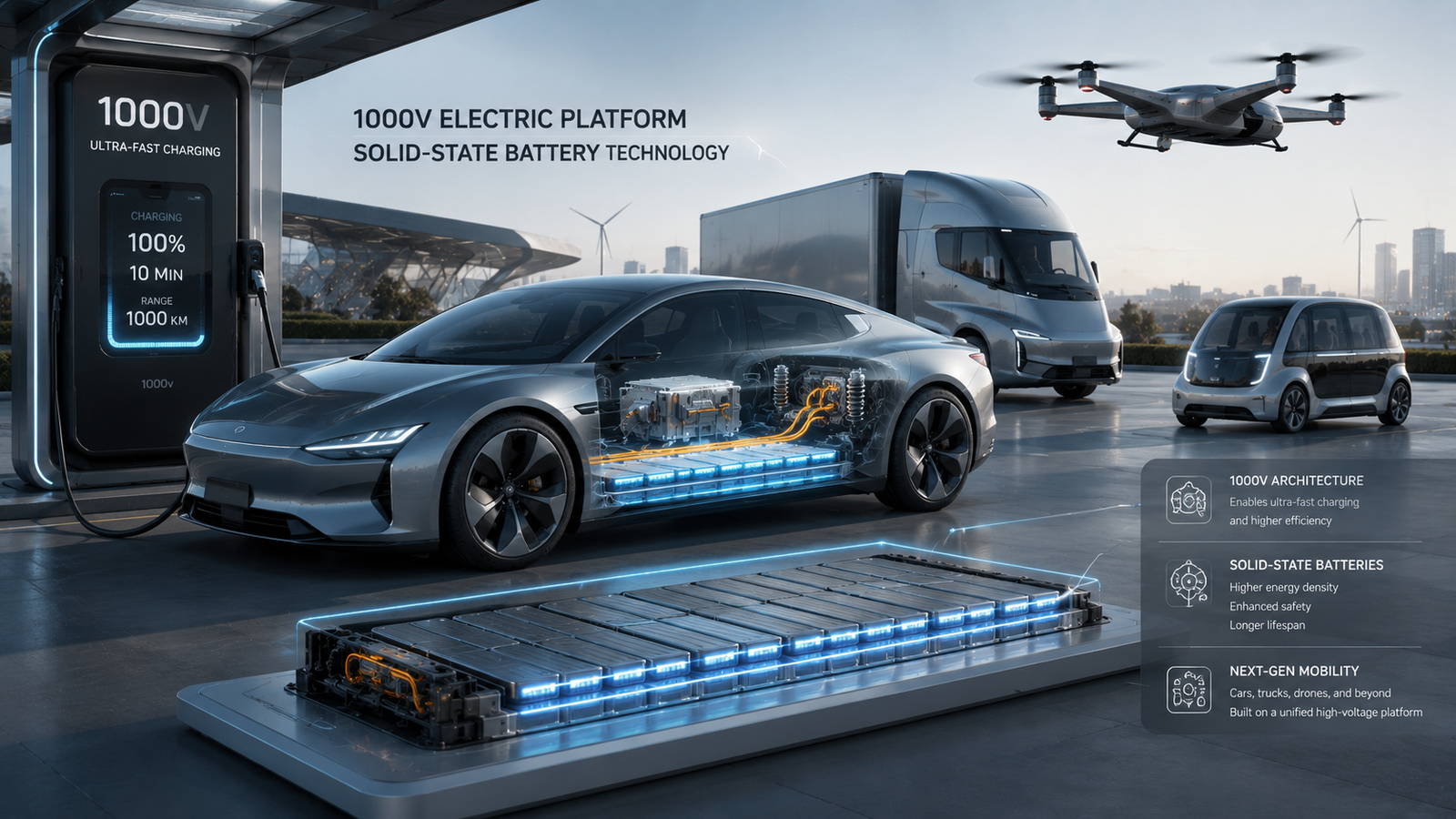
The technological race is only gaining momentum. Manufacturers are already working on the next stage of development, related to the introduction of 1000-volt systems.
It is expected that such solutions will further reduce charging time and increase the efficiency of power electronics.
New types of batteries are also being developed in parallel.
Of particular interest are:
- solid-state batteries;
- sodium-ion batteries.
Several major Chinese manufacturers have teamed up to accelerate research and are currently developing solid-state cells. Such batteries should provide higher charging speeds, increase service life, and improve the safety of electric vehicles.
Sodium-ion technologies are considered no less promising. Despite less attention from marketers, they have an important advantage for northern regions.
Key advantages of sodium-ion batteries:
- better resistance to low temperatures;
- less dependence on rare materials;
- maintaining efficiency in severe frosts.
For countries with cold climates, this can be an equally important advantage as record charging power indicators.
Why This Concerns Every Driver
Discussions about voltage, power, and battery types may seem far removed from the actual operation of a car. However, these parameters determine one of the most important indicators of any electric vehicle — the time the owner spends at the charging station.
The faster the energy reserve is replenished, the fewer differences remain between operating an electric vehicle and a car with a traditional internal combustion engine.
That is why the development of 800-, 900-, and future 1000-volt platforms is becoming one of the main factors in the growing popularity of electric transport. For the average driver, this means shorter stops on the road, convenience on long trips, and the gradual disappearance of one of the main drawbacks of electric vehicles, which just a few years ago was considered an almost insurmountable problem.
Read more articles:
- Econometer on VAZ-2107: A Forgotten Driver's Assistant
- Lanz Bulldog: The Tractor Started with Fire and a Steering Wheel
- NAMI-050 "Belka": The People's Car That Was Never Born
Comments