Draining fuel is not only necessary in emergency situations. Such a need arises from incorrect refueling, fuel system repair, prolonged vehicle downtime, fuel contamination, or preparing the car for long-term storage.
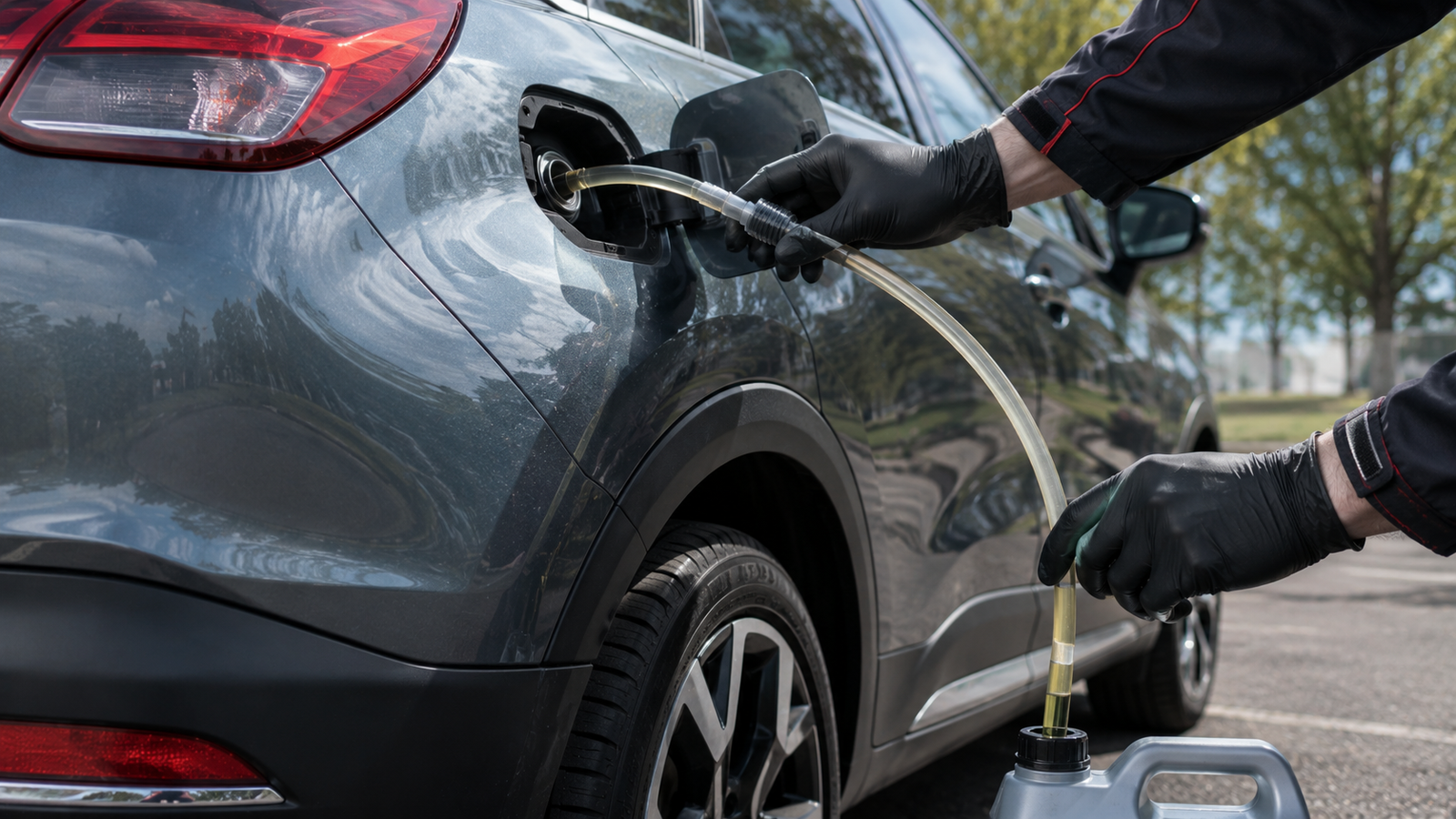
On modern cars, the usual method of siphoning with a hose through the filler neck often doesn't work. Manufacturers install check valves, protective flaps, mesh filters, and other elements that prevent fuel drainage and theft.
When Draining is Truly Necessary
- Incompatible fuel has entered the tank. Starting the engine can lead to costly repairs of the fuel system, so gasoline or diesel must be completely removed and the system flushed.
- Repair of the fuel pump, fuel filter, lines, or tank is required.
- The car has been idle for more than a year, causing the fuel to lose its properties.
- Water or contaminants have entered the fuel, causing unstable engine operation.
- The car is being prepared for long-term storage.
Main Methods
Fuel can be drained in several ways:
- through the fuel system, by temporarily starting the fuel pump;
- through the filler neck, if the car's design allows it;
- through the fuel pump's service hatch under the rear seat;
- through the drain plug, if provided by the tank's design.
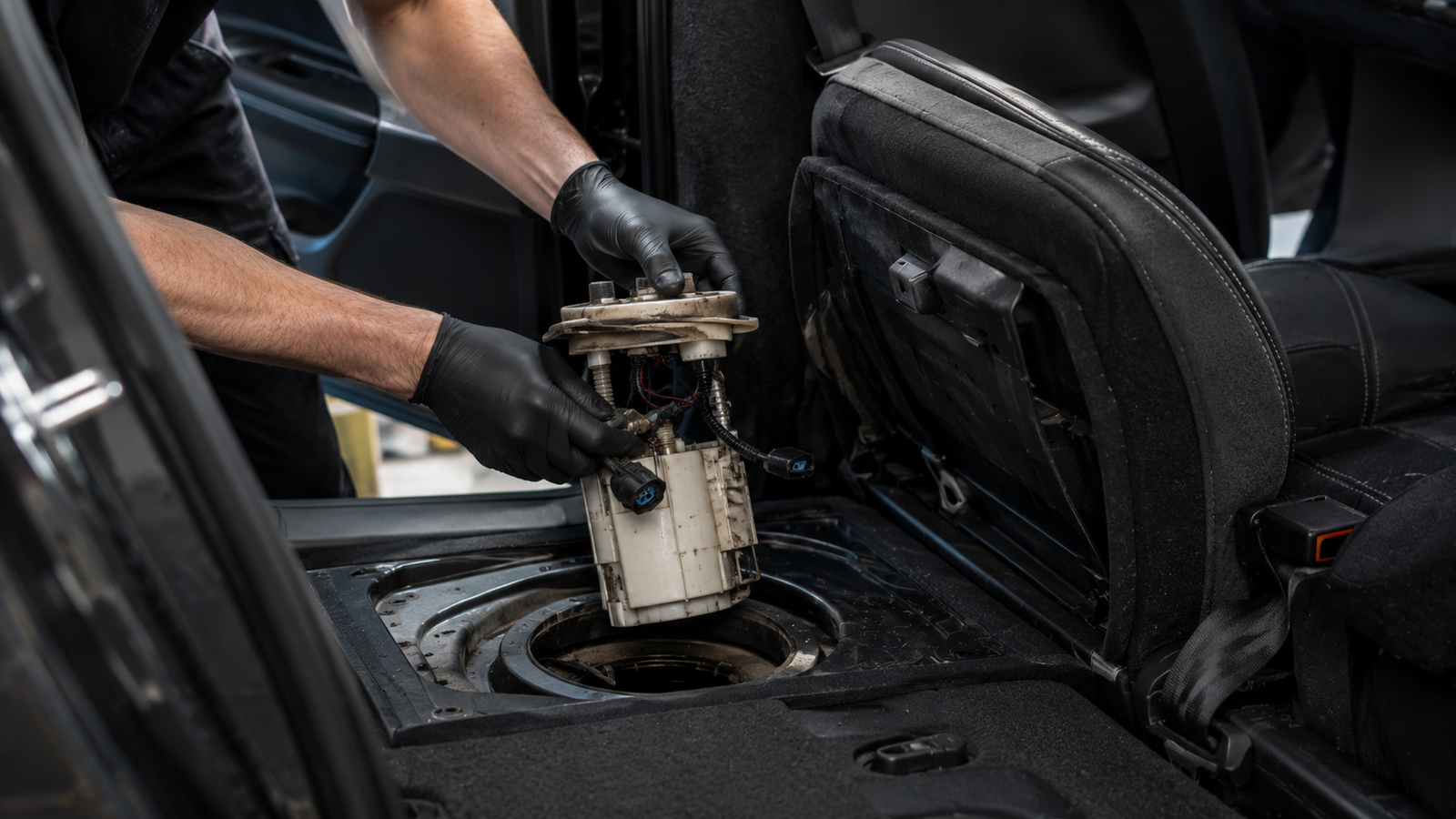
Before starting work, you need to prepare a fuel-resistant hose, a fuel canister, a hand pump or bulb, gloves, rags, and a set of tools. The fuel container must be below the tank level.
Most Common Mistakes
- using unsuitable plastic containers;
- working in an unventilated area;
- using power tools near gasoline;
- smoking during work.
All these actions increase the risk of fire and can lead to dangerous consequences.
What to Do with Drained Fuel
If the fuel was removed due to incorrect refueling or contamination, it cannot be reused. If the draining was only for repair and the fuel remained clean, it can be returned to the tank after the work is completed. Fuel should be stored in a sealed, certified canister, protected from direct sunlight.
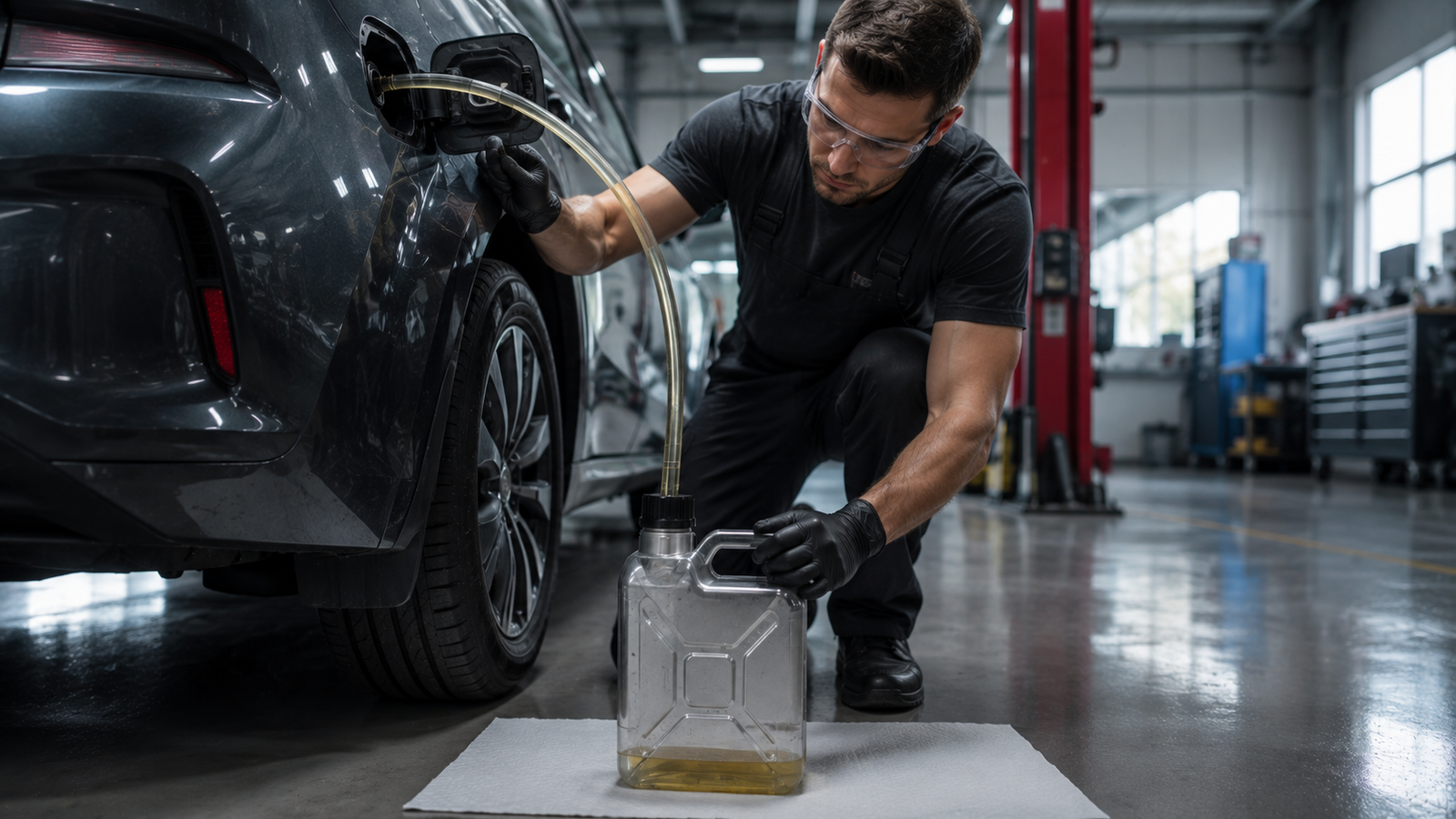
On some cars, fuel can be removed by the standard pump through the electrical system, but without knowing the diagram, it is not recommended to do so — there is a risk of damaging fuses, relays, or the pump itself.
When it's Better to Contact a Service Center
Specialist assistance is preferable if the car is under warranty, diesel fuel needs to be removed from a gasoline car, the tank design does not provide convenient access, removal of the fuel module is required, or the necessary tools are missing.
The main rule is that before starting work, you must consider the design of the specific car. Modern protection systems have significantly complicated access to the tank, so incorrect actions can lead to damage. If you are not confident in your abilities, it is safer to entrust the procedure to a service than to pay for expensive fuel system repairs.
Read more materials:
- Heat can disable a car: experts named the main risks for drivers
- For 1.5 million, better than Arkana? Let's figure out if it's worth buying a Samsung XM3
- Why good painters never skimp on these four painting stages