It is a common misconception that car thieves only target expensive SUVs or premium sedans. However, in practice, a wide variety of cars can be the object of a crime — from budget passenger models and older hatchbacks to commercial vehicles. Only the methods used by criminals differ. These include relaying the signal of the standard key, breaking locks, connecting to the diagnostic connector, bypassing the immobilizer, or even evacuating the car.
Why the standard alarm is not enough
The first thing a car owner needs to understand is that a standard alarm system is not a full-fledged anti-theft system.
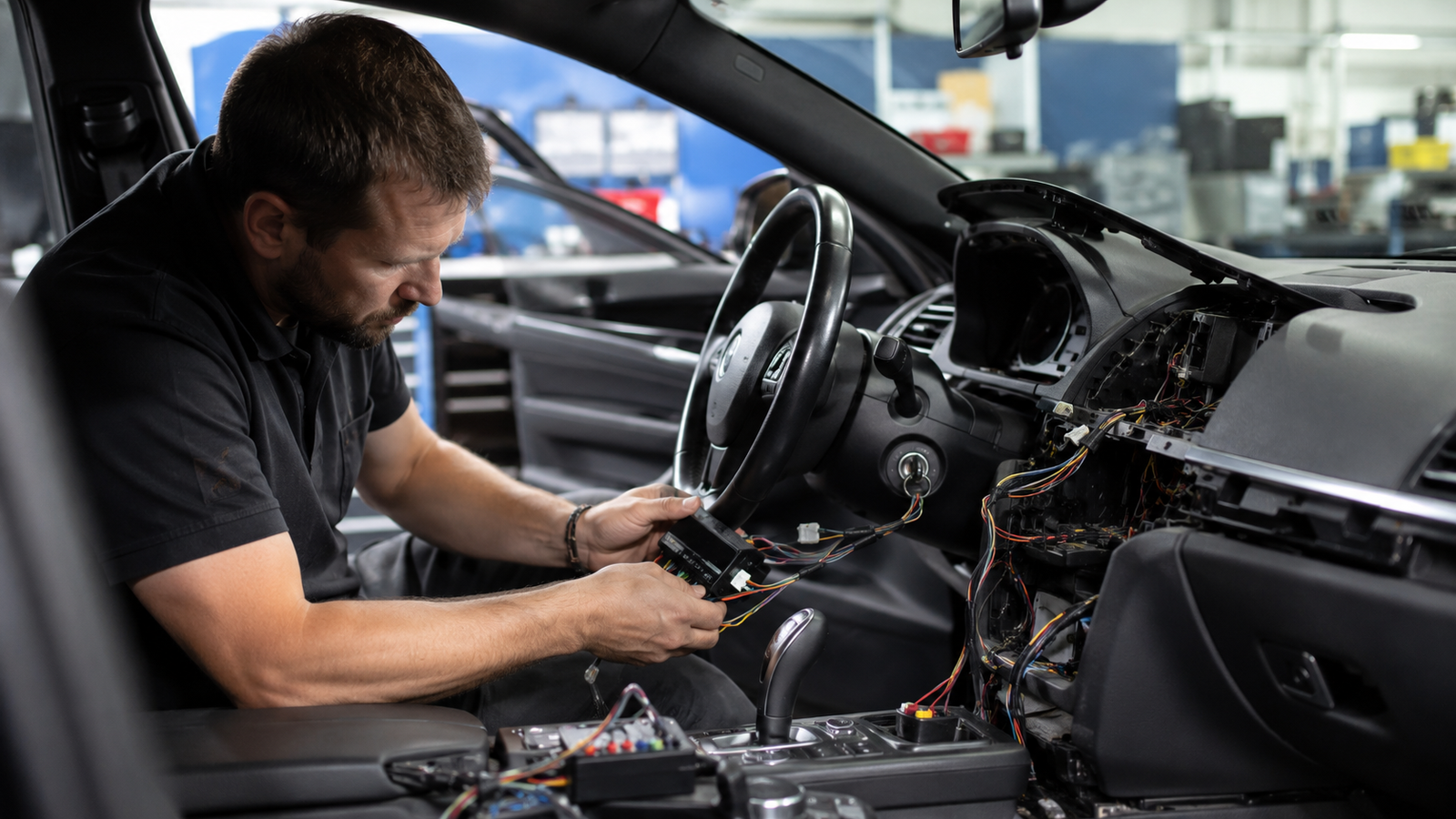
In many modern cars, it performs basic functions:
- provides an audible alert;
- provides comfortable control functions;
- interacts with the central locking system.
However, such protection is not always able to stop a prepared criminal. If the criminal is well acquainted with a particular car model, they usually know the features of the standard immobilizer, the location of electronic control units, the CAN bus, and the most vulnerable elements of the security system.
An additional immobilizer significantly complicates theft
One of the most effective ways to protect is to install an additional immobilizer with an owner authorization system.
Unlike a conventional alarm, such a device is not limited to giving an alarm signal, but directly prevents the engine from starting or the car from moving.
At the same time, the quality of installation is of great importance. The lock should not be placed in obvious places, for example, near the steering column or where a car thief will look for it first. The less predictable the installation, the more difficult it is to quickly neutralize the protection.
Car owners with keyless entry systems should take additional measures
Cars equipped with keyless entry systems require special attention.
One of the common methods of theft remains the relaying of the electronic key signal. In this case, criminals create a situation in which the car mistakenly believes that the key is nearby, although in reality it may be at home.
To reduce the risk, it is recommended to:
- disable the Keyless function if the manufacturer provides such an option;
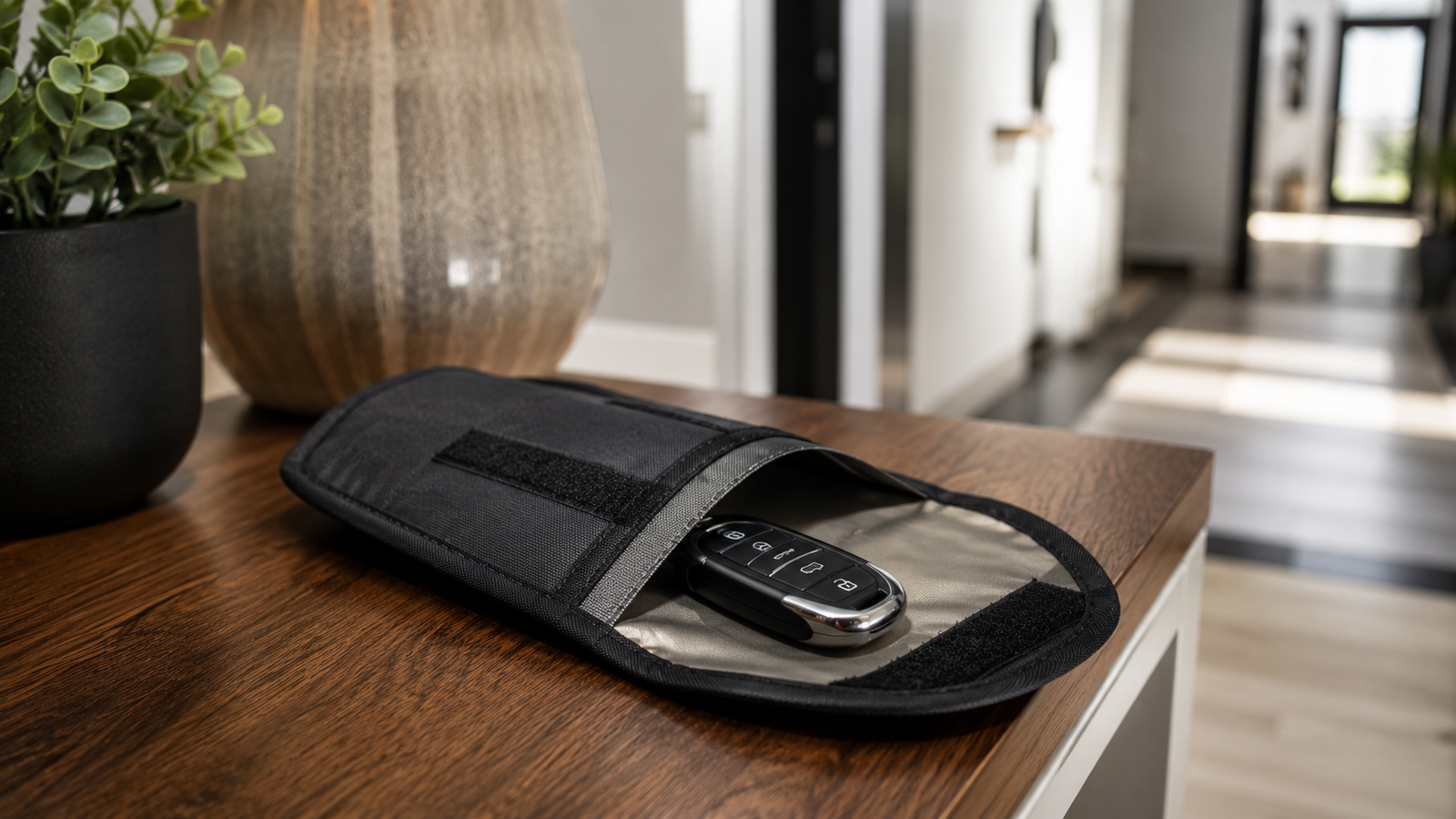
- use a shielding case to store the key;
- do not leave keys near the front door of an apartment or house.
The diagnostic connector also needs protection
Another potentially vulnerable element of the car remains the OBD-II diagnostic connector.
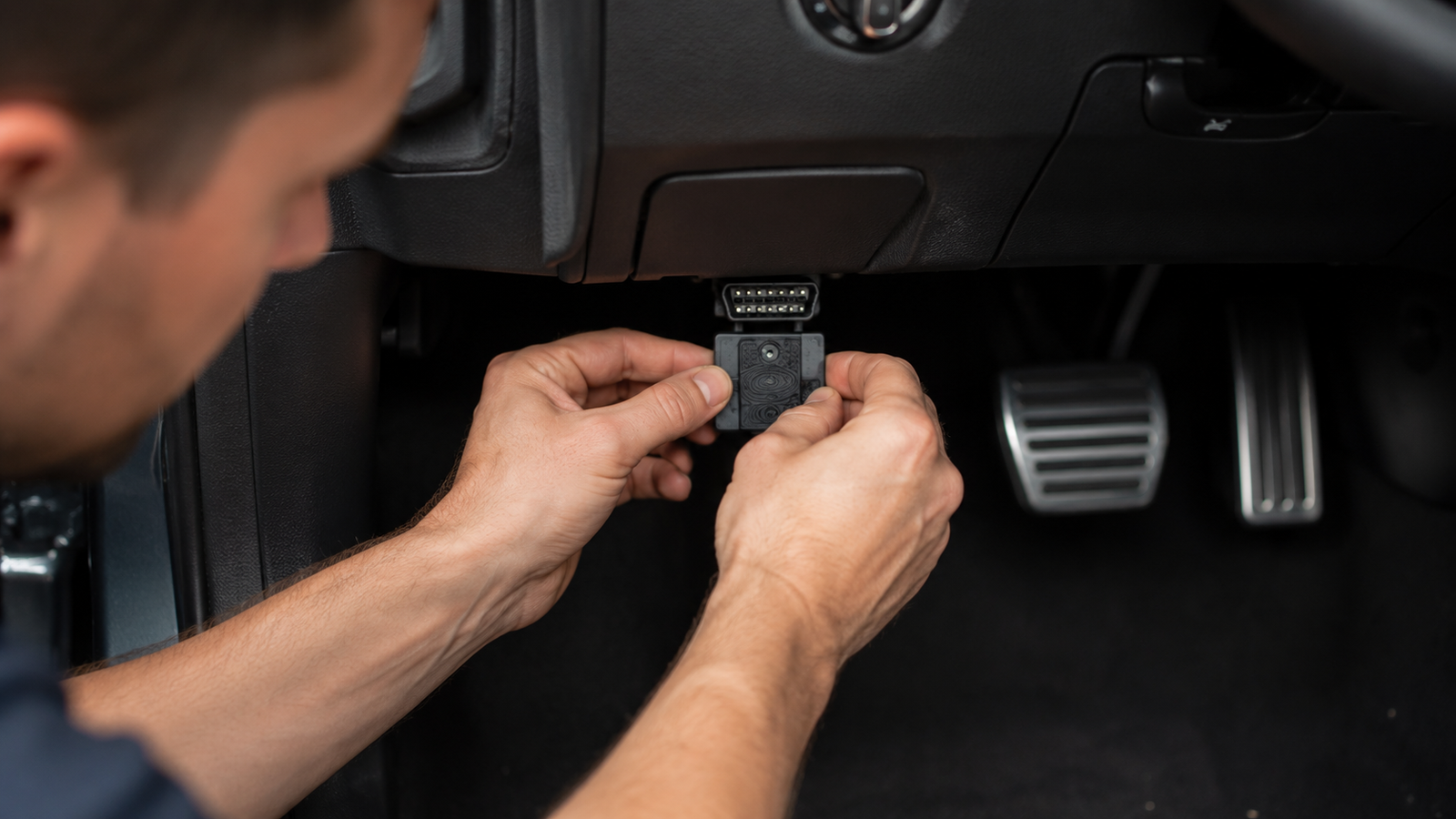
In some cases, through it, criminals are able to:
- register a new key;
- disable existing locks;
- gain access to the car's electronic systems.
Various solutions can be used for protection:
- relocation of the diagnostic connector;
- installation of a protective cover with a lock;
- electronic blocking of the diagnostic line;
- use of a false connector.
Such measures should not create difficulties during subsequent car maintenance.
Mechanical protection remains relevant
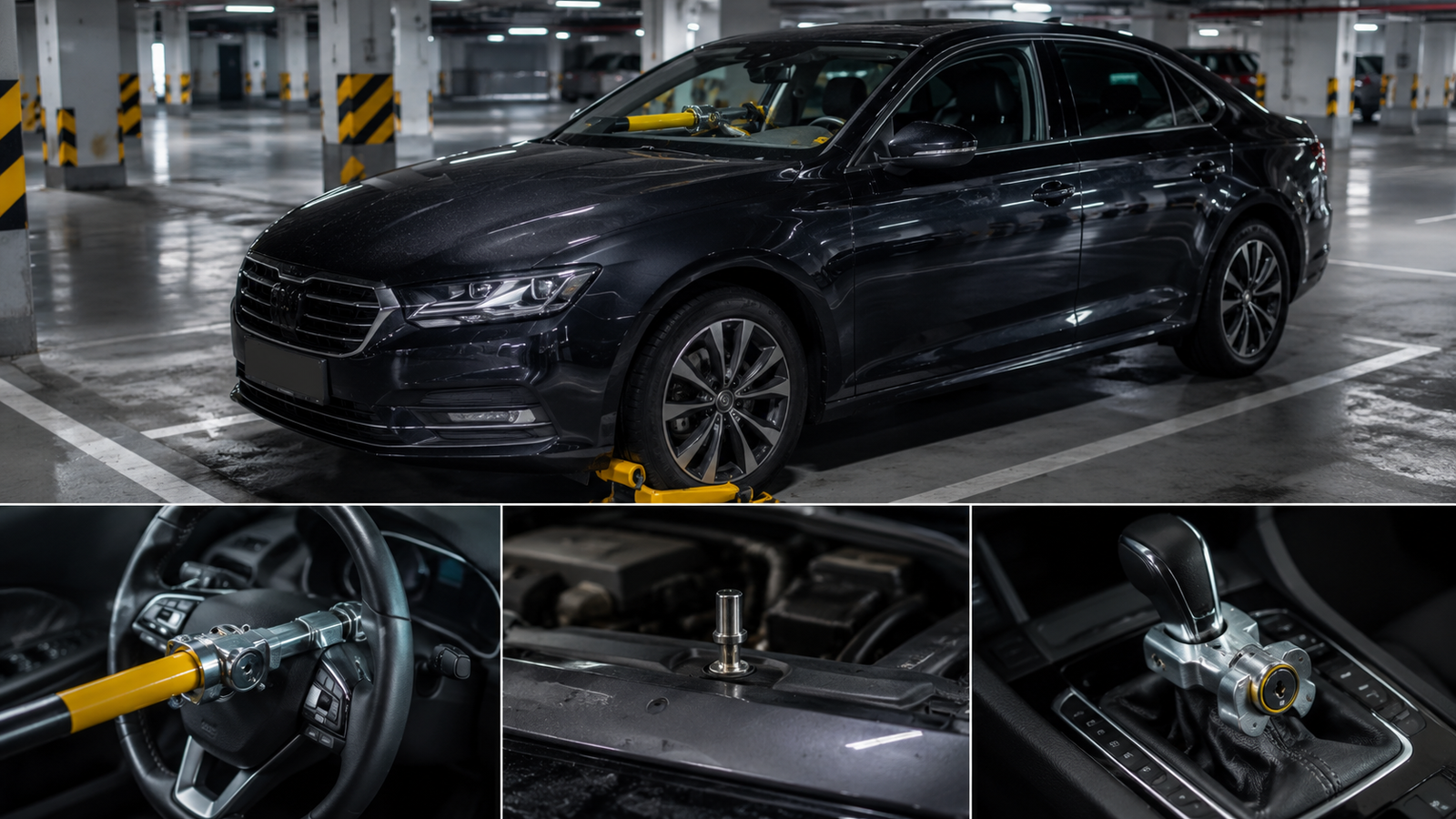
Despite the development of electronic technologies, mechanical anti-theft devices retain their effectiveness.
These include:
- steering shaft locks;
- gearbox blockers;
- hood protection;
- reinforced door locks;
- electromechanical hood locks.
All these devices do not make theft impossible, but they significantly increase the time required for the intruder. It is the time factor that often becomes decisive: if the car cannot be quickly opened, started, and driven away, the criminal may abandon their intentions and choose a less protected car.
Why it is important to protect the hood
Under it are often located:
- alarm system siren;
- battery;
- blocking relay;
- alarm elements;
- electrical wiring.
If the hood is opened only in the standard way, the intruder gets the opportunity to quickly disconnect the car's power or disable the components of the security complex. Therefore, protecting this area significantly increases the car's overall resistance to theft.
A GPS beacon is useful, but should not be the only protection
Modern telematics systems also help improve car safety.
As an additional layer of protection are used:
- GPS and GLONASS beacons;
- mobile notifications;
- tilt sensors;
- evacuation sensors.
However, satellite monitoring cannot completely replace other means of protection. The navigation equipment signal can be jammed, and the car can be quickly moved to an enclosed space. That is why it is advisable to install the beacon covertly, use autonomous power, and not rely solely on it.
Equipment installation plays a decisive role
The quality of installation is often more important than the fame of the security system manufacturer.
Even expensive equipment can be ineffective if:
- it was installed according to a standard scheme;
- the main blocks were placed in obvious places;
- the wiring remained unprotected;
- emergency system shutdown was not thought out.
Good anti-theft protection should have an unconventional architecture to make it as difficult as possible to quickly disable it.
Everyday habits also affect safety
The behavior of the car owner also plays a significant role.
A few simple rules:
- do not store keys near the front door;
- do not leave the car running even for a short time;
- do not keep documents, a spare key, alarm tags, and service key fobs in the cabin.
After purchasing a used car, it is also advisable to check how many keys are registered in the system, make sure there are no extra tags, old security complexes, and traces of interference with the electrical wiring.
When parking, preference should be given to well-lit areas with video surveillance and active pedestrian traffic. If the car is left for a long time, it is advisable to position it in such a way as to make it difficult to quickly load it onto a tow truck or roll it out.
There is no universal way to completely eliminate the risk of theft. Nevertheless, a combination of modern technical solutions with competent owner habits can significantly complicate the actions of intruders and significantly reduce the likelihood of car theft.
Read more materials:
- Volvo 480: the boldest failure of the Swedish brand
- Why electric bicycles have become the new urban transport
- Liters by QR code: where fuel restrictions are already in effect