In the mid-1970s, the American automotive market was undergoing significant changes. After the oil crisis, previous notions of large sedans with powerful engines began to rapidly lose relevance. Rising fuel prices forced buyers to pay more attention to costs, and automakers had to find new solutions for a market that had changed its priorities in just a few years.
This restructuring was particularly challenging for the largest American concerns. For a long time, they had convinced customers that a real car should be large, comfortable, and equipped with an engine of impressive displacement. Now, these same companies had to prove that a compact model could also be an attractive purchase.
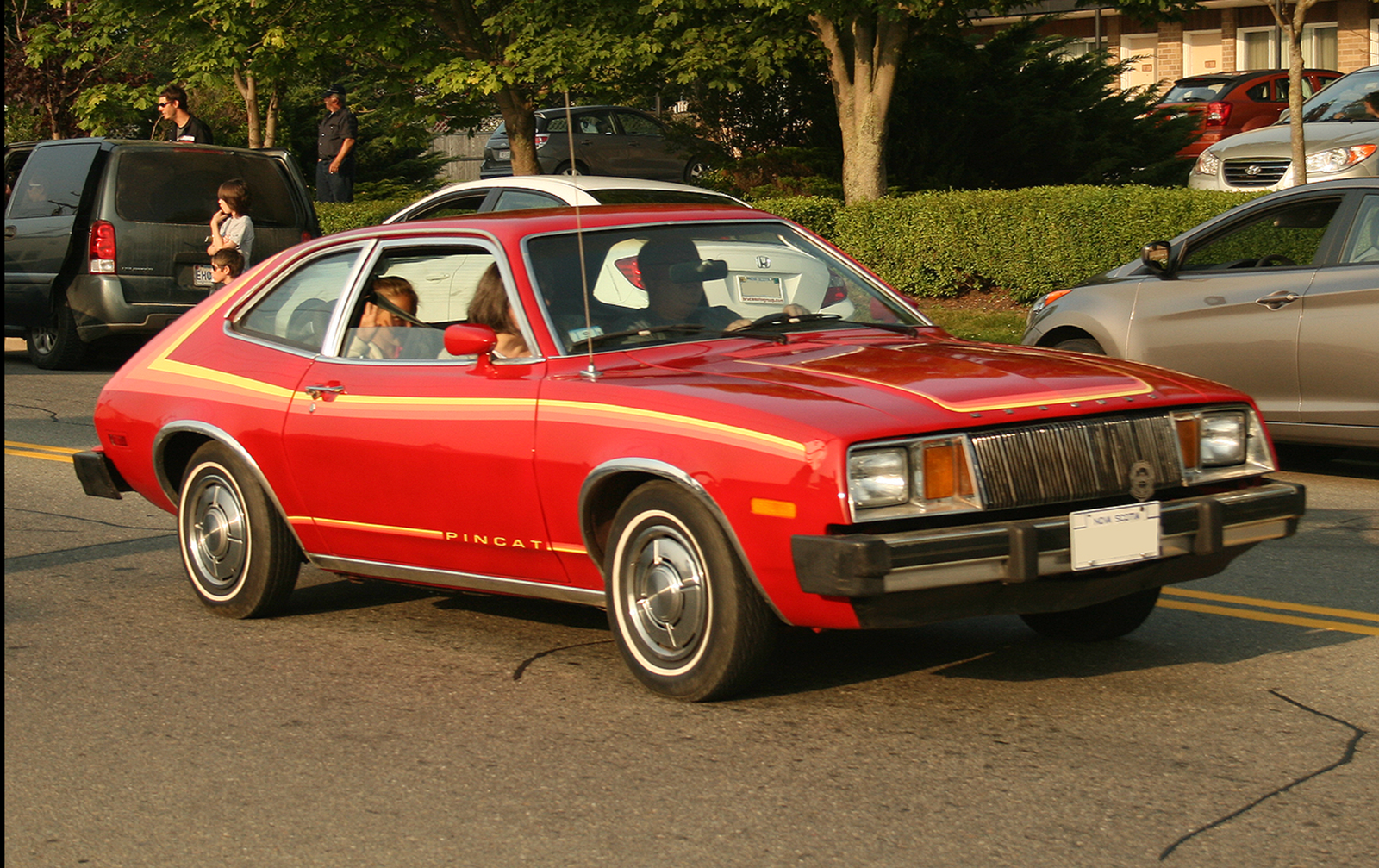
It was during this period that the Mercury Bobcat appeared – a car that is remembered far less today than it deserves.
A Compact Car with Its Own Philosophy
The name Bobcat is mainly familiar to fans of American automotive history. Most motorists, however, would more likely recall the Ford Pinto, and to some extent, this would be fair.
Both models were indeed very close relatives. They used a common technical platform, a similar body power structure, and almost identical architecture. However, within the Ford Motor Company, each was assigned its own role.
The Mercury brand traditionally occupied an intermediate position between mass-market Ford models and more prestigious Lincoln cars. Its task was to offer buyers a higher level of comfort and equipment without the need to move into the full premium segment.
This approach was maintained in the creation of the Bobcat.
When the model debuted in the Canadian market in 1974, and then appeared in the US, potential owners were offered not just a compact car, but a car that did not create a feeling of forced economy.
It was nuances like these that largely determined the success of American models in the mid-1970s.
Oil Crisis Changed Attitudes Towards Small Cars
Before the energy crisis, most American manufacturers did not perceive subcompact cars as a serious direction for development.
While Japanese companies perfected their Toyota, Datsun, and Honda models, Detroit's automotive industry continued to bet on traditional full-size cars.
However, the situation quickly changed.
Buyers came to the conclusion that a car did not have to be huge and consume fuel as if the price of gasoline would never change.
As a result, the compact car segment became an arena of fierce competition.
Among the main market participants were:
- Chevrolet Vega;
- AMC Gremlin;
- imported Japanese models;
- Ford Pinto;
- Mercury Bobcat.
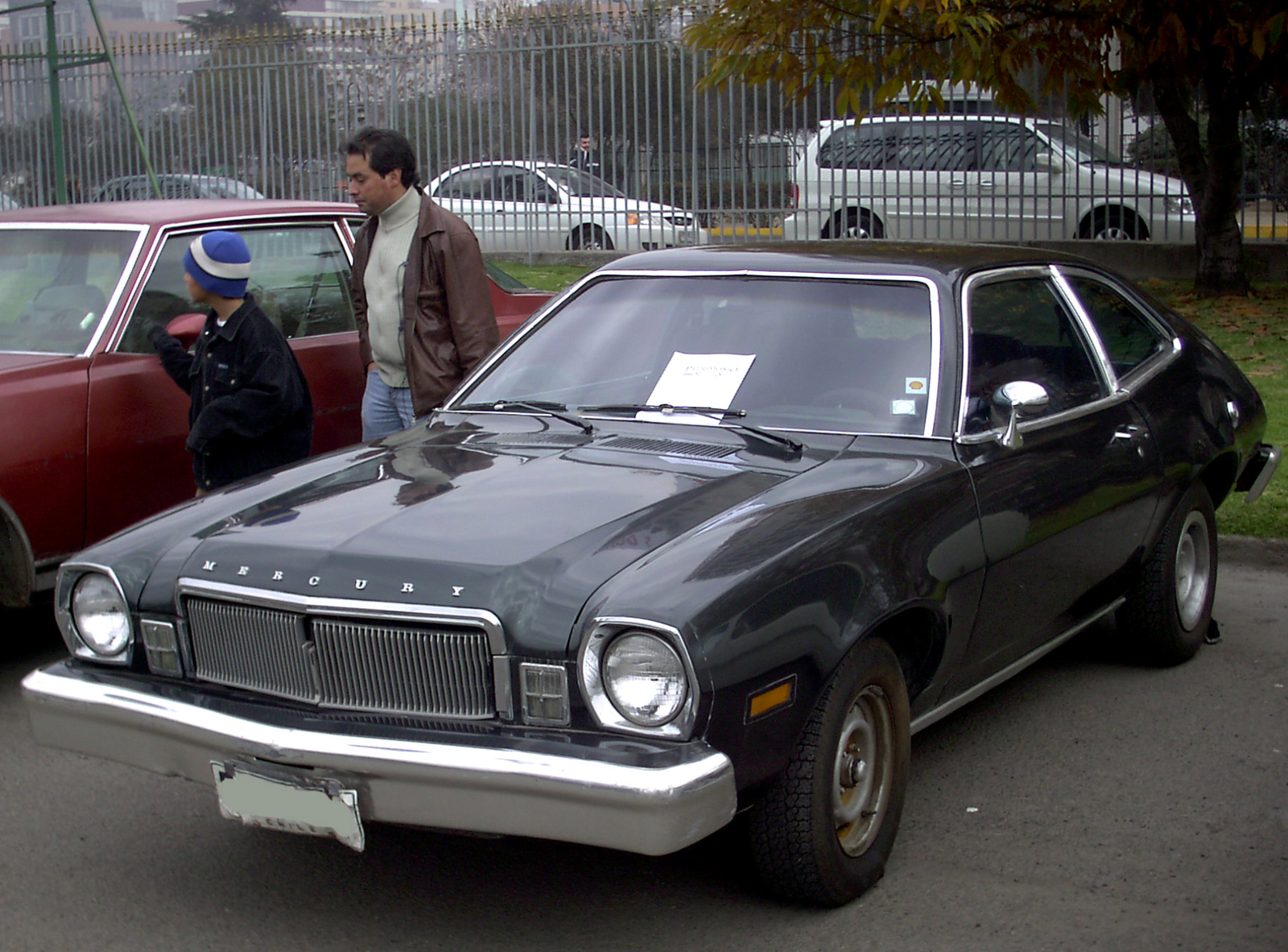
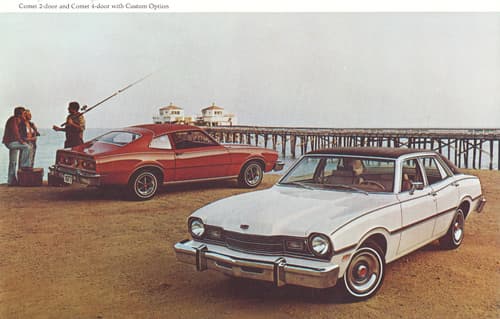
Outwardly, the Bobcat differed little from its relative, the Ford Pinto, and this is exactly what marketers aimed for. Their goal was not to create a fundamentally different car, but to offer a car with a higher level of perception and service.
Practicality Became the Model's Main Advantage
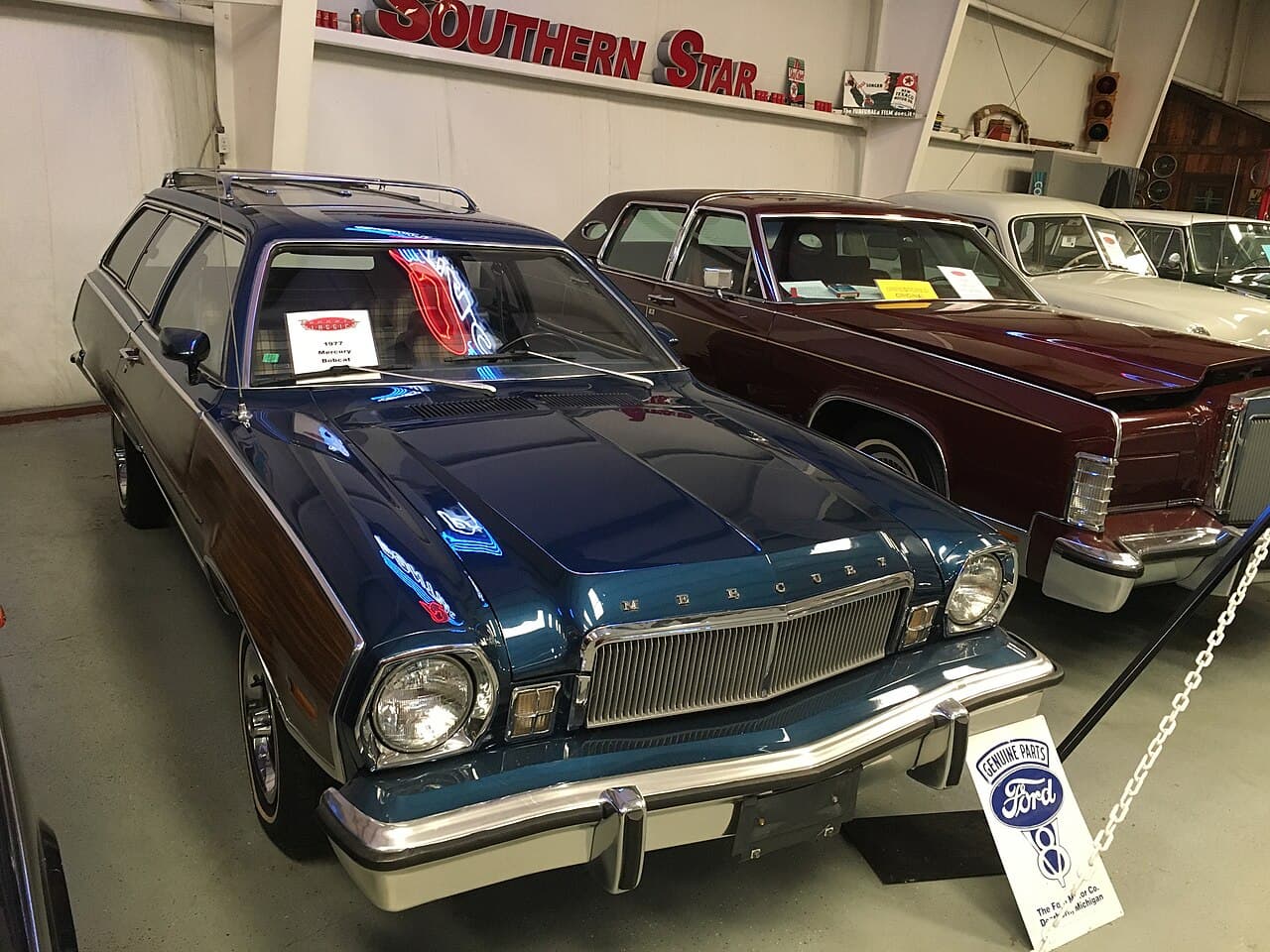
The Mercury Bobcat was produced in several body styles.
Buyers had access to:
- two-door sedan;
- Villager station wagon;
- three-door Runabout hatchback.
The Runabout version is considered the most interesting.
For the mid-1970s, the car offered a very modern combination of compact size and practicality. A large tailgate, folding rear seat, and spacious cargo area made the model a versatile vehicle for everyday use.
The car's philosophy was extremely simple. The Bobcat did not strive to impress others with its body size or engine power. Instead, it offered the owner convenience, functionality, and versatility, which decades later remain as in demand as when the model first appeared.
No Sporting Ambitions, But with Decent Engineering
The Mercury Bobcat's base powertrain was a four-cylinder engine with a displacement of 2.3 liters.
It did not claim a sporty character, but it provided calm and predictable operation. The car accelerated confidently, did not create excessive noise, and was well suited for daily commutes.
For those who required more traction, the manufacturer offered another option – a 2.8-liter German-designed V6 Cologne engine.
Such an engine significantly changed the car's character. Although the Bobcat still did not become a sports model, it felt much more confident on country roads, and overtaking became much more comfortable.
Buyers could choose one of two transmissions:
- four-speed manual;
- three-speed automatic.
While the manual transmission was more suitable for those seeking maximum fuel efficiency, the automatic transmission quickly became a popular choice among city dwellers who regularly faced heavy traffic.
Modest Appearance Became Part of Its Character
Even at its debut, the Mercury Bobcat was rarely called an outstanding example of automotive design.
The American automotive industry of the mid-1970s was going through a difficult period. Designers simultaneously had to take into account new requirements for safety, ecology, fuel consumption, and production costs. All of this inevitably affected the appearance of cars.
The Bobcat did not try to look faster, more luxurious, or more expensive than it actually was. It featured a calm and restrained design without excessive showiness.
It is thanks to this honesty that the car is perceived today as one of the most accurate symbols of its era. Of course, many then and now prefer the spectacular American coupes of those years, but it was the unassuming appearance that became one of the characteristic features of the Bobcat.
Always Remained in the Shadow of the Ford Pinto
Over seven years of production, Mercury dealers sold just over 224,000 Bobcat cars.
For an independent model, this was a quite decent result. However, alongside it was the Ford Pinto, whose annual sales amounted to hundreds of thousands of units.
In the end, history was quite harsh on the Bobcat.
When compact Ford Motor Company cars of the mid-1970s are recalled today, the Pinto is most often mentioned. The Mercury Bobcat usually remains in the background, although it often offered richer equipment, and many buyers consciously chose it.
The concept of a compact car with a higher level of comfort fully justified itself, but the resounding success of the related model almost overshadowed the Bobcat's own achievements.
A Car That Preserved the Atmosphere of the 1970s
Today, such cars are extremely rare, so every well-preserved example is of particular interest.
Recently, a 1976 Mercury Bobcat Runabout was put up for sale.
In almost half a century, the car has traveled about 116,000 kilometers. It spent most of its life in the dry climate of Arizona, thanks to which the body has been preserved in very good condition. Minor traces of time appeared only along the lower edges of the panels, while the power elements were practically unaffected by corrosion.
Under the hood is a 2.8-liter V6 engine, working in conjunction with a three-speed automatic transmission.
The car remains fully operational, registered, and continues to be regularly used, without becoming solely a museum exhibit.
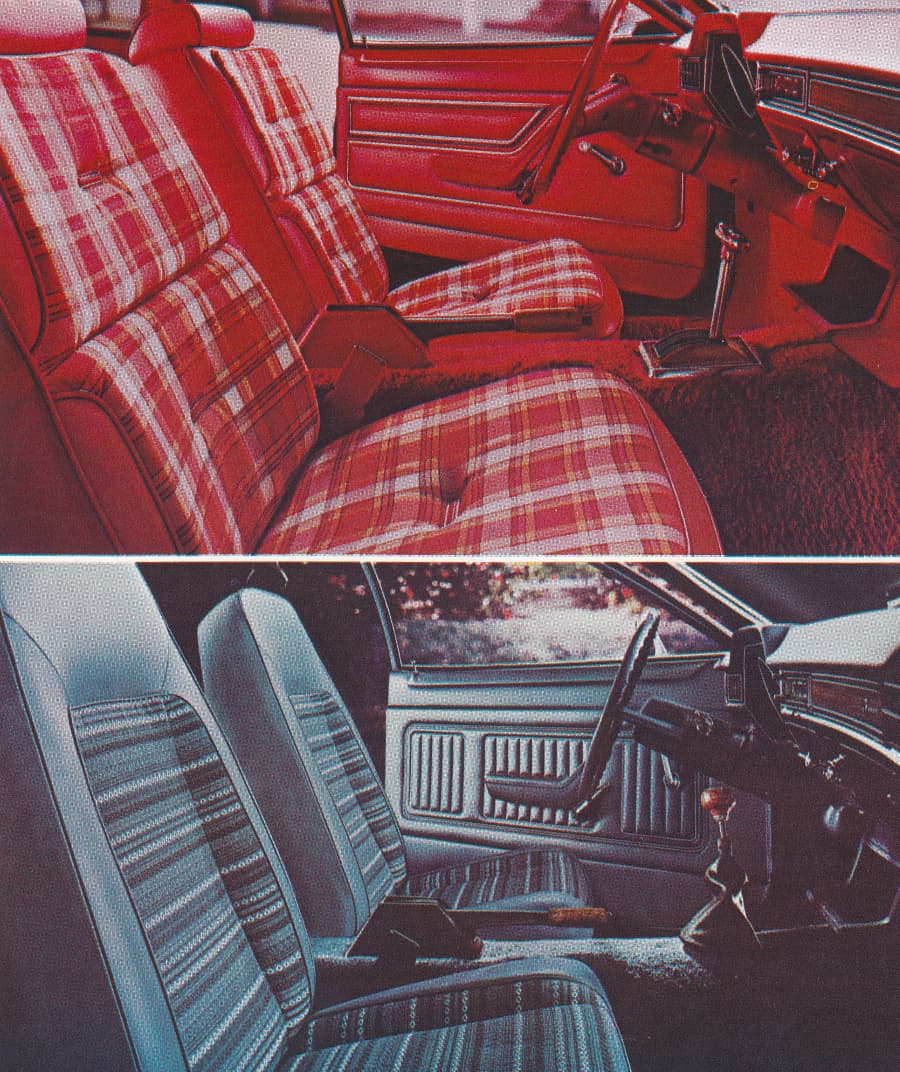
The interior attracts special attention. The red checkered seat upholstery looks unusual even by modern standards, and decorative wood-imitation inserts only emphasize the atmosphere of the mid-1970s. These details do not hide the car's age, but rather make it part of a historical image.
Not Every Legend Becomes Famous
Today, this particular example is asking for 12,000 dollars.
Of course, for that amount, you can buy a much more modern car. However, no modern model can so accurately convey the mood of the American automotive industry of the mid-1970s.
Just open the door, feel the characteristic smell of the interior, grasp the thin steering wheel, and hear the V6 engine running to understand: the value of such cars is determined not only by technical characteristics or market value.
Some models become symbols of their era, others change the market, and still others, like the Mercury Bobcat, honestly do their job for decades without seeking to be in the spotlight. Perhaps that is why, half a century later, they evoke no less interest than the most famous cars of their time. Sometimes the most curious pages of automotive history belong not to record-breakers, but to those models that always remained a little on the sidelines.
Read more materials:
- What measures really reduce the risk of car theft
- Rust on a Chinese car: how to prevent the problem
- Emma Felbermair: how Audi is leading the new F1 Academy star