The history of the legendary "Bukhanka" began long before the serial UAZ-450. Already during the Great Patriotic War, Soviet engineers began developing a completely new universal vehicle designed to carry one ton of cargo. This project was designated UAZ-300. Although the vehicle never reached mass production, its technical solutions later became the foundation for creating one of the most famous vehicles of the Ulyanovsk Automobile Plant.
Military Order Initiated the Project
The idea of creating a compact universal truck emerged in 1943. The Ministry of Automobile and Tractor Industry entrusted the development of the new vehicle to the Ulyanovsk Automobile Plant, which at that time was just beginning to recover after another relocation.
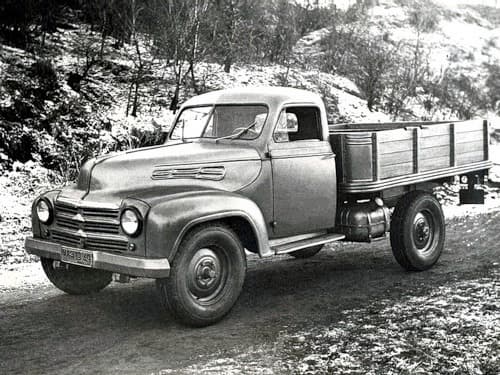
The situation was complicated by several circumstances. The enterprise received a large amount of captured equipment from German companies Zauder-Werke, Steyr, and Steyr-Daimler-Puch, but it was impossible to master it quickly. Only by 1946 was the plant able to fully begin its own design work.
Despite the extremely limited capabilities of the enterprise, the ministry expected specialists to at least develop the architecture of the future UAZ-300 universal vehicle. At the same time, the plant practically did not yet have its own engineering school.
Learning Had to Be Done from Foreign Cars
Due to a lack of sufficient experience, engineers sought solutions by studying foreign equipment that ended up in the USSR.
For this, vehicles of various brands were used:
- Opel;
- Dodge;
- Mercedes-Benz.
Often, cars that were no longer suitable for operation were completely disassembled, their design was carefully studied, and it was translated into drawings. This approach allowed understanding the principles of layout and selecting the most successful technical solutions for the future domestic car.
The main task was to determine the optimal arrangement of units and create the most versatile design.
The First Mock-ups Were Very Different
As the chief designer of UAZ, Mikhail Ivanovich Kazakov, later recalled, one of the main problems remained the lack of practical experience in designing such cars.
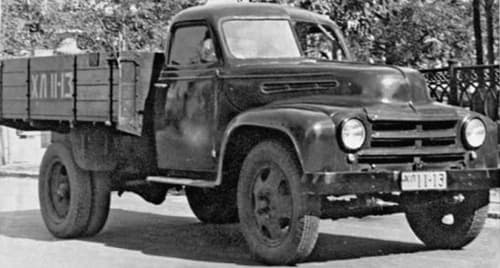
Additional difficulties arose during discussions at meetings of the scientific and technical council. According to the designer, many commission members had very superficial knowledge in the field of automotive engineering, practically no engineering practice, and often changed their own opinions. At the same time, their proposed comments were not always accompanied by technical justification.
To determine the most successful layout, specialists built several experimental mock-ups and scale models.
Among them were:
- a pickup truck without a cab;
- a compact sanitary minibus for 11 people with a transfer case and a demultiplier;
- a one-ton truck.
It was in these early developments that solutions that later appeared on the famous "Bukhanka" were already visible. However, the main variant of the project still remained a light truck with a carrying capacity of one ton.
The Design Gradually Took on a Finished Look
After numerous calculations, engineers determined the main technical solutions.
They managed to develop:
- frame design;
- suspension on longitudinal leaf springs;
- mass distribution scheme;
- traction characteristics parameters.
The next serious question was the choice of the power unit. There were practically no options: only the engine from the GAZ-M-20 "Pobeda" and the engine of the GAZ-AA truck, known as the "Polutorka," were available to the designers.
To objectively assess the prospects of the project, Kazakov proposed building experimental cars with both engines at once.
After Criticism, the Project Was Seriously Reworked
When the next version of the UAZ-300 was successfully defended at a meeting of the scientific and technical council, the plant was allowed to produce two full-fledged experimental trucks.
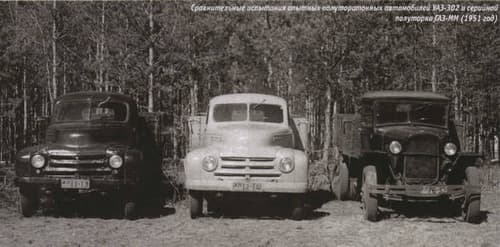
They received:
- an engine from the "Pobeda";
- leaf spring suspension;
- a four-speed manual gearbox without synchronizers.
The test results were sent to leading design bureaus and automobile plants in the country for study and expert evaluation.
After receiving dozens of comments, the car's design was significantly refined. According to the project participants, the recommendations of specialists from other enterprises really helped to significantly improve the quality of the development.
At the same time, disputes continued around the load distribution between the axles. Some specialists believed that the rear axle was overloaded and proposed reducing the load share from 65% to 50% or even 40%.
However, it was precisely this weight distribution that allowed the experimental UAZ-300 to confidently overcome swampy areas and viscous clay without losing its ability to move. For ordinary trucks, such a scheme was considered atypical, but later a similar principle was used on the UAZ-450, where the increased load fell on the front axle.
The Project Was Supported, But Could Not Be Implemented
Despite positive assessments from many specialists, the country's technical base remained the main obstacle.
The main problems of the project were as follows:
- there was no more powerful engine;
- the engine from the "Pobeda" provided good torque but was not distinguished by high power;
- there was a shortage of quality rubber;
- there was a lack of materials for manufacturing leaf springs;
- there were difficulties with the production of durable transmission parts.
Mikhail Kazakov, even at the design stage, proposed several options for modernizing the M-20 engine, but all these ideas were never implemented.
Despite constant criticism, most participants in the meetings of the scientific and technical council still supported the project and recognized that Kazakov's team managed to create the most successful design possible under the existing conditions.
All Developments Were Useful in Creating the "Bukhanka"
Subsequently, the fate of the project changed for reasons unrelated to its technical qualities.
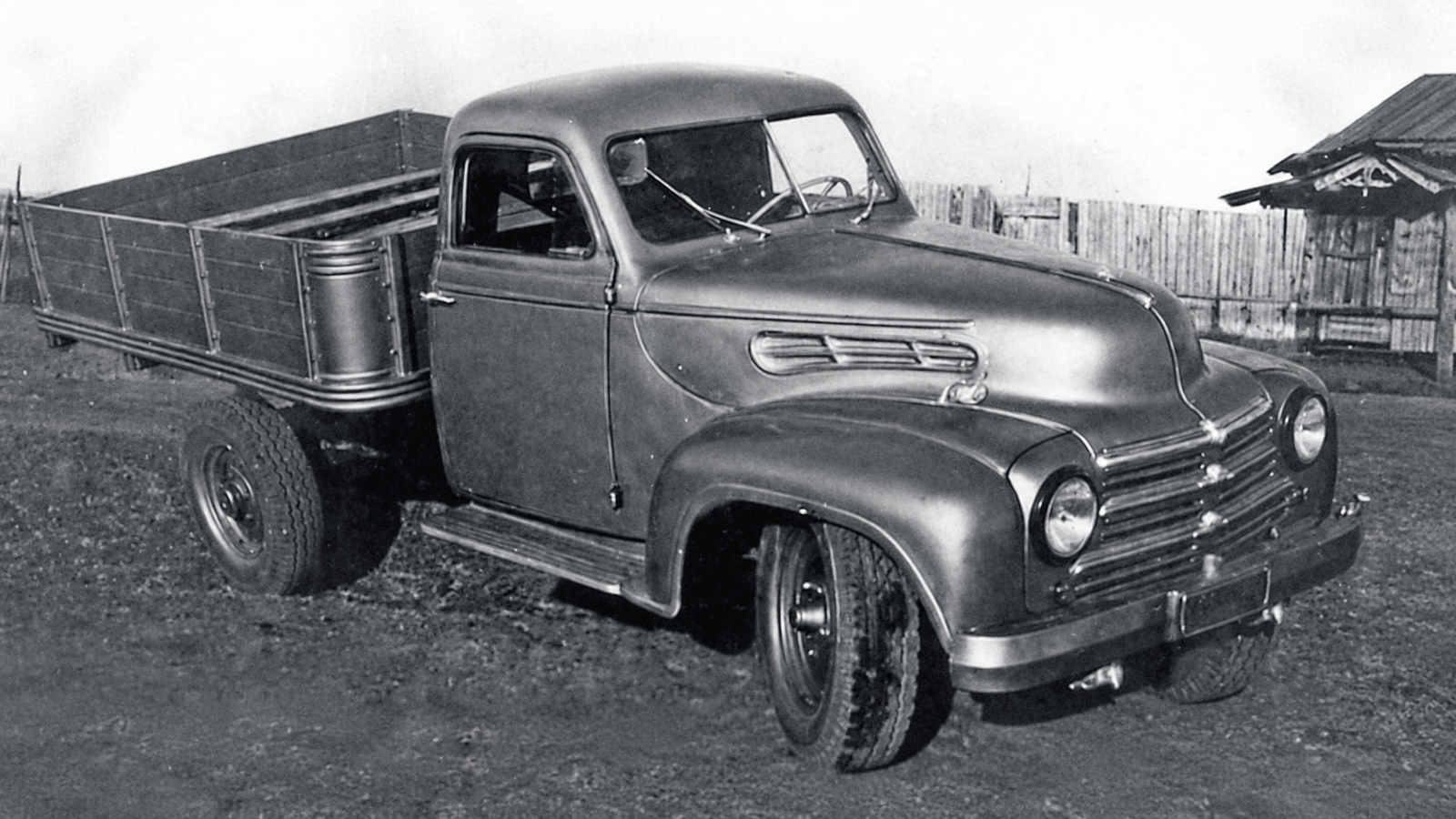
The Ulyanovsk Automobile Plant was instructed to increase the production of GAZ-AA trucks, which caused the deadlines for refining the UAZ-300 to be postponed for several years. As a result, the promising car became unclaimed.
Already in the early 1950s, the development was finally shelved. However, it did not completely disappear. After receiving a state order to create a new car, engineers again turned to the accumulated experience.
It was then that most of the technical solutions developed during the creation of the UAZ-300 found application in the UAZ-450 project – that very legendary "Bukhanka." Therefore, its history did not begin from scratch: the foundation for the future model was a huge amount of engineering work performed during the development of the first universal truck of the Ulyanovsk Automobile Plant.
Read more materials:
- Station wagons in Russia: practicality lost to image
- How Chinese-assembled Toyota differs from the usual one
- Why owning a car in Russia is becoming more expensive