Engine chip tuning has long ceased to be about the conditional "adding horsepower out of thin air." Modern software tuning involves working with the electronic control unit, where parameters such as fuel injection, ignition, boost pressure, and the functioning of various control systems can be adjusted.
But the firmware itself does not guarantee a good result. Much depends on the design of a particular engine. One engine can withstand a 20–30% power increase without serious consequences, while another, even after a relatively small increase, may start operating at the limit of permissible loads.
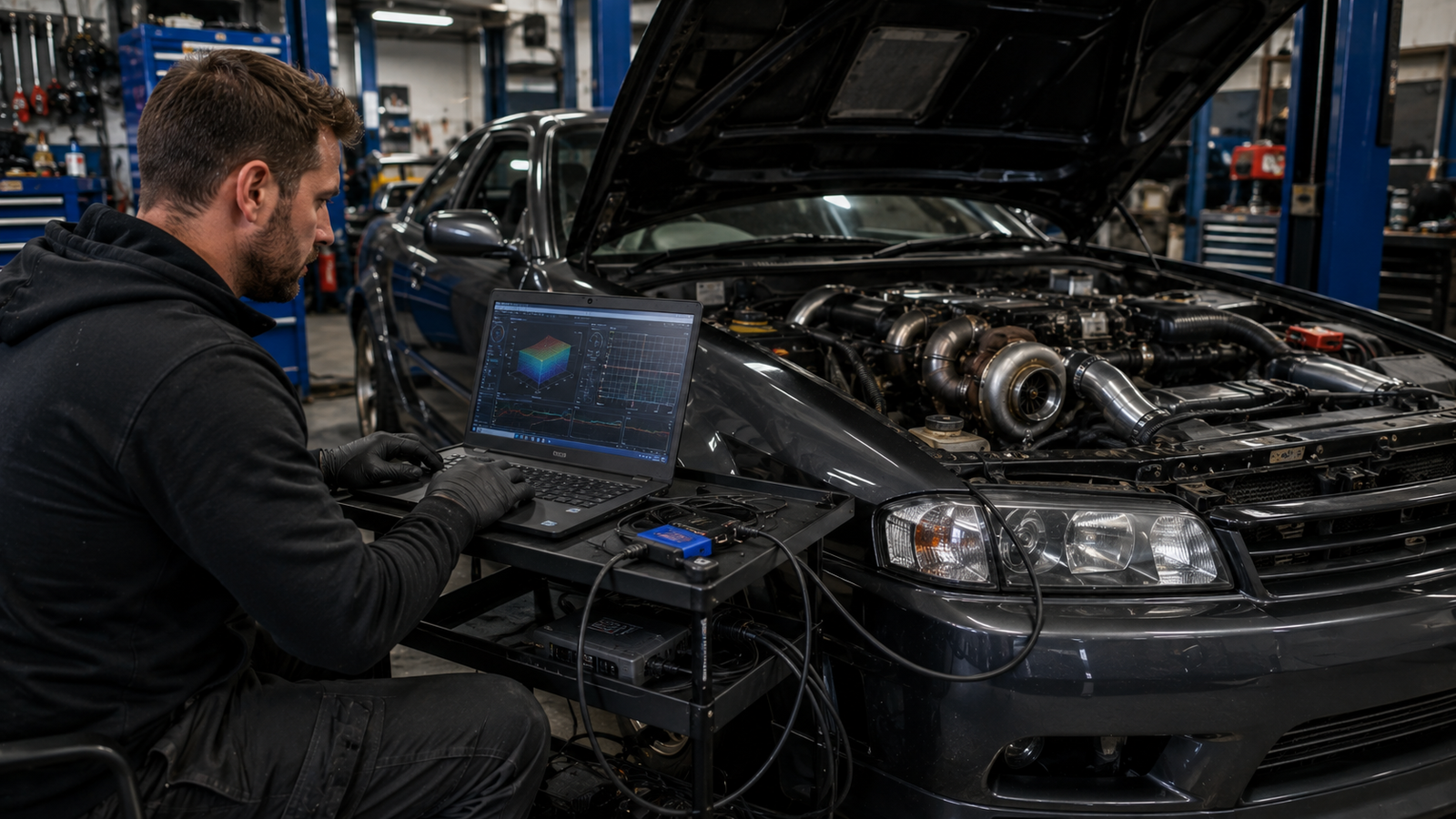
Therefore, there is no universal answer to the question of the best engine for chip tuning. The most interesting power units are those that initially have a certain safety margin, an efficient cooling system, reliable fuel equipment, and a design capable of withstanding higher loads.
At the same time, a power increase itself does not mean that the car will automatically become faster. A reasonable balance between performance, temperature regime, and mechanical strength of the engine is important.
What determines an engine's potential
One of the main factors is the factory design margin. Manufacturers do not always use the full potential of the engine. When designing, they have to consider fuel quality, climatic conditions, various operating modes, and durability requirements.
That is why the same basic design is sometimes produced in several power variants. If a less powerful modification has the same cylinder block and similar mechanical components as a more powerful version, such an engine can be of particular interest for software tuning.
The type of engine itself also plays a big role. Turbocharged power units usually provide the programmer with many more opportunities. The electronic unit can control boost pressure, the amount of fuel supplied, and other parameters, allowing more air and fuel into the cylinders.
A naturally aspirated engine has much more modest capabilities. Here, the amount of air entering the cylinders is largely limited by the displacement and natural aspiration. Firmware can improve throttle response, valve timing, and some engine characteristics, but a large power increase solely through software changes is usually not to be expected.
Turbocharged gasoline engines — the most interesting candidates
Modern turbocharged gasoline engines are considered one of the most convenient options for chip tuning. They are equipped with electronic turbo control, direct injection, and complex load regulation algorithms.
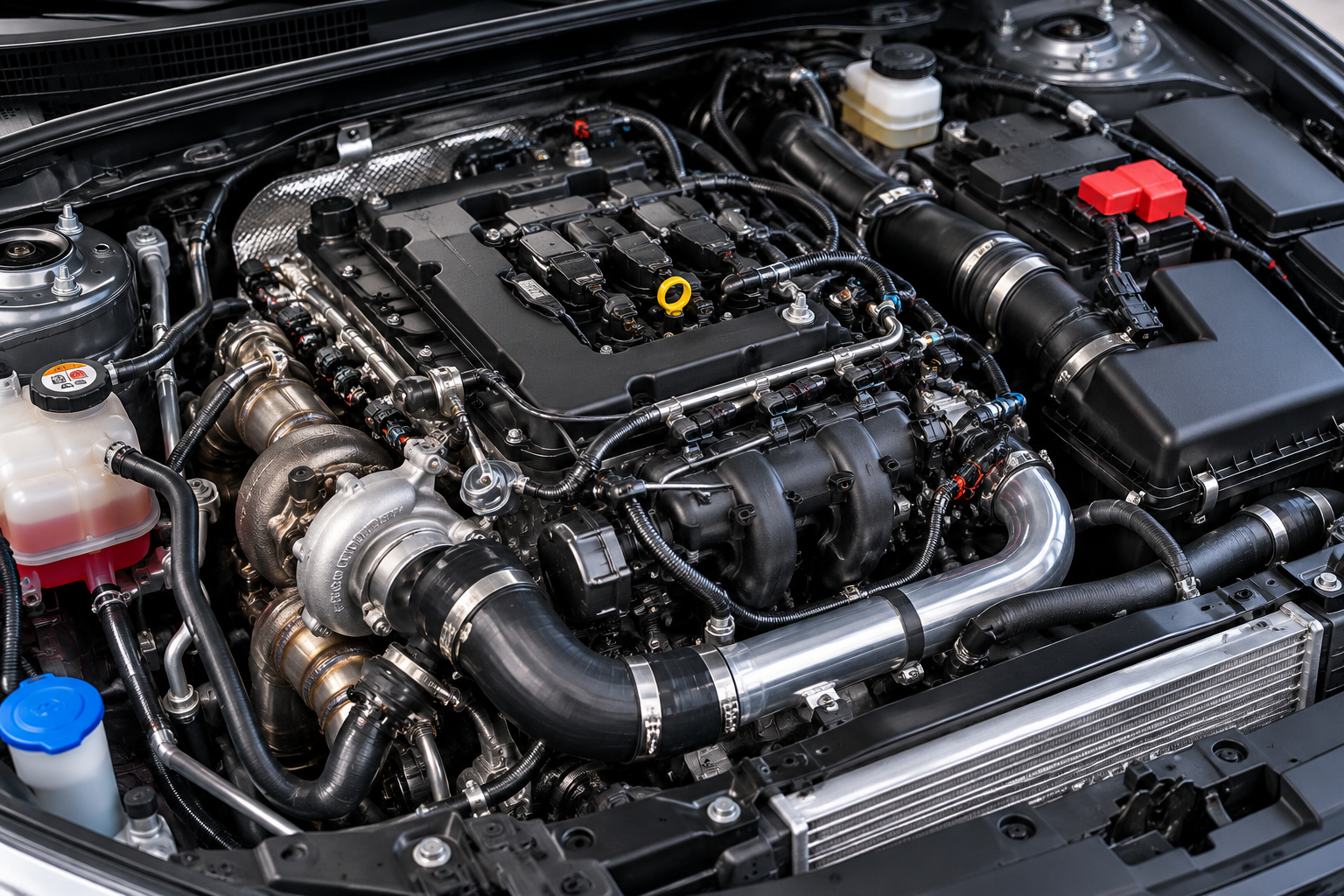
For many engines with a displacement of 1.4–2.0 liters, proper tuning can provide a noticeable power increase. On average, this can be about 15–30%, although the final figure is determined by the specific engine, its technical condition, and the quality of the fuel used.
Engines that feature are particularly attractive:
- a strong piston group;
- an efficient cooling system;
- a turbocharger with a performance reserve;
- sufficient structural reserve for loads.
However, increasing boost pressure does not go unnoticed. Along with power, exhaust gas temperature and pressure inside the cylinders increase. Pistons, connecting rods, the turbocharger, and the cooling system receive additional load.
Therefore, good firmware should take into account not only the desired power increase but also the real limitations of a particular power unit.
What diesel engines can offer
Modern turbocharged diesel engines with Common Rail systems are also well suited for software tuning. Their strong point is high torque, available at relatively low RPMs. After adjusting the software parameters, the increase in thrust is especially noticeable during acceleration, overtaking, and driving with a load.
However, diesels also have limits. If you simply increase fuel supply without considering the temperature regime, you can accelerate the wear of the turbocharger, particulate filter, and fuel system components.
For such an engine, the following are especially important:
- reliable fuel equipment;
- efficient cooling;
- sufficient strength of main parts;
- correctly tuned torque.
The last point is particularly important. When evaluating a diesel engine, one should not focus solely on the final power output. In everyday operation, it is largely the torque that shapes the feel of the car's dynamics.
Which engines are less suitable for flashing
Naturally aspirated engines of small displacement without turbocharging usually have the most limited capabilities. By changing software parameters, it is impossible to significantly increase the amount of air in the cylinders, so the potential for chip tuning is limited. For such an engine, a 5–10% power increase can already be considered a good result. It is usually impossible to get much more solely by changing the software.
One should also be cautious with engines that are already operating at a high load level from the factory. If the manufacturer initially used a significant part of the structural margin, increasing pressure and temperature can significantly reduce the service life.
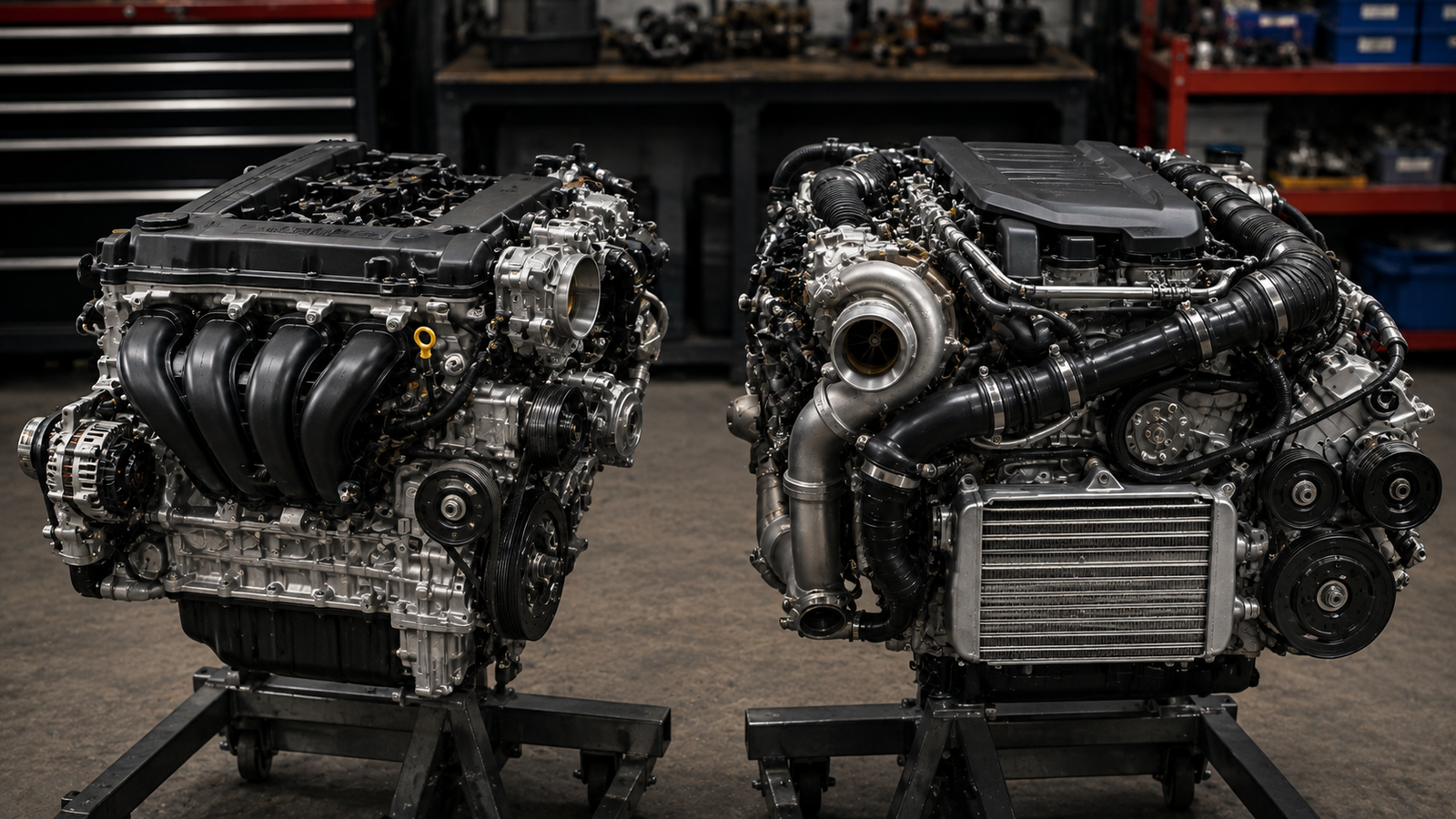
Additional risks arise with engines that have limited cooling capabilities, a weak fuel system, or a turbocharger that is operating almost at its limit.
At the same time, an engine that shows the most impressive numbers on the dyno is not necessarily the best basis for tuning. Much more important is whether it can maintain a normal service life after an increase in output.
What to check before flashing
Before chip tuning, it is necessary to ensure that the engine is technically sound. Even a structurally successful engine will not be a good basis for tuning if its condition is already subpar.
Before changing the software, you should check:
- compression in the cylinders;
- the condition of the cooling system;
- oil pressure;
- turbocharger operation;
- injector condition;
- presence of electronic system errors.
The type of gasoline used is no less important. Modern engines with high compression ratios and direct injection are sensitive to octane number and overall fuel quality.
Therefore, the specialist must consider not only the engine itself. When preparing the tuning, it is necessary to take into account the gearbox, the specifics of car operation, and the desired result. Good firmware should not be a thoughtless installation of the same ready-made file on different cars. The tuning must correspond to the specific power unit and its capabilities.
Which engines look most promising
Generally speaking, the most interesting candidates remain modern turbocharged gasoline engines with a displacement of approximately 1.6–3.0 liters, as well as turbodiesels of a similar generation. Such units have electronic control, efficient boost systems, and sufficiently wide possibilities for changing software parameters. Engines that the manufacturer installs on different cars in several power variants are particularly attractive. Such a practice may indicate the presence of a certain structural reserve laid down during the development of the engine family.
However, drawing conclusions solely based on displacement or the number of cylinders is incorrect. Even two engines of the same displacement can have completely different safety margins and react differently to an increase in power.
There is no universal recipe for chip tuning. The same percentage of power increase can mean completely different loads on mechanical parts and car systems for different engines. Modern turbocharged gasoline and diesel engines usually turn out to be the most promising. They allow a significant increase in power and torque without serious mechanical intervention, but here too, much depends on the specific design and condition of the car.
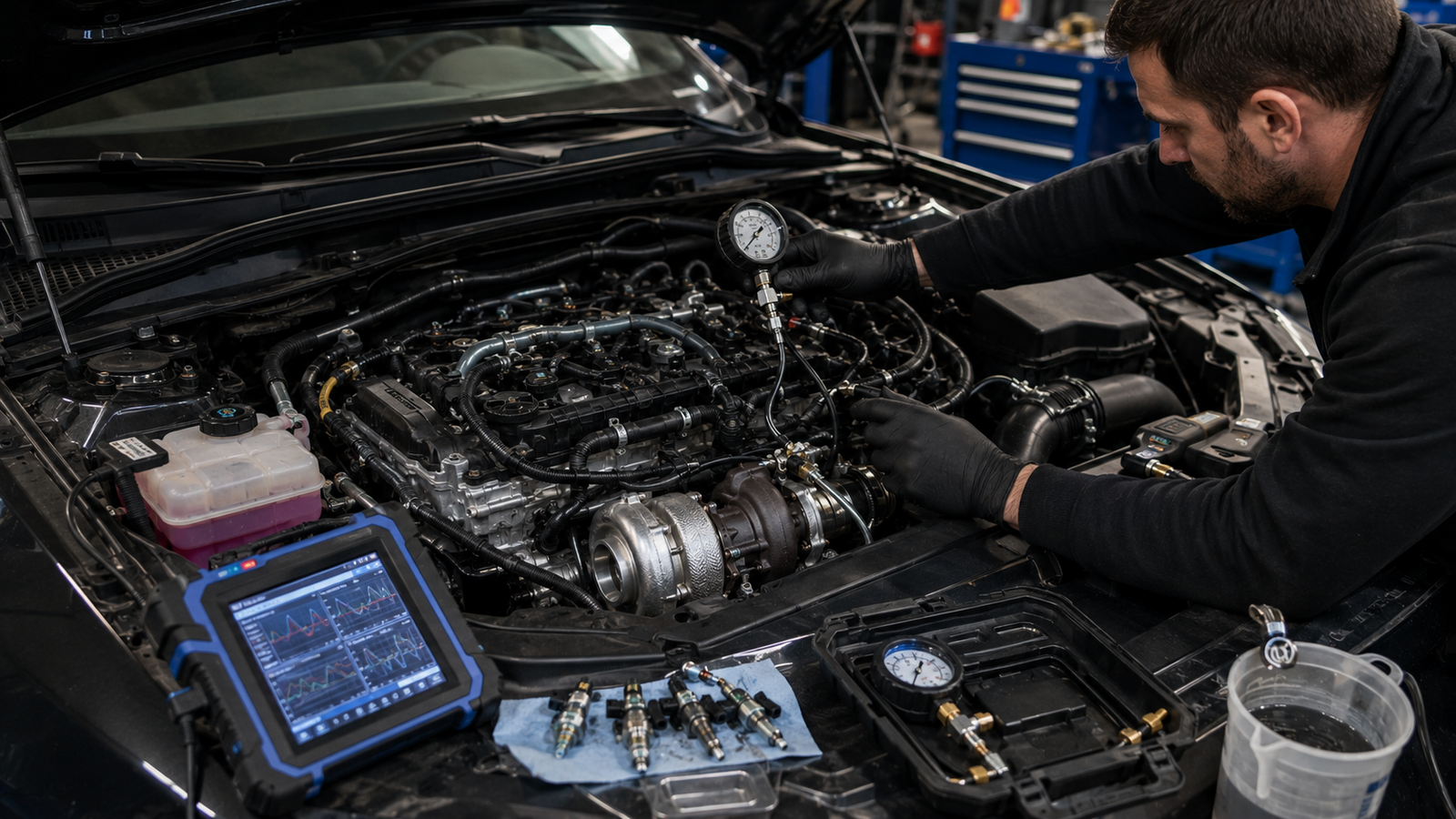
The main thing is not to confuse the maximum dyno result with successful tuning. A good engine for chip tuning should not just show impressive numbers after flashing. It must maintain an acceptable temperature regime, mechanical strength, and reliability.
Therefore, proper tuning does not begin with the question of how much horsepower can be gained. First, it is necessary to determine what margin is built into a particular engine, what its condition is, and what loads it can withstand. Only after such an assessment does it make sense to select the firmware parameters. This approach allows for an increase in dynamics without turning the engine into a unit constantly operating at its limits.
Read more articles:
- From the first Civic to Type R: the best versions of the legend
- Why the headlights of late Moskvich cars quickly yellowed
- Why the fuel filler flap is sometimes on different sides
Comments