In December 1975, the Moscow AZLK was completing the assembly of an experimental car that differed significantly from everything the Soviet industry produced at the time. The body was covered with bright metallic green paint. At the factory, the car was quickly nicknamed "Gena the Crocodile" – due to its color and a somewhat good-natured, though unusual, appearance.
Behind the striking bodywork lay a technical filling that was quite bold for the Soviet automotive industry. The experimental 1.7-liter engine received hemispherical combustion chambers, McPherson suspension was used at the front, and an independent scheme similar to the BMW 5 Series was used at the rear. Even the door handles were recessed.
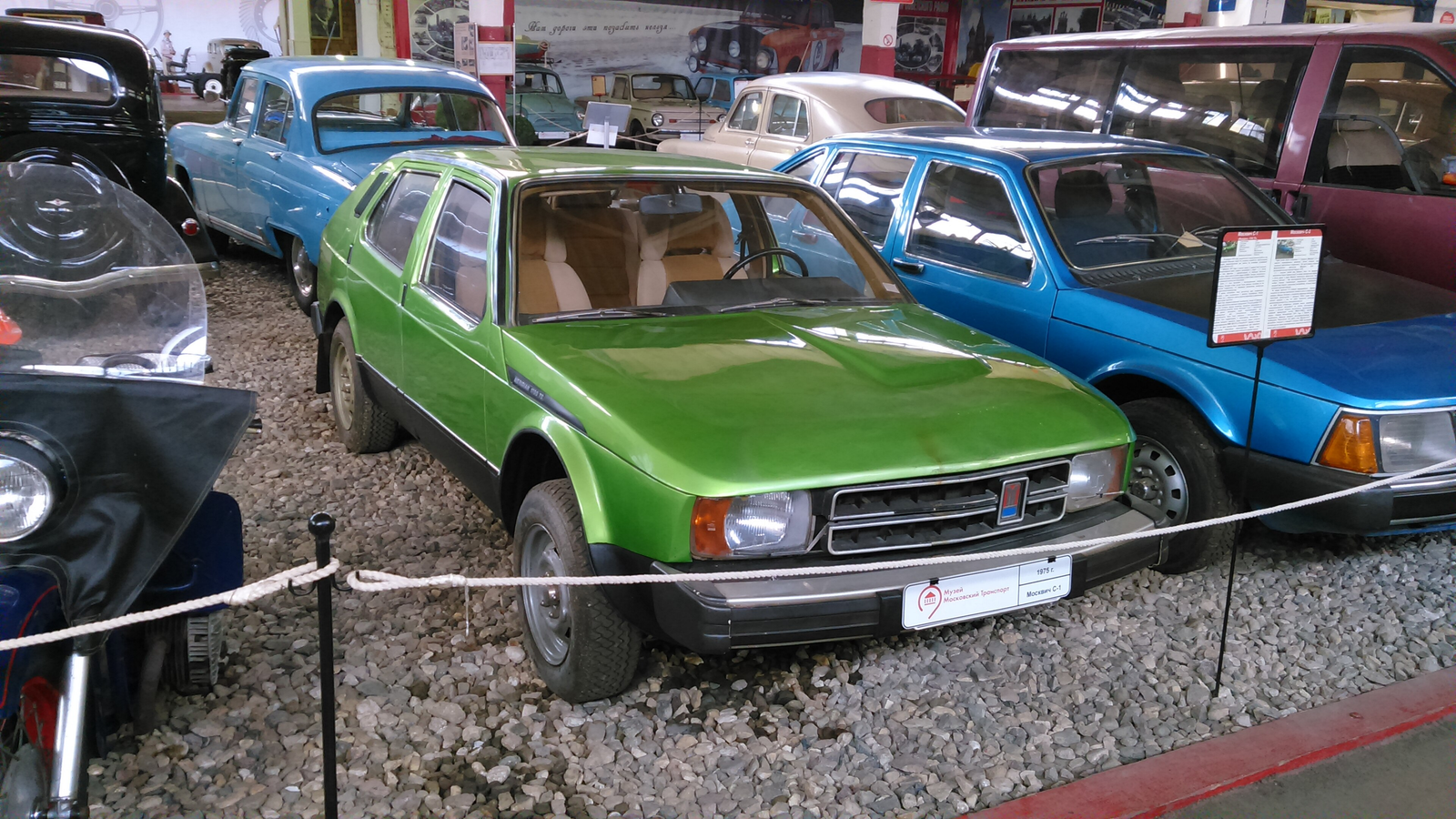
Today, such solutions seem commonplace, but for the mid-1970s, this was a significant step forward.
Rejection of old prototypes
By the mid-1970s, AZLK had accumulated many problems with experimental cars of the "3-5" series. Projects were constantly delayed, their refinement dragged on, and launch dates were missed. As a result, the "3-5-6" program was finally closed.
Then the chief designer of the enterprise, Igor Zaitsev, decided to change the very approach to car creation. Artists were removed from the Body Bureau and a separate Artistic Design Bureau was formed – essentially its own design studio within a Soviet car factory.
The new team included:
- Elbaev and Vyadro were responsible for sketches;
- Malyshenko was responsible for body structures;
- Leonov developed the interior.
The first projects were named "Delta". After studying European cars, the designers concluded that hatchbacks were a promising direction.
However, the AZLK management saw a problem in such a design. With an open fifth door, cold air would quickly penetrate the cabin in winter. The fact that the Izhevsk IZH-2125 was already produced with a hatchback body was not taken into account. As a result, a compromise appeared – a fastback body. In silhouette, it resembled a hatchback, but instead of a liftgate, it received a conventional trunk lid. For the world automotive industry of those years, this was also a rather rare body type.
"Gena the Crocodile" and aerodynamics
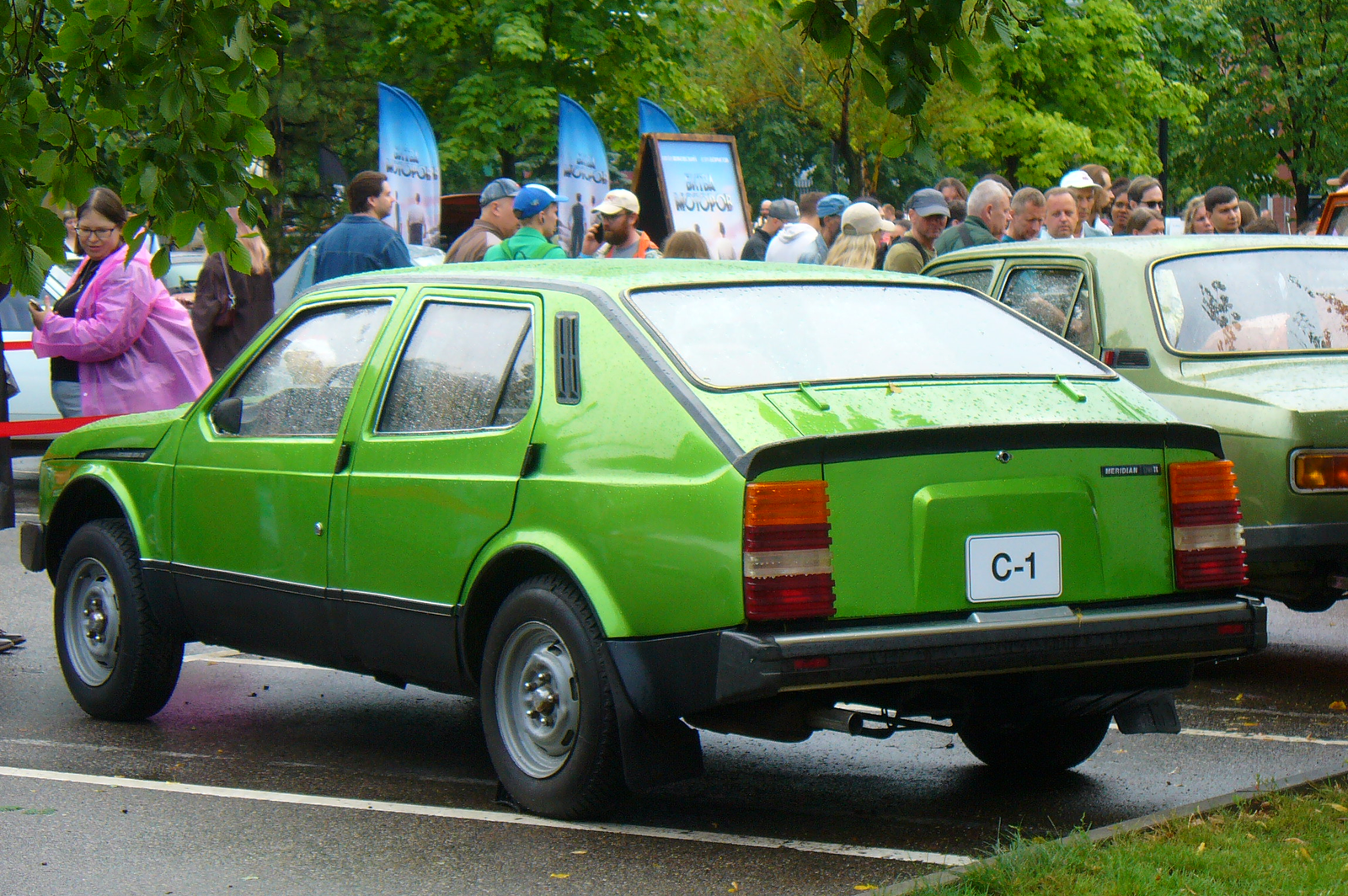
The new car differed not only in appearance. Its drag coefficient was significantly lower than that of the production "Moskvich-412". For the Soviet automotive industry of the mid-1970s, the very idea of seriously engaging in aerodynamics was unusual. Most cars were created primarily with an eye to the manufacturability of stamping and the possibility of unifying parts. Here, great attention was paid to how the body interacts with the airflow.
On February 22, 1975, the developers presented a clay model to director Kolomnikov. It took three weeks to make. The hood already had a plate with the index 2141. The head's reaction was positive: the project was recognized as a real breakthrough, and work on a running prototype was allowed to continue.
According to factory recollections, some decisions were approved literally "on the fly." Engineers and designers worked simultaneously, not sequentially. For Soviet industry, this was unusual: traditionally, the design was first finalized, and only then was the exterior developed. In the case of the S-1, the process was more reminiscent of the Western approach.
Engine with a reserve for the future
A new AZLK-327 engine with a displacement of 1702 cubic centimeters was developed for the car. The cylinder head was redesigned. The combustion chambers were shaped like two hemispheres with a cone for the spark plug. This geometry contributed to the vertical swirling of the fuel-air mixture, which was supposed to ensure more complete and clean combustion.
The location of the distributor was also changed. The ignition distributor was moved from the crankshaft to the camshaft. For "Moskvich-412" owners, the problem was well known: after overcoming a deep puddle, the distributor could collect water, causing the engine to stop. This solution was abandoned on the new car.
The KP-9 gearbox was taken from factory racing cars. The lever worked directly with the gearbox mechanism, without rods, and gears engaged with a clear click. When designing the engine, the possibility of further power increase was laid. The design allowed for increasing the compression ratio and switching to new generation two-barrel carburetors.
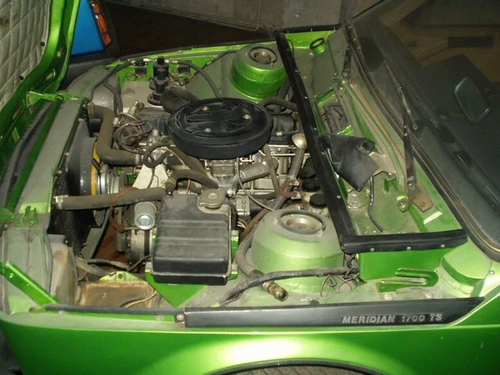
The result was an engine designed not only for existing production requirements but also for further modernization. For the Soviet automotive industry, this was atypical: most domestic engines retained an almost unchanged design for decades.
Suspension that others didn't have
One of the main engineering achievements of the S-1 was its chassis. McPherson struts were used at the front, combining a strut, spring, and one arm. At the rear, an independent suspension on trailing arms was installed, similar to the BMW E12 design. This combination allowed for reducing body roll in corners and improving wheel grip on the road.
For the first time on a "Moskvich", the front wheels received disc brakes.
McPherson also had production advantages. Compared to the double-wishbone scheme, it consisted of fewer parts, which potentially allowed for reducing assembly labor intensity and unsprung mass. At the same time, steering precision at high speeds increased.
For Soviet cars of that time, such characteristics were rarely among the main priorities. Even the VAZ-2101, created using Italian developments, retained the classic double-wishbone front suspension.
Unusual interior
The interior of the experimental car turned out to be no less interesting. In front of the driver were round instruments in chrome bezels, reminiscent of Porsche solutions. In fact, a French Jaeger dashboard, intended for trucks, was used. A batch of such instruments was already in the factory warehouse, and it was decided to use them in the prototype.
They looked very impressive. The ignition switch was moved from the steering column to the central tunnel. The reason was not only aesthetic. In a head-on collision, the key on the steering column could injure the driver's knees, while the new location eliminated this danger.
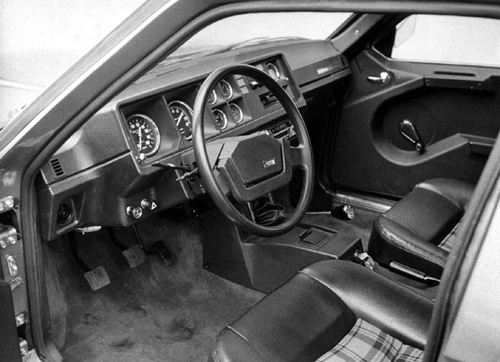
Special attention was paid to ergonomics. On early mock-ups, the steering column angle and pedal placement were changed. As a result, the driver was lower and further from the dashboard compared to production Soviet cars.
This position was intended to simultaneously reduce fatigue on long journeys and improve load distribution in an accident.
Details ahead of their time
Unusual solutions were also abundant in the exterior. The central body pillars were moved outwards, which allowed for expanding the cabin. The door handles were recessed into special niches. This improved aerodynamics and simultaneously increased pedestrian safety. A spoiler appeared on the trunk lid, and the taillights received transverse ribs.
Some solutions are particularly reminiscent of cars that would appear later. The appearance of individual elements was already associated with the future Mercedes W123, although its appearance was still about five years away.
The clay model was covered with a special 3M film before demonstration and painted in such a way that it looked like a real metal body. Upon seeing this work, the American delegation was amazed – such an unusual use of materials was for them.
Tests passed, but the project was not saved
"Gena the Crocodile" successfully passed tests. Prototypes covered thousands of kilometers at test sites. One of the white cars was even crashed into a concrete cube at the factory. The conducted crash test showed that the body could withstand the impact.
But after the tests, problems began that were no longer related to the car's design itself. The Ufa factory refused to master the production of the new engine, as it considered the reorganization of the enterprise too complex. The Omsk enterprise could not establish the production of the gearbox.
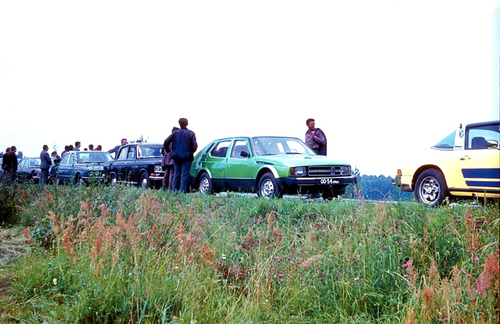
Even the authority of director Kolomnikov was not enough to overcome the obstacles that arose. The Ministry of Automotive Industry was wary of the project. The car was too bold and differed too much from the approved production plans.
The designers tried to save the project, at least in a modified form. They developed a simplified S-2 version, and then created the S-3 with a third row of windows to make the car look more solid. Even the possibility of installing a fifth door was considered.
But all these attempts did not help. The project was closed.
Why the USSR could not put the S-1 into production
The reason was not only departmental decisions. For mass production of the car, it was necessary to master dozens of new stamps, rebuild welding lines, and establish the production of a large number of complex-shaped parts.
The planned system preferred proven designs that could be produced in huge series. Any serious modernization carried a risk to the fulfillment of the production plan.
As a result, a paradoxical situation arose. The car, in terms of engineering solutions, approached the European D-class, but the USSR's own industrial base of the late 1970s was not ready for its mass production.
What remained after the S-1
Despite the project's closure, the solutions developed for it did not disappear without a trace. Some of them later appeared on production Soviet cars:
- recessed door handles were used on the VAZ-2108;
- integrated plastic elements became common for 1980s cars;
- the idea of a large family fastback was eventually realized in the production AZLK-2141.
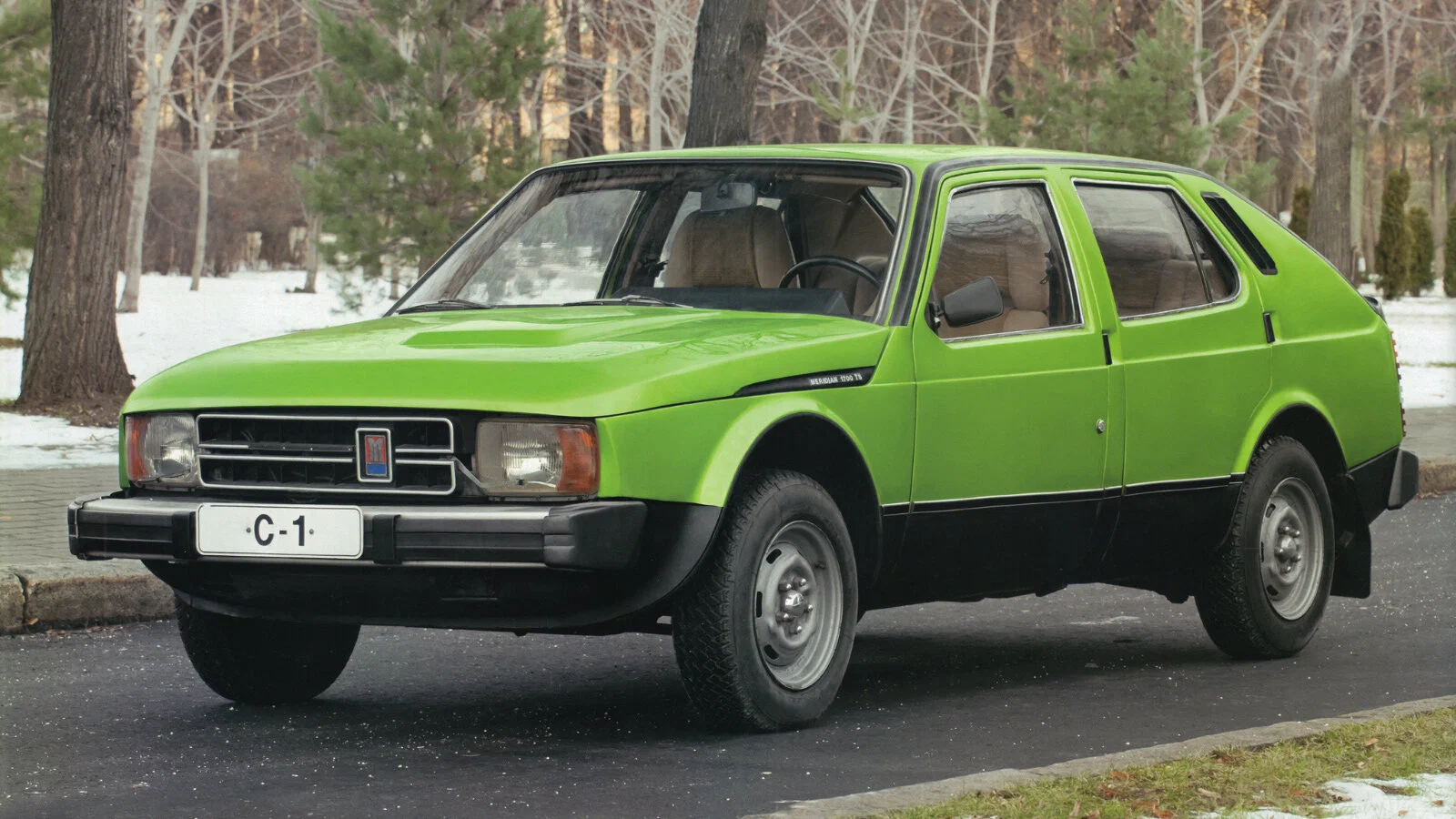
This is the main feature of the AZLK S-1. In 1975, the Moscow factory tried to make not just another new "Moskvich", but to immediately jump over an entire generation of Soviet cars.
Technically, the project turned out to be quite bold. But the industrial system in which it was to live was not ready for such a leap.
Read more materials:
- Why Japanese auto giants cloned their models
- The secret of the central engine of the legendary "Ikarus" buses
- From the first Civic to Type R: the best versions of the legend
Comments