The automotive life of Soviet drivers gave rise to many unusual tricks. Some of them turned out to be quite practical and are still used today, while others now look more like garage exotica.
The latter includes the method of restoring old windshield wipers with gasoline. The rubber blades of the wipers were placed in a container with fuel for several hours, then washed and returned to their place.
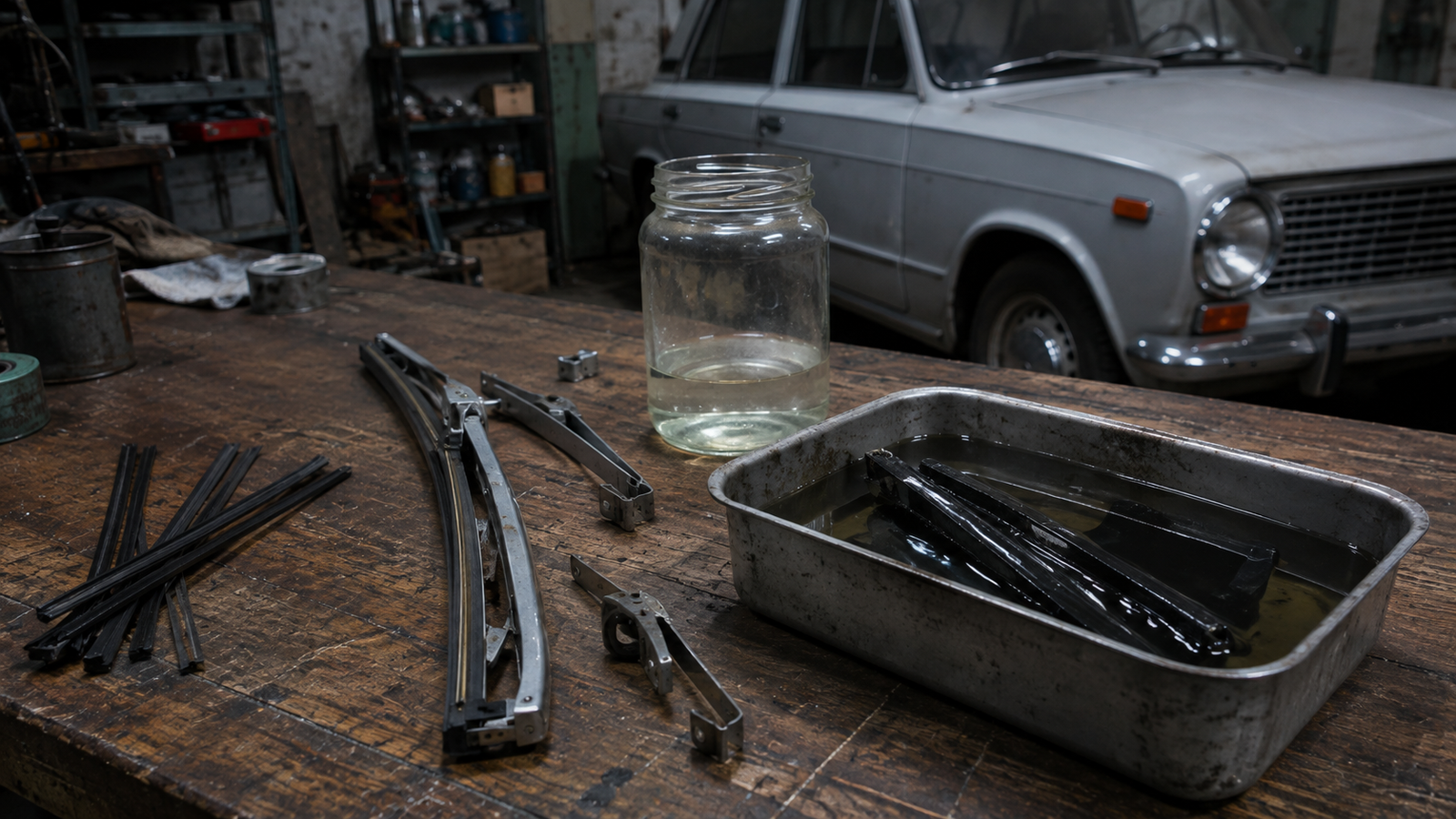
At first glance, such a procedure seems absurd: rubber is not resistant to gasoline, and prolonged contact with fuel can destroy it. However, in Soviet conditions, this method had a perfectly understandable reason.
Scarcity forced saving
The main problem was that car spare parts in the USSR were often difficult to buy. Windshield wiper blades and replacement rubber inserts were also scarce parts.
Therefore, owners tried to squeeze the maximum resource out of what they already had:
- they tried to restore old rubber;
- dirt was removed with available means;
- replacement of parts was postponed until the last moment.
Over time, the rubber lost its elasticity, became stiff, and began to adhere less well to the glass. It was not easy to get a new part, so even a temporary improvement in the performance of an old wiper was perceived as a perfectly acceptable result.
Why gasoline could help at all
Soviet rubber products differed significantly in composition from modern materials. They did not use as many stabilizers and modifiers that today help protect rubber from aging, ultraviolet light, and temperature changes.
As a result, wiper blades relatively quickly lost their original elasticity. Gasoline in this situation acted as a kind of temporary plasticizer. It penetrated the material's structure, softened it, and allowed the rubber to adhere better to the glass surface again. The effect did not last long, but in the absence of the opportunity to buy a new blade, even such a result was sufficient.
How the procedure was carried out
Usually, the rubber elements were first removed from the blades. Then they were placed in a container with gasoline for several hours, sometimes left overnight. After that, the rubber blades were:
- removed from the fuel;
- thoroughly washed, removing gasoline residues;
- installed back on the blades.
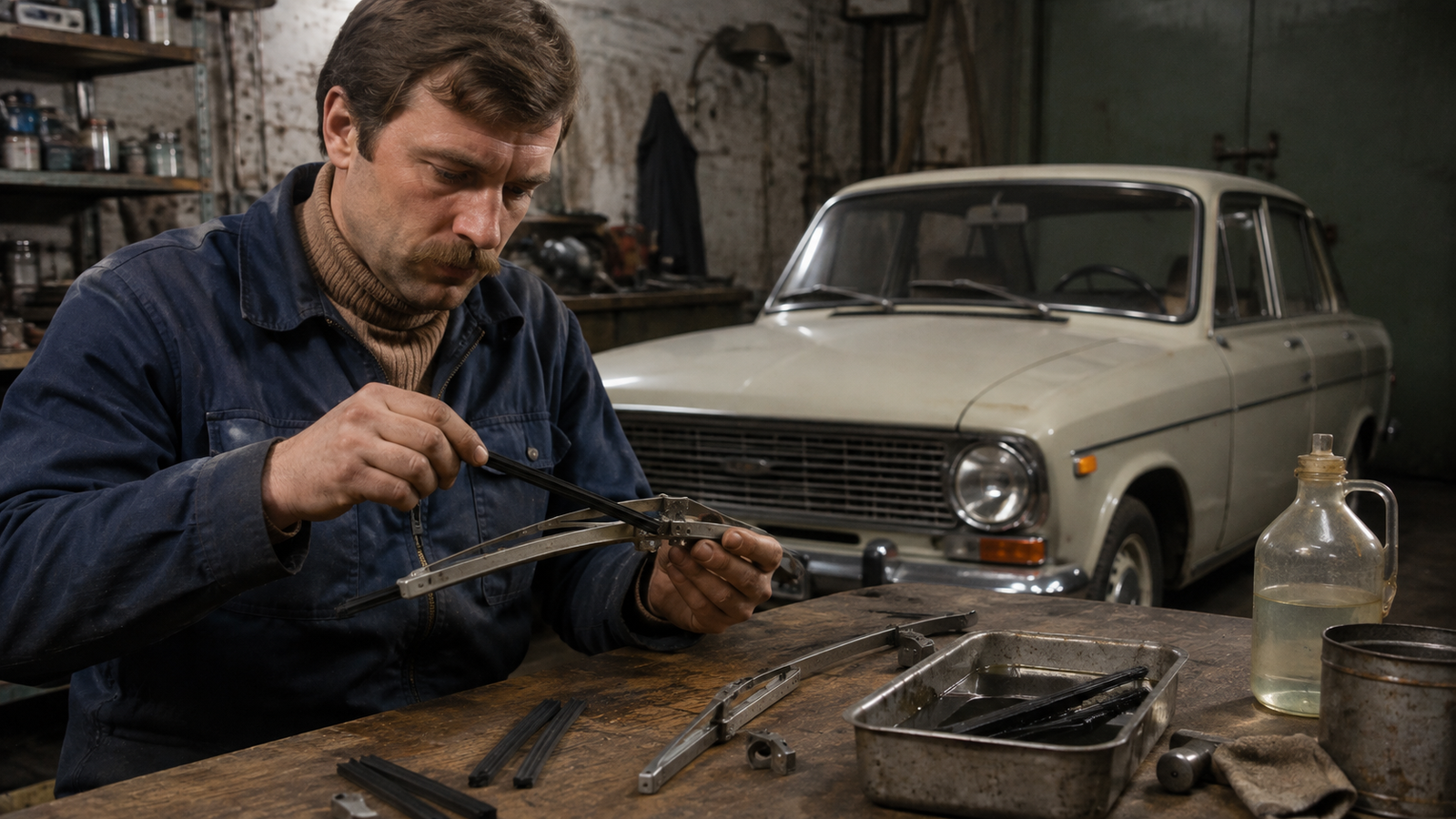
It was important not to overexpose the material here. The longer the rubber was in contact with gasoline, the higher the risk of its destruction.
Some drivers therefore used a more gentle option: they did not soak the rubber completely, but wiped it with a cloth soaked in fuel. This allowed to reduce the duration of exposure.
The method had a downside
Restoring functionality in this way could not be considered a full-fledged repair. With too prolonged exposure to gasoline, the rubber could:
- become loose;
- crack;
- lose its properties faster;
- significantly shorten its remaining service life.
In addition, fuel residues on the glass could form a film and impair visibility. One should also not forget about gasoline vapors, which pose a health hazard.
Nevertheless, in conditions of spare parts shortages, some drivers consciously made such a compromise. The goal was simple - to keep the car in working condition for as long as possible.
Why it shouldn't be done today
Modern wiper blades are made of more durable materials. Their composition may include silicone and other components that increase resistance to external influences and aging. Therefore, a gasoline bath today is more likely to completely ruin the rubber than to restore its original elasticity.
Moreover, there is no longer any need to save money in this way. A large number of blades and replacement rubber inserts are available for sale, and special compounds exist for caring for rubber parts. They are designed to restore and protect the material without exposure to fuel.
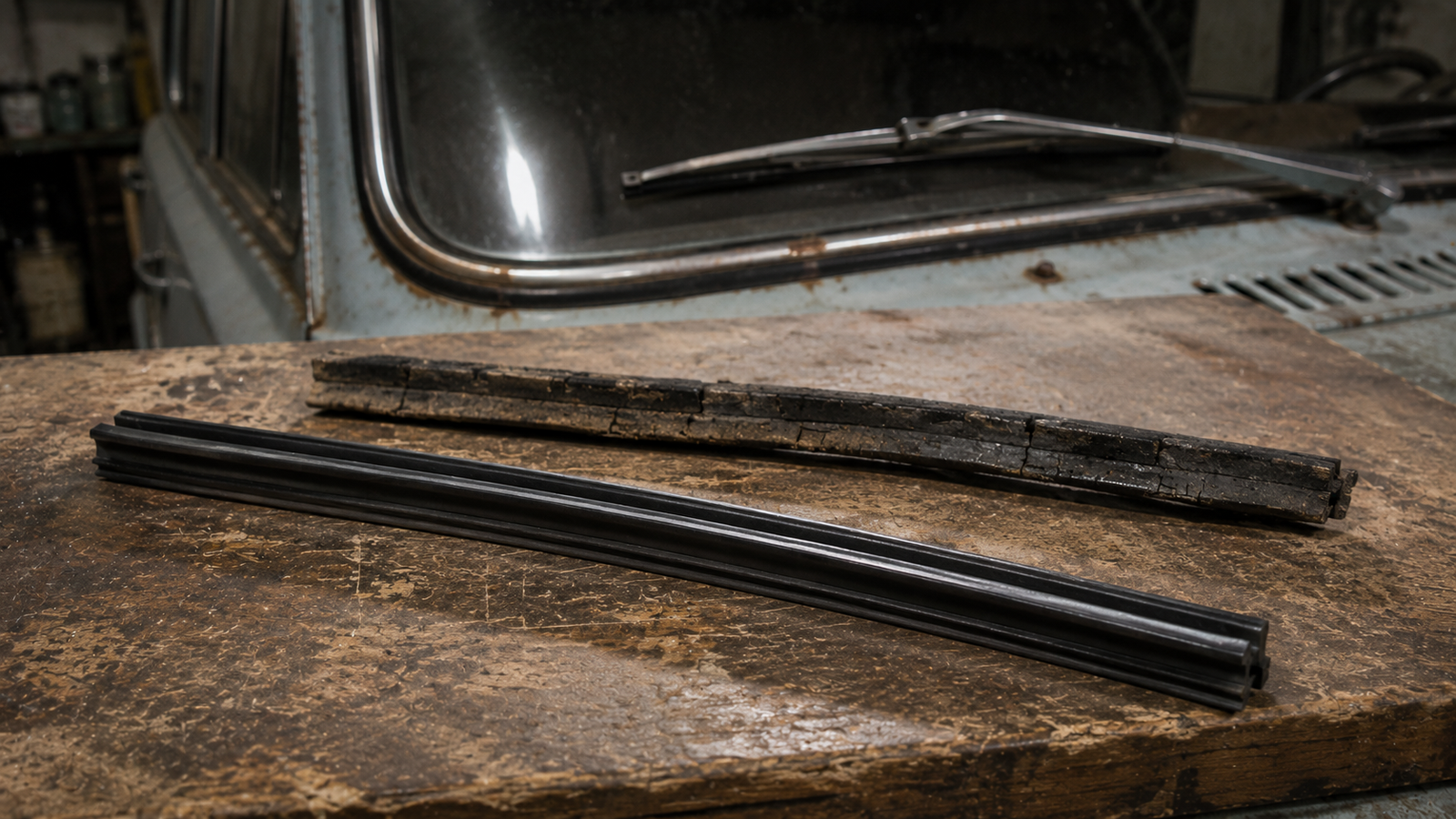
Soaking wipers in gasoline was a typical example of Soviet garage ingenuity. This method appeared not because gasoline was considered an ideal means for caring for rubber, but because drivers had to find a way out of a combination of several problems at once: a shortage of spare parts, rapid aging of available materials, and the need to keep the car in working condition.
Today, there is no point in repeating such an experiment. What once could temporarily save an old rubber blade is quite capable of completely disabling a modern part.
Read more materials:
- Pontiac Phantom: Bill Mitchell's Last Masterpiece
- German Sedan for 1.57 Million: What's the Catch
- Car as a Reward: Who was Given Cars in the USSR
Comments