In Germany, Multicar is sometimes jokingly compared to a miniature version of Unimog – only from the GDR. The comparison is indeed amusing: the legendary Mercedes-Benz Unimog became one of the most famous universal all-terrain vehicles in the world, while Multicar started as an extremely simple factory cart.
But this joke has an interesting continuation. Almost the entire automotive world of East Germany disappeared after the country's reunification. Brands that had existed for decades under a planned economy proved uncompetitive in the common German market. But Multicar not only survived the 1990s. Vehicles of this brand are still produced today.
Moreover, production is still linked to Waltershausen in Thuringia, where the company's history began back in 1920. Today, Multicar is a business unit of Hako, not an independent automotive company, but the brand itself has been preserved. The German Patent Office explicitly calls it the only brand of the former East German automotive industry that continues to produce its own vehicles.
And this story began with a machine that today can hardly be called a full-fledged car.
A cart controlled by feet
The company's history began in 1920 in Hörselgau, Thuringia. Engineer Arthur Ade and businessman Hermann Irrgang founded Maschinenfabrik Hörselgau Ade & Irrgang. A few years later, production moved to neighboring Waltershausen. The company produced agricultural machinery, trailers, and various coupling devices. After World War II, the factory was nationalized, and in 1948, it was renamed VEB Fahrzeugwerk Waltershausen.
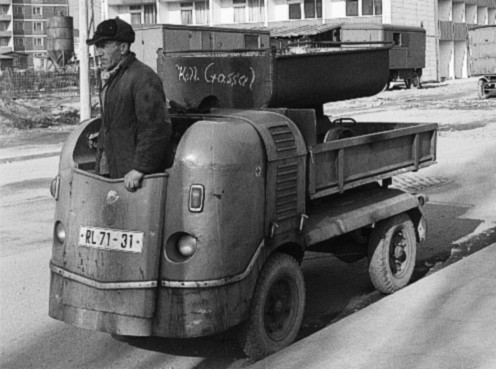
It was here, a few years later, that the machine that would later become Multicar appeared. Initially, it was not so much a truck as a self-propelled transport cart. In 1951, the DK 2002, known as Dieselameise – "diesel ant" – began to be produced. Its power was only 5.6 hp, and the machine was primarily intended for moving goods within enterprises.
In 1956, the production of the more advanced DK 3 was transferred to Waltershausen. This design became the direct predecessor of the future Multicar. The design was as simple as possible: four wheels, a cargo platform, and an open driver's seat.
But the most interesting part was right here. There was no steering wheel. The driver controlled the machine using a special foot pedal-“rocker”. Pressing one side turned the cart in one direction, the other – in the opposite direction. Other functions were performed by levers.
For modern technology, such a scheme seems almost incredible. But the maximum speed of the first machines was only about 15 km/h, so designers primarily needed to ensure simple and cheap movement of goods around the factory territory. In 1958, the DK 4 appeared, which became the basis of the first Multicar M21. However, the name Multicar was assigned to the machine a little later – from December 1959.
How the "diesel ant" turned into Multicar
The old name was not very convenient for entering the international market. Therefore, the factory needed a more universal name. This is how the Multicar brand appeared – a name that emphasized the versatility of the machine.
For the enterprise, this was an important step. Now it was no longer just a factory cart, but a specialized vehicle that could be offered to a wider range of customers. The first M21 was produced until 1964. During this time, about 14 thousand machines were manufactured in Waltershausen.
At the same time, Multicar gradually became not only internal equipment of the GDR. A significant part of the machines was exported. It was versatility that would later become the main secret of the brand's survival.
In 1964, Multicar became a real car
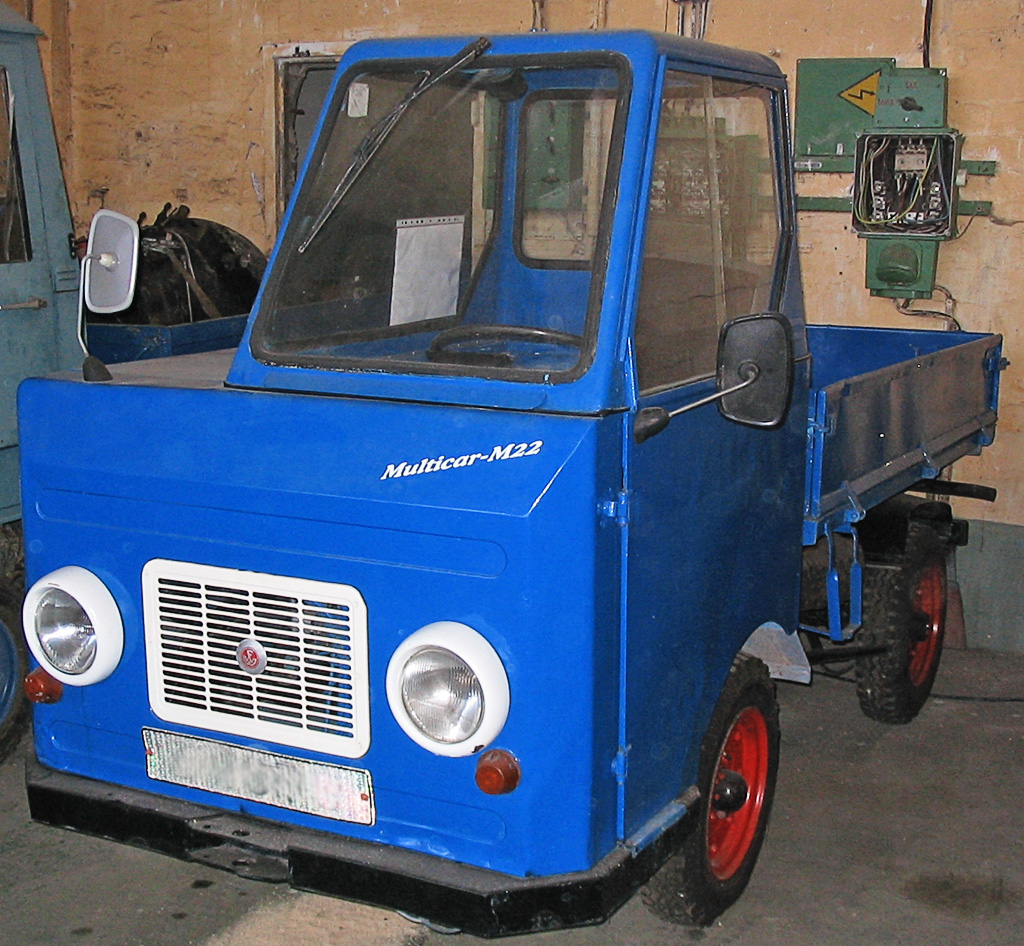
A real turning point occurred with the appearance of the Multicar M22. The machine received an enclosed cabin, full steering, and equipment necessary for operation on public roads. This was a completely different level compared to the open M21 cart.
Over ten years of production, 42,579 Multicar M22s were manufactured, approximately half of which were exported. The main advantage of the model was not speed and not even payload itself. Multicar could be transformed into a machine for a wide variety of tasks.
Platforms, dump trucks, special superstructures, and various municipal equipment were installed on the same chassis. The machine could transport goods, work at enterprises, serve urban utilities, and perform special tasks. This concept would later become the basis of the entire brand.
From 20 to 50 km/h
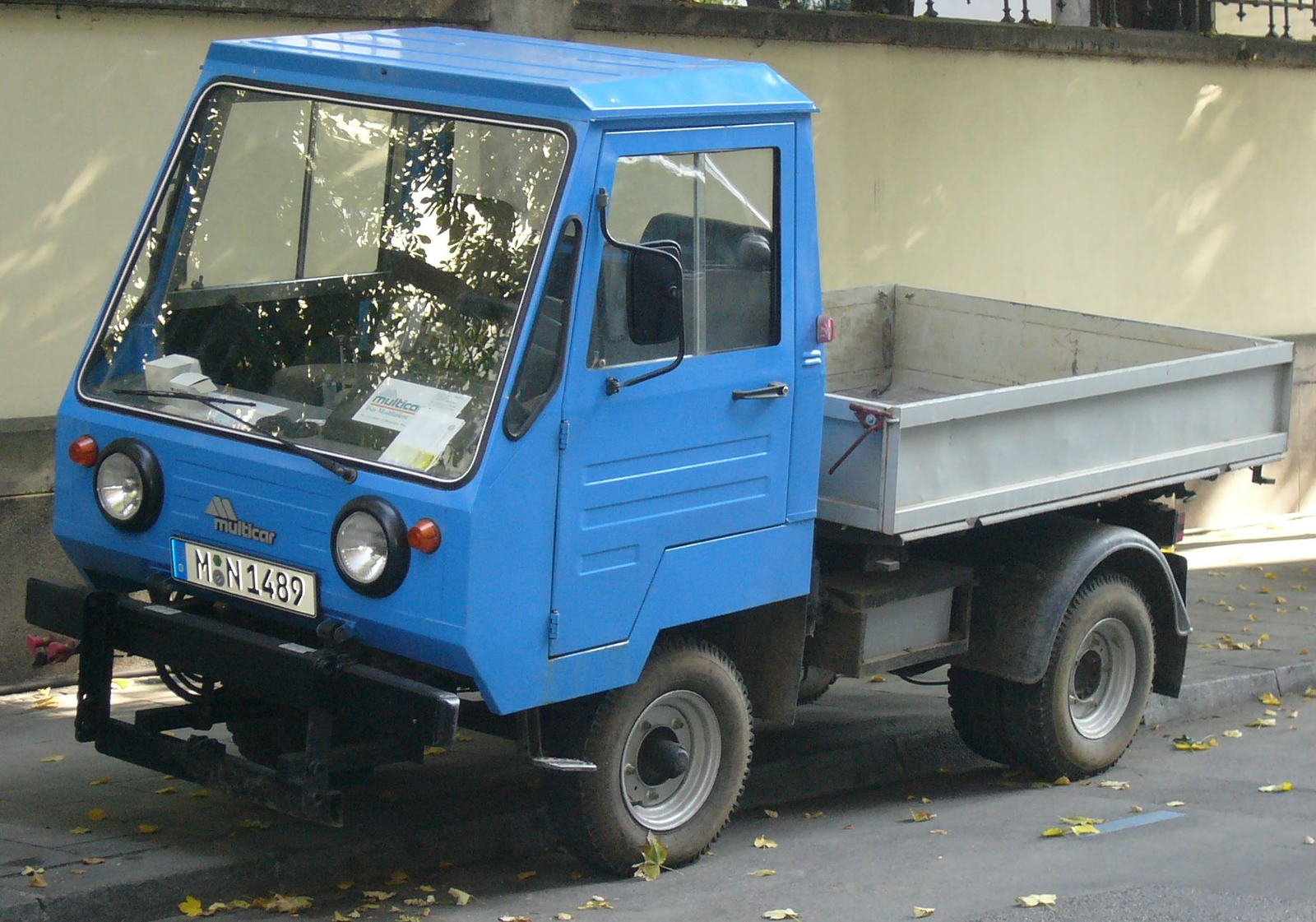
In 1974, the Multicar M24 appeared. Compared to its predecessor, the machine received a more serious power unit: a four-cylinder diesel engine with about 45 hp. The maximum speed increased to 50 km/h.
In addition, the design was specially made convenient for installing various superstructures. A standardized mounting system was used on the frame, allowing one basic machine to be adapted for different tasks. Until 1978, the factory manufactured 25,659 Multicar M24s, with about 48% of the machines going for export. For a manufacturer from the GDR, this was a serious result. But the real export success was yet to come.
Multicar M25 became the brand's main success
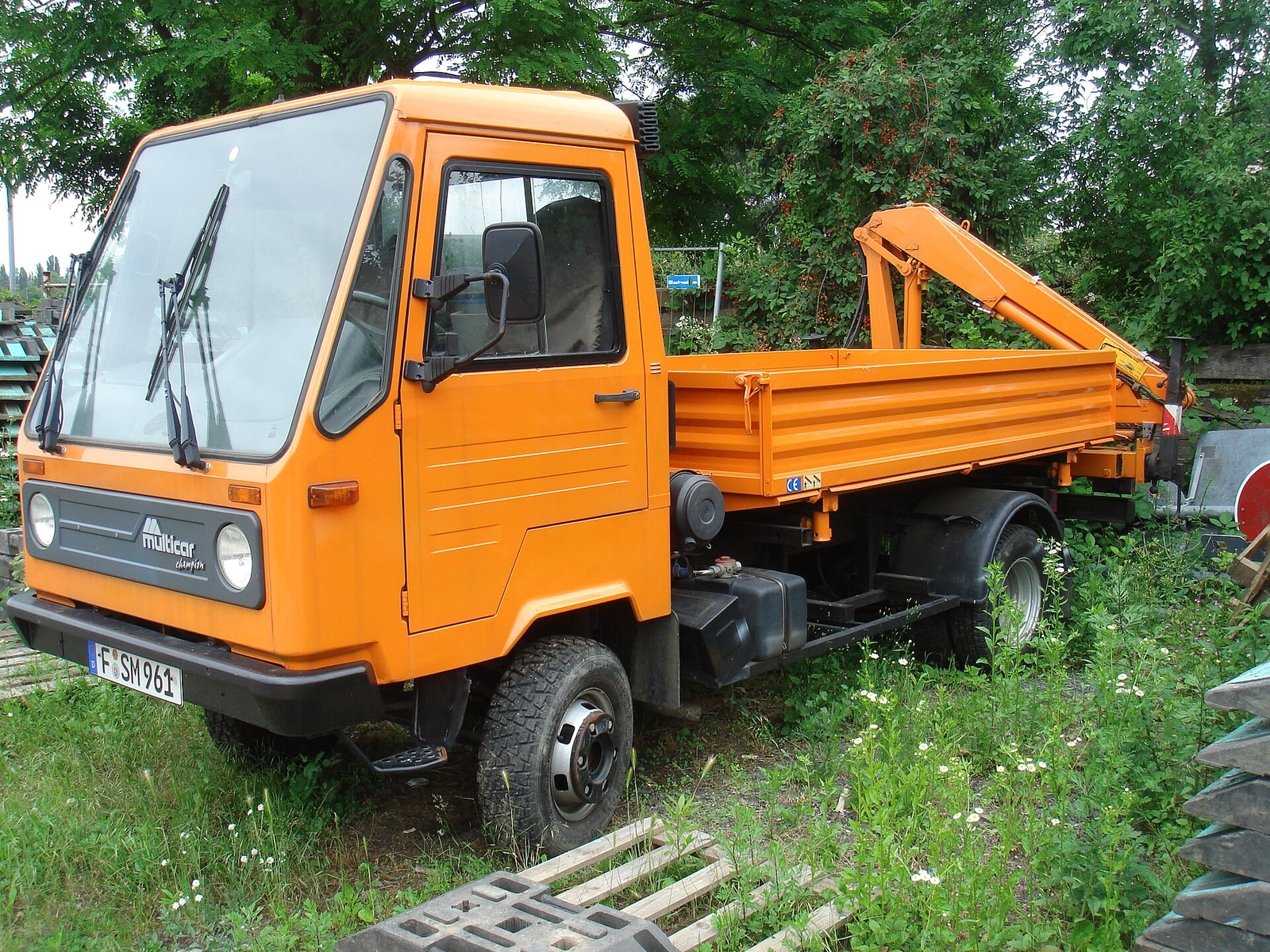
In 1978, the Multicar M25 appeared – perhaps the most famous representative of the family. The model received an updated cabin, a more modern design, and a wide range of execution options. Subsequently, an all-wheel-drive modification also appeared for it.
The M25 proved so popular that its production continued even after the disappearance of the GDR. From 1991, the machine received a Volkswagen engine, and the total number of M25s produced reached approximately 100 thousand units. For an East German enterprise, this was an almost ideal product.
Multicar did not try to compete with ordinary passenger cars or large trucks. It occupied a very specific niche – compact multifunctional equipment. That is why the machine proved to be in demand far beyond the GDR.
In 1980, the factory in Waltershausen was considered the largest producer of this type of equipment in the world, and Multicar was supplied to approximately 20 countries. In the Soviet Union, these machines were well known to municipal services. They were used for street cleaning, cargo transportation, and other economic tasks.
Why Multicar survived the reunification of Germany
And here begins the most interesting part of the story. In 1989, the Berlin Wall fell. In 1990, the GDR ceased to exist.
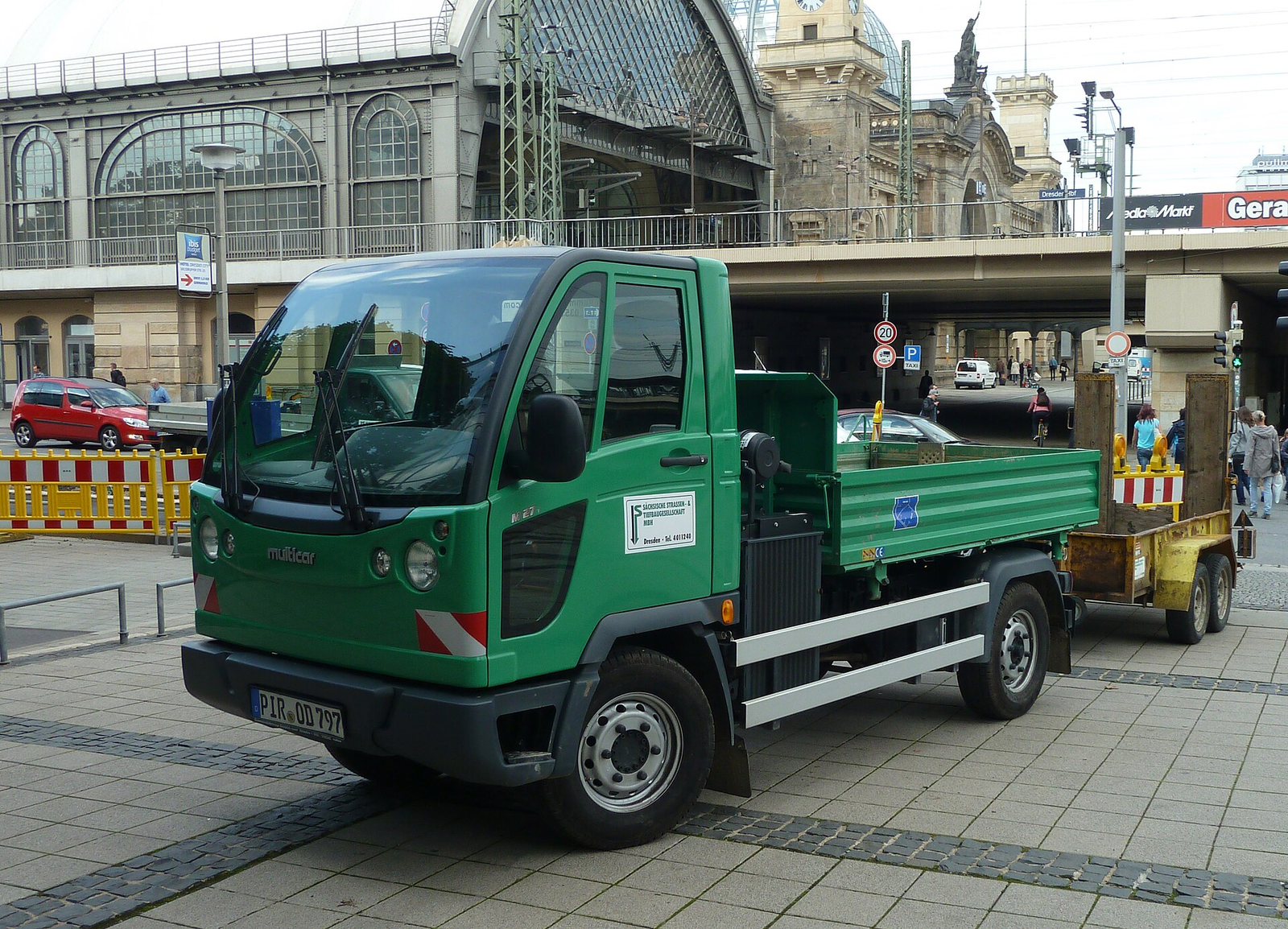
For the East German automotive industry, a period began that proved to be devastating. Enterprises that had worked for decades in a closed economy suddenly found themselves in the same market as Western manufacturers. Many brands did not survive this transition.
Multicar was lucky for one simple reason: its products remained in demand. Municipal enterprises, industry, and various organizations still needed compact multifunctional machines. Therefore, the enterprise got a chance to restructure.
In 1991, the Multicar 91 model with a Volkswagen engine appeared. In 1992, production of the M26 began with a more modern cabin and an Iveco diesel engine. Manfred Windus, former director of logistics at Multicar, played a major role in preserving the enterprise. In 1993, he was named manager of the year for his work in leading the company out of the crisis of the transition period.
That is, Multicar did not survive due to its state status. On the contrary, it had to quickly adapt to a market economy.
Then Multicar became part of Hako
The next stage began in 1998. The German Hako Group became the main shareholder of Multicar. The enterprise gradually transformed into a specialized center for the development of multifunctional municipal equipment. In 2005, Multicar and Hako merged, after which Multicar ceased to exist as an independent legal entity and became a separate division within Hako.
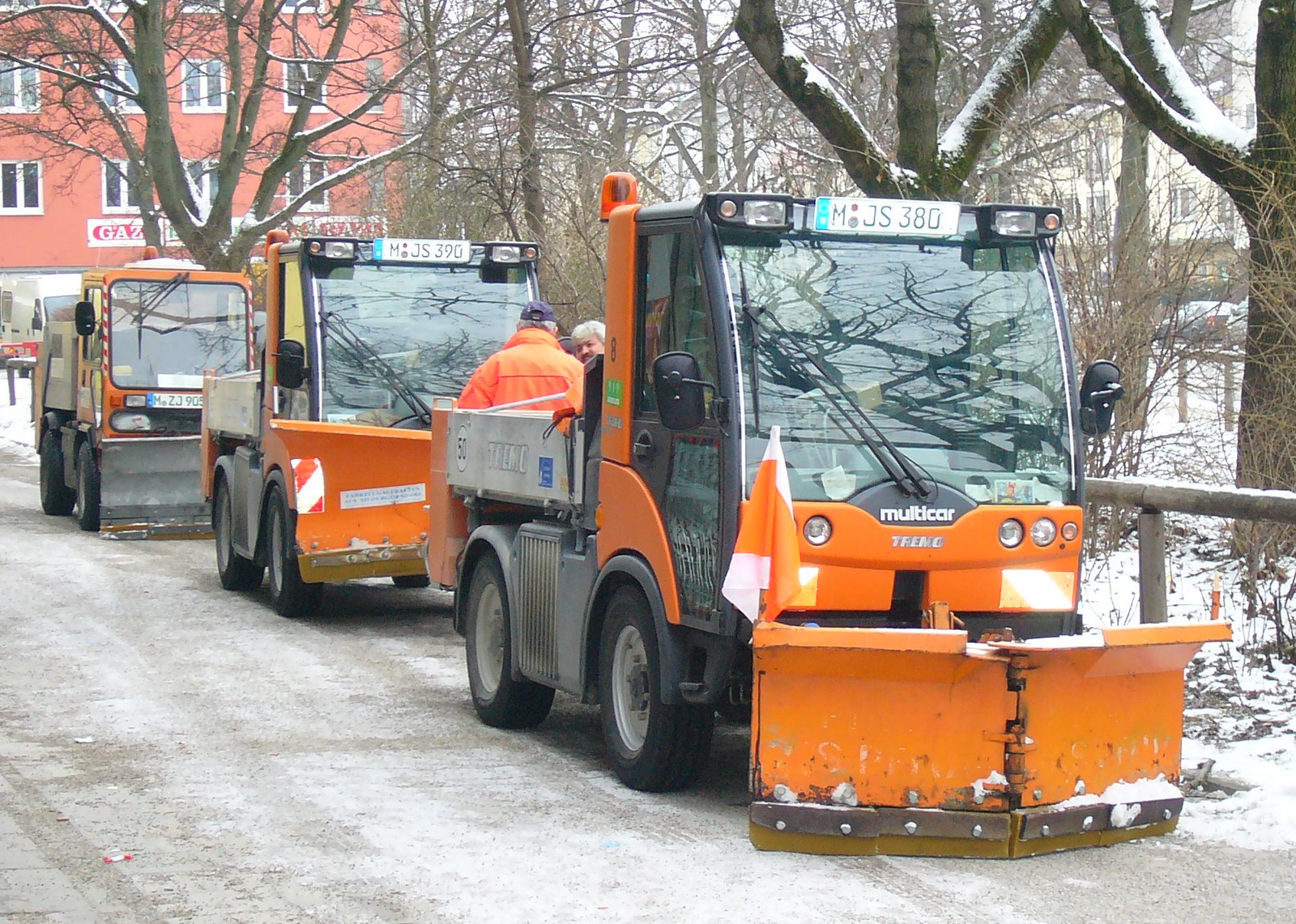
This is an important detail, because the phrase "Multicar is the only GDR car manufacturer that still exists" requires clarification. There is no independent Multicar company today. The brand itself and the production of relevant equipment within Hako have been preserved. But the factory site in Waltershausen continued to operate, and Multicar did not disappear from the market. And in this sense, the story is truly unique.
From a small cart to the M41
The modern Multicar can hardly be compared with the M21 anymore. The current Hako lineup includes the M29, M31, and M41. These are full-fledged multifunctional machines for municipal services, construction, green area maintenance, street cleaning, and winter maintenance.
For example, the Multicar M29 belongs to the six-ton class, develops up to 62 km/h, and can work with approximately 100 different attachment options. The M31 is a larger machine in the six-ton class. Several versions are available for it, including all-wheel-drive versions and a hydrostatic transmission. And the pinnacle of the modern lineup is the Multicar M41. This is a machine with a gross vehicle weight of up to 7.49 tons, with a 175 hp diesel engine, all-wheel drive, and a maximum speed of up to 90 km/h.
The brand also has an electric future: Hako is preparing a fully electric Multicar M31 ZE, scheduled for launch in early 2027. Of the original machine with a 5.6 hp diesel and foot control, only the name remains.
What was the secret of survival
The history of Multicar actually shows a fairly simple principle. The brand survived not because its products were technologically better than all other GDR cars. And not because an exception was made for it after the reunification of Germany. It simply found a very specific niche.
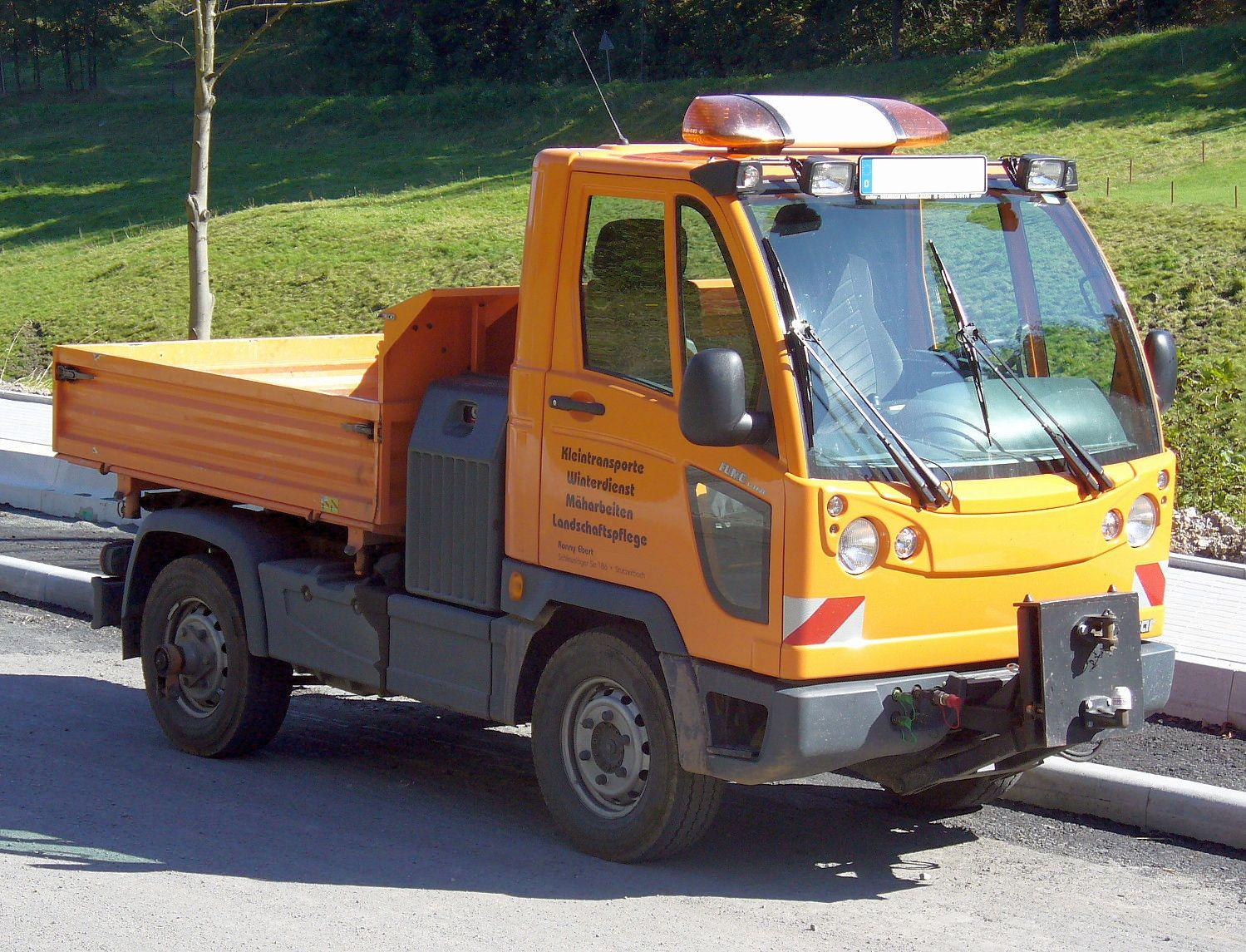
Multicar never tried to be a universal car in the usual sense. Its task was different: to take a compact chassis and turn it into the basis for dozens of different machines. Today, the same basic equipment can work as a dump truck, a cleaning machine, a transporter, a road winter maintenance machine, or a carrier of special equipment. Modern M29 and M31 are built precisely on this.
It turns out to be a peculiar historical irony. The most primitive machine in this story – an open cart that the driver controlled with his feet – turned out to be the beginning of a brand that outlived the state for which it was created.
And then Multicar did what many much more famous East German brands could not: it did not cling to the past and gradually transformed from a factory cart into specialized equipment for a completely different economy. Perhaps that is why today the comparison with Unimog no longer seems so mocking. It's just two different answers to the same question: how to make a small, maneuverable, and maximally versatile work machine.
Read more articles:
- How ELM327 actually determines engine parameters
- Toyota Mark II: why it is still loved
- Fifth wheel: an American in 1932 invented how to park sideways