The Toyota Mark II has developed a rather unusual reputation. On the one hand, the model has long become the subject of internet jokes and various memes. On the other hand, it has a very specific circle of fans, and many people know this car even without a particular interest in automobiles. Yet, the main question remains: why do owners and admirers love the Toyota Mark II so much?
To answer this, it's worth defining which cars we're talking about. The model arrived in Russia in several generations, but true popularity here was gained primarily by two body styles – X90 and X100. These are the seventh and eighth generations of the Mark II, respectively.
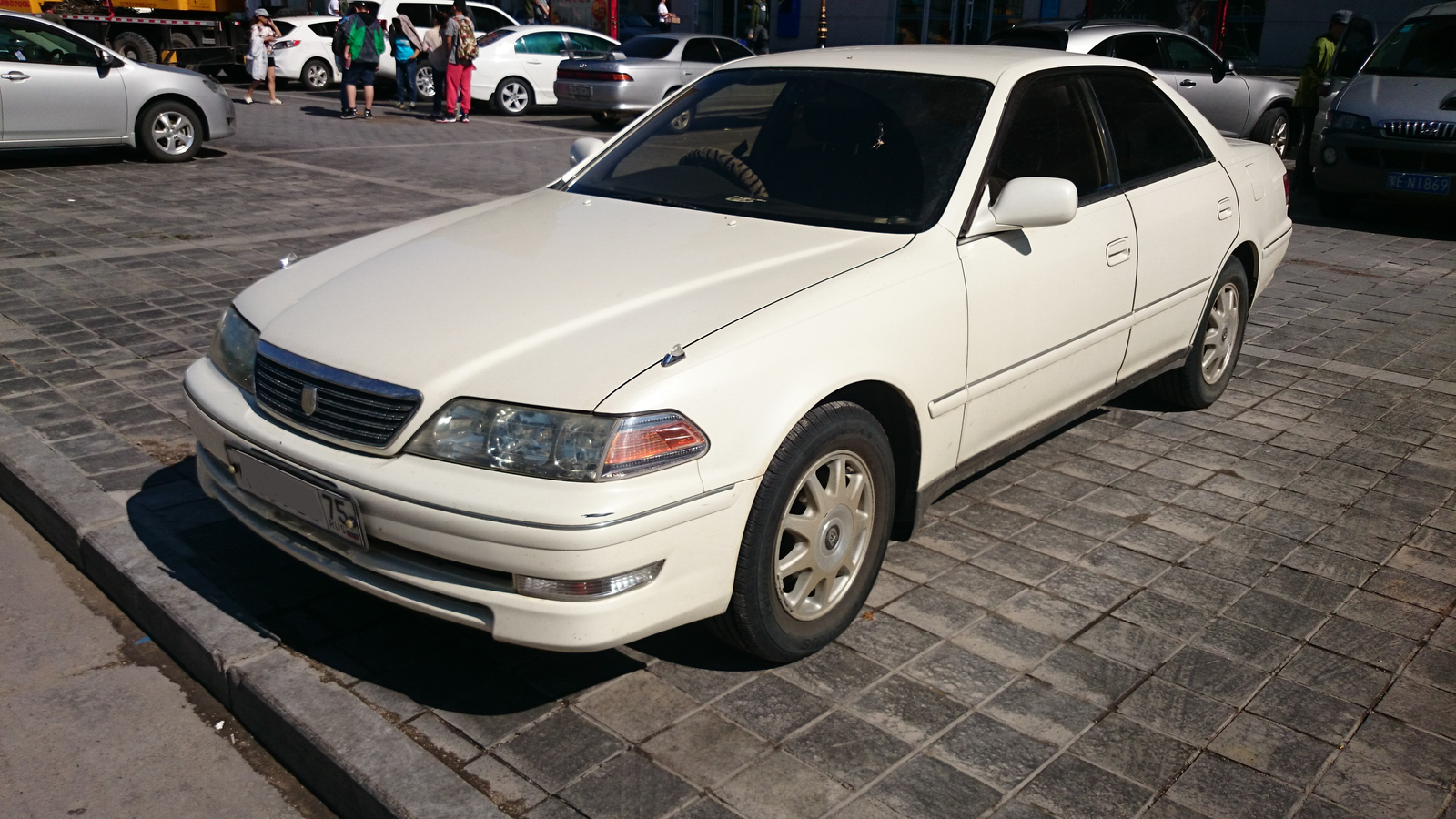
Earlier variants are practically unavailable on the market today, and subsequent models are no longer perceived in the same way as the previous "Markovniks." Therefore, it makes sense to focus on the X90 and X100 – the cars that can still be found on Russian roads. Their widespread presence is also confirmed by sales statistics. At the same time, prices for well-preserved examples can sometimes be surprising: some cars are quite expensive. But even at such a cost, the Mark II continues to find buyers. There are several reasons for this.
Premium Character, Ingrained from the Start
The main argument in favor of the Mark II is its reputation. In terms of its status, this car was not limited to the role of an ordinary business sedan of its time. Toyota actually claimed a higher class. Among the model's competitors were:
- BMW 5-Series;
- Mercedes-Benz E-Class;
- Audi A6.
Therefore, the Mark II was created with noticeable premium ambitions. The car tried to combine comfort, spaciousness, and sufficiently convincing dynamics. It is the combination of these qualities that largely explains the model's attractiveness. It is not just a sedan that can transport people from one point to another. Its character initially implied a higher level of requirements for convenience and driving performance.
At the same time, the Mark II had various engines, but the Tourer V modification holds a special place among them.
Tourer V – A Completely Different Story
Under the hood of the Toyota Mark II Tourer V was a twin-turbocharged 1JZ-GTE engine with a volume of 2.5 liters. Its power was 280 horsepower. The engine could work with both manual and automatic transmissions. Regardless of the chosen transmission type, the car demonstrated very serious dynamics. Such a Mark II could accelerate to 100 km/h in less than 5.7 seconds.
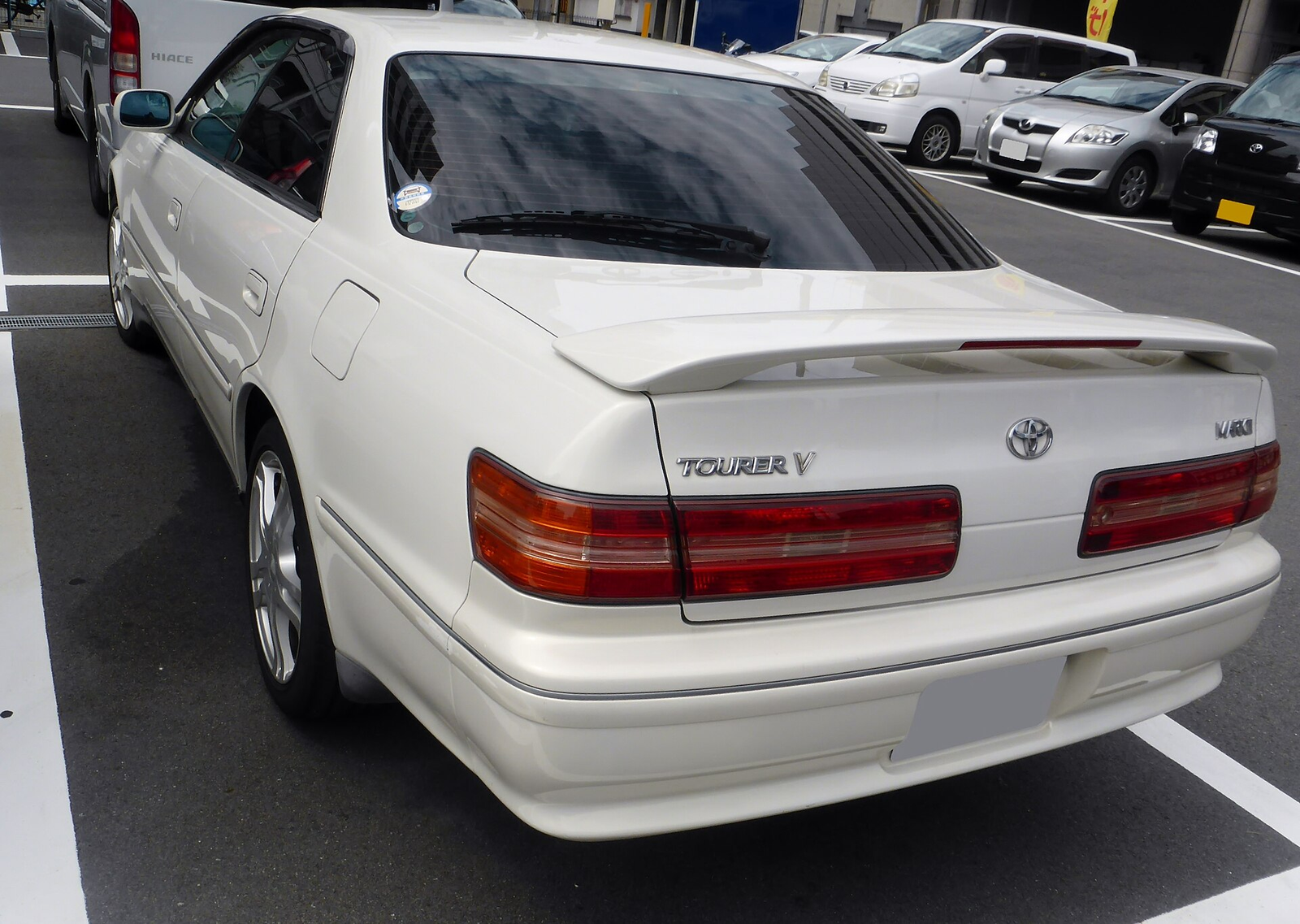
For a sedan that simultaneously maintained comfort and spaciousness, such a combination of characteristics became a separate reason for interest. As a result, the model could be perceived not only as a comfortable business-class car but also as a car with pronounced sports potential.
Reliability – Another Reason for Popularity
However, the love for the Mark II cannot be explained by dynamics alone. An equally important factor was the reliability of most versions of the model. The car proved to be robust enough to withstand even difficult operating conditions. This applies especially to atmospheric engines, gearboxes, and suspension. With normal operation, they are capable of covering hundreds of thousands of kilometers without serious problems.
For a car that has long ceased to be new, such a margin of safety is of great importance. The body deserves special attention. It turned out to be unexpectedly resistant to corrosion. Of course, with age, this advantage becomes less noticeable, but the very fact that a significant number of Mark IIs have survived to this day speaks in favor of the body structure.
Today, the age of these cars can no longer be ignored. But their presence on the market after so many years remains an important part of the model's history.
Spare Parts and Bodywork Also Played a Role
Another reason for the Mark II's attractiveness is the availability of body parts and spare parts. For an old car, this is a particularly important advantage. The model is not overly demanding in operation. In combination with the good resource of the main components, this makes it quite unpretentious for its age.
The possibility of tuning is also among its strengths. The Mark II allows owners to modify the car, adapting it to their own ideas of what it should be. The result is a rather rare combination of characteristics:
- comfort and spaciousness of a car with premium ambitions;
- powerful Tourer V version with a 280-hp 1JZ-GTE;
- high reliability of many versions;
- corrosion-resistant body;
- availability of spare parts and body parts;
- unpretentiousness;
- good tuning possibilities.
That is why the Toyota Mark II X90 and X100 continue to be in demand even years after production ceased.
A Car Designed for a Long Life
The popularity of the Mark II in this case is not explained by any single characteristic. The model turned out to be a successful combination of several qualities that rarely exist together in one car. It could offer the comfort and spaciousness of a business sedan, while having sufficiently serious dynamics. Individual versions, primarily the Tourer V, provided a completely different level of sensations thanks to the 280-hp twin-turbocharged 1JZ-GTE.
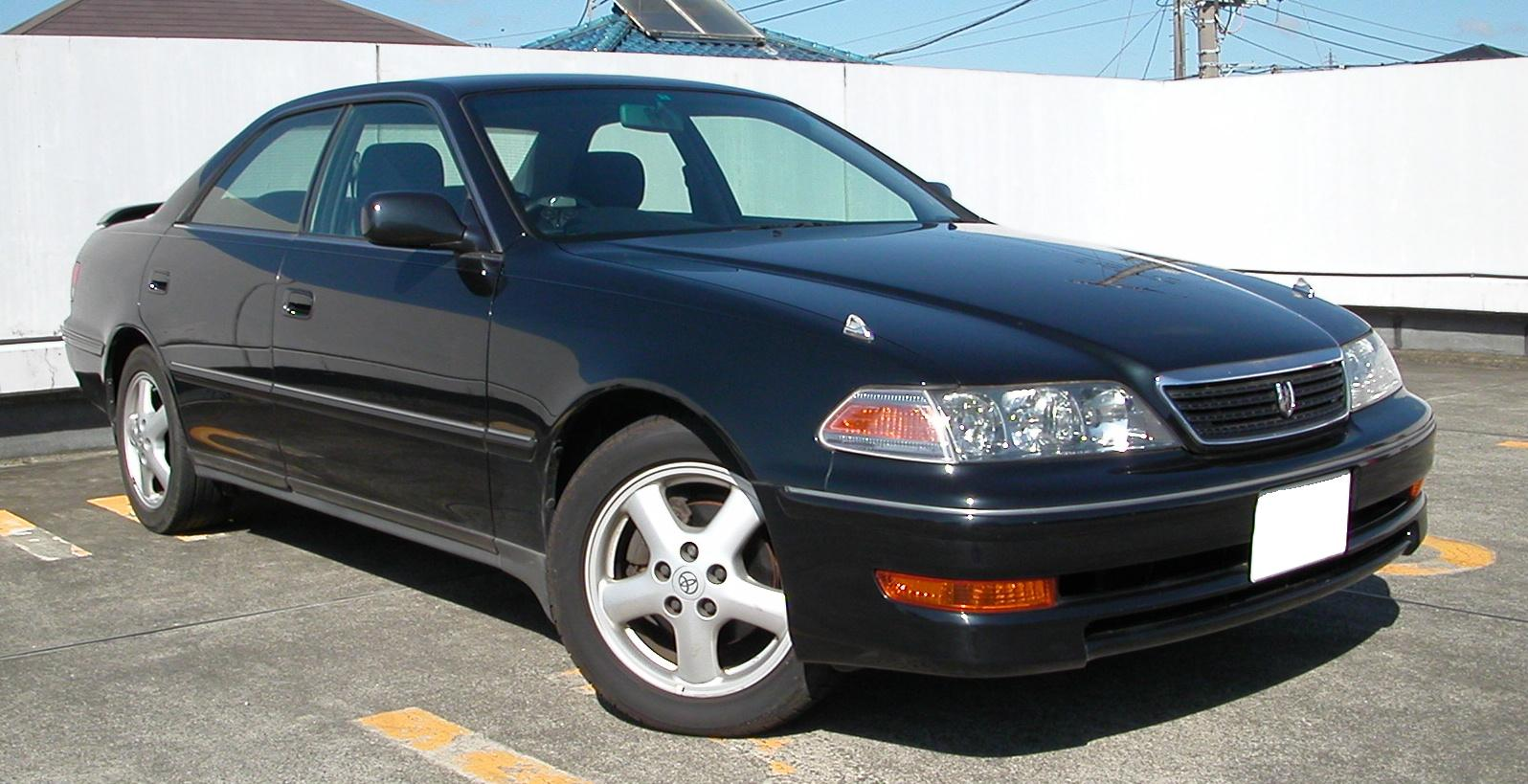
But at the same time, the car retained the main quality necessary for a car with a long life – durability. Reliable atmospheric engines, gearboxes and suspension, a corrosion-resistant body, availability of parts, and unpretentiousness allowed many examples to outlive more than one generation of owners. Add to this the possibility of tuning – and it becomes clearer why the old "Markovniks" did not disappear from the roads with the end of their production.
Today, the Toyota Mark II X90 and X100 can be unexpectedly expensive, but the presence of buyers even at such prices shows: for its audience, it is still not just an old Toyota. It is a car that managed to combine several completely different qualities – practicality, comfort, reliability, dynamics, and potential for modifications. It is this combination that became the basis of that very reputation that the Mark II retains years later.
Read more articles:
- Fifth Wheel: An American in 1932 Invented How to Parallel Park
- Why a Car Battery Has 12 Volts
- Why Huge Rims Can Harm a Car