From September 1, 2026, a new period with a whole set of changes begins for Russian motorists. Yesterday, August 31, the summer ban on the use of studded tires ended, which means that starting today, they can be used without the risk of punishment. But tire seasonality is far from the only innovation this autumn.
From the beginning of September, the rules for technical inspection and carrier liability insurance are being adjusted, and later the methodology for calculating OSAGO payments will change. However, the launch of cameras that can automatically detect cars without a policy did not happen on September 1, although the system may become operational this autumn.
Studded Tires Are Allowed Again
Traffic rules, along with technical regulations, prohibit the use of studded tires during the three summer months – June, July, and August. This restriction applies to vehicles of all categories.

However, the common understanding of the ban as a restriction on "winter tires" is erroneous. The law specifically concerns studded tires. Studless winter tires do not fall under it.
Thus, in any month, it is allowed to use:
- summer tires;
- all-season tires;
- studless winter tires.
From September 1, a kind of off-season begins: drivers can independently choose the appropriate option and will not be penalized for using any of the listed tire types. This is especially relevant for northern regions, where snow can appear as early as September. Now, switching to studded tires there in advance is possible without violating the rules.
The next seasonal boundary will appear on December 1, 2026. From this moment, summer tires will be banned, but the rule will only apply to passenger cars and trucks with a gross weight of up to 3.5 tons.
Violation of seasonality requirements entails the same penalty – a warning or a fine of 500 rubles under Part 1 of Article 12.5 of the Code of Administrative Offenses of the Russian Federation.
Taxi Drivers Can Purchase OSGOP for a Short Period
From September 1, the conditions for mandatory civil liability insurance for carriers – OSGOP – are changing. Taxi drivers will be able to issue such a policy not only for a year but also for a much shorter period.
The mandatory presence of OSGOP for passenger transportation has been in effect since September 1, 2024. In the event of an insured event, the payment under this policy can reach 2 million rubles if the passenger's life or health is affected as a result of the trip.
The problem was that the contract could only be concluded for one year. For drivers who work in taxis only occasionally, this was not very convenient. In spring, the signed law changed the situation: the minimum contract term is now one day, while the maximum is still one year.
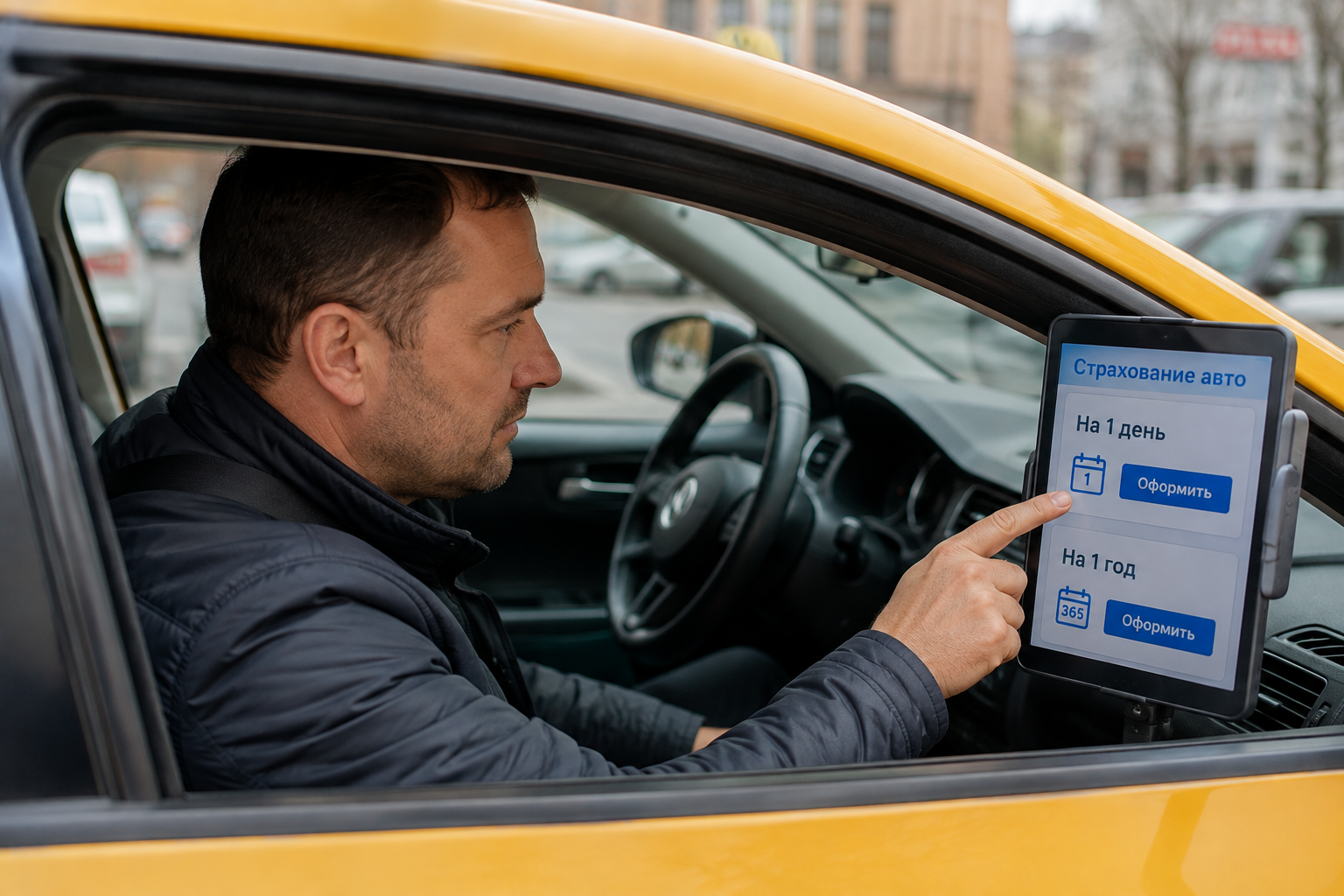
The innovation is primarily intended for those for whom taxi driving is a side job and who go on duty irregularly. Individuals and individual entrepreneurs officially registered as taxi drivers will be able to conclude short-term contracts.
At the same time, the obligation to have a policy does not disappear, nor does the responsibility for its absence. From March 8, 2026, a taxi driver without OSGOP faces a fine of 5000 rubles. In addition, their registration as a taxi driver may be terminated, which means the annulment of the permit for passenger and baggage transportation.
What's Changing in Technical Inspection
From September 1, amendments aimed primarily at combating fictitious diagnostic cards come into force. This refers to cases where a technical inspection point issues a document without actually inspecting the vehicle.
The powers of the State Traffic Inspectorate are being expanded. Now it will be able to independently disconnect an operator from the EAISTO electronic technical inspection database. The grounds for this are:
- liquidation of a legal entity;
- cessation of activity by an individual entrepreneur;
- two or more cases of issuing diagnostic cards without actual vehicle inspection within a year.
The procedure for annulling the diagnostic card itself has also changed. In addition to the previous grounds, information from the prosecutor's office and a court decision that has entered into force can now be used for this.
For the average car owner, another change will be more noticeable: the state fee for technical inspection must now be paid before the procedure begins, not after its completion.
At the same time, periodic technical inspection for passenger cars and motorcycles owned by individuals was abolished back in December 2021. But a diagnostic card is still required in a number of situations.
It will be needed:
- when registering a car and changing ownership, if the car is more than four years old;
- when replacing a major component of the car;
- when making changes to the design.
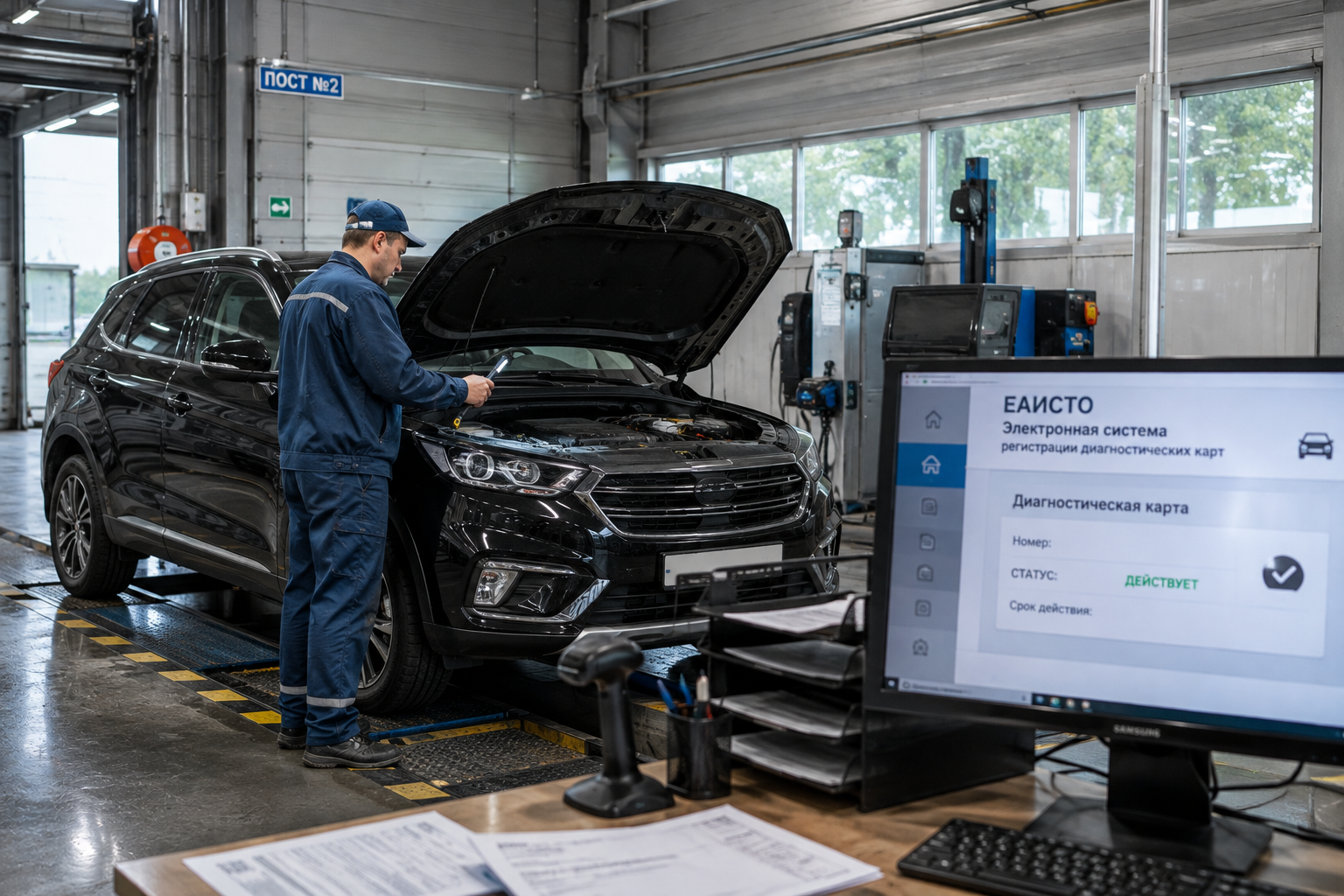
In the latter case, the age of the car no longer matters.
Cameras Have Not Yet Started Fining for OSAGO
At the end of August, information appeared that from September 1, cameras would automatically record the absence of an OSAGO policy. However, this statement turned out to be incorrect.
A bill that limited the number of fines for the absence of OSAGO to one violation per day appeared in the State Duma back in the autumn of 2025. Such a restriction was considered a necessary condition for the launch of automatic recording.
Initially, it was assumed that the relevant norm would come into force on September 1, 2026. But by the second reading, this date was excluded, and another rule was established: the law must come into force on the day of its official publication. The President signed the document, and it was published on March 23, 2026. Therefore, the restriction has been in effect since that date.
However, the cameras themselves have not yet started catching drivers without OSAGO. On August 10, at a meeting with the President, Interior Minister Vladimir Kolokoltsev stated that the department is not yet technically ready for such recording.
At the same time, the Bank of Russia advocates for a faster launch. The head of the regulator, Elvira Nabiullina, insisted on the speedy implementation of the system. The head of Buryatia, responsible for the project, proposed a compromise: first conduct an experiment in several pilot regions, and then extend the mechanism throughout the country.
The government set a target back in the summer – the cameras should be operational by October 1, 2026. However, it is not yet clear whether this deadline will be met.
The State Traffic Safety Inspectorate reported that the Ministry of Internal Affairs' "Pautina" departmental system is being modernized for the launch of automatic recording. The work is planned to be completed in November, so the possibility of launching cameras this autumn remains.
The amount of future fines is already known. For the first violation, 800 rubles are provided, for repeated driving without OSAGO within a year – from 3000 to 5000 rubles. After the launch of the cameras, a repeated fine of 3000 rubles could theoretically be issued to the driver every day.
Export of Diesel Fuel from Russia Remains Banned
Restrictions affected not only motorists but also the fuel market. The export of diesel fuel from Russia is prohibited until January 31, 2027.
An exception was previously made for direct producers of diesel fuel: their restriction was only valid until the end of August. This meant that from September 1, producers could resume exports.
However, the decree, which became known on August 29, 2026, extended the ban for them for another month – now the restriction is valid until the end of September.
This ban has been extended not for the first time, so its further continuation cannot be ruled out.
New OSAGO Directories to Appear on September 19
Another important change is expected on September 19, 2026. On this day, updated OSAGO directories, which are used to calculate the cost of repairs after an accident, will come into effect.
They contain average prices for spare parts and materials, as well as the cost of a standard hour of repair work. The directories are revised quarterly, so changes directly affect the amount of insurance payments.
The mechanism here is quite simple: if the average cost of parts in the directory increases, the estimated repair amount also increases, and with it, OSAGO payments increase. This subsequently affects the cost of the policies themselves.
The September update will differ from previous ones. In the summer, the Bank of Russia approved changes to the unified damage calculation methodology, and the new directories will be the first to be compiled taking this methodology into account.

One of the main changes concerns the price selection. When calculating the average cost of spare parts, more expensive and higher-quality parts will now be taken into account, while cheap analogues have been excluded from the selection.
According to the head of the Russian Union of Auto Insurers, Evgeny Ufimtsev, the average prices for spare parts and the average payment should increase by approximately 7–8%. For cars of those brands where the spare parts market is unstable, for example, due to supply problems, the increase may be even higher.
For car owners, the consequences are quite obvious: following the increase in payments, the average cost of an OSAGO policy should also go up. Therefore, for those whose insurance period is coming to an end, it is better not to postpone renewal – there are no grounds to expect that after the September update, the policy will become cheaper.
Read more materials:
- How UAZ Conquered Off-Road Beyond the USSR
- Why Police Choose BMW for Patrols
- Cezeta 502: The Czech Scooter That Conquered the USSR