If you put an old Soviet truck with wooden sides next to a modern vehicle today, the explanation seems obvious: back then, they simply didn't know how to make anything better. But this impression is misleading.
Wooden bodies appeared on Soviet trucks not because designers were unaware of the advantages of metal. The reason was much more practical. Vehicles needed to be produced by the thousands, metal remained a valuable resource, and repairs often had to be done far from well-equipped workshops.
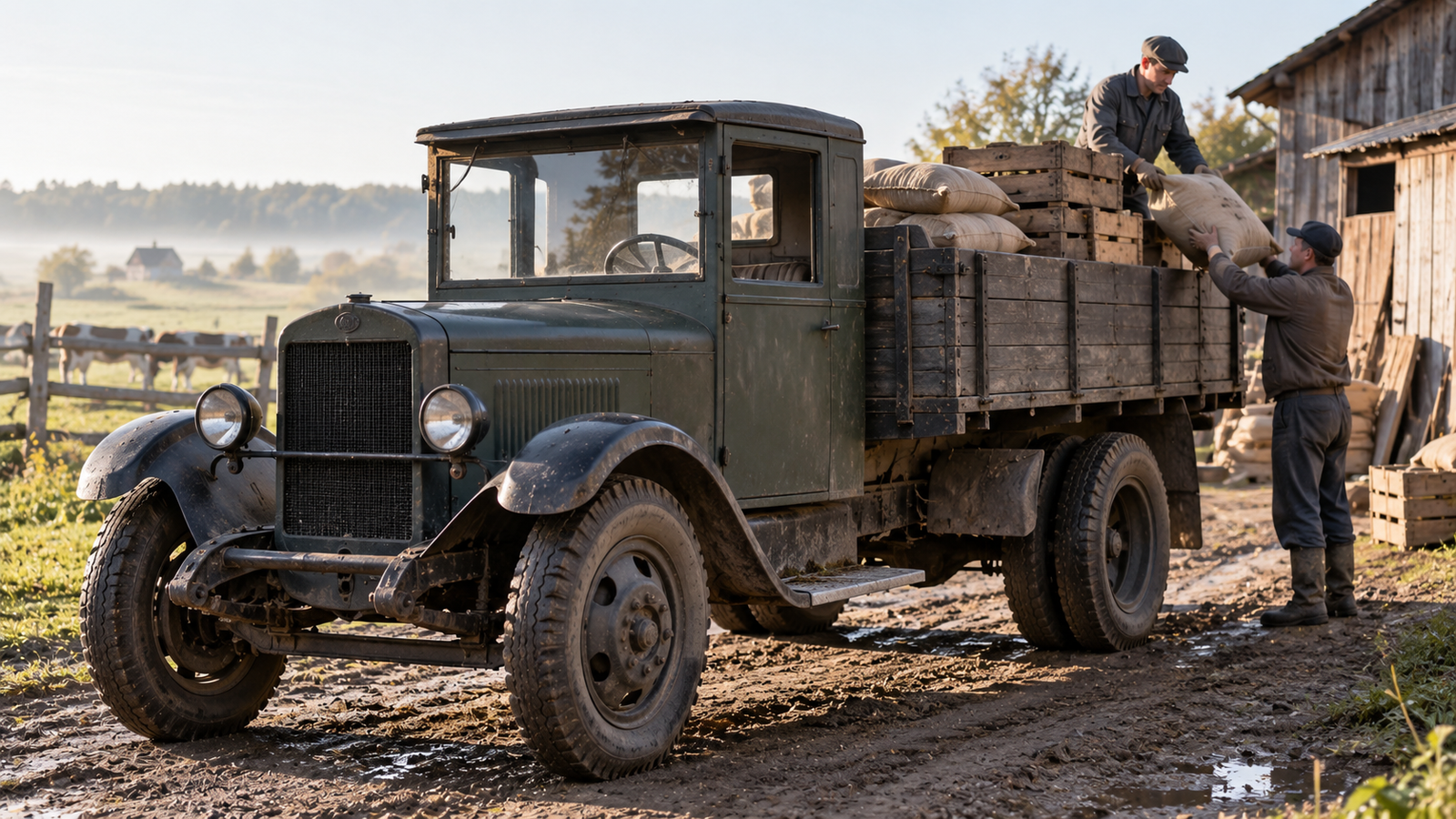
A truck in the USSR had to meet this reality. Its task was not to look modern, but to transport goods, quickly return to service after damage, and operate in the economy for as long as possible. Therefore, wood in the body structure was a conscious decision.
Metal was needed for more important tasks
In the first half of Soviet history, industry simultaneously tackled many large-scale tasks. The country built factories, developed its railway network, increased equipment production, and in the most difficult years, a significant portion of resources went to defense needs. Under such conditions, steel could not be used indiscriminately. If a structural element did not require the mandatory use of metal, it was logical to use another material.
Wooden sides were suitable for this. They were not the main load-bearing part of the vehicle, but they allowed for a reduction in metal consumption where it could be avoided. This became especially noticeable in mass production. The ZIS-5, for example, went into production in 1933 and was produced in huge batches. Vehicles of this model and its military variants remained in demand for many years. At this scale, even a small saving of material on one vehicle turned into a significant amount of saved resources. But it wasn't just about steel.
The truck was designed for real work
The Soviet vehicle was primarily intended for economic tasks. It had to transport everything without which construction sites, collective farms, and district enterprises could not exist:
- grain;
- bricks;
- sacks and barrels;
- boards;
- tools;
- straw;
- various materials and equipment.
Under such conditions, the body was considered a working tool. If the task could be solved with wood, and the freed-up metal could be directed to other components and parts, this option seemed quite rational.
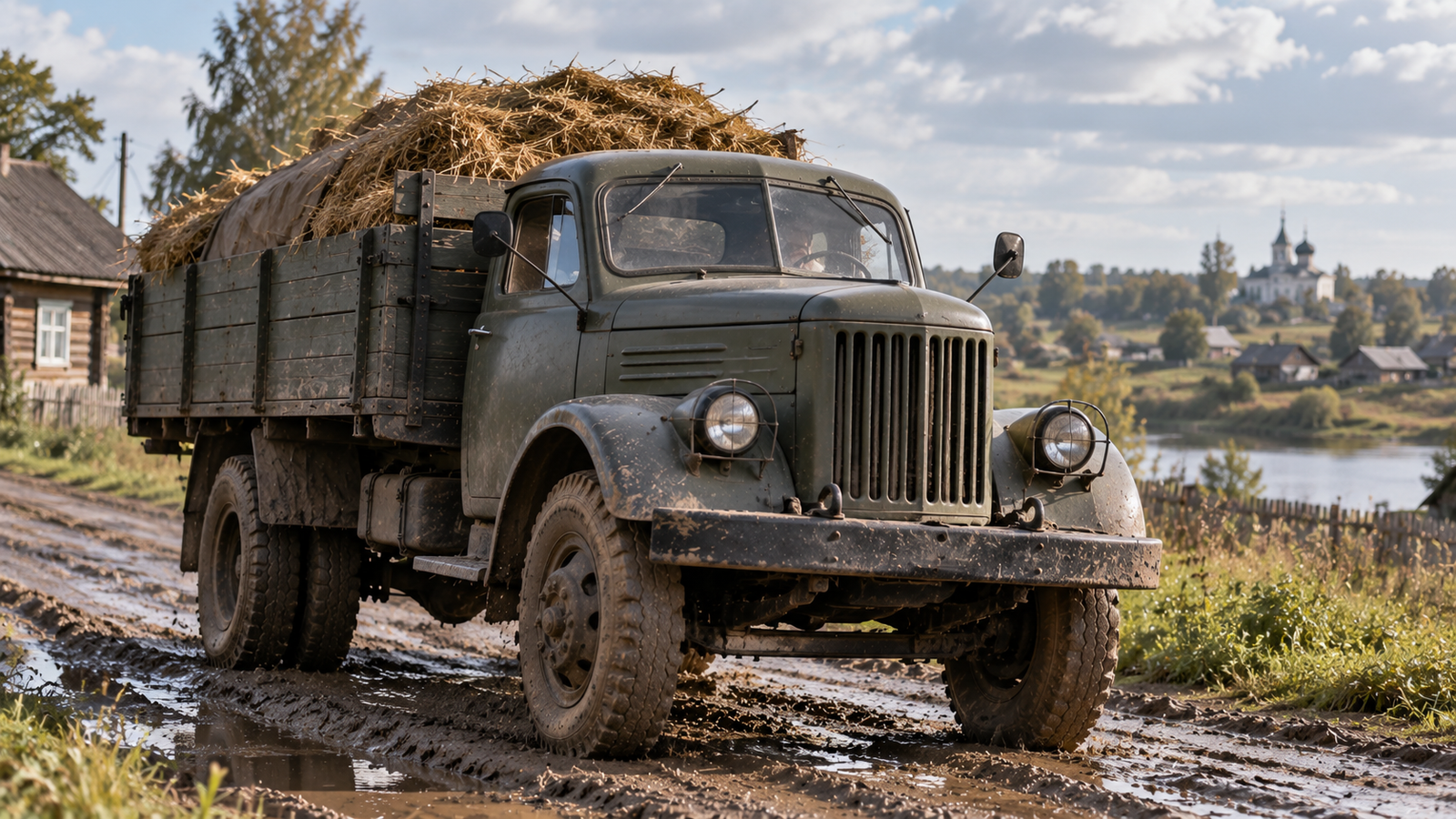
Today, an all-metal body seems like an obvious choice. But several decades ago, designers faced other questions: how many vehicles could be produced, how quickly would they reach farms, and what would happen to the vehicle after serious damage to its side? That's why the wooden platform was part of the overall production philosophy, not a forced attempt to make a car out of whatever was at hand.
Wood allowed for faster production growth
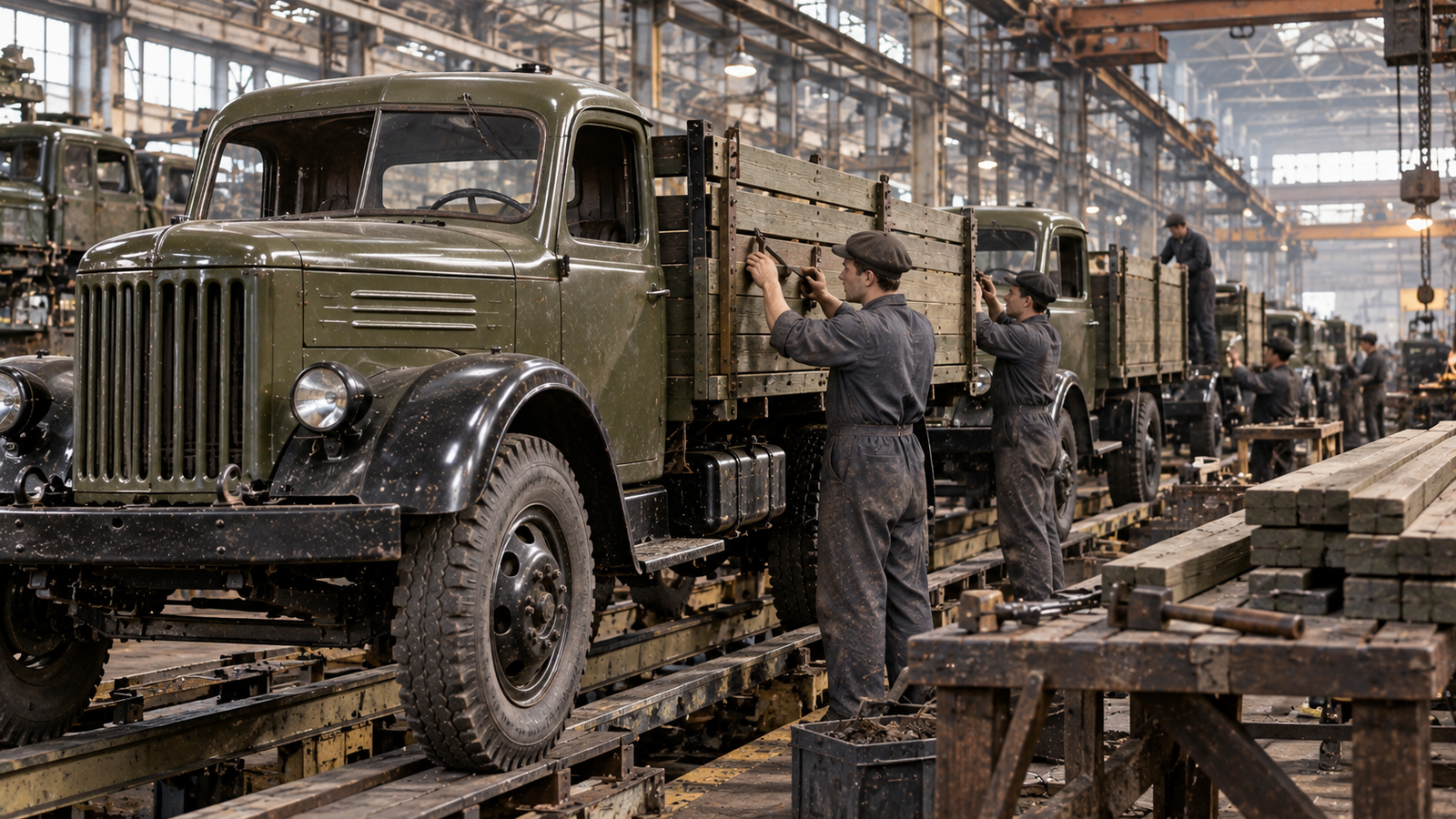
A metal body has an important production difference: its manufacturing requires a more complex technological base. Stamping, welding, tooling, appropriate equipment, and a well-established production chain are needed. All of this takes time and requires industrial infrastructure. With a wooden platform, the situation is simpler. It can be manufactured with fewer complex operations, which means this option allowed for faster increases in truck production.
And this logic persisted even when Soviet industry had significantly strengthened. In reference literature from the 1960s, the ZIL-130 was described as a vehicle with a wooden platform and three opening sides. That is, wood continued to be used not in pre-war industry, but in a completely different era. It turns out that wooden bodies were not abandoned simply out of habit. They still had advantages that were considered significant enough.
The main advantage appeared after a breakdown
The real test of the design began not on the drawing board, but where the truck had to work. Roads could be unpaved, the vehicle regularly encountered mud, moisture, and frost. Overloads were also not uncommon. Loading was often done without much care, and a full-fledged repair infrastructure might not be nearby. And this is where wooden sides gained another advantage.
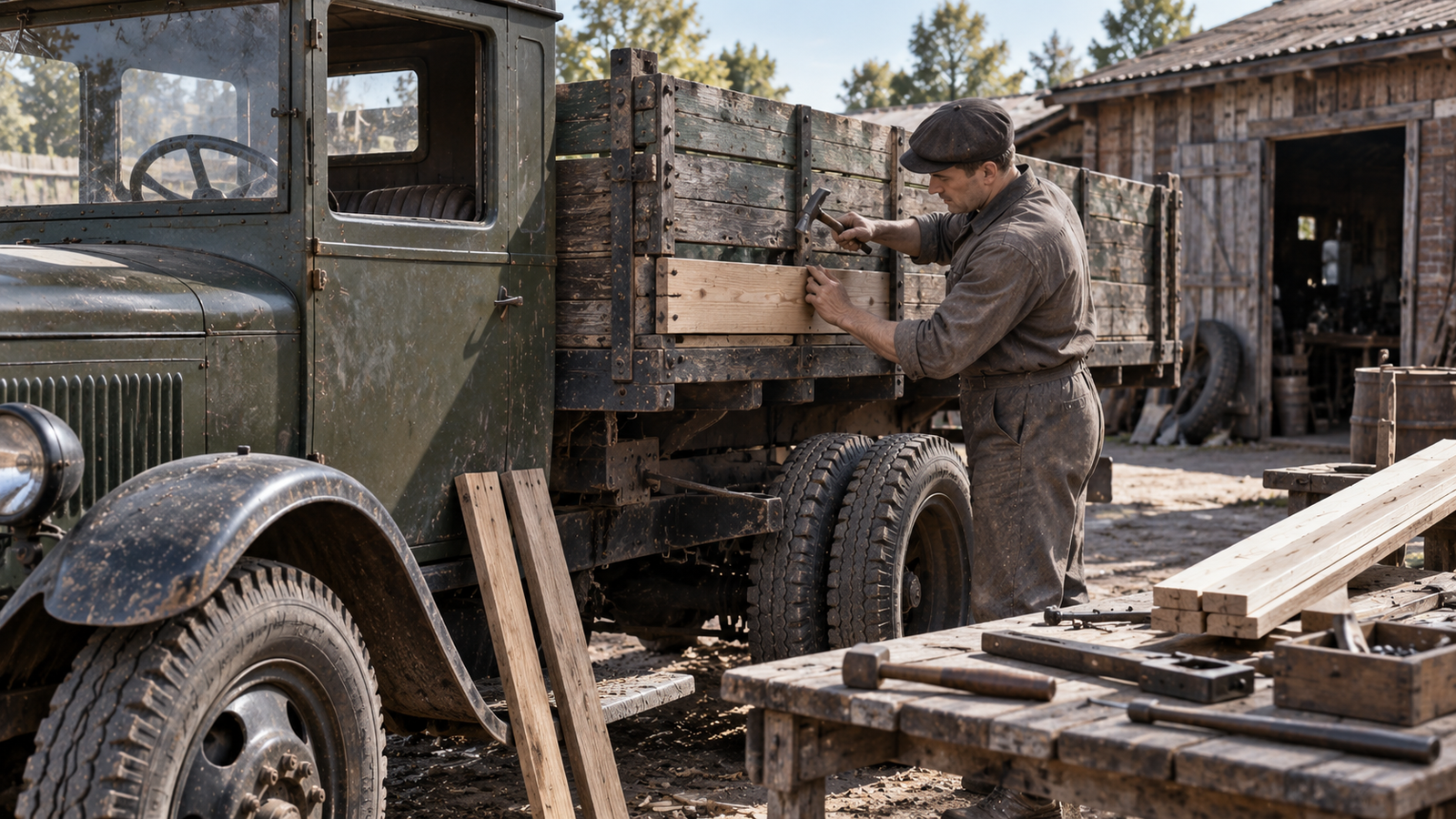
If a metal element was bent or cracked, repair required a welding machine, tools, a master, and at least a minimally equipped workshop. With a board, everything was much simpler. The damaged element could be removed and replaced with a new one.
Therefore, a typical repair looked something like this:
- remove the broken board;
- install a new one;
- secure it;
- reinforce the connection if necessary;
- return the vehicle to service.
For an economy where a truck should not be idle due to every breakdown, this was very important. Wood could rot, crack, and age, but its wear did not necessarily mean a long downtime for the entire vehicle.
Ease of repair was part of the design
Soviet technology was often serviced quite differently from a modern car. Repairs could take place in a yard, under a shed, or in a small workshop at an enterprise. Therefore, what was especially valued was not the absence of malfunctions, but the ability to quickly eliminate them.
In this regard, the wooden body perfectly matched the operating conditions. If a board became unusable, it could be replaced. If a fastener loosened, it could be tightened. If reinforcement was needed, available materials were used. Such a machine was not necessarily indestructible. Its secret lay elsewhere: not every malfunction caused long downtime. That is why trucks like the GAZ-51 and later the GAZ-52 gained a reputation as machines capable of working for a long time in a variety of conditions.
Another plus - weight
Wood also had a less obvious advantage: relatively low weight. For early trucks, this had practical significance. The GAZ-AA, for example, carried one and a half tons of cargo, and its engine developed 40 horsepower. With such characteristics, every extra kilogram of its own weight mattered. The heavier the structure itself, the less capacity remains for useful cargo.
A lighter platform allowed a larger portion of the payload capacity to be used directly for its intended purpose. In addition, lower weight reduced the load on other elements of the machine - from the frame and springs to the braking system. Therefore, wood saved not only metal. It helped maintain an acceptable weight for the entire vehicle.
Wood had serious drawbacks
Of course, wooden sides were not an ideal material.
The main problem was durability. Boards could rot, especially if the truck had to constantly work in a humid environment or transport materials that could accelerate wood decay. There were also weather problems. In the heat, wood dried out, could crack, and gaps appeared between the boards. Small cargo would then spill out.
In winter, the opposite happened: moisture affected the material, the boards swelled, the geometry of the structure changed, and fasteners required additional attention. Wood also did not tolerate rough loading well. A heavy object or a bucket could split a board where a metal side would only get a dent. That is, the wooden structure indeed required maintenance. But here lay the main compromise: its disadvantages were relatively easy to eliminate.
Why wood was retained even after the war
If a part cannot be made eternal, but it can be replaced quickly and cheaply, this approach may be more advantageous than a complex and expensive design. That is why wooden bodies remained long after Soviet industry became significantly more powerful.
Trucks continued to operate in conditions where ease of repair remained more important than technological sophistication. The vehicle could be serviced far from a large service center, and spare parts and equipment were limited. Wood allowed the body to fit into this operating system. A kind of balance was achieved: the material required periodic replacement, but the replacement itself did not turn into a complex technical operation.
All-metal body came with a different era
The abandonment of wood became natural when the industrial environment itself changed. Metallurgy developed, production became more technological, metal processing equipment was more accessible, and more was demanded from vehicles. Trucks became more powerful and faster. The body had to not only carry cargo but also provide greater strength, tightness, and durability.
Against this background, the wooden platform gradually began to give way to the all-metal one. However, the transition was not instantaneous. A striking example is the ZIL-130. The machine was already perceived as a representative of a new generation of Soviet trucks, but the wooden platform was retained on it. This clearly shows how long the old solution remained rational.
The wooden body was not a weakness, but a calculation
Today, an old truck with wooden sides is easily perceived as a symbol of technical backwardness. But if you look at it through the eyes of a person of that era, the picture is completely different. Designers faced very specific tasks:
- save scarce resources;
- produce cars in large series;
- reduce structural weight;
- ensure on-site repairability;
- maintain machine performance in harsh conditions.
Wood met all these requirements. Yes, it rotted. It had to be replaced, tightened, and repaired. It tolerated moisture and rough handling worse. But the truck did not have to be eternal. It had to work.
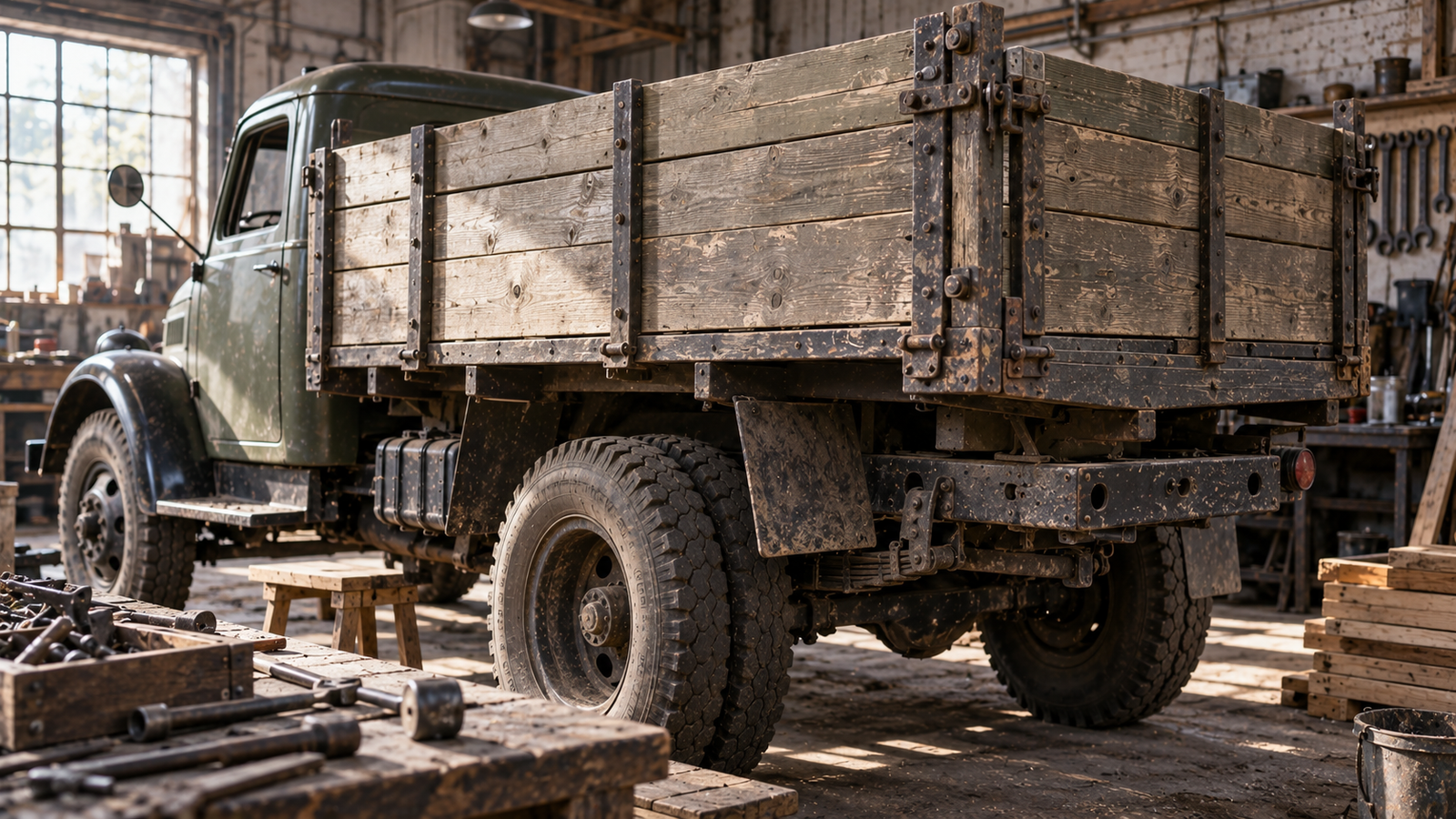
This is the main meaning of the wooden bodies of Soviet trucks. It was not a random relic or evidence that engineers "couldn't make metal." It was a solution that corresponded to the economy, production, and operating conditions of its time.
The GAZ-AA, ZIS-5, GAZ-51, GAZ-52, and even the later ZIL-130 show the same engineering logic: the design should not be as modern-looking as possible, but as suitable as possible for the environment in which it will operate. And in this sense, the wooden sides of Soviet trucks were a perfectly modern engineering optimization for their era.
Read more materials:
- Up to 7 years for a scooter: where a toy ends and a moped begins
- Why NASCAR drives left and why cars push each other
- No OSAGO - no debt write-off through bankruptcy
Комментарии