Translated with AI from the Russian original.
A car after body repair may look like new, but its appearance does not guarantee the restoration of factory strength. If the repair of power elements violated the technology, changed the geometry, or damaged the properties of high-strength steel, in the next accident the body may deform not as intended by the design.
A similar situation arises with anti-corrosion protection. The inscription “galvanized body” does not mean that all parts are coated with zinc equally and the car will not rust. Resistance depends on the metal processing technology, protection of welds and hidden cavities, paint quality, operating conditions, and timely repair of damage.
How the unibody changed car design
In early cars, the body was often mounted on a separate frame that absorbed the main loads. Later, unibodies became widespread: their metal structure simultaneously performs the functions of a frame and an outer shell. One of the well-known early examples was the Lancia Lambda, introduced in 1922.
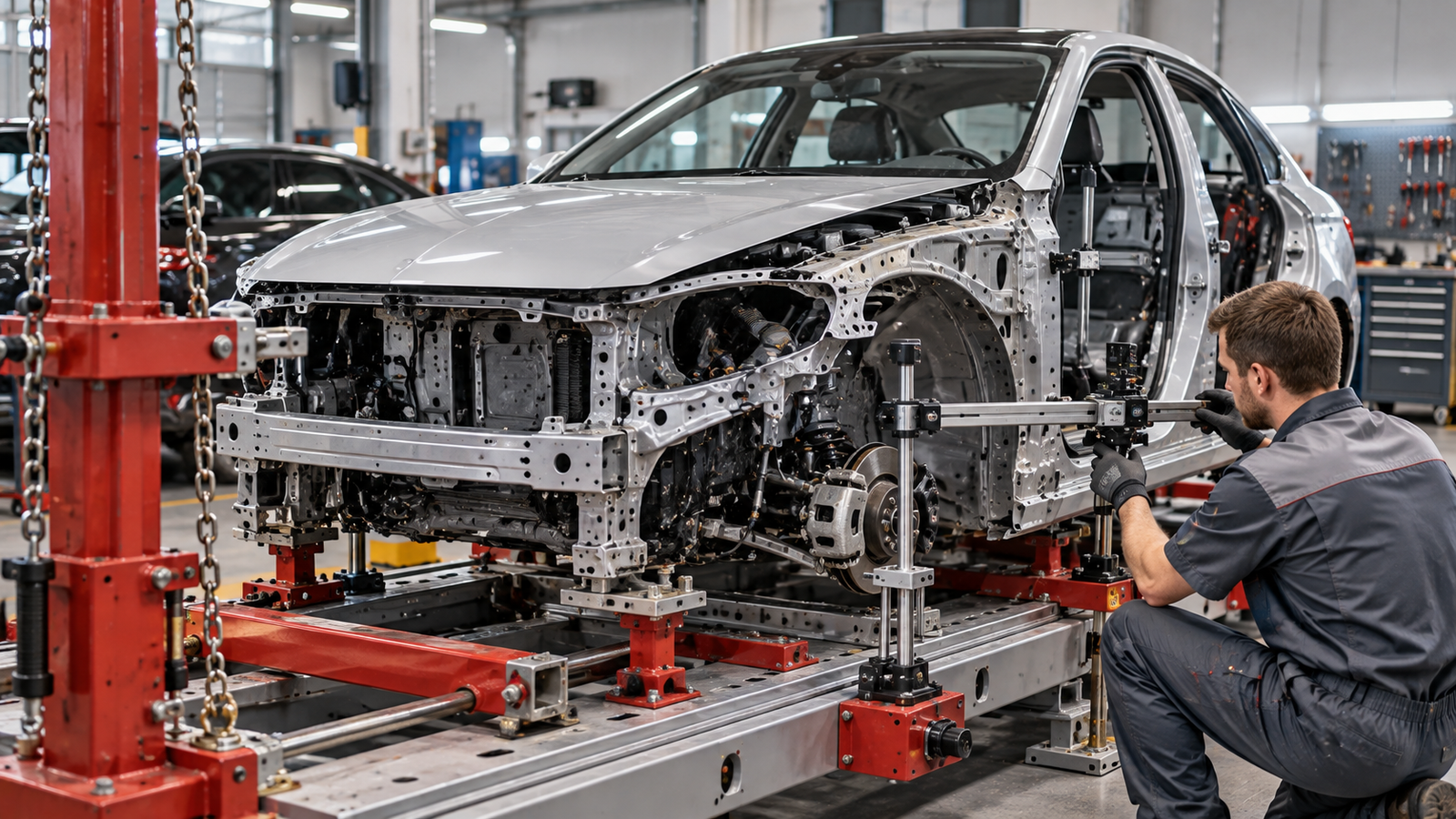
The unibody allows for more efficient use of metal and reduces the weight of the structure compared to some frame solutions. But it places increased demands on the strength of individual elements and connections. Pillars, sills, cross members, and other power parts work together, so the consequences of damage to one of them can affect the entire body.
Crumple zones and high-strength steel
In a modern car, the body should not be equally rigid in all places. The front and rear parts of the structure are designed to deform upon impact to absorb part of the impact energy. At the same time, the passenger cell must maintain space for people.
Mercedes-Benz engineer Béla Barényi played an important role in the development of this concept. His developments related to deformation zones and passenger protection became the basis for the further development of passive safety. In production Mercedes-Benz cars, corresponding solutions appeared in the late 1950s.
Steels of different strength classes are used for manufacturing modern car bodies. In individual power elements, hot stamping with subsequent quenching in a mold is used. Such parts achieve high strength due to a combination of metal composition and a strictly controlled manufacturing process.
However, not every sill or roof reinforcement is made of boron-containing steel, and permissible repair methods depend on the specific part and car model. It is impossible to determine the material solely by the location of the element: one must refer to factory documentation.
Why power parts cannot be repaired by eye
When repairing high-strength steel, not only the initial shape of the part is important, but also the preservation of its mechanical properties. Uncontrolled heating, incorrect straightening, or the use of an unsuitable welding method can change the properties of the metal and reduce the strength of the joint.
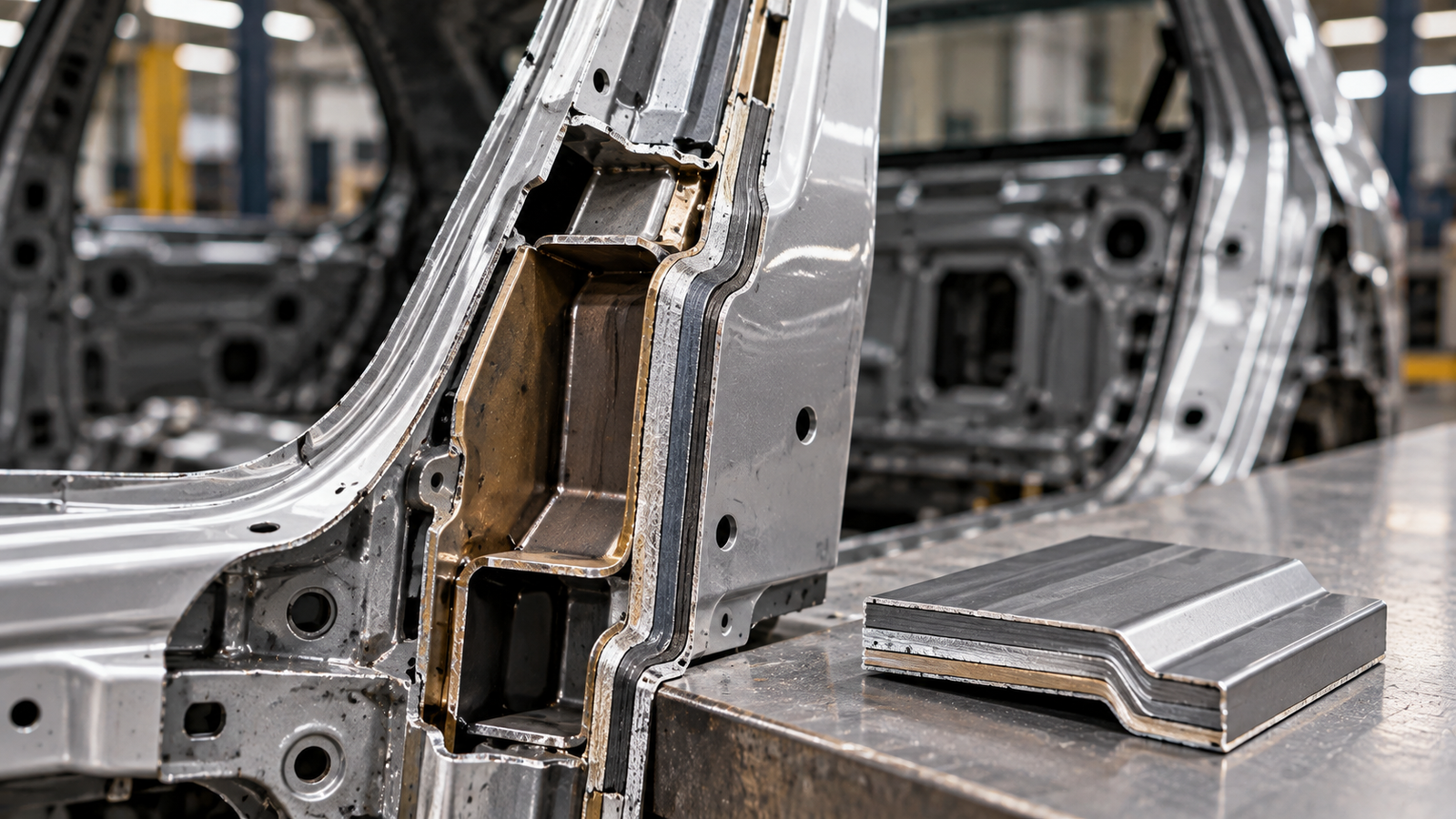
Therefore, there is no universal rule that “any pillar or sill can be straightened.” The manufacturer determines for each model which elements are allowed to be repaired, where part replacement is required, and where connections are allowed. For some hot-stamped elements, replacement is prescribed, and an attempt to restore them by heating may be unacceptable.
Body geometry is no less important. Even if the metal was not overheated, deviation of suspension mounting points, violation of the position of reinforcements, or incorrect connection of parts can affect the car's behavior in a collision. Therefore, quality repair requires not only the restoration of external panels but also checking control dimensions according to factory data.
After a serious accident, a used car buyer is not enough to see even gaps and fresh paintwork. It is necessary to find out which elements were replaced or repaired, check the quality of connections, and if necessary, order a professional body diagnosis. A beautifully restored car does not necessarily fully comply with factory safety characteristics.
How zinc protects the body from corrosion
Rust occurs as a result of electrochemical processes, which are facilitated by moisture and salts. In winter, road reagents accelerate corrosion, especially if the protective coating is damaged, and moisture and dirt linger in seams, arches, and hidden cavities for a long time.
Zinc helps protect steel in two ways: it acts as a barrier between the metal and the environment, and if the coating is damaged, it can corrode before iron. But the result depends on the type of coating and its thickness.
During hot-dip galvanizing, a steel part is immersed in molten zinc. During electrochemical application, the zinc layer is formed using electric current. In the automotive industry, galvanized sheet is also used, which is then stamped into body parts. These are different technologies, and comparing them only by the word “galvanizing” is incorrect.
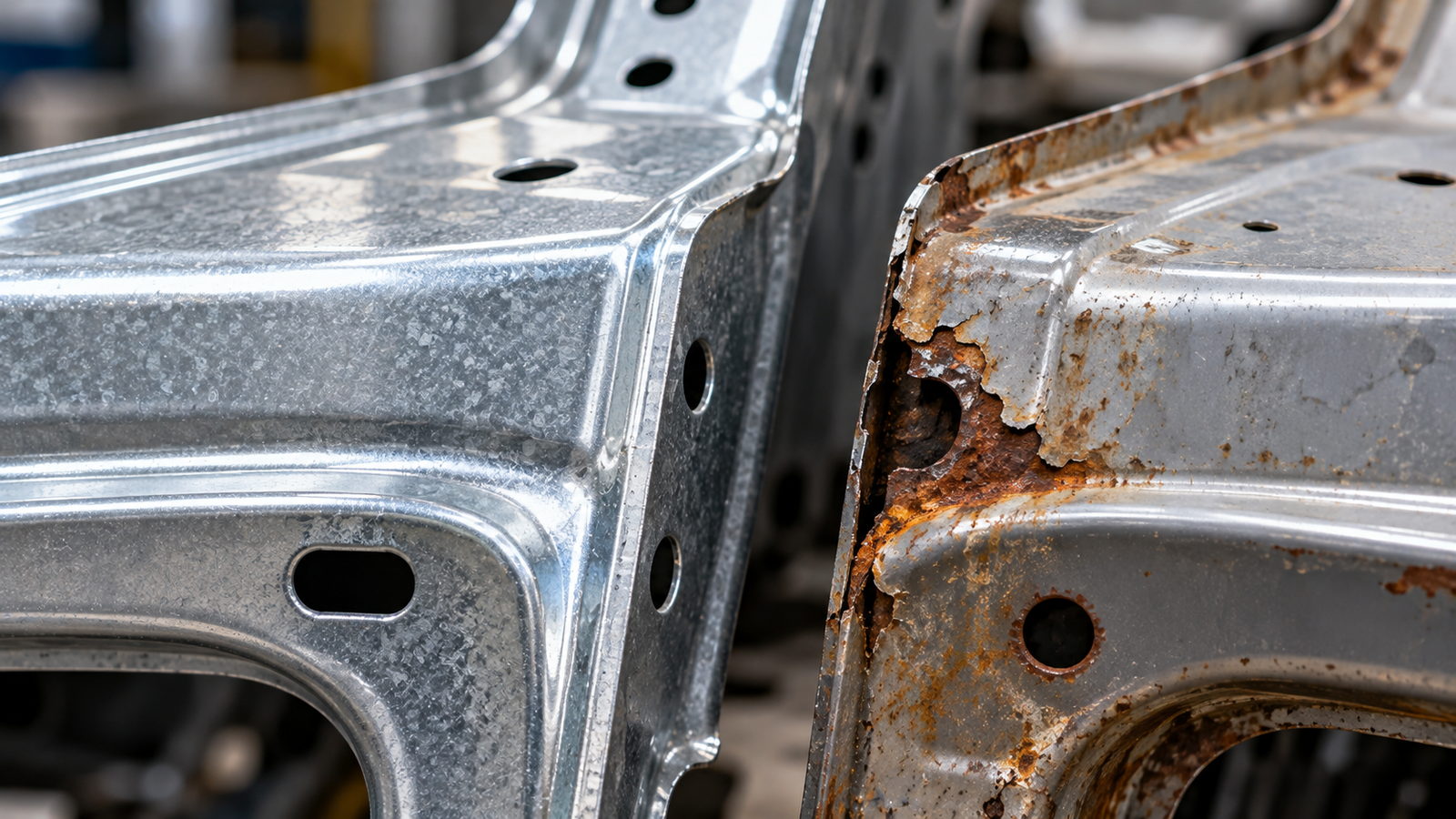
In addition to the zinc coating, the body is protected by paint and varnish materials, cataphoretic primer, weld sealants, and compounds for internal cavities. They perform different functions and complement each other. If moisture penetrates through damaged coating or lingers in a non-hermetic connection, corrosion can develop even on a car with galvanized panels.
Why one brand is not enough to evaluate a car body
Corrosion resistance depends on the model, generation, year of manufacture, factory, and production technology. Therefore, statements like “all cars of this brand do not rust” or “this brand always has bad metal” are of little help when choosing a used car.
As an example, Audi 80 and Audi 100 are often cited, which gained wide popularity due to galvanized bodies, as well as Mercedes-Benz W210, for which corrosion problems became a characteristic topic for owners. But even such examples do not replace the inspection of a specific instance: the condition depends on operation, previous repairs, and the preservation of protective coatings.
A long warranty against through corrosion also does not mean that chips, surface rust, or paint blisters will not appear on the body. It is important to read the warranty conditions: the manufacturer may set requirements for inspections, body care, and timely elimination of damage.
How to inspect a car body yourself before buying
It is worth starting with a visual inspection in good lighting. Check the sills, wheel arches, lower edges of the doors, panel joints, and areas around the windows. Paint blisters, coating cracks, and traces of sloppy repair can indicate corrosion or previous damage.
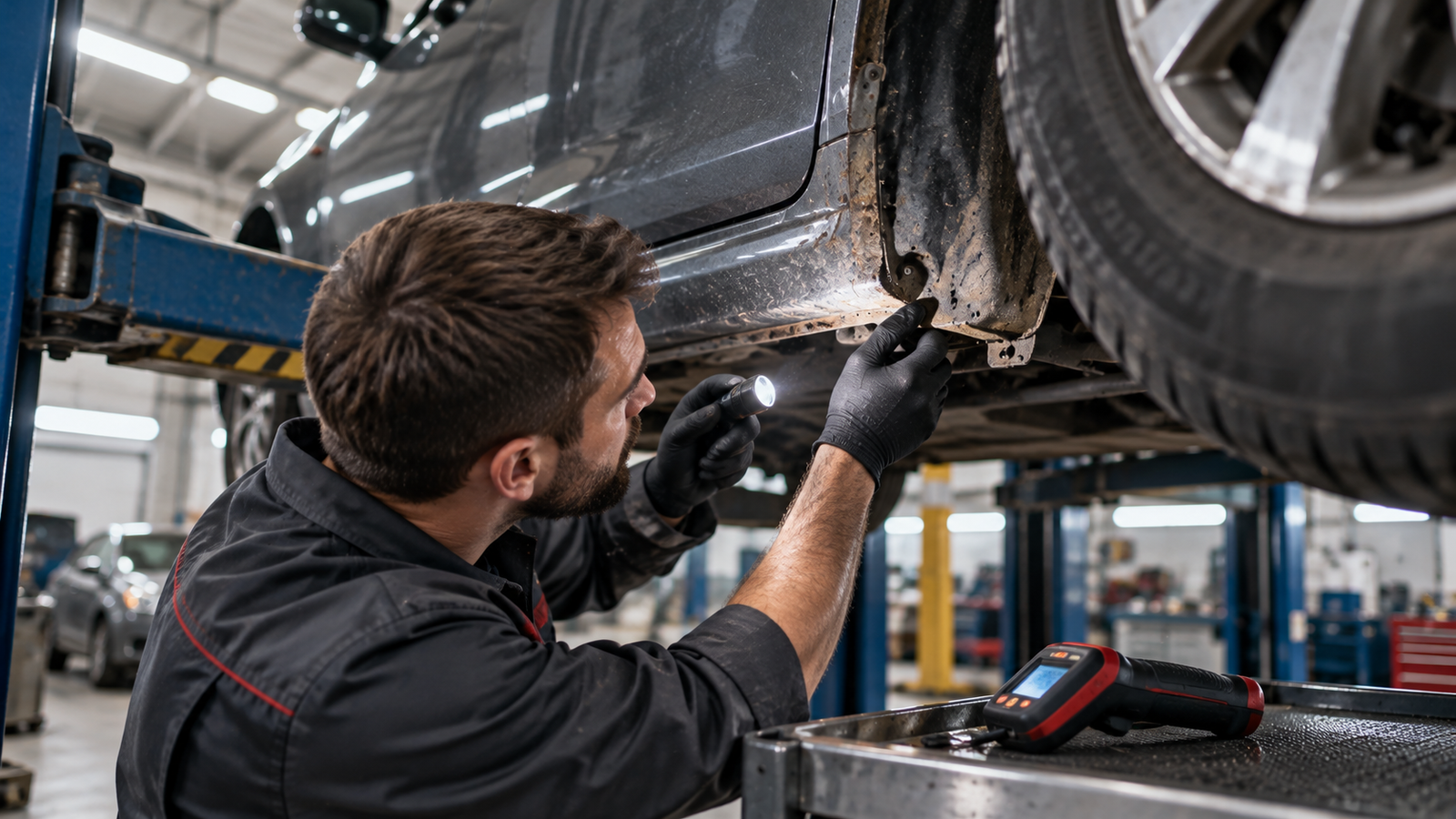
Then inspect accessible areas of the underbody and internal surfaces of the arches with a flashlight. Special attention should be paid to the attachment points of suspension elements and other power zones. If the metal looks loose, the coating peels off, or traces of rough repair are visible, it is better to entrust the assessment to a specialist.
Do not check the body by piercing suspicious places with a screwdriver: this can damage the preserved coating and not get a reliable idea of the part's condition. It is safer to conduct an inspection on a lift and use professional diagnostics.
A paint thickness gauge helps detect repainted areas and possible repairs. But there is no single micron value that unequivocally proves the presence of an accident: readings depend on the model, panel, and factory coating. Several points on each part should be measured and symmetrical elements compared with each other.
What you need to know about LADA car galvanizing
LADA cars use different body protection solutions depending on the model and production period. Therefore, it is impossible to transfer the characteristics of one model to the entire line or assume that all parts of a particular car have the same zinc coating.
LADA's official warranty conditions provide a warranty against through corrosion of body parts, but it is valid subject to established requirements. The manufacturer indicates the need for timely technical maintenance and control inspections of the paintwork and anti-corrosion coating.
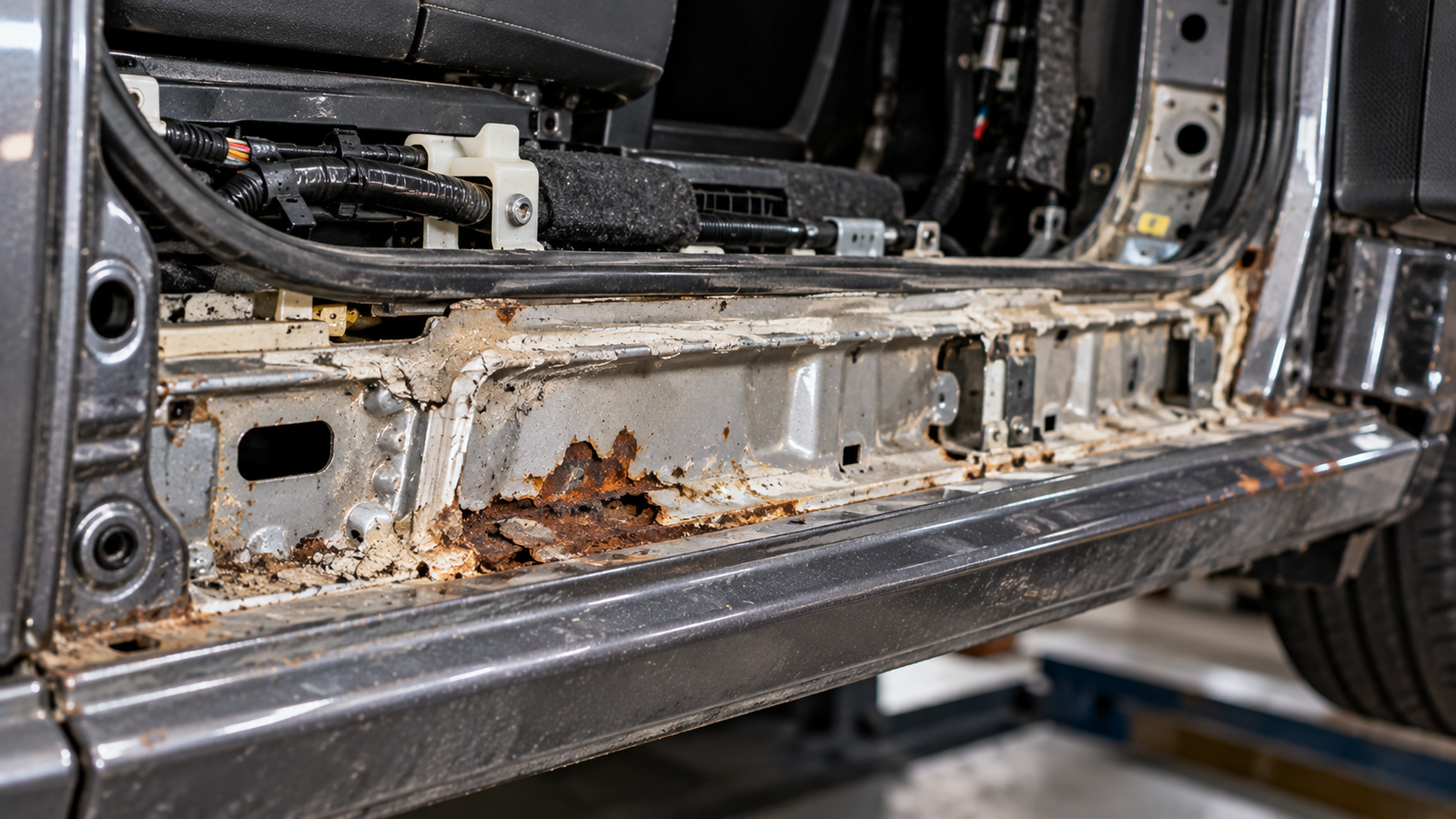
When choosing a used Vesta, Granta, Largus, or Niva Legend, the condition of the specific body is more important than a general description of the technology. Inspect the lower edges, sills, arches, welds, and underbody, find out the history of body repairs, and check the warranty conditions for the corresponding year of manufacture.
Even a well-protected body needs care. Regular washing in winter, cleaning arches and drainage holes, eliminating chips, and controlling hidden cavities help reduce the risk of corrosion. And after a serious accident, it is necessary to check not only the quality of painting but also whether the power elements have been restored in accordance with the manufacturer's technology.
Read more materials:
- “Cyber-Sheriff”: how cameras on the roof of a patrol car search for debtors
- Volvo seat belt: what Nils Bohlin actually invented
- Women are less likely than men to consider electric cars fast