Chinese automaker Hongqi has released official photos of the 2025 HS7 crossover for the Russian market. The model is impressively sized - the car's length is almost 5 meters, which is comparable to the size of premium SUVs like the Cadillac Escalade and BMW X7.
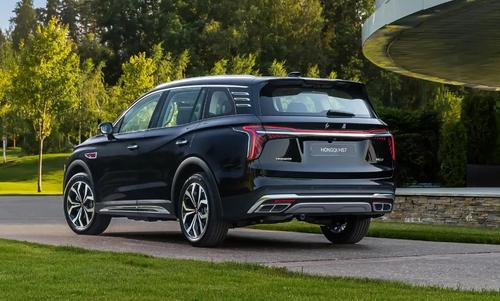
The car's exterior is designed with smooth lines and no sharp angles. Key design elements include an LED strip on the hood and a massive radiator grille. The interior is finished with wood and leather, and the front seats are equipped with power adjustments. Standard equipment includes a modern multimedia system, a digital instrument panel, and wireless charging for devices.
The second row of seats offers ample space with adjustment functions, while the third row is designed for short-term use. The luggage compartment has a variable volume depending on the seat configuration.
Technical specifications include a 2-liter turbocharged engine with 245 hp, supplemented by a 48-volt hybrid system. The transmission includes adaptive suspension and switchable all-wheel drive with selectable driving modes.
The price of the new Hongqi HS7 on the Russian market will range from 4,790,000 to 4,990,000 rubles, including current special offers.
Read more related articles:
Rare "Zhiguli" Station Wagon Put Up for Sale in Russia