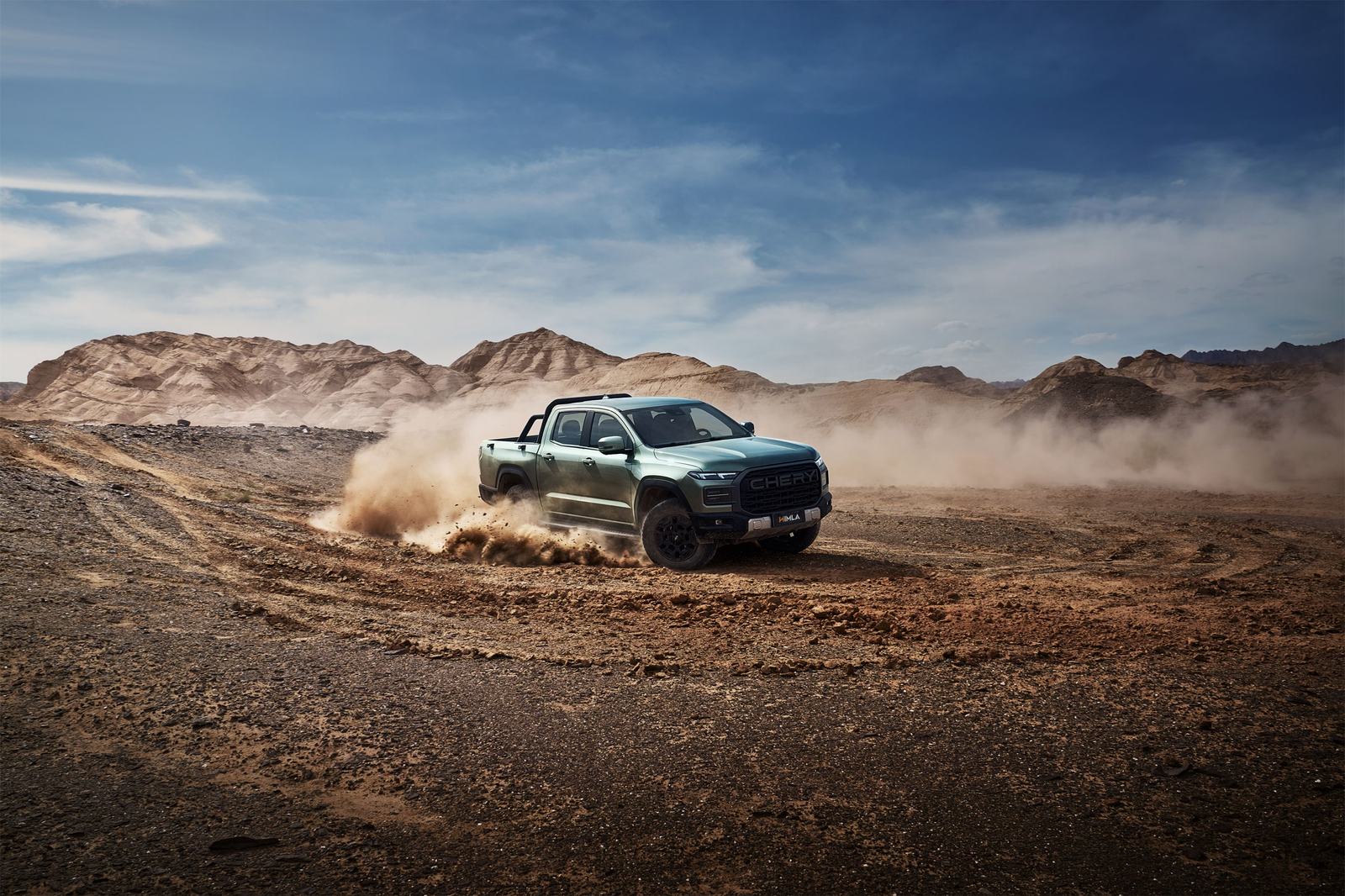
Chery has openly confirmed its interest in entering the US market for the first time – despite record tariffs and political pressure surrounding Chinese cars. The company's management stated that it is considering the American market "at the appropriate time." This is particularly important because Chery is not a niche startup, but China's largest car exporter. The company is actively expanding in Europe, Latin America, the Middle East, and Southeast Asia, promoting its Omoda, Jaecoo, and Exeed brands.
The main problem is American restrictions. The US is currently effectively blocking Chinese electric vehicles with 100% tariffs, and Congress is discussing additional sanctions against connected-car technologies from China. One new bill even provides for fines of $1.5 million for violating restrictions.
But Chery clearly expects a different scenario – local production. Earlier, Donald Trump had already allowed for the possibility of Chinese car companies operating in the US, provided that cars were manufactured in American factories. Analysts believe that this path may be the only chance for Chinese brands to enter the world's largest automotive market.
Chery's attempts to enter the US have been ongoing for almost 20 years. As early as the mid-2000s, the company tried to organize sales through Visionary Vehicles, and later through the HAAH Automotive project. Both ventures failed.
The situation is different now. Chinese brands have already proven their ability to compete in technology, design, and software. And most importantly – in price. Amid rising car costs in the US, cheap Chinese SUVs and hybrids could pose a serious threat to local manufacturers.
For the global industry, this is a potentially historic moment. If Chery does find a way into the US, the automotive market could face the same scenario that previously occurred in the electronics and smartphone industries.