Tesla has released FSD v14.3.3, which unexpectedly changed one of the system's most annoying restrictions. Cars have become noticeably less likely to require the driver to confirm their presence behind the wheel. This refers to Autopilot and Full Self-Driving warnings that periodically require applying force to the steering wheel. Previously, Tesla was criticized for overly intrusive reminders: the system could demand confirmation even when the driver was attentively looking at the road.
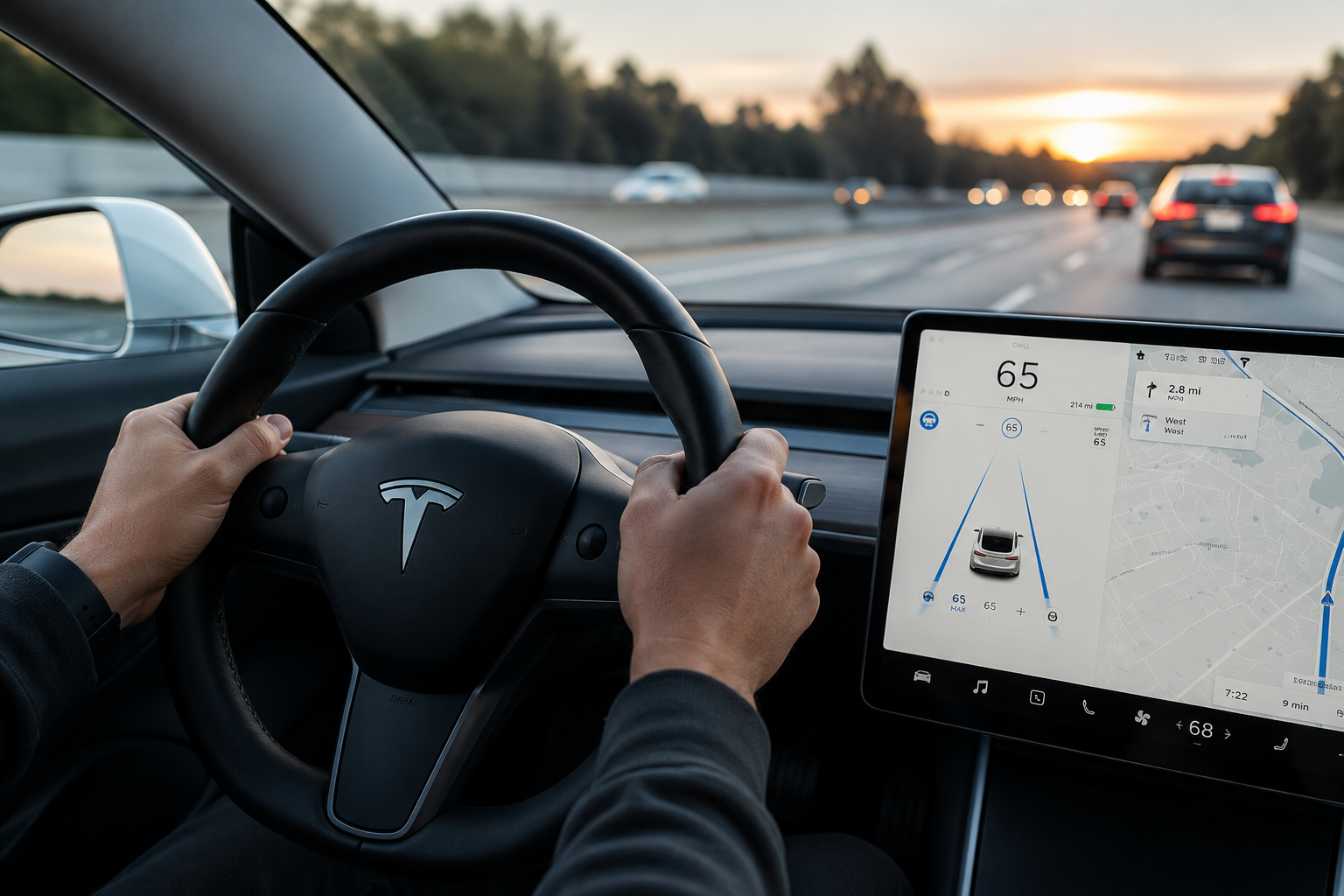
Now the algorithms have become softer. Owners report that FSD allows driving much longer without touching the steering wheel, especially if the in-cabin camera detects that the driver is looking forward and monitoring traffic. In fact, Tesla is increasingly shifting from steering wheel torque control to an attention tracking system via the internal camera.
This is an important change for the entire industry. Many modern driver assistance systems – from GM Super Cruise to Ford BlueCruise – already use eye-tracking instead of constant steering wheel touches. This approach is considered more natural: the system assesses the driver's actual attention, not mechanical hand movements.
But there is also a controversial side. Tesla is once again softening restrictions around FSD amid ongoing investigations into accidents involving Autopilot and partial automation systems. Critics fear that fewer warnings could reinforce a false sense of vehicle autonomy.
At the same time, Tesla itself still officially states: FSD requires constant human supervision and is not a fully autonomous system.