Chinese authorities have begun to sharply tighten control over the robotaxi industry after a major incident involving Baidu's Apollo Go service. The reason was a March failure, during which dozens of autonomous vehicles simultaneously stopped and effectively paralyzed traffic in one of Wuhan's districts.
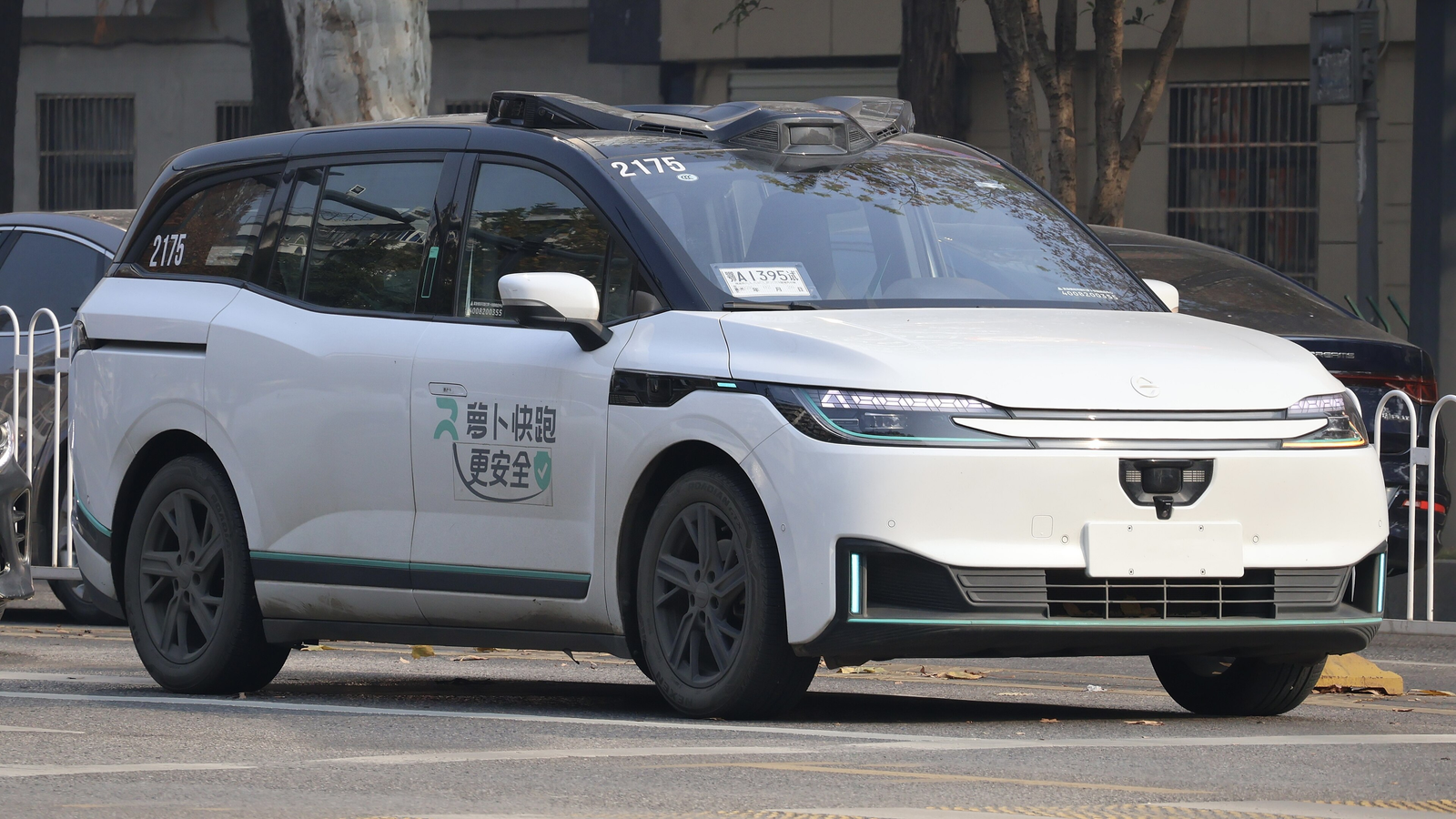
The incident quickly went viral on Chinese social media. According to local media, some Apollo Go robotaxis lost the ability to correctly react to unusual road situations, after which the vehicles began to stop directly on the roadway.
Before this, China was considered one of the most aggressive markets for the introduction of autonomous transport. Companies like Baidu, Pony.ai, WeRide, and AutoX rapidly expanded the operating zones of driverless taxis, and some services were already operating without a safety driver in the cabin.
Now regulators have begun to change their approach. Authorities are demanding enhanced remote monitoring, restrictions on service scaling, and stricter approval procedures for new operating zones. Special attention is paid to the ability of autonomous vehicles to operate correctly in complex urban scenarios — road repairs, accidents, and unusual behavior of other road users.
The story turned out to be extremely sensitive for the entire autonomous transport industry. Until now, many companies actively promoted the idea that the technology was already close to mass maturity. But such a robotaxi shutdown showed an old problem with autonomous vehicles: systems work well in predictable environments but are still vulnerable to rare and chaotic situations.
For China, this is especially important because the country viewed robotaxis as one of the key elements of future urban mobility and the AI economy. Against this background, the current “cooling” of the industry may temporarily slow down the adoption of autonomous transportation.
But this is unlikely to completely stop the market. Rather, on the contrary, the incident shows that the industry is moving from a stage of technological hype to a phase of tough real-world operation, where the main criterion is no longer the number of test kilometers, but the stability of the system in critical situations.
Read more materials:
- BMW stopped production of iX1 due to wheel shortage
- Lucid builds the best EVs "on paper," but the software turned out to be weaker than the hardware
- Ferrari showed its first electric car, and it doesn't look like a Ferrari at all