Shell has unveiled an unusual electric car concept called the Triple 10 Challenge. Despite being a fully functional prototype, the main goal of the project is not to release its own car, but to demonstrate technologies that can make future electric vehicles faster, cheaper, and more efficient.
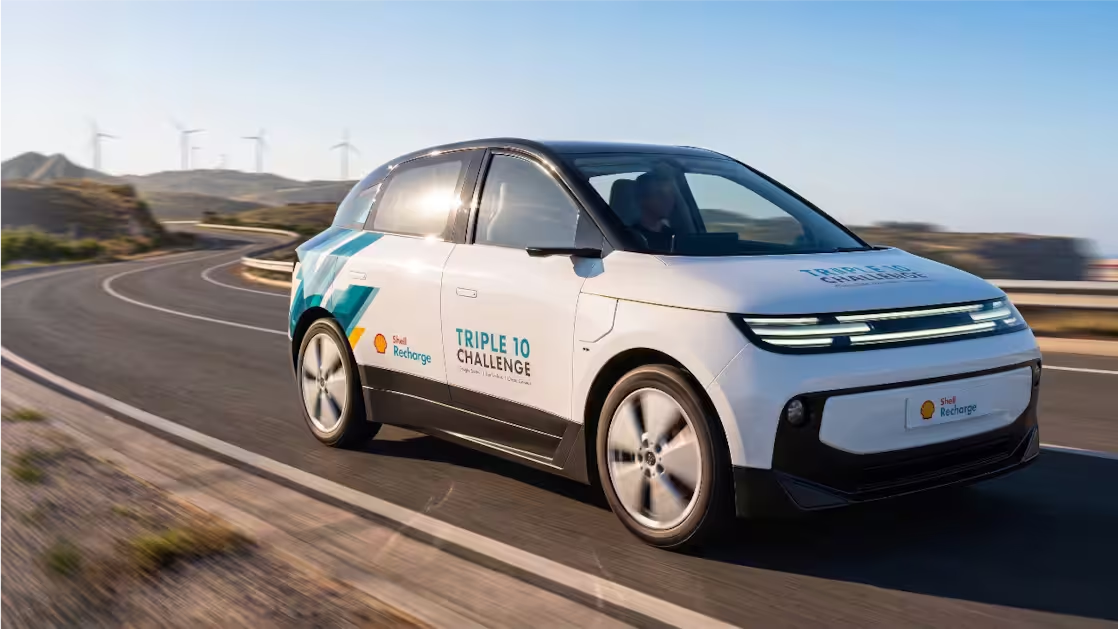
The name Triple 10 reflects three key project objectives: energy consumption of 10 km per 1 kWh, a lifetime carbon footprint of no more than 10 tons of CO₂ equivalent, and charging in less than 10 minutes.
The engineers managed to achieve the last goal. The concept can charge its battery from 10 to 80% in just 9 minutes and 54 seconds, using a 175 kW DC fast charging station. For comparison, this power level is already widely available at modern fast-charging stations.
However, the main innovation is hidden inside the car. Shell has developed a new dielectric cooling fluid, Recharge Thermal Fluid, which allows the battery to be cooled by directly immersing the cells in a special liquid. At the same time, it participates in cooling the electric motor and power electronics.
According to the company, this integrated cooling system is the first road-going architecture capable of effectively managing the temperature of all powertrain components, even during maximum fast charging.
Shell claims that the new technology can increase the overall energy efficiency of an electric vehicle by more than 30% compared to many modern models. In addition, the simplified battery design with fewer modules reduces the cost of the battery pack by approximately 25%.
The developers also paid attention to environmental friendliness. The concept features a lightweight design, an optimally sized battery, and extensive use of recyclable materials. When charged exclusively from renewable energy sources, the car's life cycle, according to Shell's calculations, will reduce CO₂ emissions by approximately 50% compared to the average European electric vehicle.
The car itself is a compact five-door hatchback with a minimalist interior, digital side mirrors, hidden door handles, and a continuous LED strip at the front. Empel Systems was responsible for the powertrain, while the battery and integration were developed by the British RML Group.
Read more materials:
- Authorities have once again taken up right-hand drive cars: the Ministry of Internal Affairs and the Ministry of Transport have begun assessing risks
- A Mini has driven a million kilometers without an engine replacement, and the owner is not stopping
- The gasoline crisis is expanding: fuel sales restrictions have already been introduced in 16 regions of Russia
Comments