Chinese automakers continue to change the rules of the game in the global automotive industry. While European companies typically take about seven years to develop a new model, and Japanese companies five to six years, Chinese brands aim to bring a car to market in just 24 months. This approach has already earned its own name – China Speed.
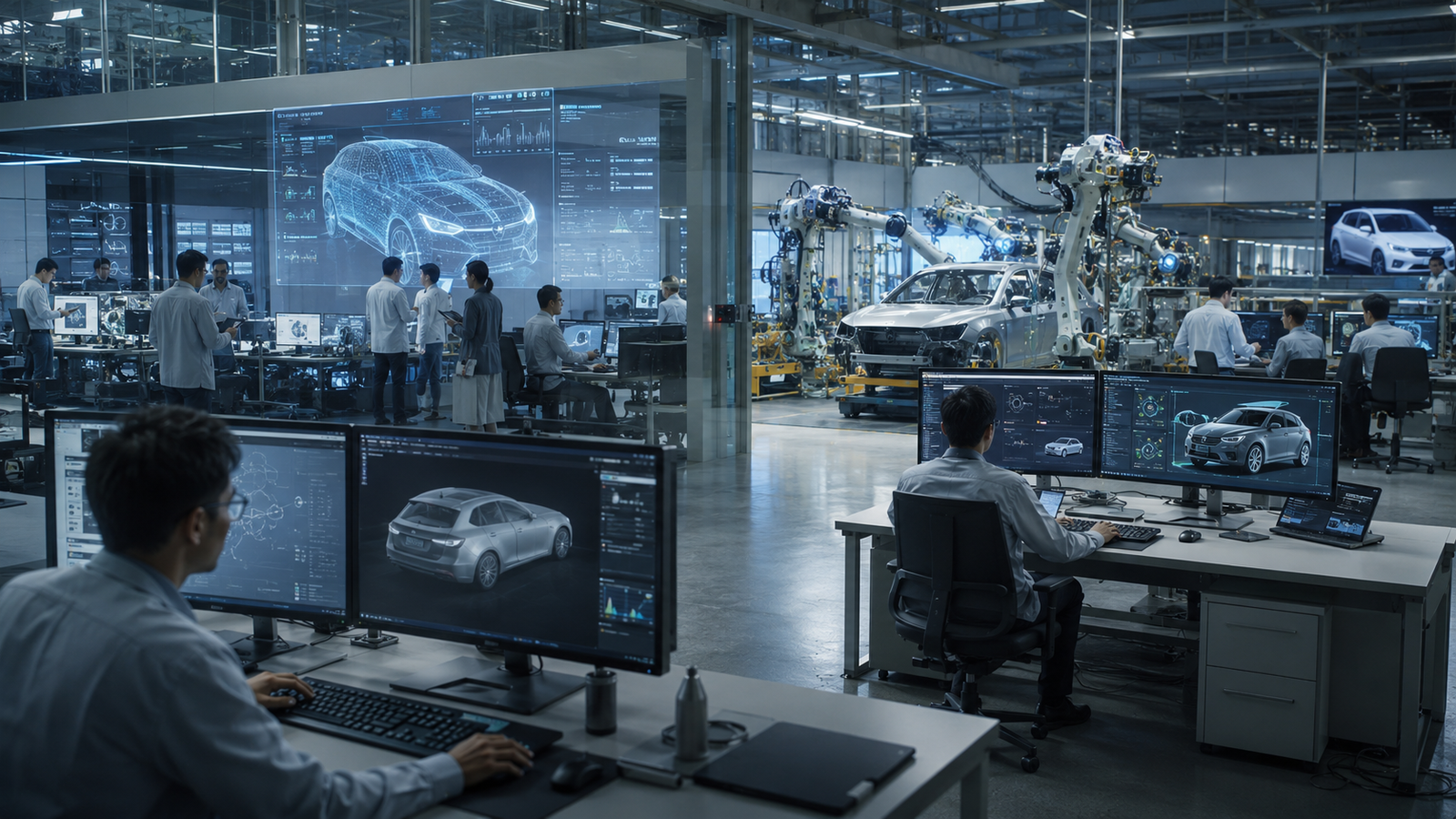
It was the desire to shorten the development cycle that forced Nissan to completely rethink its internal processes. The creation of the new generation Nissan Skyline took only 26 months – almost half the usual time. This was achieved through the active use of artificial intelligence and the reorganization of the development process.
According to Kazuyuki Yamaguchi, Nissan's Executive Officer for Product Development, competition from Chinese manufacturers requires a fundamentally different pace of work.
The company identifies four key areas that have allowed it to approach the "Chinese pace": concentrating investments on the most important car characteristics, maximizing platform unification, simplifying project management structure, and widespread use of artificial intelligence. The latter helps reduce the number of early prototypes and bring cars to production faster.
At the same time, Nissan acknowledges that accelerating development carries certain risks. Too high a speed can lead to design flaws that will then have to be corrected after sales begin. Similar problems are already encountered by some young Chinese manufacturers, who compensate for them with regular OTA software updates.
Комментарии