Today, automatic parking no longer surprises anyone. The car independently assesses the free space at the curb, then turns the steering wheel and performs the usual reverse maneuver. Many drivers consider this maneuver to be the most difficult part of parallel parking. It has remained virtually unchanged since the first decades of the automobile's existence and still requires a certain knack.
Of course, there are more exotic solutions. Some cars can steer all four wheels and practically drive into a spot sideways. But such a scheme remains rare and is mainly found on very expensive models. Almost a hundred years ago, American inventor Brooks Walker proposed solving the problem in a completely different way.
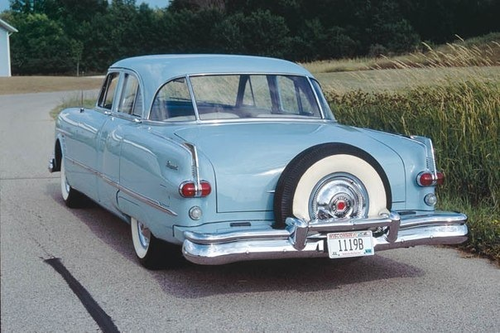
In 1932, he didn't just come up with an unusual design on paper; he built a working mechanism. Walker filed a patent and even shot promotional videos demonstrating his system. However, the automotive industry was not interested in the invention. Neither in the 1930s, nor later—in the 1950s and 1970s, when Walker continued to improve the design.
The Idea Was Extremely Unusual
The core of the idea was a very ordinary spare wheel. In most cars, it simply lay in the trunk, waiting for its moment. Walker decided to make it perform additional work. For this, the spare tire was mounted on a special hub, installed across the car. The entire structure was placed on a lowering pendulum arm.
It was this additional wheel that was supposed to act as a kind of fifth wheel and help the car complete the parking maneuver.
The scenario looked like this:
- the driver approached the free spot head-on;
- the front of the car ended up in the parking space;
- the rear part, however, remained protruding into the roadway;
- a special mechanism lowered the spare wheel;
- the fifth wheel lifted the car's rear wheels by a few centimeters;
- after that, the car's rear rolled into the remaining space.
It turned out that the car did not need to perform the classic complex reverse maneuver. The rear part could actually be moved into place after the front of the car had taken the desired position.
Where Did the Lifting Power Come From?
The most interesting part of the design was not only the idea of an additional wheel but also the method of actuating the entire system. To lift the rear of the car, Walker used a hydraulic cylinder. Moreover, a separate pump was not required to create pressure: the same pump that already worked with the power steering was used. The system was controlled by an additional lever in the cabin.
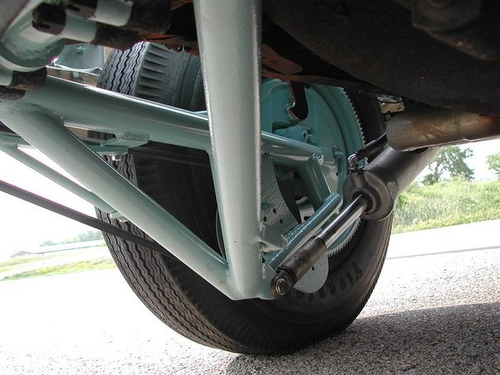
The parking wheel itself received rotation from the rear axle. For this, Walker developed a power take-off system with several chain drives. The direction of rotation depended on which driving mode was engaged—forward or reverse. At the same time, the car's driving rear wheels also continued to rotate, but after being lifted, they were above the ground and did not transmit traction to the surface.
The design turned out to be quite ingenious, although the task itself was quite specific: to lift the rear of the car and allow the fifth wheel to move it into the desired position.
Why Automakers Didn't Want Such a System
At first glance, the solution indeed looked almost ideal. Instead of a complex parking maneuver, the driver could use an additional wheel that the car already had. Moreover, Walker himself managed to produce working prototypes of the system for about $175. By modern standards, this amount would be equivalent to about one and a half thousand dollars.
But the invention had significant drawbacks.
Initially, Walker placed the mechanism directly in the trunk. This meant that the bulky structure occupied a significant portion of the usable space, leaving much less room for suitcases and other items.
Later, the inventor found another solution. He developed a bumper with a special slot through which the parking mechanism could extend. Thanks to this, the useful volume of the trunk was preserved.
However, the problem could not be completely eliminated. Access to the luggage compartment became extremely inconvenient: the fifth wheel interfered with using the trunk and effectively justified its name again. The system had several obvious disadvantages:
- occupied space or hindered access to the trunk;
- required an additional lifting mechanism;
- needed a power take-off system from the rear axle;
- complicated the car's design;
- solved a rather narrow parking problem.
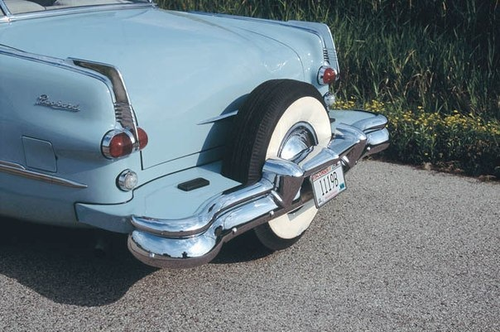
For the driver, the advantage was clear, but the automaker had to add a whole set of mechanisms to the car for the sake of performing one specific maneuver.
Walker Did Not Give Up on His Idea
Despite the lack of interest from automakers, Brooks Walker continued to work on the system. He built car after car, equipping them with his own parking mechanism, and continued to file patent applications. Work continued until the inventor's death in 1979.
Over several decades, the system received different versions. Walker tried to eliminate the shortcomings of the original design and make it more convenient for the car and the driver. However, even constant improvement could not convince manufacturers to implement the mechanism in production cars.
It is particularly noteworthy that experiments continued in different eras of the automotive industry. The idea did not disappear after the first failures in the 1930s: Walker returned to it in the 1950s and then in the 1970s.
Which Cars Received the Fifth Wheel
A total of six cars were built equipped with Brooks Walker's system. The first and most famous was a 1929 Packard. In addition to it, the unusual mechanism was installed on cars of several other brands:
- Oldsmobile;
- Ford;
- Saab.
Only one car with Walker's system has survived to this day—a Packard Cavalier.
This makes for a rather unusual fate for an invention. The mechanism really worked, its creator repeatedly demonstrated the design, filed patents, and continued to improve it for decades. But it never became a mass-produced solution for the automotive industry. Perhaps the main problem was not the mechanism's ability to park the car itself. From an engineering point of view, Walker indeed found a way to move the rear of the car without the traditional reverse maneuver.
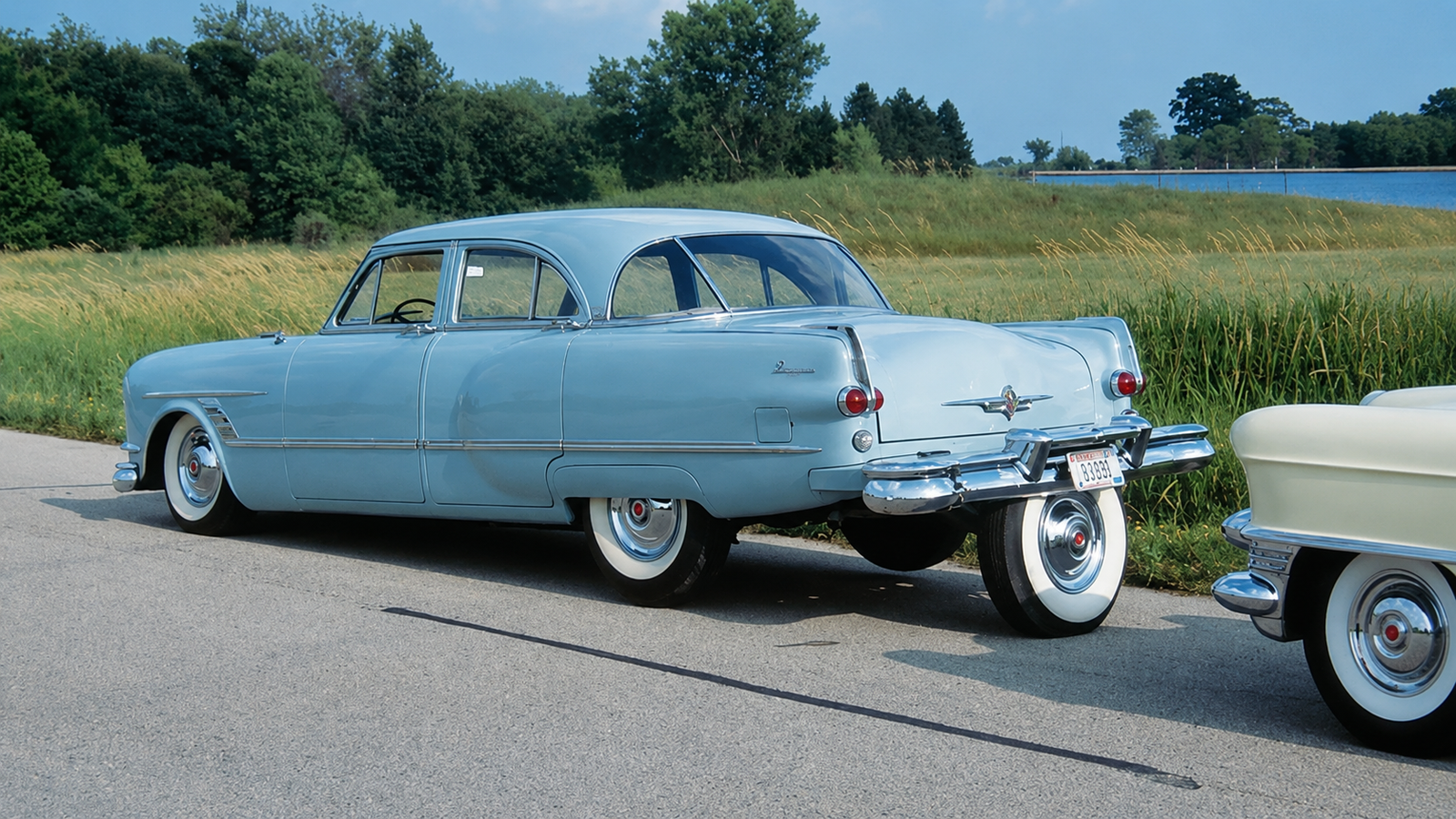
The difficulty was elsewhere: for a relatively rare operation, it was necessary to significantly complicate the car and sacrifice the convenience of the luggage compartment. Today, this idea looks especially unusual precisely because the task Walker tried to solve with mechanics is now solved with electronics and automation. A modern car can independently assess free space and turn the steering wheel, while maintaining the usual body structure.
Walker went the opposite way. He did not change the way the car was controlled—instead, he added another wheel to it. And this, perhaps, is the most unusual detail of the whole story: the spare tire, which for decades was considered a useless item lying in the trunk, in his design turned into a full-fledged working element of the car.
Read more materials:
- Why huge rims can harm a car
- Pontiac Phantom: Bill Mitchell's last masterpiece
- German sedan for 1.57 million: what's the catch
Комментарии