The first few weeks after buying a new car are usually filled with pleasant impressions. The smell of fresh plastic, a perfectly clean dashboard, and the crisp action of every button are all delightful. But once you hit the highway or encounter broken asphalt, the impressions can change.
Tire hum, wind noise, and stones hitting the wheel arches begin to penetrate the cabin. Music is not always able to drown it out. For someone who spends several hours behind the wheel every day, constant background noise becomes more than just a minor annoyance. It gradually increases fatigue and makes the journey more stressful.
Hence, a natural question arises: will additional soundproofing help, and are the costs justified?
Why owners are not in a hurry to soundproof
Before installing full soundproofing, two problems usually need to be solved.
The first is the cost. Treating doors, floor, roof, and wheel arches in a good service center can cost approximately one-tenth of the car's total value.
The second is completely different reviews. Some owners consider soundproofing one of the best ways to increase car comfort. Others claim that there is practically no noticeable result, and the procedure itself is just a way to spend money.
The difference in experience is largely explained by the specifics of the technology itself. Materials alone are not enough: the correctness of their installation and the qualifications of the installers are of great importance.
Accuracy is especially important when disassembling and subsequently reassembling the interior. If the panels are installed carelessly, after the procedure, the car may acquire new squeaks and extraneous noises that were not present before the intervention.
How comprehensive soundproofing works
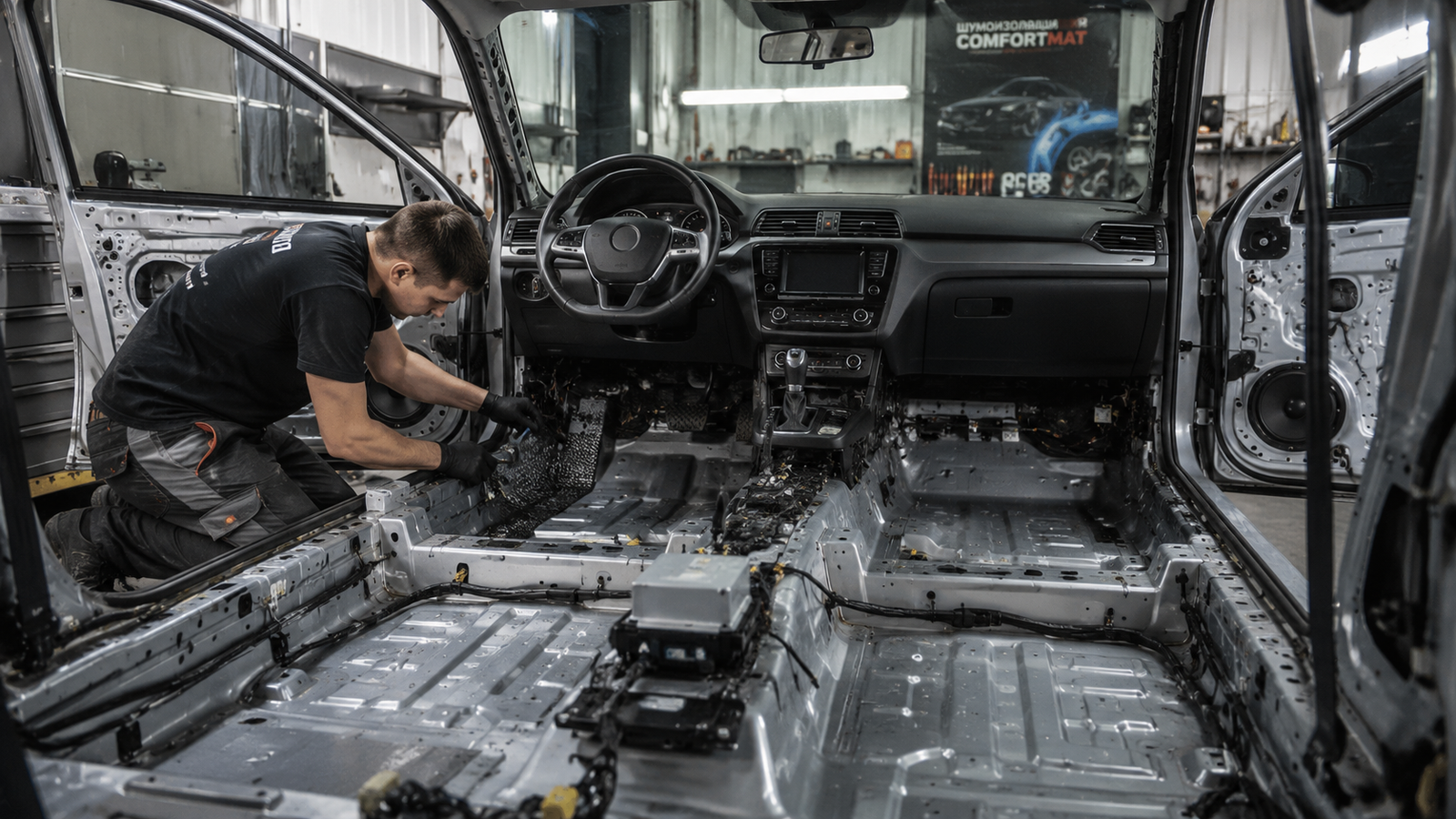
Additional soundproofing is not just about simply covering the doors with some material. A full treatment involves several layers, each performing a separate task.
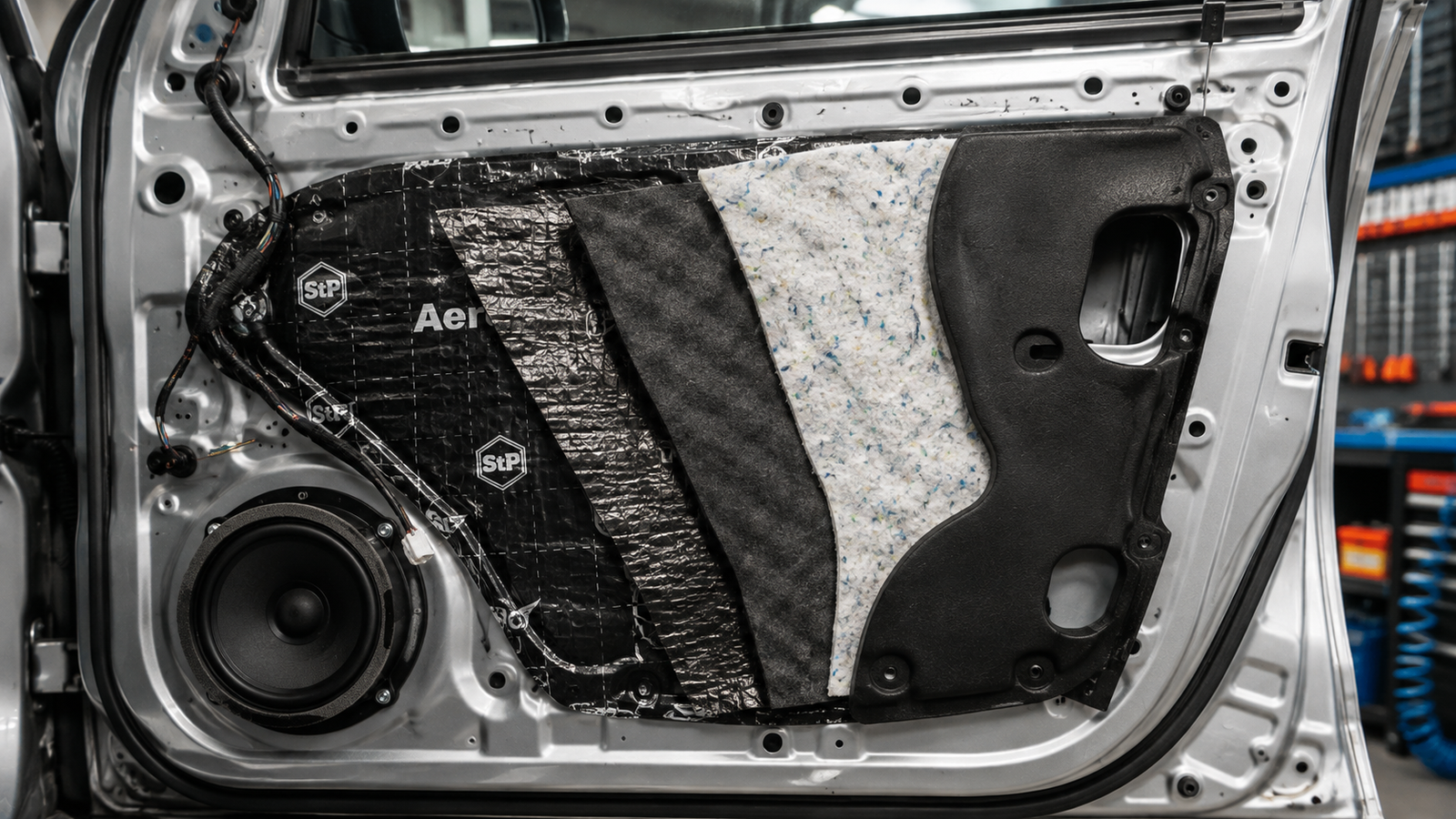
First, the door trims, seats, carpets are removed from the car, and the interior is partially disassembled. After that, a vibration-damping material is applied to the bare metal of the body. Its task is to dampen vibrations that arise during the movement of the car and the operation of the engine.
A sound-absorbing material, such as foamed rubber or light foam, is laid over it. This layer should prevent external sounds from penetrating into the cabin.
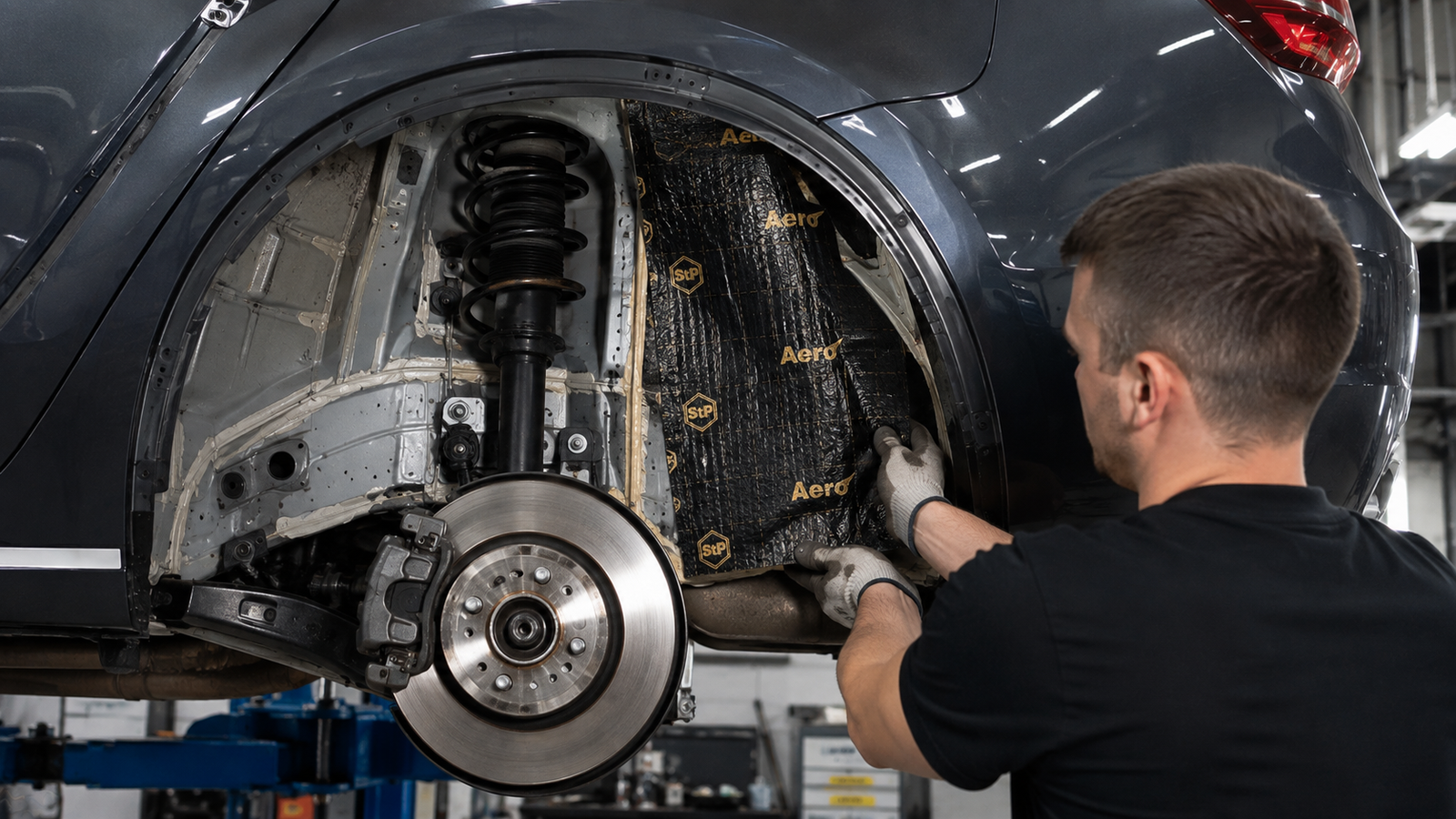
Special attention is paid to the wheel arches. Up to half of the road noise can enter the car through them, especially if hard tires or simple plastic protection are used.
Therefore, high-quality arch treatment can significantly change the acoustic environment inside the car.
A full range of work usually takes one to two days. In good service centers, the process is additionally photographed at different stages, and a report is provided to the owner. This allows monitoring the work performed and understanding exactly what was done to the car.
What the driver notices after treatment
One of the first changes is the car's behavior during rain. The characteristic "drum roll" on the roof disappears or significantly decreases. Tire hum also becomes significantly quieter at speeds of approximately 60–80 km/h. If before it seemed that the tires constantly made a loud sound, after treatment it can turn into a barely noticeable rustle.
The perception of conversation in the cabin also changes. Passengers in the back row become easier to hear, as their voices no longer have to compete with constant road noise.
The difference when listening to music is felt separately. Against the background of reduced noise, frequencies and details that were previously lost in the general sound background become noticeable. On the highway up to 120 km/h, the noise of oncoming air is perceived much more muffled, and the car stops "rattling" so much on the asphalt.
The effect is especially noticeable on long trips. The reduction of constant background noise reduces the feeling of tension that could previously accumulate by the end of a long journey. Subjectively, drivers can estimate the noise level reduction at approximately 30–40%. At the same time, even after such treatment, a budget car does not turn into a business jet, but the difference in acoustic comfort can be perceived as a transition to a completely different level.
What the owner gets and what has to be sacrificed
Additional soundproofing has quite specific advantages, but at the same time, certain disadvantages arise.
Main advantages:
- less road noise, especially tire hum;
- less fatigue and irritation during long trips;
- better perception of the audio system's performance;
- the feeling of a more expensive and well-assembled interior;
- reduction of squeaks and a tighter fit of interior elements.
However, for such a result, several inevitable consequences must be accepted:
- the car's weight increases by approximately 20–40 kg;
- theoretically, this can affect dynamics and fuel consumption, although in practice the difference is barely noticeable;
- comprehensive treatment can cost up to 10% of the price of a new car;
- after disassembling the interior, warranty disputes are possible, as the dealer may formally refuse to provide a warranty for individual elements;
- the result strongly depends on the qualifications of the masters, and careless assembly can lead to the appearance of new squeaks and play.
Who really needs soundproofing
Additional treatment primarily makes sense for those who spend a lot of time driving and truly value silence. In this case, it is about buying additional comfort for oneself, and not about investing in the future value of the car.

Soundproofing should be considered if:
- the car is regularly used for long trips on the highway;
- children are often transported in the car and you want them to be able to sleep peacefully while driving;
- quiet trips and the ability to talk normally in the cabin are important;
- constant road or other extraneous noise is annoying.
Additional treatment can be refused if:
- loud music already drowns out most external sounds;
- the car is mainly used for short trips around the city;
- the factory noise level does not cause discomfort.
Is it worth investing in silence?
Soundproofing is not some miraculous way to completely get rid of all sounds in the cabin. It is an engineering solution that can provide a tangible result if the materials are chosen correctly and the work is performed with high quality.
For a driver who drives a lot and gets tired specifically from constant hum, such an upgrade can be one of the most noticeable improvements to a new car. Noise reduction makes long trips calmer, facilitates conversations, and allows for better music perception.
But there is no universal recommendation here. Before installation, it is worth comparing the cost of the work, the expected effect, and how much the factory noise really bothers you.

If discomfort is felt every day, the money spent can pay off with many hours of calmer driving. If the car is perceived as quiet enough even without additional treatment, the same funds can be spent on other improvements.
Ultimately, your own feelings remain the correct guide, not other people's reviews about how "obligatory" soundproofing is for a car.
Read more materials:
- Why Chinese cars appear on the market every 2 years
- Why Lada Vesta is cheaper in Belarus than in Russia
- Why Soviet buses lost their driver's door