Google Maps does not choose a route solely based on the principle of “main road is better.” The system analyzes the road network, current traffic speed, historical traffic data, and incident information, then calculates the estimated travel time. Google also considers road quality and characteristics.
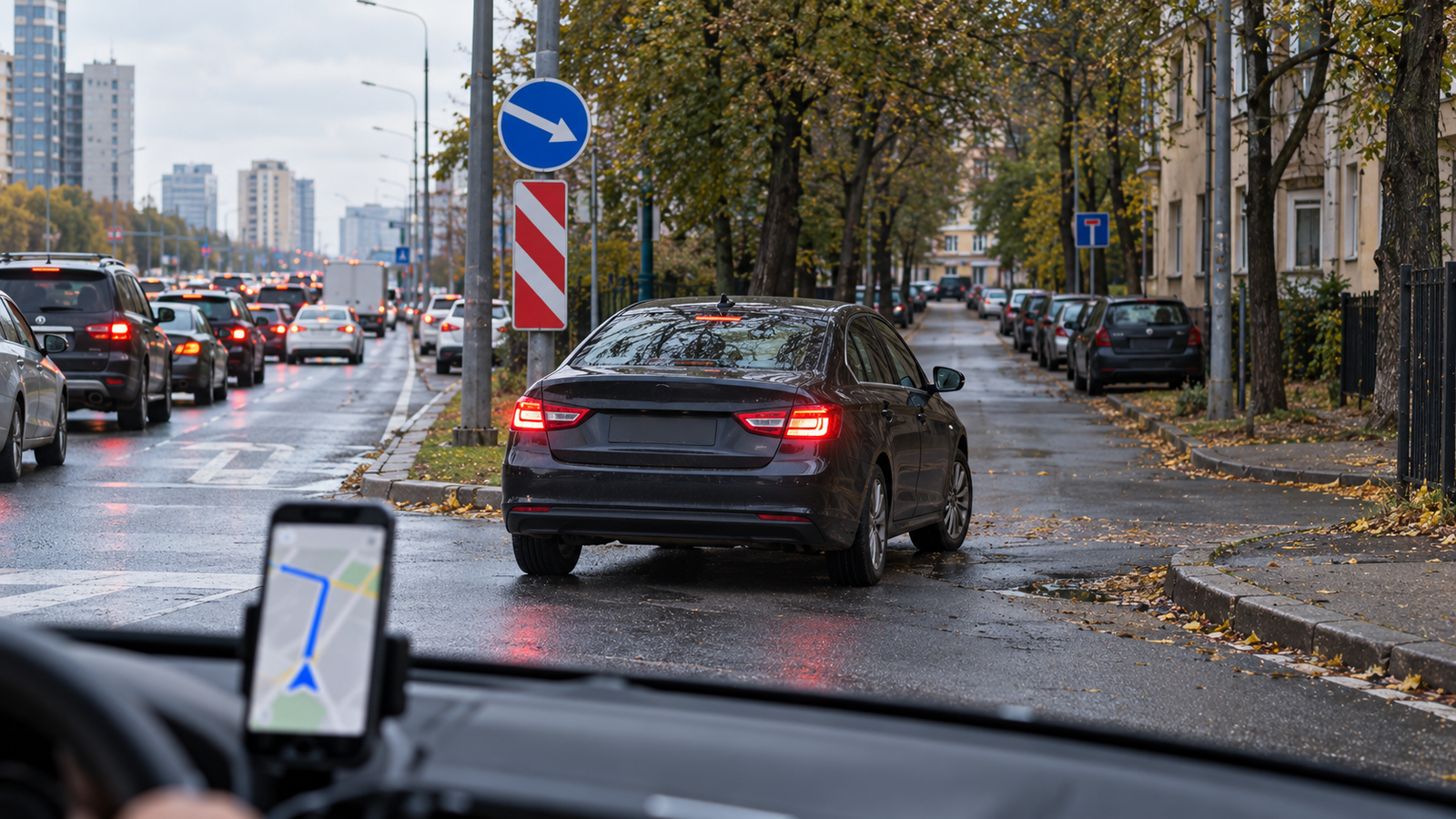
This is where the paradox arises. If the navigator sees a traffic jam on a major highway, it may suggest a quieter street to the driver where the estimated travel time will be shorter. But if thousands of motorists do the same thing simultaneously, the advantage of such a route will quickly disappear.
This effect is explained by the so-called selfish routing problem: each driver optimizes their own trip, and the application does not aim to minimize the total time for the entire road network. As a result, the flow of cars can move from major roads to streets that were not originally designed for such a volume of traffic.
At the same time, Google constantly recalculates routes. To make predictions, the company uses not only the current situation but also historical traffic data, and machine learning algorithms estimate what traffic will be like after some time. Therefore, the route may change even after the trip has begun.
There is also a simpler source of errors: the map data itself may be incomplete or outdated. Google receives road information from both users and partners, and speed limits come from several sources with varying accuracy and coverage. The company specifically provides an option to report an incorrect route or an incorrect speed limit.
Read more materials:
- Bentley turns car dealerships into ateliers: over 70% of clients choose Mulliner personalization
- Russia approaches Germany in Rolls-Royce registrations: 156 cars imported in eight months
- Geely to decide the fate of the Alpine A424 hypercar: the company may enter WEC as early as 2027
Comments